
Homework Answers
Add Answer to:
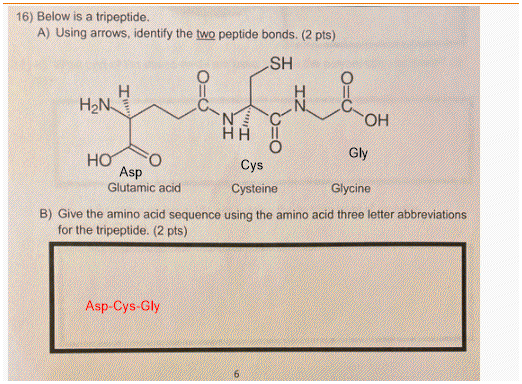
16) Below is a tripeptide. A) Using arrows, identify the two peptide bonds. (2 pts) SH...
Use the annotated peptide below for questions 7-8. CH2 CHz CH3 CH2 CH2 CH2 SH NH2...
 Use the annotated peptide below for questions 7-8. CH2 CHz CH3 CH2 CH2 CH2 SH NH2 NH2 он 7. (2 pts) Write the three-letter amino acid code for an amino acid in this peptide that would be able to stabilize protein structures through ionic interactions at pH 7.5. If there is not an amino acid in the above peptide that meets these specifications write "N/A"-not applicable. 8. (2pts) Write the three-letter amino acid code for an amino acid in this...
options There are peptide bonds in the molecule below. The N-terminal amino acid is Choose... The...
 options
There are peptide bonds in the molecule below. The N-terminal amino acid is Choose... The C-terminal amino acid is Choose... V NH3 NHE ОН 90- NH Choose... glycine alanine valine leucine isoleucine serine threonine cysteine methonine aspartate glutamate asparagine glutamine lysine arginine phenylalanine tyrosine proline histidine
options
There are peptide bonds in the molecule below. The N-terminal amino acid is Choose... The C-terminal amino acid is Choose... V NH3 NHE ОН 90- NH Choose... glycine alanine valine leucine isoleucine serine threonine cysteine methonine aspartate glutamate asparagine glutamine lysine arginine phenylalanine tyrosine proline histidine
There are peptide bonds in the molecule below. The N-terminal amino acid is Choose... The C-terminal...
 There are peptide bonds in the molecule below. The N-terminal amino acid is Choose... The C-terminal amino acid is Choose... V NH₃ NH₃ Air ОН 90- NH Choose... glycine alanine valine leucine isoleucine serine threonine cysteine methonine aspartate glutamate asparagine glutamine lysine arginine phenylalanine tyrosine proline histidine
1. Partial hydrolysis of lysozyme yielded an octapeptide that was later identified as the N-terminal segment of...
1. Partial hydrolysis of lysozyme yielded an octapeptide that was later identified as the N-terminal segment of the protein. From the following information, determine the sequence of this octapeptide. a. The following amino acids were identified after complete hydrolysis of the octapeptide: Arginine (Arg) Glycine (Gly) Phenylalanine (Phe) Cysteine (Cys) Leucine (Leu) Valine (Val) Glutamic Acid (Glu) Lysine (Lys) b. Treatment of the octapeptide with dinitroflurobenzene (Sanger reagent) followed by complete hydrolysis gave lysine (Lys) labeled with two dinitrophenyl (DNP) groups. c. Treatment of the octapeptide with trypsin gave lysine...
1. Partial hydrolysis of lysozyme yielded an octapeptide that was later identified as the N-terminal segment of...
1. Partial hydrolysis of lysozyme yielded an octapeptide that was later identified as the N-terminal segment of the protein. From the following information, determine the sequence of this octapeptide. a. The following amino acids were identified after complete hydrolysis of the octapeptide: Arginine (Arg) Glycine (Gly) Phenylalanine (Phe) Cysteine (Cys) Leucine (Leu) Valine (Val) Glutamic Acid (Glu) Lysine (Lys) b. Treatment of the octapeptide with dinitroflurobenzene (Sanger reagent) followed by complete hydrolysis gave lysine (Lys) labeled with two dinitrophenyl (DNP) groups. c. Treatment of the octapeptide with trypsin gave lysine...
5. (15 pts) You have been given a peptide for analysis. (1) Write out the six...
 5. (15 pts) You have been given a peptide for analysis. (1) Write out the six key steps to determine the sequence of a protein as discussed in the lecture. (2) What is the sequence of a peptide based on the following experimental results: (indicate your logic by placing a letter corresponding to the data set in parentheses above the amino acid in the sequence. This is required for full credit) a) Its amino acid composition is M+L+Y+C+S+2K. b) Treatment...
- Use the structure of the peptide to complete the problems/questions following. O HONE CH- H-º-N...
 - Use the structure of the peptide to complete the problems/questions following. O HONE CH- H-º-N CH-c o- CH2 CH-OH CH2 CH2 CH3 C=0 ΝΗ NH2 a. (4 pts) Name (full name) the N-terminal amino acid? b. (4 pts) Name (full name) the C-terminal amino acid? C. (5 pts) Using the 1 letter amino acid abbreviation, give the name of the peptide.
please answer thoroughly and correctly thjs js my last try Vasopressin is a peptide hormone synthesized...
 please answer thoroughly and correctly thjs js my last try
Vasopressin is a peptide hormone synthesized by the hypothalamus; in its reduced form it has the structure shown. NH2 HS H H₂N н NH2 SH H NH2 OH Vasopressin NH *H N NH2 This structure is incorrect in that one of the amino acids is shown in the D-configuration, rather than the L. Which one is it? What is the amino acid sequence of this peptide? CYFONCPRG Enter your answer...
please answer thoroughly and correctly thjs js my last try
Vasopressin is a peptide hormone synthesized by the hypothalamus; in its reduced form it has the structure shown. NH2 HS H H₂N н NH2 SH H NH2 OH Vasopressin NH *H N NH2 This structure is incorrect in that one of the amino acids is shown in the D-configuration, rather than the L. Which one is it? What is the amino acid sequence of this peptide? CYFONCPRG Enter your answer...
-HAPTER 4 CLAUOVOR " Tyrosine O Asparticauid Ho iX !! HOH Peptide Bond Alanie Y qoo...
 -HAPTER 4 CLAUOVOR " Tyrosine O Asparticauid Ho iX !! HOH Peptide Bond Alanie Y qoo Guysine Сн, / сн. н сH, Hн fan-e--c-coo- alpha HH OH OH H Carbon How many amino acid residues are in this structure? 48 amino acid residles How many peptide bonds are in this structure? 3 Peptide bonds What is the name of the C terminal residue? Gusine What is the one-letter abbreviation of the N-terminal residue? What is the sequence, given in three-letter...
1) (10 pts) Serine proteases are enzymes that cleave peptide bonds in proteins. Explain using words...
 1) (10 pts) Serine proteases are enzymes that cleave peptide bonds in proteins. Explain using words (drawings OR both) why serine proteases cleave either before or after different amino acid residues. Talk about at least two of the following proteases: Chymotrypsin, Trypsin, or Elastase. mod 2) (10pts) Below is a hypothetical peptide sequence. Give the peptide fragments that will occur by enzymatic degradation using Trypsin and Chymotrypsin DARSKWKSENLIRTY 3) (10 pts) All superfamilies of serine proteases use the catalytic triad...
 Use the annotated peptide below for questions 7-8. CH2 CHz CH3 CH2 CH2 CH2 SH NH2 NH2 он 7. (2 pts) Write the three-letter amino acid code for an amino acid in this peptide that would be able to stabilize protein structures through ionic interactions at pH 7.5. If there is not an amino acid in the above peptide that meets these specifications write "N/A"-not applicable. 8. (2pts) Write the three-letter amino acid code for an amino acid in this...
 options
There are peptide bonds in the molecule below. The N-terminal amino acid is Choose... The C-terminal amino acid is Choose... V NH3 NHE ОН 90- NH Choose... glycine alanine valine leucine isoleucine serine threonine cysteine methonine aspartate glutamate asparagine glutamine lysine arginine phenylalanine tyrosine proline histidine
options
There are peptide bonds in the molecule below. The N-terminal amino acid is Choose... The C-terminal amino acid is Choose... V NH3 NHE ОН 90- NH Choose... glycine alanine valine leucine isoleucine serine threonine cysteine methonine aspartate glutamate asparagine glutamine lysine arginine phenylalanine tyrosine proline histidine
 There are peptide bonds in the molecule below. The N-terminal amino acid is Choose... The C-terminal amino acid is Choose... V NH₃ NH₃ Air ОН 90- NH Choose... glycine alanine valine leucine isoleucine serine threonine cysteine methonine aspartate glutamate asparagine glutamine lysine arginine phenylalanine tyrosine proline histidine
 5. (15 pts) You have been given a peptide for analysis. (1) Write out the six key steps to determine the sequence of a protein as discussed in the lecture. (2) What is the sequence of a peptide based on the following experimental results: (indicate your logic by placing a letter corresponding to the data set in parentheses above the amino acid in the sequence. This is required for full credit) a) Its amino acid composition is M+L+Y+C+S+2K. b) Treatment...
 - Use the structure of the peptide to complete the problems/questions following. O HONE CH- H-º-N CH-c o- CH2 CH-OH CH2 CH2 CH3 C=0 ΝΗ NH2 a. (4 pts) Name (full name) the N-terminal amino acid? b. (4 pts) Name (full name) the C-terminal amino acid? C. (5 pts) Using the 1 letter amino acid abbreviation, give the name of the peptide.
 please answer thoroughly and correctly thjs js my last try
Vasopressin is a peptide hormone synthesized by the hypothalamus; in its reduced form it has the structure shown. NH2 HS H H₂N н NH2 SH H NH2 OH Vasopressin NH *H N NH2 This structure is incorrect in that one of the amino acids is shown in the D-configuration, rather than the L. Which one is it? What is the amino acid sequence of this peptide? CYFONCPRG Enter your answer...
please answer thoroughly and correctly thjs js my last try
Vasopressin is a peptide hormone synthesized by the hypothalamus; in its reduced form it has the structure shown. NH2 HS H H₂N н NH2 SH H NH2 OH Vasopressin NH *H N NH2 This structure is incorrect in that one of the amino acids is shown in the D-configuration, rather than the L. Which one is it? What is the amino acid sequence of this peptide? CYFONCPRG Enter your answer...
 -HAPTER 4 CLAUOVOR " Tyrosine O Asparticauid Ho iX !! HOH Peptide Bond Alanie Y qoo Guysine Сн, / сн. н сH, Hн fan-e--c-coo- alpha HH OH OH H Carbon How many amino acid residues are in this structure? 48 amino acid residles How many peptide bonds are in this structure? 3 Peptide bonds What is the name of the C terminal residue? Gusine What is the one-letter abbreviation of the N-terminal residue? What is the sequence, given in three-letter...
 1) (10 pts) Serine proteases are enzymes that cleave peptide bonds in proteins. Explain using words (drawings OR both) why serine proteases cleave either before or after different amino acid residues. Talk about at least two of the following proteases: Chymotrypsin, Trypsin, or Elastase. mod 2) (10pts) Below is a hypothetical peptide sequence. Give the peptide fragments that will occur by enzymatic degradation using Trypsin and Chymotrypsin DARSKWKSENLIRTY 3) (10 pts) All superfamilies of serine proteases use the catalytic triad...
Most questions answered within 3 hours.
-
Where is the error in this code sequence?
String s1 = "Hello";
String s2 = "ello";...
asked 10 months ago -
Financial data for Joel de Paris, Inc., for last year
follow:
Joel de Paris, Inc.
Balance...
asked 10 months ago -
Consider this reaction:
Al2(SO4)3 (aq)+ BaCl3
(aq) Al2Cl6 (aq)- +
3BaSO4(s) . What is the...
asked 10 months ago -
Suppose that Savneet is considering increasing her
recent random sample from 20 car rentals to 40...
asked 10 months ago -
Trucks arrive at an unloading terminal at an average rate of 120
per hour.
Trucks arrive...
asked 10 months ago -
Why are methanol and ethanol completely soluble in water while
octanol is not very little soluble....
asked 10 months ago -
A facilities manager at a university reads in a research report
that the mean amount of...
asked 10 months ago -
When the CuSO4 is rehydrated by adding water to the anhydrous
compound, is this an endothermic...
asked 10 months ago -
A ray of sunlight is passing from diamond into crown glass; the
angle of incidence is...
asked 10 months ago -
A block of mass 0.249 kg is placed on top of a light, vertical
spring of...
asked 10 months ago -
how do the kidneys compensate in the presences of acidosis
a) trigger hyperventilate
b) reserve acid...
asked 10 months ago -
Question 501 pts
The rental rate of capital to the firm increases. Which of the
following...
asked 10 months ago