
Homework Answers
Add Answer to:
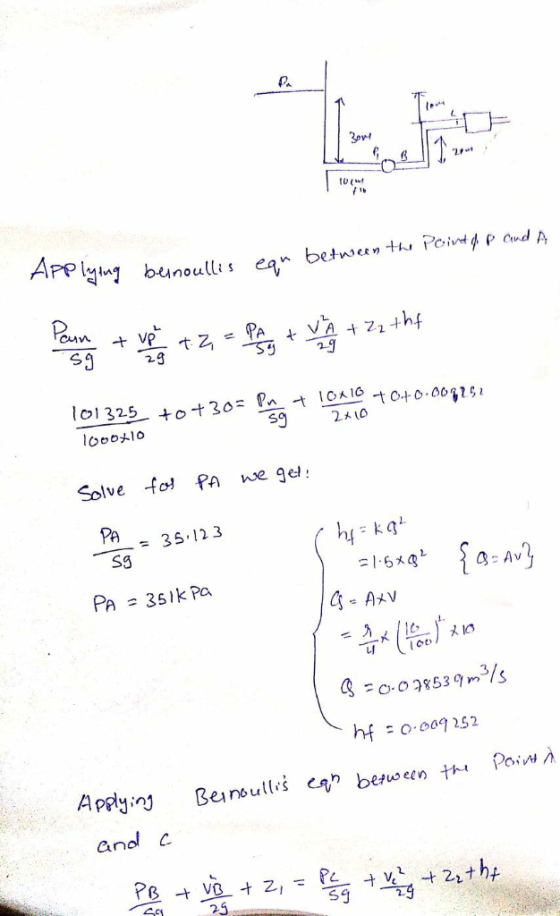
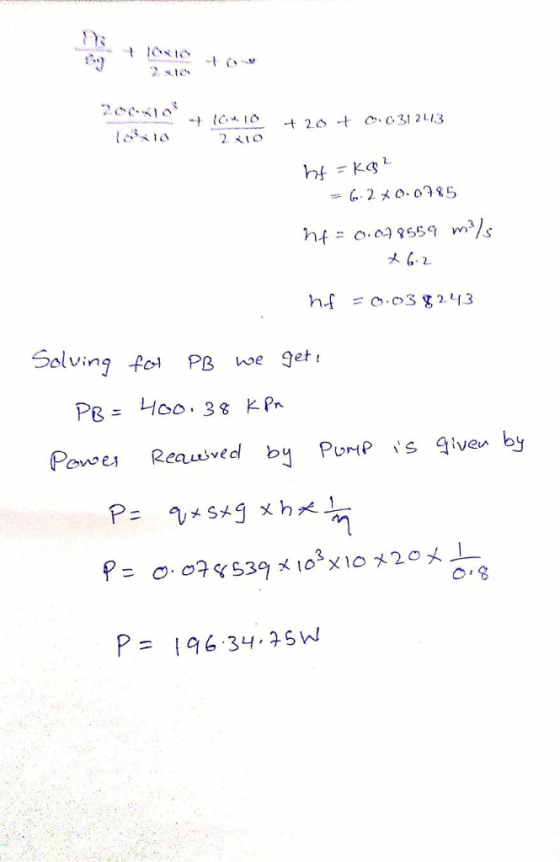
Problem No.5.9 (no. 4.82 Potter) The average velocity is 10 m/s in the pipe shown in...
DON’T disregard the thermal conductivity of the pipe 3.) Oil at 200 C flows in a pipeline. The pipe has a 30-cm diameter and the flow is at an average velocity of 2 m/s. A 200-m-long section of t...
 DON’T disregard the thermal conductivity of the pipe
3.) Oil at 200 C flows in a pipeline. The pipe has a 30-cm diameter and the flow is at an average velocity of 2 m/s. A 200-m-long section of the pipeline passes through icy waters of a lake at 0° C. The pipe is uncoated carbon steel with a thermal conductivity of 61 W/m o C. Determine (a) the temperature of the oil when the pipe leaves the lake, (b) the...
DON’T disregard the thermal conductivity of the pipe
3.) Oil at 200 C flows in a pipeline. The pipe has a 30-cm diameter and the flow is at an average velocity of 2 m/s. A 200-m-long section of the pipeline passes through icy waters of a lake at 0° C. The pipe is uncoated carbon steel with a thermal conductivity of 61 W/m o C. Determine (a) the temperature of the oil when the pipe leaves the lake, (b) the...
A 38-in pump is installed for the system below. The pipe (100- cm diameter) has a...
 A 38-in pump is installed for the system below. The pipe (100- cm diameter) has a friction factor of 0.012 and a total length of 20 km. Given that K = 0.5 (pipe entrance) and K. = 1.0 (pipe exit). For water at 80 degrees Fahrenheit, estimate the flow rate (in gpm), the power required (in horsepower, HP), and the net positive suction head required (in ft) to avoid cavitation for the system when the pump running. Elevation = 180...
For the air-jet shown below, determine the velocity (in m/s) of the air drawn in by...
 For the air-jet shown below, determine the velocity (in m/s) of the air drawn in by the jet. The air supply is at an absolute pressure of 700,000 Pa (abs) and a velocity of 3 m/s. Total mixed air velocity (at the exit) is measured to be 8 m/s. 700 kPa 300 K 2.5 cm Air supply Mixed air flows 45 cm - p 101.3 kPa T-300 K 101.3 kPa 300 K Air drawn into pipe An air-jet consist of...
16 pts) Consider the pipe branetink Pavet ded velocity of 10 m/s and pressure points B...
 16 pts) Consider the pipe branetink Pavet ded velocity of 10 m/s and pressure points B and C. The system is in a horizontal plewatet frictional losses, the weight of the pipe, the at the inlet and both outlets. B. ng system shown. Water a pressure 10 kPa ovet atmospheric r lows into the system at goint A with losses be syste and is supported by a hinge at point D. Neplect at th of the pipe, the weight of...
8-C) As shown below water is pumped and sprayed through a nozzle into the atmosphere at 20 m/s at...
 8-C) As shown below water is pumped and sprayed through a nozzle into the atmosphere at 20 m/s at an elevation 10 m above the reservoir surface. The mass flow rate is 40 kg/s and the volumetric flow rate is 0.040 m3/s. The large diameter inlet pipe total length is 50 m. The pump effidency is 65%. The longer smaller diameter pipe leaving the pump is 200 m in total length. The pipes have different diameters as indicated below. The...
Problem 10 7.50 Water (10°C) is flowing at a rate of 0.35 m/s, and it is...
 Problem 10 7.50 Water (10°C) is flowing at a rate of 0.35 m/s, and it is as- sumed that h1 = 2 V"/2g from the reservoir to the gage, where V is the velocity in the 30-cm pipe. What power must the pump supply? Assume a-1.0 at all locations P-100 kPa Elevation10m D-30 cm 3853939333Elevation 6 m 40 cm diameter Water T-10-c Elevation-2m
A 38-in pump is installed for the system below. The pipe (100-cm diameter) has a friction...
 A 38-in pump is installed for the system below. The pipe (100-cm diameter) has a friction factor of 0.012 and a total length of 20 km. Given that Ke = 0.5 (pipe entrance) and Ke = 1.0 (pipe exit). For water at 80 degrees Fahrenheit, estimate the flow rate (in gpm), the power required (in horsepower, HP), and the net positive suction head required (in ft) to avoid cavitation for the system when the pump running. Elevation = 180 m...
A 38-in pump is installed for the system below. The pipe (100-cm diameter) has a friction...
 A 38-in pump is installed for the system below. The pipe (100-cm diameter) has a friction factor of 0.012 and a total length of 20 km. Given that Ke = 0.5 (pipe entrance) and Ke = 1.0 (pipe exit). For water at 80 degrees Fahrenheit, estimate the flow rate (in grm), the power required (in horsepower, HP), and the net positive suction head required (in ft) to avoid cavitation for the system when the pump running. Elevation = 180 m...
A 38-in pump is installed for the system below. The pipe (100-cm diameter) has a friction...
 A 38-in pump is installed for the system below. The pipe (100-cm diameter) has a friction factor of 0.012 and a total length of 20 km. Given that Ke = 0.5 (pipe entrance) and Ke = 1.0 (pipe exit). For water at 80 degrees Fahrenheit, estimate the flow rate (in gpm), the power required (in horsepower, HP), and the net positive suction head required (in ft) to avoid cavitation for the system when the pump running. Elevation = 180 m...
A 38-in pump is installed for the system below. The pipe (100-cm diameter) has a friction...
 A 38-in pump is installed for the system below. The pipe (100-cm diameter) has a friction factor of 0.012 and a total length of 20 km. Given that Ke = 0.5 (pipe entrance) and Kε = 1.0 (pipe exit). For water at 80 degrees Fahrenheit, estimate the flow rate (in gpm), the power required in horsepower, HP), and the net positive suction head required (in ft) to avoid cavitation for the system when the pump running. Elevation = 180 m...
 DON’T disregard the thermal conductivity of the pipe
3.) Oil at 200 C flows in a pipeline. The pipe has a 30-cm diameter and the flow is at an average velocity of 2 m/s. A 200-m-long section of the pipeline passes through icy waters of a lake at 0° C. The pipe is uncoated carbon steel with a thermal conductivity of 61 W/m o C. Determine (a) the temperature of the oil when the pipe leaves the lake, (b) the...
DON’T disregard the thermal conductivity of the pipe
3.) Oil at 200 C flows in a pipeline. The pipe has a 30-cm diameter and the flow is at an average velocity of 2 m/s. A 200-m-long section of the pipeline passes through icy waters of a lake at 0° C. The pipe is uncoated carbon steel with a thermal conductivity of 61 W/m o C. Determine (a) the temperature of the oil when the pipe leaves the lake, (b) the...
 A 38-in pump is installed for the system below. The pipe (100- cm diameter) has a friction factor of 0.012 and a total length of 20 km. Given that K = 0.5 (pipe entrance) and K. = 1.0 (pipe exit). For water at 80 degrees Fahrenheit, estimate the flow rate (in gpm), the power required (in horsepower, HP), and the net positive suction head required (in ft) to avoid cavitation for the system when the pump running. Elevation = 180...
 For the air-jet shown below, determine the velocity (in m/s) of the air drawn in by the jet. The air supply is at an absolute pressure of 700,000 Pa (abs) and a velocity of 3 m/s. Total mixed air velocity (at the exit) is measured to be 8 m/s. 700 kPa 300 K 2.5 cm Air supply Mixed air flows 45 cm - p 101.3 kPa T-300 K 101.3 kPa 300 K Air drawn into pipe An air-jet consist of...
 16 pts) Consider the pipe branetink Pavet ded velocity of 10 m/s and pressure points B and C. The system is in a horizontal plewatet frictional losses, the weight of the pipe, the at the inlet and both outlets. B. ng system shown. Water a pressure 10 kPa ovet atmospheric r lows into the system at goint A with losses be syste and is supported by a hinge at point D. Neplect at th of the pipe, the weight of...
 8-C) As shown below water is pumped and sprayed through a nozzle into the atmosphere at 20 m/s at an elevation 10 m above the reservoir surface. The mass flow rate is 40 kg/s and the volumetric flow rate is 0.040 m3/s. The large diameter inlet pipe total length is 50 m. The pump effidency is 65%. The longer smaller diameter pipe leaving the pump is 200 m in total length. The pipes have different diameters as indicated below. The...
 Problem 10 7.50 Water (10°C) is flowing at a rate of 0.35 m/s, and it is as- sumed that h1 = 2 V"/2g from the reservoir to the gage, where V is the velocity in the 30-cm pipe. What power must the pump supply? Assume a-1.0 at all locations P-100 kPa Elevation10m D-30 cm 3853939333Elevation 6 m 40 cm diameter Water T-10-c Elevation-2m
 A 38-in pump is installed for the system below. The pipe (100-cm diameter) has a friction factor of 0.012 and a total length of 20 km. Given that Ke = 0.5 (pipe entrance) and Ke = 1.0 (pipe exit). For water at 80 degrees Fahrenheit, estimate the flow rate (in gpm), the power required (in horsepower, HP), and the net positive suction head required (in ft) to avoid cavitation for the system when the pump running. Elevation = 180 m...
 A 38-in pump is installed for the system below. The pipe (100-cm diameter) has a friction factor of 0.012 and a total length of 20 km. Given that Ke = 0.5 (pipe entrance) and Ke = 1.0 (pipe exit). For water at 80 degrees Fahrenheit, estimate the flow rate (in grm), the power required (in horsepower, HP), and the net positive suction head required (in ft) to avoid cavitation for the system when the pump running. Elevation = 180 m...
 A 38-in pump is installed for the system below. The pipe (100-cm diameter) has a friction factor of 0.012 and a total length of 20 km. Given that Ke = 0.5 (pipe entrance) and Ke = 1.0 (pipe exit). For water at 80 degrees Fahrenheit, estimate the flow rate (in gpm), the power required (in horsepower, HP), and the net positive suction head required (in ft) to avoid cavitation for the system when the pump running. Elevation = 180 m...
 A 38-in pump is installed for the system below. The pipe (100-cm diameter) has a friction factor of 0.012 and a total length of 20 km. Given that Ke = 0.5 (pipe entrance) and Kε = 1.0 (pipe exit). For water at 80 degrees Fahrenheit, estimate the flow rate (in gpm), the power required in horsepower, HP), and the net positive suction head required (in ft) to avoid cavitation for the system when the pump running. Elevation = 180 m...
Most questions answered within 3 hours.
-
Where is the error in this code sequence?
String s1 = "Hello";
String s2 = "ello";...
asked 10 months ago -
Financial data for Joel de Paris, Inc., for last year
follow:
Joel de Paris, Inc.
Balance...
asked 10 months ago -
Consider this reaction:
Al2(SO4)3 (aq)+ BaCl3
(aq) Al2Cl6 (aq)- +
3BaSO4(s) . What is the...
asked 10 months ago -
Suppose that Savneet is considering increasing her
recent random sample from 20 car rentals to 40...
asked 10 months ago -
Trucks arrive at an unloading terminal at an average rate of 120
per hour.
Trucks arrive...
asked 10 months ago -
Why are methanol and ethanol completely soluble in water while
octanol is not very little soluble....
asked 10 months ago -
A facilities manager at a university reads in a research report
that the mean amount of...
asked 10 months ago -
When the CuSO4 is rehydrated by adding water to the anhydrous
compound, is this an endothermic...
asked 10 months ago -
A ray of sunlight is passing from diamond into crown glass; the
angle of incidence is...
asked 10 months ago -
A block of mass 0.249 kg is placed on top of a light, vertical
spring of...
asked 10 months ago -
how do the kidneys compensate in the presences of acidosis
a) trigger hyperventilate
b) reserve acid...
asked 10 months ago -
Question 501 pts
The rental rate of capital to the firm increases. Which of the
following...
asked 10 months ago