
Homework Answers
3 SiO2(s) + 4 Al(l) -----> 3 Si(s) + 2 Al2O3(s)
 G0 =
G0Products
- G0reactants
G0 =
G0Products
- G0reactants
= [0 +(2*-1581.97)] - [ 3*-856.67+4*6.61]
= -620.37 KJ
Yes, pure Al will reduce SiO2.
3 SiO2(s) + 4 Al(l) -----> 3 Si(s) + 2 Al2O3(s)
Add Answer to:
Calculate the DeltaGdegree for the reduction of SiO_2(s) by Al(l) at 1573K. Would pure Al reduce...
4. Calculate the mass of AgaCOs(s) that will dissolve in 5.00 L of a. Pure water. 0.500 M NazS20s...
 no ksp or kf was given.
4. Calculate the mass of AgaCOs(s) that will dissolve in 5.00 L of a. Pure water. 0.500 M NazS20s, given that the [Ag(S:0)-1 ion forms under these conditions. b. A 0.0500 M (total concentration) bicarbonate/carbonate buffer at pH 10.25. c.
4. Calculate the mass of AgaCOs(s) that will dissolve in 5.00 L of a. Pure water. 0.500 M NazS20s, given that the [Ag(S:0)-1 ion forms under these conditions. b. A 0.0500 M (total concentration)...
no ksp or kf was given.
4. Calculate the mass of AgaCOs(s) that will dissolve in 5.00 L of a. Pure water. 0.500 M NazS20s, given that the [Ag(S:0)-1 ion forms under these conditions. b. A 0.0500 M (total concentration) bicarbonate/carbonate buffer at pH 10.25. c.
4. Calculate the mass of AgaCOs(s) that will dissolve in 5.00 L of a. Pure water. 0.500 M NazS20s, given that the [Ag(S:0)-1 ion forms under these conditions. b. A 0.0500 M (total concentration)...
consider the following standard reduction potentials. Reduction Half-Reaction Eo (volts) Al3+(aq) + 3e− → Al(s) −...
consider the following standard reduction potentials. Reduction Half-Reaction Eo (volts) Al3+(aq) + 3e− → Al(s) − 1.66 Fe2+(aq) + 2e− → Fe(s) − 0.44 Sn2+(aq) + 2e− → Sn(s) − 0.14 The Al/Al3+ half-reaction can be paired with the other two to produce voltaic cells because ________ A) Al is a more powerful oxidizing agent B) Fe and Sn are readily oxidized Al is a more powerful reducing agent C) Al3+ is a more powerful oxidizing agent D) Al3+...
Calculate the equilibrium constant, ?, for the reaction shown at 25 °C. Fe3+(aq)+B(s)+6H2O(l)⟶Fe(s)+H3BO3(s)+3H3O+(aq) The balanced reduction...
Calculate the equilibrium constant, ?, for the reaction shown at 25 °C. Fe3+(aq)+B(s)+6H2O(l)⟶Fe(s)+H3BO3(s)+3H3O+(aq) The balanced reduction half‑reactions for the equation and their respective standard reduction potential values (?∘) are Fe3+(aq)+3e−⟶Fe(s) ?∘=−0.04V H3BO3(s)+3H3O+(aq)+3e−⟶B(s)+6H2O(l) ?∘=−0.8698 V K=
Use standard reduction potentials to calculate the equilibrium constant for the reaction: I2(s) + Hg(l)2I-(aq) +...
Use standard reduction potentials to calculate the equilibrium constant for the reaction: I2(s) + Hg(l)2I-(aq) + Hg2+(aq) Hint: Carry at least 5 significant figures during intermediate calculations to avoid round off error when taking the antilogarithm. a.) Find the equilibrium constant b.) G° for this reaction would be greater/less than zero.
Calculate the equilibrium constant for this reaction at 25º C, Al (s) + Fe3+ (aq) —>...
Calculate the equilibrium constant for this reaction at 25º C, Al (s) + Fe3+ (aq) —> Al3+ (aq) + Fe (s) given the following standard reduction potentials for the two half-reactions. Fe3+ (aq) + 3 e- —> Fe (s) Eº = 0.77 V Al3+ (aq) + 3 e- —> Al (s) Eº = -1.66 V
(R)-(+)-Alpine-Borane (Midland Reduction) will reduce acetophenone stereoselectively: (R)-(+)- Al...
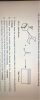 (R)-(+)-Alpine-Borane (Midland Reduction) will reduce acetophenone stereoselectively: (R)-(+)- Alpine-Borane Major Product 1) Please draw the major product for this reaction (take into account stereoselectivity) 2) Please draw both transition states, the favoured and the disfavoured and briefly 3) Which prochiral face of the ketone has been approached by the hydride (si or re) and (1 mark) comment on the reasons why they differ energetically (4 marks) which configuration does the alcohol obtained have (S or R)? (2 marks)
(R)-(+)-Alpine-Borane (Midland...
(R)-(+)-Alpine-Borane (Midland Reduction) will reduce acetophenone stereoselectively: (R)-(+)- Alpine-Borane Major Product 1) Please draw the major product for this reaction (take into account stereoselectivity) 2) Please draw both transition states, the favoured and the disfavoured and briefly 3) Which prochiral face of the ketone has been approached by the hydride (si or re) and (1 mark) comment on the reasons why they differ energetically (4 marks) which configuration does the alcohol obtained have (S or R)? (2 marks)
(R)-(+)-Alpine-Borane (Midland...
The standard reduction potential for Al3+ to Al is ?°red = −1.662 ? and the standard...
The standard reduction potential for Al3+ to Al is ?°red = −1.662 ? and the standard reduction potential for Co2+ to Co is ?°red = −0.277. Given this information calculate the maximum amount of work, in kJ/mol rxn for the balanced redox reaction from 2Al(s)+3Co2+(aq)----> 2Al3+(aq)+3Co(s) (T = 25.0 °C). Is this a spontaneous reaction? why or why not
Calculate the standard-state entropy for the following reaction: 1 Al2O3(s) + 3 H2(g) ? 2 Al(s) + 3 H2O(l) (If applicab...
Calculate the standard-state entropy for the following reaction: 1 Al2O3(s) + 3 H2(g) ? 2 Al(s) + 3 H2O(l) (If applicable, coefficients of one have been included for clarity.) The standard entropy values are given in the table. S? J/(K?mol) Al(s) 28.0 H2O(l) 189 Al2O3(s) 51.0 H2(g) 131
Calculate the standard-state entropy for the following reaction: 1 Al2O3(s) + 3 H2(g) ⟶ 2 Al(s) + 3 H2O(l) (If applicab...
Calculate the standard-state entropy for the following reaction: 1 Al2O3(s) + 3 H2(g) ⟶ 2 Al(s) + 3 H2O(l) (If applicable, coefficients of one have been included for clarity.) The standard entropy values are given in the table. Formula S∘ J/(K⋅mol) Al(s) 28.0 H2O(l) 189 Al2O3(s) 51.0 H2(g) 131
The solid rocket boosters of the space shuttle employed the following oxidation/reduction reaction: 10 Al (s)...
The solid rocket boosters of the space shuttle employed the following oxidation/reduction reaction: 10 Al (s) +6NH4CLO4 (s) --> 4Al2O3 (s) +2AlCl3 (s) + 12 H2o (g) + 3N2 (g) ?Hf 0 for NH4ClO4= -295.3 KJ/mol Al=0 KJ/mol Al2O3= -1676 KJ/mol AlCl3= -704.2 KJ/mol H2O= -241.82 KJ/mol N2= 0 KJ/mol Calculate the standard enthalpy of this reaction. How much energy is released when 100,000 kg of ammonium perchlorate (and excess aluminum) is burned?
 no ksp or kf was given.
4. Calculate the mass of AgaCOs(s) that will dissolve in 5.00 L of a. Pure water. 0.500 M NazS20s, given that the [Ag(S:0)-1 ion forms under these conditions. b. A 0.0500 M (total concentration) bicarbonate/carbonate buffer at pH 10.25. c.
4. Calculate the mass of AgaCOs(s) that will dissolve in 5.00 L of a. Pure water. 0.500 M NazS20s, given that the [Ag(S:0)-1 ion forms under these conditions. b. A 0.0500 M (total concentration)...
no ksp or kf was given.
4. Calculate the mass of AgaCOs(s) that will dissolve in 5.00 L of a. Pure water. 0.500 M NazS20s, given that the [Ag(S:0)-1 ion forms under these conditions. b. A 0.0500 M (total concentration) bicarbonate/carbonate buffer at pH 10.25. c.
4. Calculate the mass of AgaCOs(s) that will dissolve in 5.00 L of a. Pure water. 0.500 M NazS20s, given that the [Ag(S:0)-1 ion forms under these conditions. b. A 0.0500 M (total concentration)...
 (R)-(+)-Alpine-Borane (Midland Reduction) will reduce acetophenone stereoselectively: (R)-(+)- Alpine-Borane Major Product 1) Please draw the major product for this reaction (take into account stereoselectivity) 2) Please draw both transition states, the favoured and the disfavoured and briefly 3) Which prochiral face of the ketone has been approached by the hydride (si or re) and (1 mark) comment on the reasons why they differ energetically (4 marks) which configuration does the alcohol obtained have (S or R)? (2 marks)
(R)-(+)-Alpine-Borane (Midland...
(R)-(+)-Alpine-Borane (Midland Reduction) will reduce acetophenone stereoselectively: (R)-(+)- Alpine-Borane Major Product 1) Please draw the major product for this reaction (take into account stereoselectivity) 2) Please draw both transition states, the favoured and the disfavoured and briefly 3) Which prochiral face of the ketone has been approached by the hydride (si or re) and (1 mark) comment on the reasons why they differ energetically (4 marks) which configuration does the alcohol obtained have (S or R)? (2 marks)
(R)-(+)-Alpine-Borane (Midland...
Most questions answered within 3 hours.
-
Where is the error in this code sequence?
String s1 = "Hello";
String s2 = "ello";...
asked 10 months ago -
Financial data for Joel de Paris, Inc., for last year
follow:
Joel de Paris, Inc.
Balance...
asked 10 months ago -
Consider this reaction:
Al2(SO4)3 (aq)+ BaCl3
(aq) Al2Cl6 (aq)- +
3BaSO4(s) . What is the...
asked 10 months ago -
Suppose that Savneet is considering increasing her
recent random sample from 20 car rentals to 40...
asked 10 months ago -
Trucks arrive at an unloading terminal at an average rate of 120
per hour.
Trucks arrive...
asked 10 months ago -
Why are methanol and ethanol completely soluble in water while
octanol is not very little soluble....
asked 10 months ago -
A facilities manager at a university reads in a research report
that the mean amount of...
asked 10 months ago -
When the CuSO4 is rehydrated by adding water to the anhydrous
compound, is this an endothermic...
asked 10 months ago -
A ray of sunlight is passing from diamond into crown glass; the
angle of incidence is...
asked 10 months ago -
A block of mass 0.249 kg is placed on top of a light, vertical
spring of...
asked 10 months ago -
how do the kidneys compensate in the presences of acidosis
a) trigger hyperventilate
b) reserve acid...
asked 10 months ago -
Question 501 pts
The rental rate of capital to the firm increases. Which of the
following...
asked 10 months ago