
Homework Answers
Add Answer to:
BC: 2-1-1-6 Using the parallelogram law, graphically find the magnitude of the resultant of the two...
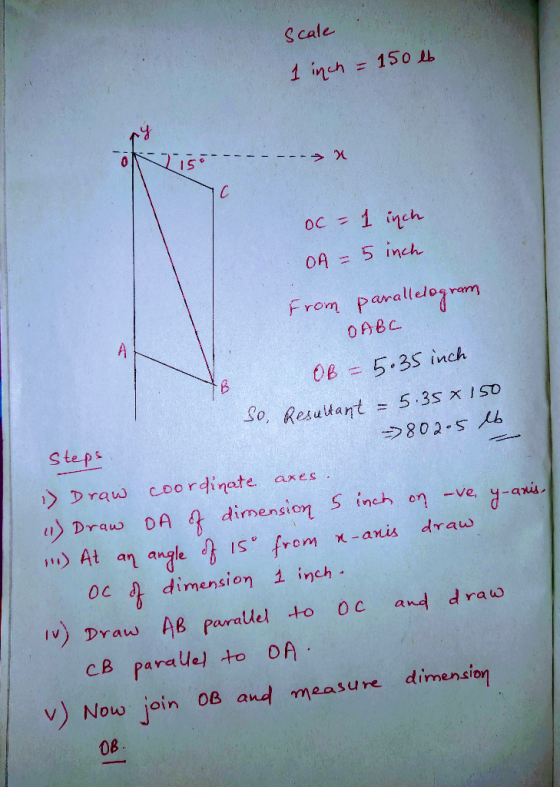
HW: 2-1-4 Using the parallelogram law, graphically find the magnitude of the resultant of F, and...
 HW: 2-1-4 Using the parallelogram law, graphically find the magnitude of the resultant of F, and F knowing that F, 250N and F2 175N. Use the scale 1 50N. Use the squares between the filled in circles in the figure to determine the directions of the forces. Hint: See video 2-04. Answer(s): 2 Force magnitudes are not drawn to scale.
HW: 2-1-8 Using the parallelogram law, graphically find the smallest F, if the resultant is horizontal...
 HW: 2-1-8 Using the parallelogram law, graphically find the smallest F, if the resultant is horizontal with a magnitude of 1000lb. Also find F2. Use the scale 1in- 250b. Hint: See video 2-10. You may want to also do Hw 2-1-7 to see the major difference with just a slight change in wording. Also see video 2-04 Answer(s): 45° 2
HW: 2-1-12 Using the parallelogram law, trigonmetrically find the magnitude of the resultant of F, and...
 HW: 2-1-12 Using the parallelogram law, trigonmetrically find the magnitude of the resultant of F, and F2 knowing that F1-250N and F2-175% Use the squares in the figure to determine the directions of the forces. Example, ø- tan1 (rise/run) Answer(s): 2 Force magnitudes are not drawn to scale.
Use the parallelogram rule to find the magnitude of the resultant for the two forces shown...
 Use the parallelogram rule to find the magnitude of the resultant for the two forces shown in the figure 12 lb 30° 5 lb The magnitude of the resultant force is (Round to the nearest tenth as needed.) Enter your answer in the answer box. W Previous
Use the parallelogram rule to find the magnitude of the resultant for the two forces shown...
 Use the parallelogram rule to find the magnitude of the resultant for the two forces shown in the figure. 12 1b 30° 5 lb ib The magnitude of the resultant force is (Round to the nearest tenth as needed.) Enter your answer in the answer box. Previous
Use the parallelogram rule to find the magnitude of the resultant for the two forces shown...
 Use the parallelogram rule to find the magnitude of the resultant for the two forces shown in the figure. 10 lb 60° SID The magnitude of the resultant force is (. (Round to the nearest tenth as needed.)
a. using the graphical/semi-graphical (parallelogram law) to determine the magnitude of F1 and inclination theta of...
 a. using the graphical/semi-graphical (parallelogram law) to
determine the magnitude of F1 and inclination theta of F2
b. use the algebraic method to determine the magnitude of F1 and
the inclination theta of F2
HW (2-2) The two forces shown act in the x-y plane of the T-beam cross section. If it is known that the resultant R of the two forces has a magnitude of 3.5 kN and a line of action that lies 15° above the negative x-axis,...
a. using the graphical/semi-graphical (parallelogram law) to
determine the magnitude of F1 and inclination theta of F2
b. use the algebraic method to determine the magnitude of F1 and
the inclination theta of F2
HW (2-2) The two forces shown act in the x-y plane of the T-beam cross section. If it is known that the resultant R of the two forces has a magnitude of 3.5 kN and a line of action that lies 15° above the negative x-axis,...
Use the parallelogram rule to solve for the resultant of the two forces. Provide both magnitude...
 Use the parallelogram rule to solve for the resultant of the two forces. Provide both magnitude and direction of the resultant. 12 N 35° 20 N
Use and identify the steps of the graphical/semi-graphical method (parallelogram law) to find: i. The vector...
 Use and identify the steps of the graphical/semi-graphical
method
(parallelogram law) to find:
i. The vector expression of the
resultant
ii. The magnitude and angle (with
respect to the x axis) of the resultant
b. Use and identify the steps (from
problem 1b) of the algebraic method to find:
i. The vector expression of the
resultant
ii. The magnitude and angle (with
respect to the x axis) of the resultant
34 Chapter 2 Force Systems Representative Problems 2/11 The two...
Use and identify the steps of the graphical/semi-graphical
method
(parallelogram law) to find:
i. The vector expression of the
resultant
ii. The magnitude and angle (with
respect to the x axis) of the resultant
b. Use and identify the steps (from
problem 1b) of the algebraic method to find:
i. The vector expression of the
resultant
ii. The magnitude and angle (with
respect to the x axis) of the resultant
34 Chapter 2 Force Systems Representative Problems 2/11 The two...
Resultant, magnitude and direction
 Find (graphically) the resultant magnitude and direction (give the direction angle) for the four concurrent forces. Scale:1" = 20 lb (verify in your print that the 20 lb vector force measures 1")
 HW: 2-1-4 Using the parallelogram law, graphically find the magnitude of the resultant of F, and F knowing that F, 250N and F2 175N. Use the scale 1 50N. Use the squares between the filled in circles in the figure to determine the directions of the forces. Hint: See video 2-04. Answer(s): 2 Force magnitudes are not drawn to scale.
 HW: 2-1-8 Using the parallelogram law, graphically find the smallest F, if the resultant is horizontal with a magnitude of 1000lb. Also find F2. Use the scale 1in- 250b. Hint: See video 2-10. You may want to also do Hw 2-1-7 to see the major difference with just a slight change in wording. Also see video 2-04 Answer(s): 45° 2
 HW: 2-1-12 Using the parallelogram law, trigonmetrically find the magnitude of the resultant of F, and F2 knowing that F1-250N and F2-175% Use the squares in the figure to determine the directions of the forces. Example, ø- tan1 (rise/run) Answer(s): 2 Force magnitudes are not drawn to scale.
 Use the parallelogram rule to find the magnitude of the resultant for the two forces shown in the figure 12 lb 30° 5 lb The magnitude of the resultant force is (Round to the nearest tenth as needed.) Enter your answer in the answer box. W Previous
 Use the parallelogram rule to find the magnitude of the resultant for the two forces shown in the figure. 12 1b 30° 5 lb ib The magnitude of the resultant force is (Round to the nearest tenth as needed.) Enter your answer in the answer box. Previous
 Use the parallelogram rule to find the magnitude of the resultant for the two forces shown in the figure. 10 lb 60° SID The magnitude of the resultant force is (. (Round to the nearest tenth as needed.)
 a. using the graphical/semi-graphical (parallelogram law) to
determine the magnitude of F1 and inclination theta of F2
b. use the algebraic method to determine the magnitude of F1 and
the inclination theta of F2
HW (2-2) The two forces shown act in the x-y plane of the T-beam cross section. If it is known that the resultant R of the two forces has a magnitude of 3.5 kN and a line of action that lies 15° above the negative x-axis,...
a. using the graphical/semi-graphical (parallelogram law) to
determine the magnitude of F1 and inclination theta of F2
b. use the algebraic method to determine the magnitude of F1 and
the inclination theta of F2
HW (2-2) The two forces shown act in the x-y plane of the T-beam cross section. If it is known that the resultant R of the two forces has a magnitude of 3.5 kN and a line of action that lies 15° above the negative x-axis,...
 Use the parallelogram rule to solve for the resultant of the two forces. Provide both magnitude and direction of the resultant. 12 N 35° 20 N
 Use and identify the steps of the graphical/semi-graphical
method
(parallelogram law) to find:
i. The vector expression of the
resultant
ii. The magnitude and angle (with
respect to the x axis) of the resultant
b. Use and identify the steps (from
problem 1b) of the algebraic method to find:
i. The vector expression of the
resultant
ii. The magnitude and angle (with
respect to the x axis) of the resultant
34 Chapter 2 Force Systems Representative Problems 2/11 The two...
Use and identify the steps of the graphical/semi-graphical
method
(parallelogram law) to find:
i. The vector expression of the
resultant
ii. The magnitude and angle (with
respect to the x axis) of the resultant
b. Use and identify the steps (from
problem 1b) of the algebraic method to find:
i. The vector expression of the
resultant
ii. The magnitude and angle (with
respect to the x axis) of the resultant
34 Chapter 2 Force Systems Representative Problems 2/11 The two...
Most questions answered within 3 hours.
-
Where is the error in this code sequence?
String s1 = "Hello";
String s2 = "ello";...
asked 10 months ago -
Financial data for Joel de Paris, Inc., for last year
follow:
Joel de Paris, Inc.
Balance...
asked 10 months ago -
Consider this reaction:
Al2(SO4)3 (aq)+ BaCl3
(aq) Al2Cl6 (aq)- +
3BaSO4(s) . What is the...
asked 10 months ago -
Suppose that Savneet is considering increasing her
recent random sample from 20 car rentals to 40...
asked 10 months ago -
Trucks arrive at an unloading terminal at an average rate of 120
per hour.
Trucks arrive...
asked 10 months ago -
Why are methanol and ethanol completely soluble in water while
octanol is not very little soluble....
asked 10 months ago -
A facilities manager at a university reads in a research report
that the mean amount of...
asked 10 months ago -
When the CuSO4 is rehydrated by adding water to the anhydrous
compound, is this an endothermic...
asked 10 months ago -
A ray of sunlight is passing from diamond into crown glass; the
angle of incidence is...
asked 10 months ago -
A block of mass 0.249 kg is placed on top of a light, vertical
spring of...
asked 10 months ago -
how do the kidneys compensate in the presences of acidosis
a) trigger hyperventilate
b) reserve acid...
asked 10 months ago -
Question 501 pts
The rental rate of capital to the firm increases. Which of the
following...
asked 10 months ago