
Homework Answers
In Queue, accessing the content while removing it from the front end of the queue, is known as a Dequeue Operation

System.out.println(myQueue.dequeue());
It prints 50

System.out.println(myQueue.dequeue());
It prints 26

System.out.println(myQueue.dequeue());
It prints 32

So, Output is
50
26
32

50
26
32

Add Answer to:
Suppose the following sequence of elements are added to a queue in the following order: 50,...
JAVA LANG PLEASE: I have follwed these below guidelines but when i run my queue test...
JAVA LANG PLEASE: I have follwed these below guidelines but when i run my queue test it is not executing but my stack is working fine, can you fix it please! MyQueue.java Implement a queue using the MyStack.java implementation as your data structure. In other words, your instance variable to hold the queue items will be a MyStack class. enqueue(String item): inserts item into the queue dequeue(): returns and deletes the first element in the queue isEmpty(): returns true or false...
Suppose that the following elements are added in the specified order to an empty binary search...
Suppose that the following elements are added in the specified order to an empty binary search tree: Meg, Stewie, Peter, Joe, Lois, Brian, Quagmire, Cleveland Write the elements of the tree above in the order they would be seen by a pre-order, in-order, and post-order traversal. Type your solutions with the elements separated by spaces and/or commas, such as: One, Two, Three, Four pre-order in-order post-order
In Java, create a program implementing the functionalities of a standard queue in a class called Queue3503....
In Java, create a program implementing the functionalities of a standard queue in a class called Queue3503. You will test the functionalities of the Queue3503 class from the main() method of the Main class. In a queue, first inserted items are removed first and the last items are removed at the end (imagine a line to buy tickets at a ticket counter). Do NOT change your class name from "Main". The Main class should come first in your code. Your filename should be "Main.java". The Queue3503 class will contain:...
Revision Question Consider the following Java class: { public static void main (String [ ] args)...
Revision Question Consider the following Java class: { public static void main (String [ ] args) { ArrayQueue<Integer> queue; queue = new ArrayQueue<Integer> () ; Integer x, y ; x = 3; y = 6; queue.offer (x) ; queue.offer (12) ; queue.offer (y) ; y = queue.peek () ; queue.poll () ; queue. offer (x - 2) ; queue.offer (x) ; queue.offer (y + 4) ; System.out.println ("Queue Elements: ") ; while (! queue.empty() ) System.out.print (queue.poll () + "...
Java:Netbeans-Use the LinkedList class to simulate a queue, and use the add method to simulate the...
Java:Netbeans-Use the LinkedList class to simulate a queue, and use the add method to simulate the enqueue, and the remove method to simulate the dequeue method for a Queue. Remember to use FIFO. Need help with 0. Add New Microchips pushMicroChip(), popMicroChip() and . To simulate this, you will create a menu option 0, which will generate 100 microchip long objects, and place them into a stack of microchips. Those microchip objects will be generated by using the System.nanotime() method. ...
Question B1 You are given the following Java classes: public class Queue { private static class...
 Question B1 You are given the following Java classes: public class Queue { private static class Node { Object object; Node next; Node () { object = null; next = null; } Node (Object object, Node next) { this.object = object; this.next = next; private Node header; private int size = 0; // size shows the no of elements in queue public Object dequeue () { if (size == 0 ) { return null; else { Object remove_object = header.object;...
What is the output of the following code? 3eimport java.util.LinkedList; 4 import java.util.Queue; 7 public class...
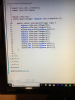 What is the output of the following code? 3eimport java.util.LinkedList; 4 import java.util.Queue; 7 public class Pop f 8 static Queue<Integer> myQueue= new LinkedList<>(); public static void main(Stringl args) tf 10e myQueue.offer(new Integer(8)); myQueue.offer(new Integer (16)); System.out.println(myQueue.pol1()); myQueue.offer(new Integer (3)); myQueue.offer(new Integer(12)); myQueue.offer (new Integer(5)): myQueue.offer(new Integer(8)) myQueue.offer(new Integer (6)); myQueue.offer(new Integer(2)); System.out.println(myQueue.pol1)); System.out.println(myQueue.poll()): System.out.println(myQueue.poll()):l 12 13 15 16 17 18 19 20 21 23 24 25 OA. 26 85 O B. 8 16 3 12 c. 16 862 D....
C++ -- Event processing simulation using a transaction queue Hi! it is queue simulation please read...
C++ -- Event processing simulation using a transaction queue Hi! it is queue simulation please read the instructions, write codes, and explain the code with comments. Thank you Transactions enter the system and are stored in a queue. Each transaction represents some work that needs to be accomplished. Servers exist which process transactions. Servers take transactions off the queue and process them. you’re building the simulation framework. The idea is that somebody would take your framework, and add the specifics...
The ExceptionLab class provided: – Creates an array of 100 elements and fills it with random...
 The ExceptionLab class provided: – Creates an array of 100
elements and fills it with random numbers from 1 to 100. – It asks
the user for an index value between 0 and 99. – Prints the element
at that position. – If a number > 99 is entered by the user, the
class will abort with an ArrayIndexOutOfBoundsException • Modify
the ExceptionLab: – Add a try-catch clause which intercepts the
ArrayIndexOutOfBounds and prints the message: Index value cannot be...
The ExceptionLab class provided: – Creates an array of 100
elements and fills it with random numbers from 1 to 100. – It asks
the user for an index value between 0 and 99. – Prints the element
at that position. – If a number > 99 is entered by the user, the
class will abort with an ArrayIndexOutOfBoundsException • Modify
the ExceptionLab: – Add a try-catch clause which intercepts the
ArrayIndexOutOfBounds and prints the message: Index value cannot be...
C++ Sorting and Searching 1. Mark the following statements as true or false. a. A sequential...
C++ Sorting and Searching 1. Mark the following statements as true or false. a. A sequential search of a list assumes that the list elements are sorted in ascending order. b. A binary search of a list assumes that the list is sorted. 2. Consider the following list: 63 45 32 98 46 57 28 100 Using a sequential search, how many comparisons are required to determine whether the following items are in the list or not? (Recall that comparisons...
 Question B1 You are given the following Java classes: public class Queue { private static class Node { Object object; Node next; Node () { object = null; next = null; } Node (Object object, Node next) { this.object = object; this.next = next; private Node header; private int size = 0; // size shows the no of elements in queue public Object dequeue () { if (size == 0 ) { return null; else { Object remove_object = header.object;...
 What is the output of the following code? 3eimport java.util.LinkedList; 4 import java.util.Queue; 7 public class Pop f 8 static Queue<Integer> myQueue= new LinkedList<>(); public static void main(Stringl args) tf 10e myQueue.offer(new Integer(8)); myQueue.offer(new Integer (16)); System.out.println(myQueue.pol1()); myQueue.offer(new Integer (3)); myQueue.offer(new Integer(12)); myQueue.offer (new Integer(5)): myQueue.offer(new Integer(8)) myQueue.offer(new Integer (6)); myQueue.offer(new Integer(2)); System.out.println(myQueue.pol1)); System.out.println(myQueue.poll()): System.out.println(myQueue.poll()):l 12 13 15 16 17 18 19 20 21 23 24 25 OA. 26 85 O B. 8 16 3 12 c. 16 862 D....
 The ExceptionLab class provided: – Creates an array of 100
elements and fills it with random numbers from 1 to 100. – It asks
the user for an index value between 0 and 99. – Prints the element
at that position. – If a number > 99 is entered by the user, the
class will abort with an ArrayIndexOutOfBoundsException • Modify
the ExceptionLab: – Add a try-catch clause which intercepts the
ArrayIndexOutOfBounds and prints the message: Index value cannot be...
The ExceptionLab class provided: – Creates an array of 100
elements and fills it with random numbers from 1 to 100. – It asks
the user for an index value between 0 and 99. – Prints the element
at that position. – If a number > 99 is entered by the user, the
class will abort with an ArrayIndexOutOfBoundsException • Modify
the ExceptionLab: – Add a try-catch clause which intercepts the
ArrayIndexOutOfBounds and prints the message: Index value cannot be...
Most questions answered within 3 hours.
-
Where is the error in this code sequence?
String s1 = "Hello";
String s2 = "ello";...
asked 10 months ago -
Financial data for Joel de Paris, Inc., for last year
follow:
Joel de Paris, Inc.
Balance...
asked 10 months ago -
Consider this reaction:
Al2(SO4)3 (aq)+ BaCl3
(aq) Al2Cl6 (aq)- +
3BaSO4(s) . What is the...
asked 10 months ago -
Suppose that Savneet is considering increasing her
recent random sample from 20 car rentals to 40...
asked 10 months ago -
Trucks arrive at an unloading terminal at an average rate of 120
per hour.
Trucks arrive...
asked 10 months ago -
Why are methanol and ethanol completely soluble in water while
octanol is not very little soluble....
asked 10 months ago -
A facilities manager at a university reads in a research report
that the mean amount of...
asked 10 months ago -
When the CuSO4 is rehydrated by adding water to the anhydrous
compound, is this an endothermic...
asked 10 months ago -
A ray of sunlight is passing from diamond into crown glass; the
angle of incidence is...
asked 10 months ago -
A block of mass 0.249 kg is placed on top of a light, vertical
spring of...
asked 10 months ago -
how do the kidneys compensate in the presences of acidosis
a) trigger hyperventilate
b) reserve acid...
asked 10 months ago -
Question 501 pts
The rental rate of capital to the firm increases. Which of the
following...
asked 10 months ago