
Homework Answers
Add Answer to:
Consider the following table: Name Formula Conjugate Acid Ammonia NH3 ΝΗ, Methylamine CH3NH2 CH, NH3 +...
Conjugate Name Formula Kb Question3 Acid NH4 CH3NH,+ 4.38 x 10⁴ Question 4 Ammonia NH3 1.8...
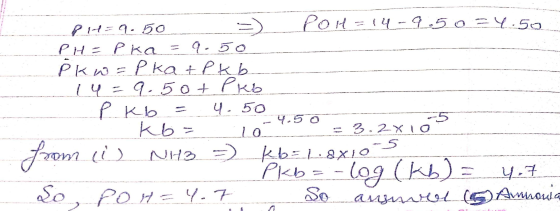
 Conjugate Name Formula Kb Question3 Acid NH4 CH3NH,+ 4.38 x 10⁴ Question 4 Ammonia NH3 1.8 x 10⁻⁵ Methylamine CHNH2 Question 5 1 pt C2HsNH2 C2H, NH 5.6 x 10⁴ hylamine Aniline Pyridine Question6 CoH, NH2C6H,NH3+ 3.8 x 10¹⁰ Question 7 CsHsNH+ 1.7 x 10⁹ Question 8 1 pt Which base would be the best choice for preparing a pH- 9.50 Question 9 buffer? O aniline O ammonia Oethylamine Question 10 Question 11 1 pt pyridine Omethylamine
The table shows four bases and their base dissociation constants. Kh Base ammonia ethylamine methylamine pyridine...
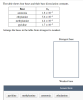 The table shows four bases and their base dissociation constants. Kh Base ammonia ethylamine methylamine pyridine 1.8 x 10⁻⁵ 5.6 x 10⁻⁴ 4.4 x 10⁻⁴ 1.7 x 10⁻⁹ Arrange the bases in the table from strongest to weakest. Strongest base Weakest base Answer Bank pyridine methylamine ammonia ethylamine
The following shows a list of weak acids and bases with their Ka and Kb values....
The following shows a list of weak acids and bases with their Ka and Kb values. Substances Ka Substances Kb Cyanic acid (HCN) 4.9 x 10⁻¹⁰ Ammonia (NH3) 1.8 x 10⁻⁵ Nitrous acid (HNO2) 4.5 x 10⁻⁴ Aniline (C6H5NH2) 4.3 x 10⁻¹⁰ Hydrofluoric acid (HF) 6.8 x 10⁻⁴ Pyridine (C5H5N) 1.7 x 10⁻⁹ Acetic acid (CH3COOH) 1.8 x 10⁻⁵ Methylamine (CH3NH2) 4.4 x 10⁻⁴ If you want to make a pH 8.0 buffer solution, which of the following acids or...
How many grams of solid ammonium chloride should be added to 1.50 L of a 0.202...
 How many grams of solid ammonium chloride should be added to 1.50 L of a 0.202 M ammonia solution to prepare a buffer with a pH of 9.880 ? grams ammonium chloride Consider the titration of 100.0 mL of 0.200 Macetic acid ( K = 1.8 x 10-5) by 0.100 M KOH. Calculate the pH of the resulting solution after the following volumes of KOH have been added. a. 0.0 mL pH = b. 50.0 mL pH = c. 100.0...
Preparing Buffer Solutions: Calculating the Volume of Weak Base Needed Use the table of K values ...
 Preparing Buffer Solutions: Calculating the Volume of Weak Base Needed Use the table of K values given with this problem to choose the best weak base to start from for making a buffer that holds the pH of the solution at 5.00. Make your selection so that you maximize the capacity of the buffer. Assume that you want to make 700 mL of a buffer and you have already added enough of the conjugate acid salt to make the final...
Consider the following data on some weak acids and weak bases: acid Ka name formula nitrous...
 Consider the following data on some weak acids and weak
bases:
acid
Ka
name
formula
nitrous acid
HNO2
×4.510−4
acetic acid
HCH3CO2
×1.810−5
base
Kb
name
formula
ammonia
NH3
×1.810−5
ethylamine
C2H5NH2
×6.410−4
Use this data to rank the following solutions in order of
increasing pH. In other words, select a '
1
' next to the solution that will have the lowest pH, a '
2
' next to the solution that will have the next lowest pH, and...
Consider the following data on some weak acids and weak
bases:
acid
Ka
name
formula
nitrous acid
HNO2
×4.510−4
acetic acid
HCH3CO2
×1.810−5
base
Kb
name
formula
ammonia
NH3
×1.810−5
ethylamine
C2H5NH2
×6.410−4
Use this data to rank the following solutions in order of
increasing pH. In other words, select a '
1
' next to the solution that will have the lowest pH, a '
2
' next to the solution that will have the next lowest pH, and...
Preparing Buffer Solutions: Calculating the Volume of Weak Base Needed Use the table of K values...
 Preparing Buffer Solutions: Calculating the Volume of Weak Base Needed Use the table of K values given with this problem to choose the best weak base to start from for making a buffer that holds the pH of the solution at 9.70. Make your selection so that you maximize the capacity of the buffer. Assume that you want to make 100 mL of a buffer and you have already added enough of the conjugate acid salt to make the final...
Salt Hydrolysis: Hydrolysis at the Endpoint of a Titration Consider the following equation: NH3 (aq) +...
Salt Hydrolysis: Hydrolysis at the Endpoint of a Titration Consider the following equation: NH3 (aq) + HBr (aq) → NH4Br (aq) + H2O (l) Here the neutralization reaction is creating ammonium bromide. If you add enough strong acid to react with all of the weak base, all that will remain will be ammonium bromide and water. The conjugate acid from this salt will hydrolyze in solution to determine the pH at this point. Weak Acid Ka Weak Base Kb CH3COOH...
Consider the following data on some weak acids and weak bases: acid name Ka formula base...
 Consider the following data on some weak acids and weak bases: acid name Ka formula base Ko name formula ethylamine C2H5NH2 6.4 x 10⁻⁴ hydrofluoric acid HF 6.8 x 10⁻⁴ acetic acid HCH3CO2 1.8 x 10⁻⁵ methylamine CH3NH2 4.4 x 10⁻⁴ Use this data to rank the following solutions in order of increasing pH. In other words, select a 'l' next to the solution that will have the lowest pH, a '2' next to the solution that will have the...
Calculate the equilibrium concentrations of all chemical species present in a 0.10 M H2CO3(aq) solution. What...
 Calculate the equilibrium concentrations of all chemical species
present in a 0.10 M H2CO3(aq)
solution. What is the percent ionization of the acid and resulting
pH?
[H2CO3] =
[HCO3-] =
[CO32-] =
[H3O+] =
% ionization =
pH =
Acid Acetic Ammonium Formula CH:COOH NH4+ H2BO: Boric Carbonic H2CO3 HC1O2 HCOOH Chlorous Formic Hydrocyanic Perchloric 1.8 x 10⁵ 5.6 x 10⁻¹⁰ 5.4 x 10⁻¹⁰ 4.5 x 10⁻⁷ 4.7 x 10⁻¹¹ 1.1 x 10⁻² 1.8 x 10⁻⁴ 5.2 x 10⁻¹⁰ Very...
Calculate the equilibrium concentrations of all chemical species
present in a 0.10 M H2CO3(aq)
solution. What is the percent ionization of the acid and resulting
pH?
[H2CO3] =
[HCO3-] =
[CO32-] =
[H3O+] =
% ionization =
pH =
Acid Acetic Ammonium Formula CH:COOH NH4+ H2BO: Boric Carbonic H2CO3 HC1O2 HCOOH Chlorous Formic Hydrocyanic Perchloric 1.8 x 10⁵ 5.6 x 10⁻¹⁰ 5.4 x 10⁻¹⁰ 4.5 x 10⁻⁷ 4.7 x 10⁻¹¹ 1.1 x 10⁻² 1.8 x 10⁻⁴ 5.2 x 10⁻¹⁰ Very...
 Conjugate Name Formula Kb Question3 Acid NH4 CH3NH,+ 4.38 x 10⁴ Question 4 Ammonia NH3 1.8 x 10⁻⁵ Methylamine CHNH2 Question 5 1 pt C2HsNH2 C2H, NH 5.6 x 10⁴ hylamine Aniline Pyridine Question6 CoH, NH2C6H,NH3+ 3.8 x 10¹⁰ Question 7 CsHsNH+ 1.7 x 10⁹ Question 8 1 pt Which base would be the best choice for preparing a pH- 9.50 Question 9 buffer? O aniline O ammonia Oethylamine Question 10 Question 11 1 pt pyridine Omethylamine
 The table shows four bases and their base dissociation constants. Kh Base ammonia ethylamine methylamine pyridine 1.8 x 10⁻⁵ 5.6 x 10⁻⁴ 4.4 x 10⁻⁴ 1.7 x 10⁻⁹ Arrange the bases in the table from strongest to weakest. Strongest base Weakest base Answer Bank pyridine methylamine ammonia ethylamine
 How many grams of solid ammonium chloride should be added to 1.50 L of a 0.202 M ammonia solution to prepare a buffer with a pH of 9.880 ? grams ammonium chloride Consider the titration of 100.0 mL of 0.200 Macetic acid ( K = 1.8 x 10-5) by 0.100 M KOH. Calculate the pH of the resulting solution after the following volumes of KOH have been added. a. 0.0 mL pH = b. 50.0 mL pH = c. 100.0...
 Preparing Buffer Solutions: Calculating the Volume of Weak Base Needed Use the table of K values given with this problem to choose the best weak base to start from for making a buffer that holds the pH of the solution at 5.00. Make your selection so that you maximize the capacity of the buffer. Assume that you want to make 700 mL of a buffer and you have already added enough of the conjugate acid salt to make the final...
 Consider the following data on some weak acids and weak
bases:
acid
Ka
name
formula
nitrous acid
HNO2
×4.510−4
acetic acid
HCH3CO2
×1.810−5
base
Kb
name
formula
ammonia
NH3
×1.810−5
ethylamine
C2H5NH2
×6.410−4
Use this data to rank the following solutions in order of
increasing pH. In other words, select a '
1
' next to the solution that will have the lowest pH, a '
2
' next to the solution that will have the next lowest pH, and...
Consider the following data on some weak acids and weak
bases:
acid
Ka
name
formula
nitrous acid
HNO2
×4.510−4
acetic acid
HCH3CO2
×1.810−5
base
Kb
name
formula
ammonia
NH3
×1.810−5
ethylamine
C2H5NH2
×6.410−4
Use this data to rank the following solutions in order of
increasing pH. In other words, select a '
1
' next to the solution that will have the lowest pH, a '
2
' next to the solution that will have the next lowest pH, and...
 Preparing Buffer Solutions: Calculating the Volume of Weak Base Needed Use the table of K values given with this problem to choose the best weak base to start from for making a buffer that holds the pH of the solution at 9.70. Make your selection so that you maximize the capacity of the buffer. Assume that you want to make 100 mL of a buffer and you have already added enough of the conjugate acid salt to make the final...
 Consider the following data on some weak acids and weak bases: acid name Ka formula base Ko name formula ethylamine C2H5NH2 6.4 x 10⁻⁴ hydrofluoric acid HF 6.8 x 10⁻⁴ acetic acid HCH3CO2 1.8 x 10⁻⁵ methylamine CH3NH2 4.4 x 10⁻⁴ Use this data to rank the following solutions in order of increasing pH. In other words, select a 'l' next to the solution that will have the lowest pH, a '2' next to the solution that will have the...
 Calculate the equilibrium concentrations of all chemical species
present in a 0.10 M H2CO3(aq)
solution. What is the percent ionization of the acid and resulting
pH?
[H2CO3] =
[HCO3-] =
[CO32-] =
[H3O+] =
% ionization =
pH =
Acid Acetic Ammonium Formula CH:COOH NH4+ H2BO: Boric Carbonic H2CO3 HC1O2 HCOOH Chlorous Formic Hydrocyanic Perchloric 1.8 x 10⁵ 5.6 x 10⁻¹⁰ 5.4 x 10⁻¹⁰ 4.5 x 10⁻⁷ 4.7 x 10⁻¹¹ 1.1 x 10⁻² 1.8 x 10⁻⁴ 5.2 x 10⁻¹⁰ Very...
Calculate the equilibrium concentrations of all chemical species
present in a 0.10 M H2CO3(aq)
solution. What is the percent ionization of the acid and resulting
pH?
[H2CO3] =
[HCO3-] =
[CO32-] =
[H3O+] =
% ionization =
pH =
Acid Acetic Ammonium Formula CH:COOH NH4+ H2BO: Boric Carbonic H2CO3 HC1O2 HCOOH Chlorous Formic Hydrocyanic Perchloric 1.8 x 10⁵ 5.6 x 10⁻¹⁰ 5.4 x 10⁻¹⁰ 4.5 x 10⁻⁷ 4.7 x 10⁻¹¹ 1.1 x 10⁻² 1.8 x 10⁻⁴ 5.2 x 10⁻¹⁰ Very...
Most questions answered within 3 hours.
-
Where is the error in this code sequence?
String s1 = "Hello";
String s2 = "ello";...
asked 10 months ago -
Financial data for Joel de Paris, Inc., for last year
follow:
Joel de Paris, Inc.
Balance...
asked 10 months ago -
Consider this reaction:
Al2(SO4)3 (aq)+ BaCl3
(aq) Al2Cl6 (aq)- +
3BaSO4(s) . What is the...
asked 10 months ago -
Suppose that Savneet is considering increasing her
recent random sample from 20 car rentals to 40...
asked 10 months ago -
Trucks arrive at an unloading terminal at an average rate of 120
per hour.
Trucks arrive...
asked 10 months ago -
Why are methanol and ethanol completely soluble in water while
octanol is not very little soluble....
asked 10 months ago -
A facilities manager at a university reads in a research report
that the mean amount of...
asked 10 months ago -
When the CuSO4 is rehydrated by adding water to the anhydrous
compound, is this an endothermic...
asked 10 months ago -
A ray of sunlight is passing from diamond into crown glass; the
angle of incidence is...
asked 10 months ago -
A block of mass 0.249 kg is placed on top of a light, vertical
spring of...
asked 10 months ago -
how do the kidneys compensate in the presences of acidosis
a) trigger hyperventilate
b) reserve acid...
asked 10 months ago -
Question 501 pts
The rental rate of capital to the firm increases. Which of the
following...
asked 10 months ago