

Homework Answers

Add Answer to:
The ph range and buffer questions on photo 1 and questions
6,7, and 8 on the...
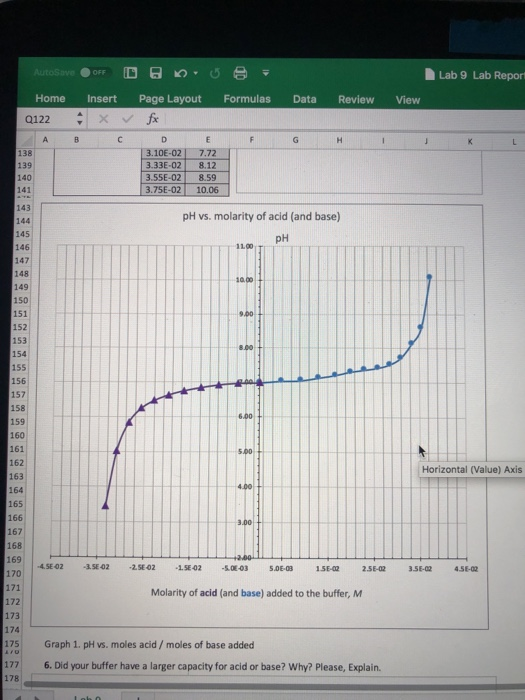
Did your buffer have a larger capacity for acid or base? Why? Buffer Capacity pH 6.66...
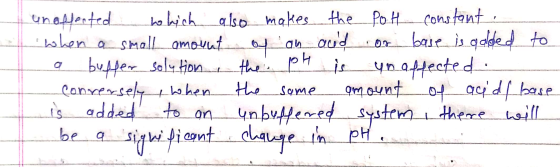
 Did your buffer have a larger capacity for acid or base?
Why?
Buffer Capacity pH 6.66 6.54 6.41 6.28 Moles -4.76E-03 -9.09E-03 -1.30E-02 -1.67E-02 -2.00E-02 -2.31E-02 -2.59E-02 -2.86E-02 4.76E-03 9.09E-03 1.30E-02 1.67E-02 2.00E-02 2.31E-02 2.59E-02 2.86E-02 3.10E-02 6.11 5.89 5.56 4.62 6.87 6.96 7.05 7.16 7.27 7.44 7.66 8.04 9.02 -4.00E-02 -3.00E-02 -2.00E-02 2.00E-02 3.00E-02 4.00E-02 -1.00E-02 0.00E+00 1.00E-02 Moles Acid/Moles Base
Did your buffer have a larger capacity for acid or base?
Why?
Buffer Capacity pH 6.66 6.54 6.41 6.28 Moles -4.76E-03 -9.09E-03 -1.30E-02 -1.67E-02 -2.00E-02 -2.31E-02 -2.59E-02 -2.86E-02 4.76E-03 9.09E-03 1.30E-02 1.67E-02 2.00E-02 2.31E-02 2.59E-02 2.86E-02 3.10E-02 6.11 5.89 5.56 4.62 6.87 6.96 7.05 7.16 7.27 7.44 7.66 8.04 9.02 -4.00E-02 -3.00E-02 -2.00E-02 2.00E-02 3.00E-02 4.00E-02 -1.00E-02 0.00E+00 1.00E-02 Moles Acid/Moles Base
"How does the buffer capacity of the two solutions change? That is over what range of...
"How does the buffer capacity of the two solutions change? That is over what range of strong acid/strong base volume is the pH of the buffer resistant to change? For your two data sets of buffer data, indicate the moles of acid or base that can be added in this range." This is pertaining to a chem lab doing a combined titration of a 5 and 10mL buffer with both HCl and NaOH. I know the buffer limits of the...
What is change in pH upon addition of 1.0x10⁻³mol strong acid to 1.00L of a buffer...
 What is change in pH upon
addition of 1.0x10⁻³mol strong acid to 1.00L of a buffer
mader of 26.8mL of 0.200M HCl added to 50.0mL of 0.200M Tris
(pKa=8.3), diluted to a total volume of 0.200mL?
Buffer Capacity • Ability of a buffer to resist change in pH upon addition of acid or base. Example 4.12 in Tinoco What is change in pH upon addition of 1.0x10- 3 mol strong acid to 1.00 L of a buffer made of 26.8...
What is change in pH upon
addition of 1.0x10⁻³mol strong acid to 1.00L of a buffer
mader of 26.8mL of 0.200M HCl added to 50.0mL of 0.200M Tris
(pKa=8.3), diluted to a total volume of 0.200mL?
Buffer Capacity • Ability of a buffer to resist change in pH upon addition of acid or base. Example 4.12 in Tinoco What is change in pH upon addition of 1.0x10- 3 mol strong acid to 1.00 L of a buffer made of 26.8...
You are instructed to create 100 mL of a 0.05 M Acetate buffer with a pH...
 You are instructed to create 100 mL of a 0.05 M Acetate buffer with a pH of 4.2. You have Glacial Acetic acid (17.4M) and the sodium Acetate NaC2H302, available (Ka=1.8e-5). (Enter all numerical answers to three significant figures.) Copy the results into your lab notebook for use in class. HC2H302(s) + H20(I) = H30+(aq) + C2H302 (aq) What is the molarity needed for the acid component of the buffer? What is the molarity needed for the base component of...
A buffer capacity is a measure of a buffer solution's resistance to changes in pH as...
A buffer capacity is a measure of a buffer solution's resistance to changes in pH as strong acid or base is added. Suppose that you have 145ml of a buffer that is 0.220M in both benzoic acid (C6H5COOH) and it's conjugate base (C6H5COO-). Calculate the maximum volume of 0.220M HCL that can be added to the buffer before it's buffering capacity is lost. _________mL There was no other information given for this question.
Buffer capacity is a measure of a buffer solution's resistance to changes in pH as strong...
 Buffer capacity is a measure of a buffer solution's resistance to changes in pH as strong acid or base is added. Suppose that you have 145 mL of a buffer that is 0.100 M in both propanoic acid (C2H5COOH) and its conjugate base (C2H5COo ). Calculate the maximum volume of 0.420 M HCl that can be added to the buffer before its buffering capacity is lost. ml
Buffer capacity is a measure of a buffer solution's resistance to changes in pH as strong...
Buffer capacity is a measure of a buffer solution's resistance to changes in pH as strong acid or base is added. Suppose that you have 175 mL of a buffer that is 0.440 M in both benzoic acid (C6H5COOH) and its conjugate base (C6H5COO−) . Calculate the maximum volume of 0.280 M HCl that can be added to the buffer before its buffering capacity is lost.
Buffer capacity is a measure of a buffer solution's resistance to changes in pH as strong...
Buffer capacity is a measure of a buffer solution's resistance to changes in pH as strong acid or base is added. Suppose that you have 145 mL of a buffer that is 0.500 M in both propanoic acid (C2H5COOH) and its conjugate base (C2H5COO−) . Calculate the maximum volume of 0.140 M HCl that can be added to the buffer before its buffering capacity is lost.
Buffer capacity is a measure of a buffer solution\'s resistance to changes in pH as strong...
Buffer capacity is a measure of a buffer solution\'s resistance to changes in pH as strong acid or base is added. Suppose that you have 175 mL of a buffer that is 0.280 M in both propanoic acid (C2H5COOH) and its conjugate base (C2H5COO–). Calculate the maximum volume of 0.200 M HCl that can be added to the buffer before its buffering capacity is lost.
Buffer capacity is a measure of a buffer solution's resistance to changes in pH as strong...
Buffer capacity is a measure of a buffer solution's resistance to changes in pH as strong acid or base is added. Suppose that you have 145 mL of a buffer that is 0.140 M in both acetic acid ( CH 3 COOH ) and its conjugate base ( CH 3 COO − ) . Calculate the maximum volume of 0.260 M HCl that can be added to the buffer before its buffering capacity is lost.
 Did your buffer have a larger capacity for acid or base?
Why?
Buffer Capacity pH 6.66 6.54 6.41 6.28 Moles -4.76E-03 -9.09E-03 -1.30E-02 -1.67E-02 -2.00E-02 -2.31E-02 -2.59E-02 -2.86E-02 4.76E-03 9.09E-03 1.30E-02 1.67E-02 2.00E-02 2.31E-02 2.59E-02 2.86E-02 3.10E-02 6.11 5.89 5.56 4.62 6.87 6.96 7.05 7.16 7.27 7.44 7.66 8.04 9.02 -4.00E-02 -3.00E-02 -2.00E-02 2.00E-02 3.00E-02 4.00E-02 -1.00E-02 0.00E+00 1.00E-02 Moles Acid/Moles Base
Did your buffer have a larger capacity for acid or base?
Why?
Buffer Capacity pH 6.66 6.54 6.41 6.28 Moles -4.76E-03 -9.09E-03 -1.30E-02 -1.67E-02 -2.00E-02 -2.31E-02 -2.59E-02 -2.86E-02 4.76E-03 9.09E-03 1.30E-02 1.67E-02 2.00E-02 2.31E-02 2.59E-02 2.86E-02 3.10E-02 6.11 5.89 5.56 4.62 6.87 6.96 7.05 7.16 7.27 7.44 7.66 8.04 9.02 -4.00E-02 -3.00E-02 -2.00E-02 2.00E-02 3.00E-02 4.00E-02 -1.00E-02 0.00E+00 1.00E-02 Moles Acid/Moles Base
 What is change in pH upon
addition of 1.0x10⁻³mol strong acid to 1.00L of a buffer
mader of 26.8mL of 0.200M HCl added to 50.0mL of 0.200M Tris
(pKa=8.3), diluted to a total volume of 0.200mL?
Buffer Capacity • Ability of a buffer to resist change in pH upon addition of acid or base. Example 4.12 in Tinoco What is change in pH upon addition of 1.0x10- 3 mol strong acid to 1.00 L of a buffer made of 26.8...
What is change in pH upon
addition of 1.0x10⁻³mol strong acid to 1.00L of a buffer
mader of 26.8mL of 0.200M HCl added to 50.0mL of 0.200M Tris
(pKa=8.3), diluted to a total volume of 0.200mL?
Buffer Capacity • Ability of a buffer to resist change in pH upon addition of acid or base. Example 4.12 in Tinoco What is change in pH upon addition of 1.0x10- 3 mol strong acid to 1.00 L of a buffer made of 26.8...
 You are instructed to create 100 mL of a 0.05 M Acetate buffer with a pH of 4.2. You have Glacial Acetic acid (17.4M) and the sodium Acetate NaC2H302, available (Ka=1.8e-5). (Enter all numerical answers to three significant figures.) Copy the results into your lab notebook for use in class. HC2H302(s) + H20(I) = H30+(aq) + C2H302 (aq) What is the molarity needed for the acid component of the buffer? What is the molarity needed for the base component of...
 Buffer capacity is a measure of a buffer solution's resistance to changes in pH as strong acid or base is added. Suppose that you have 145 mL of a buffer that is 0.100 M in both propanoic acid (C2H5COOH) and its conjugate base (C2H5COo ). Calculate the maximum volume of 0.420 M HCl that can be added to the buffer before its buffering capacity is lost. ml
Most questions answered within 3 hours.
-
Where is the error in this code sequence?
String s1 = "Hello";
String s2 = "ello";...
asked 10 months ago -
Financial data for Joel de Paris, Inc., for last year
follow:
Joel de Paris, Inc.
Balance...
asked 10 months ago -
Consider this reaction:
Al2(SO4)3 (aq)+ BaCl3
(aq) Al2Cl6 (aq)- +
3BaSO4(s) . What is the...
asked 10 months ago -
Suppose that Savneet is considering increasing her
recent random sample from 20 car rentals to 40...
asked 10 months ago -
Trucks arrive at an unloading terminal at an average rate of 120
per hour.
Trucks arrive...
asked 10 months ago -
Why are methanol and ethanol completely soluble in water while
octanol is not very little soluble....
asked 10 months ago -
A facilities manager at a university reads in a research report
that the mean amount of...
asked 10 months ago -
When the CuSO4 is rehydrated by adding water to the anhydrous
compound, is this an endothermic...
asked 10 months ago -
A ray of sunlight is passing from diamond into crown glass; the
angle of incidence is...
asked 10 months ago -
A block of mass 0.249 kg is placed on top of a light, vertical
spring of...
asked 10 months ago -
how do the kidneys compensate in the presences of acidosis
a) trigger hyperventilate
b) reserve acid...
asked 10 months ago -
Question 501 pts
The rental rate of capital to the firm increases. Which of the
following...
asked 10 months ago