
Homework Answers
 1) OH is protected by TsCl and
then it becomes a good leaving group. Sn2 attack by Et group gives
the product.
1) OH is protected by TsCl and
then it becomes a good leaving group. Sn2 attack by Et group gives
the product.
2) Acetylenic H are acidic in nature and its its a can be used as nucleophile. Thus nucleophilic attack of acetylenic anion gives alkyne product which on oxymercuration-demurcuration gives the ketone product.
3) ozonolysis followed by aldol reaction between two carbonyls. The protection of aldehyde to oxidize the OH and then ylide reaction to give alkene. Then aldehyde was deprotected.
Add Answer to:
Synthesize the following compounds from the given starting material. You may add on any alkyl/alkyl halide...
Synthesize the following compounds from the given starting material. You can add on any alkyl/ alkyl...
 Synthesize the following compounds from the given starting
material. You can add on any alkyl/ alkyl halide under 6 carbons or
any necessary inorganic reagent needed (this includes triphenyl
phosphine (Ph3P). Please draw all intermediates and
reagents necessary to get to the product.
OH سالن سل = ها را
Synthesize the following compounds from the given starting
material. You can add on any alkyl/ alkyl halide under 6 carbons or
any necessary inorganic reagent needed (this includes triphenyl
phosphine (Ph3P). Please draw all intermediates and
reagents necessary to get to the product.
OH سالن سل = ها را
Starting with Benzene and any alkyl halide with four or fewer carbons and any needed inorganic...
Starting with Benzene and any alkyl halide with four or fewer carbons and any needed inorganic reagents, show how you would synthesize the following compounds: a)m-bromoiodobenze b) m-chloroethylbenzene c)o-nitroalinine d) m-hydoxybenzoic acid e) p-methylbenzonitrile
Please read instructions provided in the photo..explain your results in detail please. basically ...
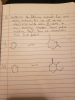 please read instructions provided in the
photo..explain your results in detail please.
basically synthesize compounds from given starting
material. alkyl and alkyl halides under 8 carbons can be added on
or any necessary inorganic reagent such as Ph3P. please draw all
intermediates that reach each product.
ISynthese the eecen Paus reens e Sts matrial You cun add en om alkyl/ alkyl halide mde 8 caden ny neuessny M ndudin that rah proud ainieru vau all temto a)
ISynthese the eecen...
please read instructions provided in the
photo..explain your results in detail please.
basically synthesize compounds from given starting
material. alkyl and alkyl halides under 8 carbons can be added on
or any necessary inorganic reagent such as Ph3P. please draw all
intermediates that reach each product.
ISynthese the eecen Paus reens e Sts matrial You cun add en om alkyl/ alkyl halide mde 8 caden ny neuessny M ndudin that rah proud ainieru vau all temto a)
ISynthese the eecen...
Design syntheses to produce the following compounds starting withany alkyl halide with 3 or fewer carbons...
 Design syntheses to produce the following compounds starting
withany alkyl halide with 3 or fewer carbons and butadiene. You may
useany any inorganic reagents necessary. Note that once a compound
hasbeen synthesized in one process it can be used in a different
process ifyou reference where it was first made.
Design syntheses to produce the following compounds starting
withany alkyl halide with 3 or fewer carbons and butadiene. You may
useany any inorganic reagents necessary. Note that once a compound
hasbeen synthesized in one process it can be used in a different
process ifyou reference where it was first made.
How would you carry out the synthesis below? Additional carbons may come from any alkyl halide...
 How would you carry out the synthesis below? Additional
carbons may come from any alkyl halide with 3 C's or less. Show the
reagents needed for each step of your transformation, but do NOT
draw the mechanisms for each step.
SHORT ANSWER #30: How would you carry out the synthesis below. Additional carbons may come from any alkyl halide with 3 C's or less. Show the reagents needed for each step of your transformation, but do NOT draw the mechanisms...
How would you carry out the synthesis below? Additional
carbons may come from any alkyl halide with 3 C's or less. Show the
reagents needed for each step of your transformation, but do NOT
draw the mechanisms for each step.
SHORT ANSWER #30: How would you carry out the synthesis below. Additional carbons may come from any alkyl halide with 3 C's or less. Show the reagents needed for each step of your transformation, but do NOT draw the mechanisms...
How would you carry out the synthesis below? Additional carbons may come from any alkyl halide...
 How would you carry out the synthesis below? Additional carbons may come from any alkyl halide with 30's or less, Show the reagents needed for each step of your transformation, but do not draw mechanisms for each step. the -->
Synthesis of Dihydrocarvone, using any starting material with six carbons or less, plus any other organic...
Synthesis of Dihydrocarvone, using any starting material with six carbons or less, plus any other organic or inorganic reagents necessary. Show intermediates. Determine the IUPAC name.
b) Propose a reasonable synthetic route to synthesize the following products from the given starting material....
 b) Propose a reasonable synthetic route to synthesize the following products from the given starting material. Draw all isolated intermediates and include all reagents used in each step. 1. CI OH مت 2. 3. Br OH -OH
02. Synthesize the following product from the given starting compounds. This will require more than one...
 02. Synthesize the following product from the given starting compounds. This will require more than one step. You may use any organic or inorganic reagent to carry out this synthesis. (8 pts each) (you can also use any one C reagent)
51. Make the following compound from the starting reagent. Show all the steps, reagents involved and...
 51. Make the following compound from the starting reagent. Show all the steps, reagents involved and the intermediate products. a. 7 بل mynd OH b. Synthesize the following molecule from benzene via a diazonium salt. Show all the reagents and the intermediate products. COOH OH c. Synthesize the following amine from the given alkyl halide in good yield. Show all the intermediates and reagents. CHE
 Synthesize the following compounds from the given starting
material. You can add on any alkyl/ alkyl halide under 6 carbons or
any necessary inorganic reagent needed (this includes triphenyl
phosphine (Ph3P). Please draw all intermediates and
reagents necessary to get to the product.
OH سالن سل = ها را
Synthesize the following compounds from the given starting
material. You can add on any alkyl/ alkyl halide under 6 carbons or
any necessary inorganic reagent needed (this includes triphenyl
phosphine (Ph3P). Please draw all intermediates and
reagents necessary to get to the product.
OH سالن سل = ها را
 please read instructions provided in the
photo..explain your results in detail please.
basically synthesize compounds from given starting
material. alkyl and alkyl halides under 8 carbons can be added on
or any necessary inorganic reagent such as Ph3P. please draw all
intermediates that reach each product.
ISynthese the eecen Paus reens e Sts matrial You cun add en om alkyl/ alkyl halide mde 8 caden ny neuessny M ndudin that rah proud ainieru vau all temto a)
ISynthese the eecen...
please read instructions provided in the
photo..explain your results in detail please.
basically synthesize compounds from given starting
material. alkyl and alkyl halides under 8 carbons can be added on
or any necessary inorganic reagent such as Ph3P. please draw all
intermediates that reach each product.
ISynthese the eecen Paus reens e Sts matrial You cun add en om alkyl/ alkyl halide mde 8 caden ny neuessny M ndudin that rah proud ainieru vau all temto a)
ISynthese the eecen...
 Design syntheses to produce the following compounds starting
withany alkyl halide with 3 or fewer carbons and butadiene. You may
useany any inorganic reagents necessary. Note that once a compound
hasbeen synthesized in one process it can be used in a different
process ifyou reference where it was first made.
Design syntheses to produce the following compounds starting
withany alkyl halide with 3 or fewer carbons and butadiene. You may
useany any inorganic reagents necessary. Note that once a compound
hasbeen synthesized in one process it can be used in a different
process ifyou reference where it was first made.
 How would you carry out the synthesis below? Additional
carbons may come from any alkyl halide with 3 C's or less. Show the
reagents needed for each step of your transformation, but do NOT
draw the mechanisms for each step.
SHORT ANSWER #30: How would you carry out the synthesis below. Additional carbons may come from any alkyl halide with 3 C's or less. Show the reagents needed for each step of your transformation, but do NOT draw the mechanisms...
How would you carry out the synthesis below? Additional
carbons may come from any alkyl halide with 3 C's or less. Show the
reagents needed for each step of your transformation, but do NOT
draw the mechanisms for each step.
SHORT ANSWER #30: How would you carry out the synthesis below. Additional carbons may come from any alkyl halide with 3 C's or less. Show the reagents needed for each step of your transformation, but do NOT draw the mechanisms...
 How would you carry out the synthesis below? Additional carbons may come from any alkyl halide with 30's or less, Show the reagents needed for each step of your transformation, but do not draw mechanisms for each step. the -->
 b) Propose a reasonable synthetic route to synthesize the following products from the given starting material. Draw all isolated intermediates and include all reagents used in each step. 1. CI OH مت 2. 3. Br OH -OH
 02. Synthesize the following product from the given starting compounds. This will require more than one step. You may use any organic or inorganic reagent to carry out this synthesis. (8 pts each) (you can also use any one C reagent)
 51. Make the following compound from the starting reagent. Show all the steps, reagents involved and the intermediate products. a. 7 بل mynd OH b. Synthesize the following molecule from benzene via a diazonium salt. Show all the reagents and the intermediate products. COOH OH c. Synthesize the following amine from the given alkyl halide in good yield. Show all the intermediates and reagents. CHE
Most questions answered within 3 hours.
-
Where is the error in this code sequence?
String s1 = "Hello";
String s2 = "ello";...
asked 10 months ago -
Financial data for Joel de Paris, Inc., for last year
follow:
Joel de Paris, Inc.
Balance...
asked 10 months ago -
Consider this reaction:
Al2(SO4)3 (aq)+ BaCl3
(aq) Al2Cl6 (aq)- +
3BaSO4(s) . What is the...
asked 10 months ago -
Suppose that Savneet is considering increasing her
recent random sample from 20 car rentals to 40...
asked 10 months ago -
Trucks arrive at an unloading terminal at an average rate of 120
per hour.
Trucks arrive...
asked 10 months ago -
Why are methanol and ethanol completely soluble in water while
octanol is not very little soluble....
asked 10 months ago -
A facilities manager at a university reads in a research report
that the mean amount of...
asked 10 months ago -
When the CuSO4 is rehydrated by adding water to the anhydrous
compound, is this an endothermic...
asked 10 months ago -
A ray of sunlight is passing from diamond into crown glass; the
angle of incidence is...
asked 10 months ago -
A block of mass 0.249 kg is placed on top of a light, vertical
spring of...
asked 10 months ago -
how do the kidneys compensate in the presences of acidosis
a) trigger hyperventilate
b) reserve acid...
asked 10 months ago -
Question 501 pts
The rental rate of capital to the firm increases. Which of the
following...
asked 10 months ago