
Homework Answers
 the
complete explanation is given in above fig.
the
complete explanation is given in above fig.
Add Answer to:
Select the elimination product(s) formed by treating the indicated alkyl halide with a base. Base il...
Draw the possible elimination products formed when the alkyl halide is treated with K-OC(CH). Elimination product...
 Draw the possible elimination products formed when the alkyl halide is treated with K-OC(CH). Elimination product formed when carbon 1 is the ß carbon: draw structure ... Elimination product formed when carbon 2 or 4 is the ß carbon: draw structure...
Draw the major E2 elimination product from the following alkyl halide.
 Draw the major E2 elimination product from the following alkyl halide.
Predict the E2 product formed from this alkyl halide CH;
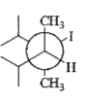 Predict the E2 product formed from this alkyl halide
CH;
Predict the E2 product formed from this alkyl halide
CH;
13. What is (are) the elimination product(s) of the following reaction Br メ A) Only I...
 13. What is (are) the elimination product(s) of the following reaction Br メ A) Only I B) Only II C) Only III D) II and III Which of the following represents the rate law for an E2 reaction? A) Rate k[alkyl halide] B) Rate k[alkyl halide][base] C) Rate k[alkyl halide]2 D) Rate k[base] 14. 15. Which of the following statements about the mechanism of an E2 reaction is true? A) B) C) D) All bonds are broken and formed in...
In the following elimination reaction of alkyl halide, it is likely to be [Endothermic or Exothermic]...
In the following elimination reaction of alkyl halide, it is likely to be [Endothermic or Exothermic] and have a [positive entropy change or negative entropy change] alkyl halide -> alkene + HX
i need help with these but alkene is the major product formed from each alkyl halide...
 i need help with these
but alkene is the major product formed from each alkyl halide in an El reaction? CH Br CHE Considering the requirement of an anti-periplanar geometry, what E2 product(s) is/are formed from each starting material? Note: Deuterium (Atomic Symbol: D) is one of the two stable isotopes of hydrogen."It nucleus contains one proton and one neutron, whereas the nucles of the more common isotope, protium, contains only one profon. The heavier version of hydrogen can undergo...
i need help with these
but alkene is the major product formed from each alkyl halide in an El reaction? CH Br CHE Considering the requirement of an anti-periplanar geometry, what E2 product(s) is/are formed from each starting material? Note: Deuterium (Atomic Symbol: D) is one of the two stable isotopes of hydrogen."It nucleus contains one proton and one neutron, whereas the nucles of the more common isotope, protium, contains only one profon. The heavier version of hydrogen can undergo...
Alkyl halides may undergo elimination reactions with BrØnstead-Lowry bases in which the halide and an adjacent...
Alkyl halides may undergo elimination reactions with BrØnstead-Lowry bases in which the halide and an adjacent proton are lost to form a new π bond. Because of the loss of a proton and a halide anion the reactions are termed ‘dehydrohalogenation’. The two most common associated mechanisms are designated as either unimolecular (E1) or bimolecular (E2) elimination reactions based on reaction rate studies. E1 reactions proceed via a two-step mechanism that involves the cleavage of the leaving group (here the...
7, (10) Give the alkyl halide which would give only the alkene shown by way of an E2 elimination (one alkyl halide f...
 7, (10) Give the alkyl halide which would give only the alkene shown by way of an E2 elimination (one alkyl halide for each alkene):
Alkyl halides may undergo elimination reactions with BrØnstead-Lowry bases in which the halide and an adjacent...
Alkyl halides may undergo elimination reactions with BrØnstead-Lowry bases in which the halide and an adjacent proton are lost to form a new π bond. Because of the loss of a proton and a halide anion the reactions are termed ‘dehydrohalogenation’. The two most common associated mechanisms are designated as either unimolecular (E1) or bimolecular (E2) elimination reactions based on reaction rate studies. E1 reactions proceed via a two-step mechanism that involves the cleavage of the leaving group (here the...
was given the wrong solutions What alkene is the major product formed from each alkyl halide...
 was given the wrong solutions
What alkene is the major product formed from each alkyl halide in an El reaction? сну Considering the requirement of an anti-periplanar geometry, what E2 product(s) is/are formed from each starting material? Note: Deuterium (Atomie Symbol: D) is one of the two stable isotopes of hydrogen." It nucleus contains one profon and one neutron, whereas the nucleus of the more common isotope, protium, contains only one proton. The heavier version of hydrogen can undergo the...
was given the wrong solutions
What alkene is the major product formed from each alkyl halide in an El reaction? сну Considering the requirement of an anti-periplanar geometry, what E2 product(s) is/are formed from each starting material? Note: Deuterium (Atomie Symbol: D) is one of the two stable isotopes of hydrogen." It nucleus contains one profon and one neutron, whereas the nucleus of the more common isotope, protium, contains only one proton. The heavier version of hydrogen can undergo the...
 Draw the possible elimination products formed when the alkyl halide is treated with K-OC(CH). Elimination product formed when carbon 1 is the ß carbon: draw structure ... Elimination product formed when carbon 2 or 4 is the ß carbon: draw structure...
 Draw the major E2 elimination product from the following alkyl halide.
 Predict the E2 product formed from this alkyl halide
CH;
Predict the E2 product formed from this alkyl halide
CH;
 13. What is (are) the elimination product(s) of the following reaction Br メ A) Only I B) Only II C) Only III D) II and III Which of the following represents the rate law for an E2 reaction? A) Rate k[alkyl halide] B) Rate k[alkyl halide][base] C) Rate k[alkyl halide]2 D) Rate k[base] 14. 15. Which of the following statements about the mechanism of an E2 reaction is true? A) B) C) D) All bonds are broken and formed in...
 i need help with these
but alkene is the major product formed from each alkyl halide in an El reaction? CH Br CHE Considering the requirement of an anti-periplanar geometry, what E2 product(s) is/are formed from each starting material? Note: Deuterium (Atomic Symbol: D) is one of the two stable isotopes of hydrogen."It nucleus contains one proton and one neutron, whereas the nucles of the more common isotope, protium, contains only one profon. The heavier version of hydrogen can undergo...
i need help with these
but alkene is the major product formed from each alkyl halide in an El reaction? CH Br CHE Considering the requirement of an anti-periplanar geometry, what E2 product(s) is/are formed from each starting material? Note: Deuterium (Atomic Symbol: D) is one of the two stable isotopes of hydrogen."It nucleus contains one proton and one neutron, whereas the nucles of the more common isotope, protium, contains only one profon. The heavier version of hydrogen can undergo...
 7, (10) Give the alkyl halide which would give only the alkene shown by way of an E2 elimination (one alkyl halide for each alkene):
 was given the wrong solutions
What alkene is the major product formed from each alkyl halide in an El reaction? сну Considering the requirement of an anti-periplanar geometry, what E2 product(s) is/are formed from each starting material? Note: Deuterium (Atomie Symbol: D) is one of the two stable isotopes of hydrogen." It nucleus contains one profon and one neutron, whereas the nucleus of the more common isotope, protium, contains only one proton. The heavier version of hydrogen can undergo the...
was given the wrong solutions
What alkene is the major product formed from each alkyl halide in an El reaction? сну Considering the requirement of an anti-periplanar geometry, what E2 product(s) is/are formed from each starting material? Note: Deuterium (Atomie Symbol: D) is one of the two stable isotopes of hydrogen." It nucleus contains one profon and one neutron, whereas the nucleus of the more common isotope, protium, contains only one proton. The heavier version of hydrogen can undergo the...
Most questions answered within 3 hours.
-
Where is the error in this code sequence?
String s1 = "Hello";
String s2 = "ello";...
asked 10 months ago -
Financial data for Joel de Paris, Inc., for last year
follow:
Joel de Paris, Inc.
Balance...
asked 10 months ago -
Consider this reaction:
Al2(SO4)3 (aq)+ BaCl3
(aq) Al2Cl6 (aq)- +
3BaSO4(s) . What is the...
asked 10 months ago -
Suppose that Savneet is considering increasing her
recent random sample from 20 car rentals to 40...
asked 10 months ago -
Trucks arrive at an unloading terminal at an average rate of 120
per hour.
Trucks arrive...
asked 10 months ago -
Why are methanol and ethanol completely soluble in water while
octanol is not very little soluble....
asked 10 months ago -
A facilities manager at a university reads in a research report
that the mean amount of...
asked 10 months ago -
When the CuSO4 is rehydrated by adding water to the anhydrous
compound, is this an endothermic...
asked 10 months ago -
A ray of sunlight is passing from diamond into crown glass; the
angle of incidence is...
asked 10 months ago -
A block of mass 0.249 kg is placed on top of a light, vertical
spring of...
asked 10 months ago -
how do the kidneys compensate in the presences of acidosis
a) trigger hyperventilate
b) reserve acid...
asked 10 months ago -
Question 501 pts
The rental rate of capital to the firm increases. Which of the
following...
asked 10 months ago