
Homework Answers
Add Answer to:
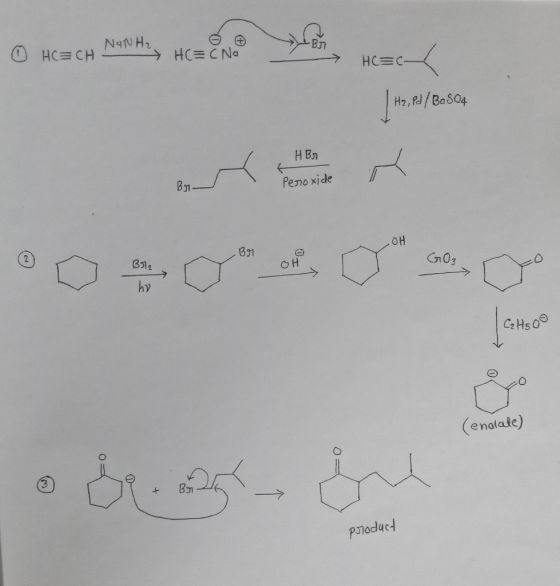
synthesis: how to get this molecule?
thesis+B 20 AM 1. Outline a synthetic strategy that could...
Propose an efficient and elegant synthesis of the molecule using only a benzene as your starting...
 Propose an efficient and elegant synthesis of the molecule
using only a benzene as your starting material. You may use any
alkyl halide or alcohol as your other sources of carbon (excluding
HCOCl), and any other reagent you deem necessary.
OH Cl
Propose an efficient and elegant synthesis of the molecule
using only a benzene as your starting material. You may use any
alkyl halide or alcohol as your other sources of carbon (excluding
HCOCl), and any other reagent you deem necessary.
OH Cl
(14) V. Starting from benzene and any other reagents you need, propose an efficient synthesis of th following compound. (10) VI. Devise a synthesis that will accomplish the following transformati...
 (14) V. Starting from benzene and any other reagents you need, propose an efficient synthesis of th following compound. (10) VI. Devise a synthesis that will accomplish the following transformation in good yield. Use the given compounds as the only organic source of carbon atoms. You may use any common organic solvents as well as any needed inorganic reagents
(14) V. Starting from benzene and any other reagents you need, propose an efficient synthesis of th following compound. (10) VI....
(14) V. Starting from benzene and any other reagents you need, propose an efficient synthesis of th following compound. (10) VI. Devise a synthesis that will accomplish the following transformation in good yield. Use the given compounds as the only organic source of carbon atoms. You may use any common organic solvents as well as any needed inorganic reagents
(14) V. Starting from benzene and any other reagents you need, propose an efficient synthesis of th following compound. (10) VI....
Propose a synthesis of compound B from (R)-2-chlorobutane. When choosing your synthetic steps, you can use...
 Propose a synthesis of compound B from (R)-2-chlorobutane. When choosing your synthetic steps, you can use any hydrocarbon with three or fewer carbon atoms, any solvents or inorganic reagents, and any organic reagents that do not contribute carbon atoms to the carbon skeleton in the product. Clearly show the required reagents and the product of each step. You do not need to show mechanistic (curved) arrows. (R)-2-chlorobutane B
A. Propose a synthesis of compound A starting from dimethyl malonate. When choosing your synthetic steps,...
 A. Propose a synthesis of compound A starting from dimethyl malonate. When choosing your synthetic steps, you can use any hydrocarbon with three or fewer carbon atoms, any solvents or inorganic reagents, and any organic reagents that do not contribute carbon atoms to the carbon skeleton in the product. Clearly show the required reagents and the product of each step. You do not need to show mechanistic (curved) arrows. [6 marks) سوني Dimethyl malonate А
14) Propose a multistep synthesis of the following compound. All carbon atoms in the product must...
 14) Propose a multistep synthesis of the following compound. All carbon atoms in the product must come cyclohexene and from alkanes, alkenes, alkynes, and alkyl halides that contain 3 or fewer carbon atoms. You can use other reagents as necessary. You do not have to draw any curved- arrow mechanisms. While you do not have the products of each synthetic step or explain your synthetic logic, you are strongly encouraged to in order to be eligible for more partial credit....
Part IV - Multistep Synthesis cont'd Propose a synthesis of compound B from (R)-2-chlorobutane. When choosing...
 Part IV - Multistep Synthesis cont'd Propose a synthesis of compound B from (R)-2-chlorobutane. When choosing your synthetic steps, you can use any hydrocarbon with three or fewer carbon atoms, any solvents or inorganic reagents, and any organic reagents that do not contribute carbon atoms to the carbon skeleton in the product. Clearly show the required reagents and the product of each step. You do not need to show mechanistic (curved) arrows. CI (R)-2-chlorobutane B
Part IV - Multistep Synthesis [14 marks] A. Propose a synthesis of compound A starting from...
 Part IV - Multistep Synthesis [14 marks] A. Propose a synthesis of compound A starting from dimethyl malonate. When choosing your synthetic steps, you can use any hydrocarbon with three or fewer carbon atoms, any solvents or inorganic reagents, and any organic reagents that do not contribute carbon atoms to the carbon skeleton in the product. Clearly show the required reagents and the product of each step. You do not need to show mechanistic (curved) arrows. [6 marks] Dimethyl malonate...
Chem 231, Assignment 5 page 6 of 5 Part IV - Multistep Synthesis [14 marks] A....
 Chem 231, Assignment 5 page 6 of 5 Part IV - Multistep Synthesis [14 marks] A. Propose a synthesis of compound A starting from dimethyl malonate. When choosing your synthetic steps, you can use any hydrocarbon with three or fewer carbon atoms, any solvents or inorganic reagents, and any organic reagents that do not contribute carbon atoms to the carbon skeleton in the product. Clearly show the required reagents and the product of each step. You do not need to...
4. Synthesis. You may use benzene (that is the starting material for a), any organic reagents that contribute four or f...
 4. Synthesis. You may use benzene (that is the starting material for a), any organic reagents that contribute four or fewer carbon atoms to the final product, and any inorganic reagents OH OH HN NH
4. Synthesis. You may use benzene (that is the starting material for a), any organic reagents that contribute four or fewer carbon atoms to the final product, and any inorganic reagents OH OH HN NH
4. Synthesis. You may use benzene (that is the starting material for a), any organic reagents that contribute four or fewer carbon atoms to the final product, and any inorganic reagents OH OH HN NH
Help with question in image. thankyou. Propose a synthesis of compound B from (R)-2-chlorobutane. When choosing...
 Help with question in image. thankyou.
Propose a synthesis of compound B from (R)-2-chlorobutane. When choosing your synthetic steps, you can use any hydrocarbon with three or fewer carbon atoms, any solvents or inorganic reagents, and any organic reagents that do not contribute carbon atoms to the carbon skeleton in the product. Clearly show the required reagents and the product of each step. You do not need to show mechanistic (curved) arrows. CI (R)-2-chlorobutane B
Help with question in image. thankyou.
Propose a synthesis of compound B from (R)-2-chlorobutane. When choosing your synthetic steps, you can use any hydrocarbon with three or fewer carbon atoms, any solvents or inorganic reagents, and any organic reagents that do not contribute carbon atoms to the carbon skeleton in the product. Clearly show the required reagents and the product of each step. You do not need to show mechanistic (curved) arrows. CI (R)-2-chlorobutane B
 Propose an efficient and elegant synthesis of the molecule
using only a benzene as your starting material. You may use any
alkyl halide or alcohol as your other sources of carbon (excluding
HCOCl), and any other reagent you deem necessary.
OH Cl
Propose an efficient and elegant synthesis of the molecule
using only a benzene as your starting material. You may use any
alkyl halide or alcohol as your other sources of carbon (excluding
HCOCl), and any other reagent you deem necessary.
OH Cl
 (14) V. Starting from benzene and any other reagents you need, propose an efficient synthesis of th following compound. (10) VI. Devise a synthesis that will accomplish the following transformation in good yield. Use the given compounds as the only organic source of carbon atoms. You may use any common organic solvents as well as any needed inorganic reagents
(14) V. Starting from benzene and any other reagents you need, propose an efficient synthesis of th following compound. (10) VI....
(14) V. Starting from benzene and any other reagents you need, propose an efficient synthesis of th following compound. (10) VI. Devise a synthesis that will accomplish the following transformation in good yield. Use the given compounds as the only organic source of carbon atoms. You may use any common organic solvents as well as any needed inorganic reagents
(14) V. Starting from benzene and any other reagents you need, propose an efficient synthesis of th following compound. (10) VI....
 Propose a synthesis of compound B from (R)-2-chlorobutane. When choosing your synthetic steps, you can use any hydrocarbon with three or fewer carbon atoms, any solvents or inorganic reagents, and any organic reagents that do not contribute carbon atoms to the carbon skeleton in the product. Clearly show the required reagents and the product of each step. You do not need to show mechanistic (curved) arrows. (R)-2-chlorobutane B
 A. Propose a synthesis of compound A starting from dimethyl malonate. When choosing your synthetic steps, you can use any hydrocarbon with three or fewer carbon atoms, any solvents or inorganic reagents, and any organic reagents that do not contribute carbon atoms to the carbon skeleton in the product. Clearly show the required reagents and the product of each step. You do not need to show mechanistic (curved) arrows. [6 marks) سوني Dimethyl malonate А
 14) Propose a multistep synthesis of the following compound. All carbon atoms in the product must come cyclohexene and from alkanes, alkenes, alkynes, and alkyl halides that contain 3 or fewer carbon atoms. You can use other reagents as necessary. You do not have to draw any curved- arrow mechanisms. While you do not have the products of each synthetic step or explain your synthetic logic, you are strongly encouraged to in order to be eligible for more partial credit....
 Part IV - Multistep Synthesis cont'd Propose a synthesis of compound B from (R)-2-chlorobutane. When choosing your synthetic steps, you can use any hydrocarbon with three or fewer carbon atoms, any solvents or inorganic reagents, and any organic reagents that do not contribute carbon atoms to the carbon skeleton in the product. Clearly show the required reagents and the product of each step. You do not need to show mechanistic (curved) arrows. CI (R)-2-chlorobutane B
 Part IV - Multistep Synthesis [14 marks] A. Propose a synthesis of compound A starting from dimethyl malonate. When choosing your synthetic steps, you can use any hydrocarbon with three or fewer carbon atoms, any solvents or inorganic reagents, and any organic reagents that do not contribute carbon atoms to the carbon skeleton in the product. Clearly show the required reagents and the product of each step. You do not need to show mechanistic (curved) arrows. [6 marks] Dimethyl malonate...
 Chem 231, Assignment 5 page 6 of 5 Part IV - Multistep Synthesis [14 marks] A. Propose a synthesis of compound A starting from dimethyl malonate. When choosing your synthetic steps, you can use any hydrocarbon with three or fewer carbon atoms, any solvents or inorganic reagents, and any organic reagents that do not contribute carbon atoms to the carbon skeleton in the product. Clearly show the required reagents and the product of each step. You do not need to...
 4. Synthesis. You may use benzene (that is the starting material for a), any organic reagents that contribute four or fewer carbon atoms to the final product, and any inorganic reagents OH OH HN NH
4. Synthesis. You may use benzene (that is the starting material for a), any organic reagents that contribute four or fewer carbon atoms to the final product, and any inorganic reagents OH OH HN NH
4. Synthesis. You may use benzene (that is the starting material for a), any organic reagents that contribute four or fewer carbon atoms to the final product, and any inorganic reagents OH OH HN NH
 Help with question in image. thankyou.
Propose a synthesis of compound B from (R)-2-chlorobutane. When choosing your synthetic steps, you can use any hydrocarbon with three or fewer carbon atoms, any solvents or inorganic reagents, and any organic reagents that do not contribute carbon atoms to the carbon skeleton in the product. Clearly show the required reagents and the product of each step. You do not need to show mechanistic (curved) arrows. CI (R)-2-chlorobutane B
Help with question in image. thankyou.
Propose a synthesis of compound B from (R)-2-chlorobutane. When choosing your synthetic steps, you can use any hydrocarbon with three or fewer carbon atoms, any solvents or inorganic reagents, and any organic reagents that do not contribute carbon atoms to the carbon skeleton in the product. Clearly show the required reagents and the product of each step. You do not need to show mechanistic (curved) arrows. CI (R)-2-chlorobutane B
Most questions answered within 3 hours.
-
Where is the error in this code sequence?
String s1 = "Hello";
String s2 = "ello";...
asked 11 months ago -
Financial data for Joel de Paris, Inc., for last year
follow:
Joel de Paris, Inc.
Balance...
asked 11 months ago -
Consider this reaction:
Al2(SO4)3 (aq)+ BaCl3
(aq) Al2Cl6 (aq)- +
3BaSO4(s) . What is the...
asked 11 months ago -
Suppose that Savneet is considering increasing her
recent random sample from 20 car rentals to 40...
asked 11 months ago -
Trucks arrive at an unloading terminal at an average rate of 120
per hour.
Trucks arrive...
asked 11 months ago -
Why are methanol and ethanol completely soluble in water while
octanol is not very little soluble....
asked 11 months ago -
A facilities manager at a university reads in a research report
that the mean amount of...
asked 11 months ago -
When the CuSO4 is rehydrated by adding water to the anhydrous
compound, is this an endothermic...
asked 11 months ago -
A ray of sunlight is passing from diamond into crown glass; the
angle of incidence is...
asked 11 months ago -
A block of mass 0.249 kg is placed on top of a light, vertical
spring of...
asked 11 months ago -
how do the kidneys compensate in the presences of acidosis
a) trigger hyperventilate
b) reserve acid...
asked 11 months ago -
Question 501 pts
The rental rate of capital to the firm increases. Which of the
following...
asked 11 months ago