
Homework Answers
Q3: 180 L
= 180
L × (1ml/1000L)
= 180/1000 ml
L
= 180
L × (1ml/1000L)
= 180/1000 ml
= 0.18 ml
One bold indicator on pipette is 0.1ml and one small indicator is 0.02ml . So we can measure the 0.18ml via 1ml pipette .

Q4:

Add Answer to:
3. The following is a 1 ml pipette. For one of the procedures you did in...
You are using a 10-ml blow-out pipette graduated in 1/10 ml. (Your pipette reads 0 at...
 You are using a 10-ml blow-out pipette graduated in 1/10 ml. (Your pipette reads 0 at the highest marking on the stem.) You have sucked up 8.6 ml of liquid and you cannot put any back into the bottle even though you need to measure out only 6.5 ml. At what mark on the pipette is the meniscus of your liquid now located? If you release liquid from your pipette, at t what line should you stop? Draw the pipette...
4. (a) A WileyPlus problem from the (now defunct) Ch. 21 assignment I used to give asked about the product formed from the aromatic nitrile below upon reaction with amide. Their product was actua...
 4. (a) A WileyPlus problem from the (now defunct) Ch. 21 assignment I used to give asked about the product formed from the aromatic nitrile below upon reaction with amide. Their product was actually quite different than mine... That said, both have plausible mechanisms to support their formation. Propose two different mechanisms to explain the formation of the two different products (don't bother drawing the mechanism of the acidic workup that's Ch. 16). (9 points) WP answer 2 equiv KNH2...
1. (a) A procedure call for 5 mmol of the ketone below. How many ml are...
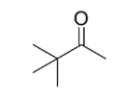 1. (a) A procedure call for 5 mmol of the ketone below. How many
ml are required (MW 100.16, CAS 75-97-8, bp = 106°C, density 0.801
g/mL)
(b) Show the product resulting from the reaction of benzaldehyde
with the above ketone.
(c) Show the mechanism of formation for (b), including any relevant
resonance structures.
1. (a) A procedure call for 5 mmol of the ketone below. How many
ml are required (MW 100.16, CAS 75-97-8, bp = 106°C, density 0.801
g/mL)
(b) Show the product resulting from the reaction of benzaldehyde
with the above ketone.
(c) Show the mechanism of formation for (b), including any relevant
resonance structures.
1 of 1 Part D-A typical enzyme experiment A common enzyme studied in many introductory biology...
 1 of 1 Part D-A typical enzyme experiment A common enzyme studied in many introductory biology labs is catalase, which is found in high concentration in most cells, promoting the decomposition of hydrogen peroxide (H2O2) Hydrogen peroxide is formed as a by-product of chemical reactions and would soon kill cells if not immediately removed or broken down into its products--water and oxygen-as shown by the following equation Catalase 2 H2O, → 2 H2O + 0, You may be familiar with...
numbers 1-3 Post-Laboratory Questions-EXP 3 Nitration of Aromatic Compounds Name: Due after completing the lab. 1....
 numbers 1-3
Post-Laboratory Questions-EXP 3 Nitration of Aromatic Compounds Name: Due after completing the lab. 1. Why is concentrated sulfuric acid emploved in thie on? What is the electrophile that is produced by the reaction of sulfuric acid and nitric acid? 2. Why is it important to maintain the reaction temperature low and the addition of nitric acid-sulfuric acid mixture carried out slowly? 3. Explain why concentrated H2SO4, not concentrated HC1, was used in this experiment? 4. Which ring of...
numbers 1-3
Post-Laboratory Questions-EXP 3 Nitration of Aromatic Compounds Name: Due after completing the lab. 1. Why is concentrated sulfuric acid emploved in thie on? What is the electrophile that is produced by the reaction of sulfuric acid and nitric acid? 2. Why is it important to maintain the reaction temperature low and the addition of nitric acid-sulfuric acid mixture carried out slowly? 3. Explain why concentrated H2SO4, not concentrated HC1, was used in this experiment? 4. Which ring of...
Experimental Outline In its simplest form, the aldol condensation is a self-addition involving tw...
 Organic Chemistry 2
Experimental Outline In its simplest form, the aldol condensation is a self-addition involving two molecules of the same aldehyde or ketone, in the presence of a base, and results in the formation of a new carbon-carbon bond joining the carbonyl carbon of one molecule to the a-position of the second. In many cases - if the reaction conditions aren't sufficiently mild - the initially formed aldol product reacts further in an elimination reaction to give what is...
Organic Chemistry 2
Experimental Outline In its simplest form, the aldol condensation is a self-addition involving two molecules of the same aldehyde or ketone, in the presence of a base, and results in the formation of a new carbon-carbon bond joining the carbonyl carbon of one molecule to the a-position of the second. In many cases - if the reaction conditions aren't sufficiently mild - the initially formed aldol product reacts further in an elimination reaction to give what is...
Answer them accordingly thank you! Question 1 a) Give the mechanism for the reaction below: 3-ethyl-3-methyl-1-pentene...
 Answer them accordingly thank
you!
Question 1 a) Give the mechanism for the reaction below: 3-ethyl-3-methyl-1-pentene + HBF3-bromo-3-ethyl-2-methylpentane b) The questions are based on the reaction scheme as shown below: H202 BH3 NaOH, H20 i) Determine the structure of intermediate A and product B. ii) The formation of product B follow one rule in electrophilic addition. What is the name of the rule and explain that rule. i) Give one reagent that can be used to reduce the alkyne above...
Answer them accordingly thank
you!
Question 1 a) Give the mechanism for the reaction below: 3-ethyl-3-methyl-1-pentene + HBF3-bromo-3-ethyl-2-methylpentane b) The questions are based on the reaction scheme as shown below: H202 BH3 NaOH, H20 i) Determine the structure of intermediate A and product B. ii) The formation of product B follow one rule in electrophilic addition. What is the name of the rule and explain that rule. i) Give one reagent that can be used to reduce the alkyne above...
3-5 pls Post-Laboratory Questions-EXP 3 Nitration of Aromatic Compounds Name: Due after completing the lab. 1....
 3-5 pls
Post-Laboratory Questions-EXP 3 Nitration of Aromatic Compounds Name: Due after completing the lab. 1. Why is concentrated sulfuric acid employed in this reaction? What is the electrophile that is produced by the reaction of sulfuric acid and nitric acid? 2. Why is it important to maintain the reaction temperature low and the addition of nitric acid-sulfuric acid mixture carried out slowly? 3. Explain why concentrated H2SO, not concentrated HCl, was used in this experiment? 4. Which ring of...
3-5 pls
Post-Laboratory Questions-EXP 3 Nitration of Aromatic Compounds Name: Due after completing the lab. 1. Why is concentrated sulfuric acid employed in this reaction? What is the electrophile that is produced by the reaction of sulfuric acid and nitric acid? 2. Why is it important to maintain the reaction temperature low and the addition of nitric acid-sulfuric acid mixture carried out slowly? 3. Explain why concentrated H2SO, not concentrated HCl, was used in this experiment? 4. Which ring of...
Experiment 1: Neutralization of Acids and Bases In this experiment, you will learn how to properly...
Experiment 1: Neutralization of Acids and Bases In this experiment, you will learn how to properly neutralize and dispose of acidic and base solutions. Remember, when a solution has a pH of 7, it is considered neutralized. Experiment 1: Neutralization of Acids and Bases In this experiment, you will learn how to properly neutralize and dispose of acidic and base solutions. Remember, when a solution has a pH of 7, it is considered neutralized. Materials 5 mL 4.5% Acetic Acid...
You are told synthesize cumene starting from benzene and any other reagents. You find 1- chloropropane...
 You are told synthesize cumene starting from benzene and any other reagents. You find 1- chloropropane in the lab and decide to attempt a Fridel Crafts alkylation. Upon completion of the experiment, a H-NMR reveals two products: a minor product with six signals and a major product with 5 signals. Provide the mechanism for the formation of both products. 2. Provide the reaction for chlorination of benzene using electrophilic aromatic substitution, it's complete mechanism including formation of "super" electrophile, and...
 You are using a 10-ml blow-out pipette graduated in 1/10 ml. (Your pipette reads 0 at the highest marking on the stem.) You have sucked up 8.6 ml of liquid and you cannot put any back into the bottle even though you need to measure out only 6.5 ml. At what mark on the pipette is the meniscus of your liquid now located? If you release liquid from your pipette, at t what line should you stop? Draw the pipette...
 4. (a) A WileyPlus problem from the (now defunct) Ch. 21 assignment I used to give asked about the product formed from the aromatic nitrile below upon reaction with amide. Their product was actually quite different than mine... That said, both have plausible mechanisms to support their formation. Propose two different mechanisms to explain the formation of the two different products (don't bother drawing the mechanism of the acidic workup that's Ch. 16). (9 points) WP answer 2 equiv KNH2...
 1. (a) A procedure call for 5 mmol of the ketone below. How many
ml are required (MW 100.16, CAS 75-97-8, bp = 106°C, density 0.801
g/mL)
(b) Show the product resulting from the reaction of benzaldehyde
with the above ketone.
(c) Show the mechanism of formation for (b), including any relevant
resonance structures.
1. (a) A procedure call for 5 mmol of the ketone below. How many
ml are required (MW 100.16, CAS 75-97-8, bp = 106°C, density 0.801
g/mL)
(b) Show the product resulting from the reaction of benzaldehyde
with the above ketone.
(c) Show the mechanism of formation for (b), including any relevant
resonance structures.
 1 of 1 Part D-A typical enzyme experiment A common enzyme studied in many introductory biology labs is catalase, which is found in high concentration in most cells, promoting the decomposition of hydrogen peroxide (H2O2) Hydrogen peroxide is formed as a by-product of chemical reactions and would soon kill cells if not immediately removed or broken down into its products--water and oxygen-as shown by the following equation Catalase 2 H2O, → 2 H2O + 0, You may be familiar with...
 numbers 1-3
Post-Laboratory Questions-EXP 3 Nitration of Aromatic Compounds Name: Due after completing the lab. 1. Why is concentrated sulfuric acid emploved in thie on? What is the electrophile that is produced by the reaction of sulfuric acid and nitric acid? 2. Why is it important to maintain the reaction temperature low and the addition of nitric acid-sulfuric acid mixture carried out slowly? 3. Explain why concentrated H2SO4, not concentrated HC1, was used in this experiment? 4. Which ring of...
numbers 1-3
Post-Laboratory Questions-EXP 3 Nitration of Aromatic Compounds Name: Due after completing the lab. 1. Why is concentrated sulfuric acid emploved in thie on? What is the electrophile that is produced by the reaction of sulfuric acid and nitric acid? 2. Why is it important to maintain the reaction temperature low and the addition of nitric acid-sulfuric acid mixture carried out slowly? 3. Explain why concentrated H2SO4, not concentrated HC1, was used in this experiment? 4. Which ring of...
 Organic Chemistry 2
Experimental Outline In its simplest form, the aldol condensation is a self-addition involving two molecules of the same aldehyde or ketone, in the presence of a base, and results in the formation of a new carbon-carbon bond joining the carbonyl carbon of one molecule to the a-position of the second. In many cases - if the reaction conditions aren't sufficiently mild - the initially formed aldol product reacts further in an elimination reaction to give what is...
Organic Chemistry 2
Experimental Outline In its simplest form, the aldol condensation is a self-addition involving two molecules of the same aldehyde or ketone, in the presence of a base, and results in the formation of a new carbon-carbon bond joining the carbonyl carbon of one molecule to the a-position of the second. In many cases - if the reaction conditions aren't sufficiently mild - the initially formed aldol product reacts further in an elimination reaction to give what is...
 Answer them accordingly thank
you!
Question 1 a) Give the mechanism for the reaction below: 3-ethyl-3-methyl-1-pentene + HBF3-bromo-3-ethyl-2-methylpentane b) The questions are based on the reaction scheme as shown below: H202 BH3 NaOH, H20 i) Determine the structure of intermediate A and product B. ii) The formation of product B follow one rule in electrophilic addition. What is the name of the rule and explain that rule. i) Give one reagent that can be used to reduce the alkyne above...
Answer them accordingly thank
you!
Question 1 a) Give the mechanism for the reaction below: 3-ethyl-3-methyl-1-pentene + HBF3-bromo-3-ethyl-2-methylpentane b) The questions are based on the reaction scheme as shown below: H202 BH3 NaOH, H20 i) Determine the structure of intermediate A and product B. ii) The formation of product B follow one rule in electrophilic addition. What is the name of the rule and explain that rule. i) Give one reagent that can be used to reduce the alkyne above...
 3-5 pls
Post-Laboratory Questions-EXP 3 Nitration of Aromatic Compounds Name: Due after completing the lab. 1. Why is concentrated sulfuric acid employed in this reaction? What is the electrophile that is produced by the reaction of sulfuric acid and nitric acid? 2. Why is it important to maintain the reaction temperature low and the addition of nitric acid-sulfuric acid mixture carried out slowly? 3. Explain why concentrated H2SO, not concentrated HCl, was used in this experiment? 4. Which ring of...
3-5 pls
Post-Laboratory Questions-EXP 3 Nitration of Aromatic Compounds Name: Due after completing the lab. 1. Why is concentrated sulfuric acid employed in this reaction? What is the electrophile that is produced by the reaction of sulfuric acid and nitric acid? 2. Why is it important to maintain the reaction temperature low and the addition of nitric acid-sulfuric acid mixture carried out slowly? 3. Explain why concentrated H2SO, not concentrated HCl, was used in this experiment? 4. Which ring of...
 You are told synthesize cumene starting from benzene and any other reagents. You find 1- chloropropane in the lab and decide to attempt a Fridel Crafts alkylation. Upon completion of the experiment, a H-NMR reveals two products: a minor product with six signals and a major product with 5 signals. Provide the mechanism for the formation of both products. 2. Provide the reaction for chlorination of benzene using electrophilic aromatic substitution, it's complete mechanism including formation of "super" electrophile, and...
Most questions answered within 3 hours.
-
Where is the error in this code sequence?
String s1 = "Hello";
String s2 = "ello";...
asked 11 months ago -
Financial data for Joel de Paris, Inc., for last year
follow:
Joel de Paris, Inc.
Balance...
asked 11 months ago -
Consider this reaction:
Al2(SO4)3 (aq)+ BaCl3
(aq) Al2Cl6 (aq)- +
3BaSO4(s) . What is the...
asked 11 months ago -
Suppose that Savneet is considering increasing her
recent random sample from 20 car rentals to 40...
asked 11 months ago -
Trucks arrive at an unloading terminal at an average rate of 120
per hour.
Trucks arrive...
asked 11 months ago -
Why are methanol and ethanol completely soluble in water while
octanol is not very little soluble....
asked 11 months ago -
A facilities manager at a university reads in a research report
that the mean amount of...
asked 11 months ago -
When the CuSO4 is rehydrated by adding water to the anhydrous
compound, is this an endothermic...
asked 11 months ago -
A ray of sunlight is passing from diamond into crown glass; the
angle of incidence is...
asked 11 months ago -
A block of mass 0.249 kg is placed on top of a light, vertical
spring of...
asked 11 months ago -
how do the kidneys compensate in the presences of acidosis
a) trigger hyperventilate
b) reserve acid...
asked 11 months ago -
Question 501 pts
The rental rate of capital to the firm increases. Which of the
following...
asked 11 months ago