Write the equilibrium‑constant expression for the reaction shown in terms of [A], [B], [C], and [D]....
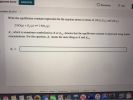
Write the equilibrium‑constant expression for the reaction shown in terms of [A], [B], [C], and [D].
A(g)+B(g)−⇀↽−2C(g)+D(g)
Note that Kc, which is sometimes symbolized as K or Keq, denotes that the equilibrium constant is expressed using molar concentrations. For this question, Kc means the same thing as K and Keq
Homework Answers
![Given equation: Acq) + Beg) 20(g) + Deg) Kc = [C]*[D] I CAD CBD Вашрумим constant Here bewer to the concentration term coef](http://img.homeworklib.com/questions/30ed8790-dbf0-11eb-adbe-97c3fb491af2.png?x-oss-process=image/resize,w_560)
Add Answer to:
Write the equilibrium‑constant expression for the reaction shown
in terms of [A], [B], [C], and [D]....
Write the equilibrium-constant expression for the reaction A(s)+3B(l)<------->2C(aq)+D(aq) in terms of [A], [B], [C], and [D]...
Write the equilibrium-constant expression for the reaction A(s)+3B(l)<------->2C(aq)+D(aq) in terms of [A], [B], [C], and [D] as needed. Kc=? *Kc, which is sometimes symbolized as Keq, denotes that the equilibrium constant is expressed using molar concentrations. For this question, Kc means the same thing as Keq.
Hon 17 of 37 > Write the equilibrium-constant expression for the reaction shown in terms of...
 Hon 17 of 37 > Write the equilibrium-constant expression for the reaction shown in terms of [A], [B]. (C), and (DI. A(g) +B(g) = 2 C(g) + D(g) Note that Kc, which is sometimes symbolized as Kor Keg, denotes that the equilibrium constant is expressed using mola concentrations. For this question, K means the same thing as K and Keq. Kc =
< Question 6 of 11 > Write the equilibrium-constant expression for the reaction shown in terms...
 < Question 6 of 11 > Write the equilibrium-constant expression for the reaction shown in terms of [SO], [CO,1. [CS], and 250,(g) + CO,(g) = CS,() + 30,() Kc, which is sometimes symbolized as K or Keq, denotes that the equilibrium constant is expressed usis concentrations. For this question, K. means the same thing as K and Keq K=
Question 7 of 11> Write the equilibrium-constant expression for the reaction shown in terms of [NO],...
 Question 7 of 11> Write the equilibrium-constant expression for the reaction shown in terms of [NO], [O,1, and [NO,]. 2 NO(g)+0,(g) 2 NO, (g) Ke, which is sometimes symbolized as K or Keg, denotes that the equilibrium constant is expressed using molar concentrations. For this question, K means the same thing as K and Ko Ke =
Answer Question 18 of 37 > Write the equilibrium-constant expression for the reaction shown in terms...
 Answer Question 18 of 37 > Write the equilibrium-constant expression for the reaction shown in terms of (AJ. (B). (C), and [D]. 3 A(g) + B(g) = 2 C(g) + 2D(g) Note that Ke, which is sometimes symbolized as Kor ke denotes that the equilibrium constant is expressed using molar concentrations. For this question, Kmeans the same thing as K and Key
Write the equilibrium-constant expression for the reaction shown in terms of (S0, 1.100,1.(CS, I, and (0,1...
 Write the equilibrium-constant expression for the reaction shown in terms of (S0, 1.100,1.(CS, I, and (0,1 Resume Attempts 2 so,(g) + CO2(g) = CS,(g) + 30,(Ⓡ) K., which is sometimes symbolized as Kor Koq, denotes that the equilibrium constant is expressed using molar concentrations. For this question, Ke means the same thing as K and Ka [92] [cs] [CO2][s0, terms of use contact us help about us | Careers privacy policy MacBook Pro
stuutuu Resources Hint mestion 19 of 37 > Write the equilibrium-constant expression for the reaction shown...
 stuutuu Resources Hint mestion 19 of 37 > Write the equilibrium-constant expression for the reaction shown in terms of [SO, 1. [CO, 1. [CS], and [02]. 2 SO, (g) + CO2(g) = CS, (g) + 30,(g) Kc, which is sometimes symbolized as Kor Keg, denotes that the equilibrium constant is expressed using molar concentrations. For this question, Kmeans the same thing as K and Key K. = about us Careers privacy policy terms of use contact us help
gnment Score: 3400/3700 Resources Hint muestion 20 of 37 > Write the equilibrium-constant expression for the...
 gnment Score: 3400/3700 Resources Hint muestion 20 of 37 > Write the equilibrium-constant expression for the reaction shown in terms of [NO], [0,), and [NO, 1. 2 NO(g) + O2(g) = 2 NO, (g) K, which is sometimes symbolized as K or Keg, denotes that the equilibrium constant is expressed using molar concentrations. For this question, Kmeans the same thing as K and Keq K. = about us Careers privacy policy terms of use contact us help
I solved it nevermind! Sapling # Equilibrium Activities and Due Dates Saplings Equilibrium Score: 2020/1200 resour...
 I
solved it nevermind!
Sapling # Equilibrium Activities and Due Dates Saplings Equilibrium Score: 2020/1200 resources Le con un precoce 7 of 12 > Write the equilibrium-constant expression for the reaction shown in terms of (A), B). (C), and [D]. A(g) +B(g) = 2(g) +D(g) Note that K, which is sometimes symbolized as Kor Kg. denotes that the equilibrium constant is expressed using molar concentrations. For this question, Ke means the same thing as K and K מון
I
solved it nevermind!
Sapling # Equilibrium Activities and Due Dates Saplings Equilibrium Score: 2020/1200 resources Le con un precoce 7 of 12 > Write the equilibrium-constant expression for the reaction shown in terms of (A), B). (C), and [D]. A(g) +B(g) = 2(g) +D(g) Note that K, which is sometimes symbolized as Kor Kg. denotes that the equilibrium constant is expressed using molar concentrations. For this question, Ke means the same thing as K and K מון
Select all of the true statements regarding chemical equilibrium. The concentrations of reactants and products are...
 Select all of the true statements regarding chemical equilibrium. The concentrations of reactants and products are equal. The concentrations of reactants and products remain constant. Reactants are being converted to products and vice versa. The rates of the forward and reverse reactions are equal. Write the equilibrium constant expression for the reaction A(s)+3 B() 2C (aq) D(aq) in terms of [A]. [B]. [C], and [D] K = Write the equilibrium-constant expression for the reaction shown in terms of [A]. [B]....
 Hon 17 of 37 > Write the equilibrium-constant expression for the reaction shown in terms of [A], [B]. (C), and (DI. A(g) +B(g) = 2 C(g) + D(g) Note that Kc, which is sometimes symbolized as Kor Keg, denotes that the equilibrium constant is expressed using mola concentrations. For this question, K means the same thing as K and Keq. Kc =
 < Question 6 of 11 > Write the equilibrium-constant expression for the reaction shown in terms of [SO], [CO,1. [CS], and 250,(g) + CO,(g) = CS,() + 30,() Kc, which is sometimes symbolized as K or Keq, denotes that the equilibrium constant is expressed usis concentrations. For this question, K. means the same thing as K and Keq K=
 Question 7 of 11> Write the equilibrium-constant expression for the reaction shown in terms of [NO], [O,1, and [NO,]. 2 NO(g)+0,(g) 2 NO, (g) Ke, which is sometimes symbolized as K or Keg, denotes that the equilibrium constant is expressed using molar concentrations. For this question, K means the same thing as K and Ko Ke =
 Answer Question 18 of 37 > Write the equilibrium-constant expression for the reaction shown in terms of (AJ. (B). (C), and [D]. 3 A(g) + B(g) = 2 C(g) + 2D(g) Note that Ke, which is sometimes symbolized as Kor ke denotes that the equilibrium constant is expressed using molar concentrations. For this question, Kmeans the same thing as K and Key
 Write the equilibrium-constant expression for the reaction shown in terms of (S0, 1.100,1.(CS, I, and (0,1 Resume Attempts 2 so,(g) + CO2(g) = CS,(g) + 30,(Ⓡ) K., which is sometimes symbolized as Kor Koq, denotes that the equilibrium constant is expressed using molar concentrations. For this question, Ke means the same thing as K and Ka [92] [cs] [CO2][s0, terms of use contact us help about us | Careers privacy policy MacBook Pro
 stuutuu Resources Hint mestion 19 of 37 > Write the equilibrium-constant expression for the reaction shown in terms of [SO, 1. [CO, 1. [CS], and [02]. 2 SO, (g) + CO2(g) = CS, (g) + 30,(g) Kc, which is sometimes symbolized as Kor Keg, denotes that the equilibrium constant is expressed using molar concentrations. For this question, Kmeans the same thing as K and Key K. = about us Careers privacy policy terms of use contact us help
 gnment Score: 3400/3700 Resources Hint muestion 20 of 37 > Write the equilibrium-constant expression for the reaction shown in terms of [NO], [0,), and [NO, 1. 2 NO(g) + O2(g) = 2 NO, (g) K, which is sometimes symbolized as K or Keg, denotes that the equilibrium constant is expressed using molar concentrations. For this question, Kmeans the same thing as K and Keq K. = about us Careers privacy policy terms of use contact us help
 I
solved it nevermind!
Sapling # Equilibrium Activities and Due Dates Saplings Equilibrium Score: 2020/1200 resources Le con un precoce 7 of 12 > Write the equilibrium-constant expression for the reaction shown in terms of (A), B). (C), and [D]. A(g) +B(g) = 2(g) +D(g) Note that K, which is sometimes symbolized as Kor Kg. denotes that the equilibrium constant is expressed using molar concentrations. For this question, Ke means the same thing as K and K מון
I
solved it nevermind!
Sapling # Equilibrium Activities and Due Dates Saplings Equilibrium Score: 2020/1200 resources Le con un precoce 7 of 12 > Write the equilibrium-constant expression for the reaction shown in terms of (A), B). (C), and [D]. A(g) +B(g) = 2(g) +D(g) Note that K, which is sometimes symbolized as Kor Kg. denotes that the equilibrium constant is expressed using molar concentrations. For this question, Ke means the same thing as K and K מון
 Select all of the true statements regarding chemical equilibrium. The concentrations of reactants and products are equal. The concentrations of reactants and products remain constant. Reactants are being converted to products and vice versa. The rates of the forward and reverse reactions are equal. Write the equilibrium constant expression for the reaction A(s)+3 B() 2C (aq) D(aq) in terms of [A]. [B]. [C], and [D] K = Write the equilibrium-constant expression for the reaction shown in terms of [A]. [B]....
Most questions answered within 3 hours.
-
Where is the error in this code sequence?
String s1 = "Hello";
String s2 = "ello";...
asked 11 months ago -
Financial data for Joel de Paris, Inc., for last year
follow:
Joel de Paris, Inc.
Balance...
asked 11 months ago -
Consider this reaction:
Al2(SO4)3 (aq)+ BaCl3
(aq) Al2Cl6 (aq)- +
3BaSO4(s) . What is the...
asked 11 months ago -
Suppose that Savneet is considering increasing her
recent random sample from 20 car rentals to 40...
asked 11 months ago -
Trucks arrive at an unloading terminal at an average rate of 120
per hour.
Trucks arrive...
asked 11 months ago -
Why are methanol and ethanol completely soluble in water while
octanol is not very little soluble....
asked 11 months ago -
A facilities manager at a university reads in a research report
that the mean amount of...
asked 11 months ago -
When the CuSO4 is rehydrated by adding water to the anhydrous
compound, is this an endothermic...
asked 11 months ago -
A ray of sunlight is passing from diamond into crown glass; the
angle of incidence is...
asked 11 months ago -
A block of mass 0.249 kg is placed on top of a light, vertical
spring of...
asked 11 months ago -
how do the kidneys compensate in the presences of acidosis
a) trigger hyperventilate
b) reserve acid...
asked 11 months ago -
Question 501 pts
The rental rate of capital to the firm increases. Which of the
following...
asked 11 months ago