
Homework Answers

Add Answer to:
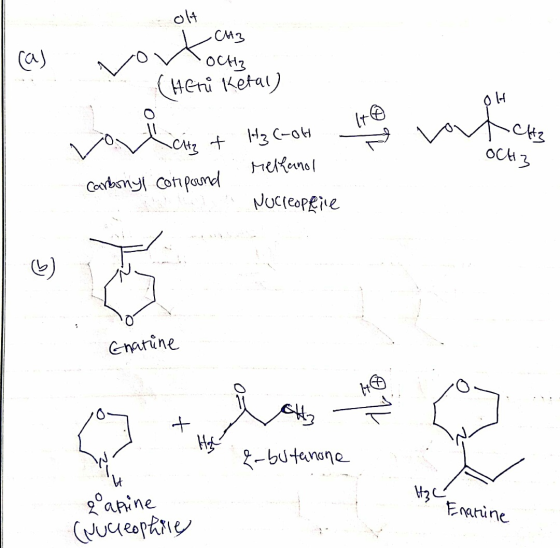
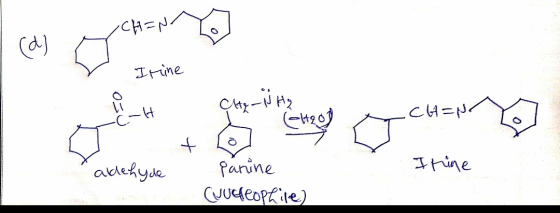
4. Draw the open-chain carbonyl compounds and the nucleophiles used to form the following nucleophilic addition...
List the following carbonyl compounds in order of decreasingreactivity toward nucleophilic addition: ester, acid chloride,amide, aldehyde,...
List the following carbonyl compounds in order of decreasingreactivity toward nucleophilic addition: ester, acid chloride,amide, aldehyde, ketone.
Rank the following carbonyl-containing compounds in order of reactivity towards nucleophilic attack. draw theproducts of the...
 Rank the following carbonyl-containing compounds in order of
reactivity towards nucleophilic attack.
draw theproducts of the following reaction as they occur in acid
solution.
Classify these structures as hemiacetal, hemiketal, acetal,
ketal, or other.
Draw the final organic product of the following three-step
reaction of bromomethylbenzene.
Rank the following carbonyl-containing compounds in order of reactivity towards nucleophilic attack. Most reactive Least reactive acetic anhydride methanal propanone butyl acetate N,N-diphenylethanamide 3-methylpentanoyl chloride
Rank the following carbonyl-containing compounds in order of
reactivity towards nucleophilic attack.
draw theproducts of the following reaction as they occur in acid
solution.
Classify these structures as hemiacetal, hemiketal, acetal,
ketal, or other.
Draw the final organic product of the following three-step
reaction of bromomethylbenzene.
Rank the following carbonyl-containing compounds in order of reactivity towards nucleophilic attack. Most reactive Least reactive acetic anhydride methanal propanone butyl acetate N,N-diphenylethanamide 3-methylpentanoyl chloride
Rank the following carbonyl-containing compounds in order of reactivity towards nucleophilic attack. Rank the following carbonyl...
 Rank the following carbonyl-containing
compounds in order of reactivity towards nucleophilic
attack.
Rank the following carbonyl - containing compounds in order of reactivity towards nucleophilic attack.
Rank the following carbonyl-containing
compounds in order of reactivity towards nucleophilic
attack.
Rank the following carbonyl - containing compounds in order of reactivity towards nucleophilic attack.
One of the most important uses for Grignard reagents is their addition to carbonyl compounds to...
 One of the most important uses for Grignard reagents is their addition to carbonyl compounds to give new carbon-carbon bonds. In this reaction, the carbon of the organometallic compound acts as a nucleophile to add to the positive carbon of the carbonyl forming an alkoxide ion intermediate. Aqueous acid is used in the second step to protonate the alkoxide ion and form the product alcohol. Draw the structure of the product(s) of step 1 when the following compound reacts with...
Rank the following carbonyl-containing compounds in order of reactivity towards nucleophilic acyl substitution. Rank the following...
 Rank the following carbonyl-containing
compounds in order of reactivity towards nucleophilic acyl
substitution.
Rank the following carbonyl-containing compounds in order of reactivity towards nucleophilic acyl substitution Most reactive Least reactive butyl acetate benzoic anhydride 3-methylpentanoyl chloride propionamide
Rank the following carbonyl-containing
compounds in order of reactivity towards nucleophilic acyl
substitution.
Rank the following carbonyl-containing compounds in order of reactivity towards nucleophilic acyl substitution Most reactive Least reactive butyl acetate benzoic anhydride 3-methylpentanoyl chloride propionamide
1. Ethers can be classified as open chain or cyclic. Open chain ethers can contain rings....
 1. Ethers can be classified as open chain or cyclic. Open chain ethers can contain rings. What is the structural difference between open chain and cyclic ethers? 2. To prepare an ether from an alkyl halide by a nucleophilic substitution reaction, what are the two types of nucleophiles that can be used? 3. Give one method for preparing an epoxide.
Draw a general curved arrow mechanism for nucleophilic addition of aldehydes and ketones. OH Nus RA'R'...
 Draw a general curved arrow mechanism for nucleophilic addition of aldehydes and ketones. OH Nus RA'R' / H2O+ R Nu Content Clue: Aldehydes and ketones react with various nucleophiles that can be based on carbon, hydrogen, nitrogen and oxygen. Carbon-based nucleophiles include: Grignard reagents, cyanide anion, and Wittig reagents. Grignard reagents as nucleophiles: 1) MgBr 2) H30+ 1) CH 3MgBr 2) H30+ 2 stereoisomers formed State the stereochemical relationship between products: MgBr 2. H3O+
Draw a general curved arrow mechanism for nucleophilic addition of aldehydes and ketones. OH Nus RA'R'...
 Draw a general curved arrow mechanism for nucleophilic addition of aldehydes and ketones. OH Nus RA'R' / H2O+ R Nu Content Clue: Aldehydes and ketones react with various nucleophiles that can be based on carbon, hydrogen, nitrogen and oxygen. Carbon-based nucleophiles include: Grignard reagents, cyanide anion, and Wittig reagents. Grignard reagents as nucleophiles: 1) MgBr 2) H30+ 1) CH 3MgBr 2) H30+ 2 stereoisomers formed State the stereochemical relationship between products: MgBr 2. H3O+
Rank the following carbonyl-containing compounds in order of reactivity towards nucleophilic attack. Most Reactive to least...
Rank the following carbonyl-containing compounds in order of reactivity towards nucleophilic attack. Most Reactive to least reactive. 3-methylpentanoyl chloride, acetic anhydride, hexyl propanoate, N,N-diphenylethanamide, butanedial, and propanone.
Rank the following carbonyl-containing compounds in order of reactivity towards nucleophilic acyl substitution Most reactive acetyl...
 Rank the following carbonyl-containing compounds in order of reactivity towards nucleophilic acyl substitution Most reactive acetyl chloride hexyl propanoate Least reactive acetic anhydride propionamide
 Rank the following carbonyl-containing compounds in order of
reactivity towards nucleophilic attack.
draw theproducts of the following reaction as they occur in acid
solution.
Classify these structures as hemiacetal, hemiketal, acetal,
ketal, or other.
Draw the final organic product of the following three-step
reaction of bromomethylbenzene.
Rank the following carbonyl-containing compounds in order of reactivity towards nucleophilic attack. Most reactive Least reactive acetic anhydride methanal propanone butyl acetate N,N-diphenylethanamide 3-methylpentanoyl chloride
Rank the following carbonyl-containing compounds in order of
reactivity towards nucleophilic attack.
draw theproducts of the following reaction as they occur in acid
solution.
Classify these structures as hemiacetal, hemiketal, acetal,
ketal, or other.
Draw the final organic product of the following three-step
reaction of bromomethylbenzene.
Rank the following carbonyl-containing compounds in order of reactivity towards nucleophilic attack. Most reactive Least reactive acetic anhydride methanal propanone butyl acetate N,N-diphenylethanamide 3-methylpentanoyl chloride
 Rank the following carbonyl-containing
compounds in order of reactivity towards nucleophilic
attack.
Rank the following carbonyl - containing compounds in order of reactivity towards nucleophilic attack.
Rank the following carbonyl-containing
compounds in order of reactivity towards nucleophilic
attack.
Rank the following carbonyl - containing compounds in order of reactivity towards nucleophilic attack.
 One of the most important uses for Grignard reagents is their addition to carbonyl compounds to give new carbon-carbon bonds. In this reaction, the carbon of the organometallic compound acts as a nucleophile to add to the positive carbon of the carbonyl forming an alkoxide ion intermediate. Aqueous acid is used in the second step to protonate the alkoxide ion and form the product alcohol. Draw the structure of the product(s) of step 1 when the following compound reacts with...
 Rank the following carbonyl-containing
compounds in order of reactivity towards nucleophilic acyl
substitution.
Rank the following carbonyl-containing compounds in order of reactivity towards nucleophilic acyl substitution Most reactive Least reactive butyl acetate benzoic anhydride 3-methylpentanoyl chloride propionamide
Rank the following carbonyl-containing
compounds in order of reactivity towards nucleophilic acyl
substitution.
Rank the following carbonyl-containing compounds in order of reactivity towards nucleophilic acyl substitution Most reactive Least reactive butyl acetate benzoic anhydride 3-methylpentanoyl chloride propionamide
 1. Ethers can be classified as open chain or cyclic. Open chain ethers can contain rings. What is the structural difference between open chain and cyclic ethers? 2. To prepare an ether from an alkyl halide by a nucleophilic substitution reaction, what are the two types of nucleophiles that can be used? 3. Give one method for preparing an epoxide.
 Draw a general curved arrow mechanism for nucleophilic addition of aldehydes and ketones. OH Nus RA'R' / H2O+ R Nu Content Clue: Aldehydes and ketones react with various nucleophiles that can be based on carbon, hydrogen, nitrogen and oxygen. Carbon-based nucleophiles include: Grignard reagents, cyanide anion, and Wittig reagents. Grignard reagents as nucleophiles: 1) MgBr 2) H30+ 1) CH 3MgBr 2) H30+ 2 stereoisomers formed State the stereochemical relationship between products: MgBr 2. H3O+
 Draw a general curved arrow mechanism for nucleophilic addition of aldehydes and ketones. OH Nus RA'R' / H2O+ R Nu Content Clue: Aldehydes and ketones react with various nucleophiles that can be based on carbon, hydrogen, nitrogen and oxygen. Carbon-based nucleophiles include: Grignard reagents, cyanide anion, and Wittig reagents. Grignard reagents as nucleophiles: 1) MgBr 2) H30+ 1) CH 3MgBr 2) H30+ 2 stereoisomers formed State the stereochemical relationship between products: MgBr 2. H3O+
 Rank the following carbonyl-containing compounds in order of reactivity towards nucleophilic acyl substitution Most reactive acetyl chloride hexyl propanoate Least reactive acetic anhydride propionamide
Most questions answered within 3 hours.
-
Where is the error in this code sequence?
String s1 = "Hello";
String s2 = "ello";...
asked 10 months ago -
Financial data for Joel de Paris, Inc., for last year
follow:
Joel de Paris, Inc.
Balance...
asked 10 months ago -
Consider this reaction:
Al2(SO4)3 (aq)+ BaCl3
(aq) Al2Cl6 (aq)- +
3BaSO4(s) . What is the...
asked 10 months ago -
Suppose that Savneet is considering increasing her
recent random sample from 20 car rentals to 40...
asked 10 months ago -
Trucks arrive at an unloading terminal at an average rate of 120
per hour.
Trucks arrive...
asked 10 months ago -
Why are methanol and ethanol completely soluble in water while
octanol is not very little soluble....
asked 10 months ago -
A facilities manager at a university reads in a research report
that the mean amount of...
asked 10 months ago -
When the CuSO4 is rehydrated by adding water to the anhydrous
compound, is this an endothermic...
asked 10 months ago -
A ray of sunlight is passing from diamond into crown glass; the
angle of incidence is...
asked 10 months ago -
A block of mass 0.249 kg is placed on top of a light, vertical
spring of...
asked 10 months ago -
how do the kidneys compensate in the presences of acidosis
a) trigger hyperventilate
b) reserve acid...
asked 10 months ago -
Question 501 pts
The rental rate of capital to the firm increases. Which of the
following...
asked 10 months ago