
Homework Answers
Add Answer to:
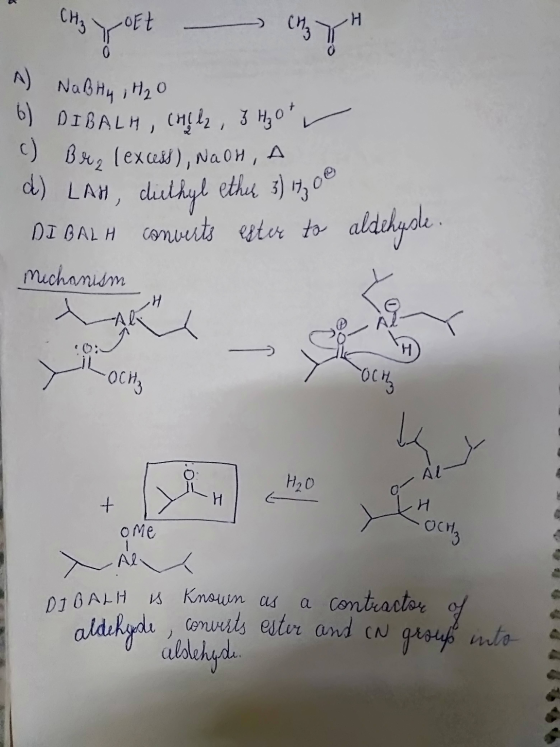
H3COEU H3C, H a) NaBH4, H2O b) i. DIBAL-H, CH2Cl2, ii. H30+ c) Br2 (excess), NaOH,...
Predict the products of the following reactions. a. b. c. (1) excess CH Mg! CI (2) H30* (1) DIBAL-H (-78 °C) (2) H...
 Predict the products of the following reactions.
a.
b.
c.
(1) excess CH Mg! CI (2) H30* (1) DIBAL-H (-78 °C) (2) H30 OCH (1) DIBAL-H (-78 °C) (2) H2O
Predict the products of the following reactions.
a.
b.
c.
(1) excess CH Mg! CI (2) H30* (1) DIBAL-H (-78 °C) (2) H30 OCH (1) DIBAL-H (-78 °C) (2) H2O
Provide the major product(s) for the following reactions: Show Stereochemistry when necessary HBr Br2 CH2Cl2 HBr...
 Provide the major product(s) for the following reactions: Show
Stereochemistry when necessary
HBr Br2 CH2Cl2 HBr Br2 ROOR H20 H2O СН,ОН H30* 1) BH3, THE 2) H2O2, NaOH, H2O 1) Hg(O2CCF3)2 CH3OH 2) NaBH4, NaOH 1) Hg(OAc)2, H20, THF 2) NaBH4, NaOH H2 Pd/C
Provide the major product(s) for the following reactions: Show
Stereochemistry when necessary
HBr Br2 CH2Cl2 HBr Br2 ROOR H20 H2O СН,ОН H30* 1) BH3, THE 2) H2O2, NaOH, H2O 1) Hg(O2CCF3)2 CH3OH 2) NaBH4, NaOH 1) Hg(OAc)2, H20, THF 2) NaBH4, NaOH H2 Pd/C
What would be the final organic product of the following reaction? ? i. DIBAL-H.-78°C ii. H30*...
 What would be the final organic product of the following reaction? ? i. DIBAL-H.-78°C ii. H30* HO
2. Choose the reagents and reaction conditions required to accomplish each of the following transformations OH...
 2. Choose the reagents and reaction conditions required to accomplish each of the following transformations OH Z-I OH a) NaOH, H2O, NH3 b) i. SOCl2 ii. NH3, iii. Br2 / NaOH, iv. H30+ c) NH3COCl, heat d) CH2N2, diethyl ether
23) Select the best reagent(s) to accomplish the following transformation. a) i) 2 CH3CH2MgBr; ii) H30+...
 23) Select the best reagent(s) to accomplish the following transformation. a) i) 2 CH3CH2MgBr; ii) H30+ c) CH3CH2Br b) i) (CH3CH2)2CuLi; ii) H2O d) i) 2 CH3CH2Li; ii) H30+ 24) Select the best reagent(s) accomplish the following transformation. NH2 a) i) LiAlH4; ii) H30* c) H2O b) SOCI d) H30, heat
14. Provide all of the organic products for the following transformations: A. Å Br2, CH2CL2 B....
 14. Provide all of the organic products for the following transformations: A. Å Br2, CH2CL2 B. 1. Hg(OAC)2, H2O 2.NaBH4 OH C. SOCI2 CH3 Me D 1. BH3 2. NaOH, H2O2
17. Use ANY needed reagents to effect the following transformation. (30 points) starting material product List...
 17. Use ANY needed reagents to effect the following transformation. (30 points) starting material product List of Reagents -N:C:N- KMnO4, H2SO4 8 00 (CH3),COCOCOC(CH3)3 Ag(NH3)2+, 120 Fe, HCI KMnO4, NaOH, H2O, cold AlCl3 Bra (excess), NaOH (excess), H20 Brz, Fe Br2, H20 Br2, H2O, H3O+ Br2, hy Br2, NaOH (excess), H2O Br2, P Buli CF3CO,H CH;=0 Formaldehyde оо CH3COCCH o CH_CC1, pyridine H2, Lindlar's catalyst H2.Pd/C H2, Pa/C, high pressure H, Raney-Ni HANNH HENNH, KOH, (HOCH2CH2)20, heat H2O H20, H2SO4,...
Choose the best reagent(s) for carrying out the following conversion from the list provided below. a....
 Choose the best reagent(s) for carrying out the following conversion from the list provided below. a. 1. e. f. g. CH3MgBr, ether H307 PBr3 NaOH (CH3)3SiC1, (CH3CH2)3N CH3MgBr, ether H30+ LiAlH4, ether 1. p-TosC1, pyridine 2. NaOH CrO3, H2SO4, H2O 1. NaBH4, ethanol 2. H30 Dess-Martin periodinane , CH2Cl2 1. h. 3. d. 1. H30+ HO CH: OH
1. Cl, H20 2. NaOH 3. CH3CH2MgBr 4. H30* 1. Mg 2h) 2. H₃C.. 3. H30+...
 1. Cl, H20 2. NaOH 3. CH3CH2MgBr 4. H30* 1. Mg 2h) 2. H₃C.. 3. H30+ 1. SOCI OH 2. DIBAL"H 3. H30* OH 1. NaOH 2j) 2. CH3CH2CI 3. O o 2k) [ N-H H20. STAB OH 2)) 1. NaOH 2. CH3CH,CI 3. O o IN-H 2k) H30*. STAB 21) 1. 2 KCN, HCN 2. LiAlH4 3. H30+ 4. H2, Pt
Which of the following would serve as syntheses of (CH3)3CCO,H? i. Br2, ROOR ii. Mg. E,...
 Which of the following would serve as syntheses of (CH3)3CCO,H? i. Br2, ROOR ii. Mg. E, ii. CO2 iv. H307 i. Br2, ROOR ii. CN iii. OH®, H20, heat iv. H30+ i Cly/OH" (excess) ii. H307 i. Brz, ROOR ii. Mg. E, iii. CO iv. H307 i Cly/OH" (excess) ii. H30* X 1950F (exces) and i. CIV/OH" (excess) ii. H30* and i Bry. ROOR ii. CN ii. OH", H20, heat iv. H30*
 Predict the products of the following reactions.
a.
b.
c.
(1) excess CH Mg! CI (2) H30* (1) DIBAL-H (-78 °C) (2) H30 OCH (1) DIBAL-H (-78 °C) (2) H2O
Predict the products of the following reactions.
a.
b.
c.
(1) excess CH Mg! CI (2) H30* (1) DIBAL-H (-78 °C) (2) H30 OCH (1) DIBAL-H (-78 °C) (2) H2O
 Provide the major product(s) for the following reactions: Show
Stereochemistry when necessary
HBr Br2 CH2Cl2 HBr Br2 ROOR H20 H2O СН,ОН H30* 1) BH3, THE 2) H2O2, NaOH, H2O 1) Hg(O2CCF3)2 CH3OH 2) NaBH4, NaOH 1) Hg(OAc)2, H20, THF 2) NaBH4, NaOH H2 Pd/C
Provide the major product(s) for the following reactions: Show
Stereochemistry when necessary
HBr Br2 CH2Cl2 HBr Br2 ROOR H20 H2O СН,ОН H30* 1) BH3, THE 2) H2O2, NaOH, H2O 1) Hg(O2CCF3)2 CH3OH 2) NaBH4, NaOH 1) Hg(OAc)2, H20, THF 2) NaBH4, NaOH H2 Pd/C
 What would be the final organic product of the following reaction? ? i. DIBAL-H.-78°C ii. H30* HO
 2. Choose the reagents and reaction conditions required to accomplish each of the following transformations OH Z-I OH a) NaOH, H2O, NH3 b) i. SOCl2 ii. NH3, iii. Br2 / NaOH, iv. H30+ c) NH3COCl, heat d) CH2N2, diethyl ether
 23) Select the best reagent(s) to accomplish the following transformation. a) i) 2 CH3CH2MgBr; ii) H30+ c) CH3CH2Br b) i) (CH3CH2)2CuLi; ii) H2O d) i) 2 CH3CH2Li; ii) H30+ 24) Select the best reagent(s) accomplish the following transformation. NH2 a) i) LiAlH4; ii) H30* c) H2O b) SOCI d) H30, heat
 14. Provide all of the organic products for the following transformations: A. Å Br2, CH2CL2 B. 1. Hg(OAC)2, H2O 2.NaBH4 OH C. SOCI2 CH3 Me D 1. BH3 2. NaOH, H2O2
 17. Use ANY needed reagents to effect the following transformation. (30 points) starting material product List of Reagents -N:C:N- KMnO4, H2SO4 8 00 (CH3),COCOCOC(CH3)3 Ag(NH3)2+, 120 Fe, HCI KMnO4, NaOH, H2O, cold AlCl3 Bra (excess), NaOH (excess), H20 Brz, Fe Br2, H20 Br2, H2O, H3O+ Br2, hy Br2, NaOH (excess), H2O Br2, P Buli CF3CO,H CH;=0 Formaldehyde оо CH3COCCH o CH_CC1, pyridine H2, Lindlar's catalyst H2.Pd/C H2, Pa/C, high pressure H, Raney-Ni HANNH HENNH, KOH, (HOCH2CH2)20, heat H2O H20, H2SO4,...
 Choose the best reagent(s) for carrying out the following conversion from the list provided below. a. 1. e. f. g. CH3MgBr, ether H307 PBr3 NaOH (CH3)3SiC1, (CH3CH2)3N CH3MgBr, ether H30+ LiAlH4, ether 1. p-TosC1, pyridine 2. NaOH CrO3, H2SO4, H2O 1. NaBH4, ethanol 2. H30 Dess-Martin periodinane , CH2Cl2 1. h. 3. d. 1. H30+ HO CH: OH
 1. Cl, H20 2. NaOH 3. CH3CH2MgBr 4. H30* 1. Mg 2h) 2. H₃C.. 3. H30+ 1. SOCI OH 2. DIBAL"H 3. H30* OH 1. NaOH 2j) 2. CH3CH2CI 3. O o 2k) [ N-H H20. STAB OH 2)) 1. NaOH 2. CH3CH,CI 3. O o IN-H 2k) H30*. STAB 21) 1. 2 KCN, HCN 2. LiAlH4 3. H30+ 4. H2, Pt
 Which of the following would serve as syntheses of (CH3)3CCO,H? i. Br2, ROOR ii. Mg. E, ii. CO2 iv. H307 i. Br2, ROOR ii. CN iii. OH®, H20, heat iv. H30+ i Cly/OH" (excess) ii. H307 i. Brz, ROOR ii. Mg. E, iii. CO iv. H307 i Cly/OH" (excess) ii. H30* X 1950F (exces) and i. CIV/OH" (excess) ii. H30* and i Bry. ROOR ii. CN ii. OH", H20, heat iv. H30*
Most questions answered within 3 hours.
-
Where is the error in this code sequence?
String s1 = "Hello";
String s2 = "ello";...
asked 11 months ago -
Financial data for Joel de Paris, Inc., for last year
follow:
Joel de Paris, Inc.
Balance...
asked 11 months ago -
Consider this reaction:
Al2(SO4)3 (aq)+ BaCl3
(aq) Al2Cl6 (aq)- +
3BaSO4(s) . What is the...
asked 11 months ago -
Suppose that Savneet is considering increasing her
recent random sample from 20 car rentals to 40...
asked 11 months ago -
Trucks arrive at an unloading terminal at an average rate of 120
per hour.
Trucks arrive...
asked 11 months ago -
Why are methanol and ethanol completely soluble in water while
octanol is not very little soluble....
asked 11 months ago -
A facilities manager at a university reads in a research report
that the mean amount of...
asked 11 months ago -
When the CuSO4 is rehydrated by adding water to the anhydrous
compound, is this an endothermic...
asked 11 months ago -
A ray of sunlight is passing from diamond into crown glass; the
angle of incidence is...
asked 11 months ago -
A block of mass 0.249 kg is placed on top of a light, vertical
spring of...
asked 11 months ago -
how do the kidneys compensate in the presences of acidosis
a) trigger hyperventilate
b) reserve acid...
asked 11 months ago -
Question 501 pts
The rental rate of capital to the firm increases. Which of the
following...
asked 11 months ago