
Homework Answers
3) a. In I2 molecule there is Vanderwaal's dispersion force present. Since the size of molecule is large and also homo nuclear so there is no dipole-dipole interaction.
b. In HF molecule, due to the electronegativity difference between two atoms there is dipole-dipole interaction. Again, due to small size and highest electronegativity of F-atom there is hydrogen bonding interaction.
c. In H2S, because of electronegativity difference between hydrogen and sulphur atom, there is dipole-dipole interaction only.
Add Answer to:
3. The following molecules will experience what type of intermolecular attractions? ( points) a) 1-1 b)...
What type of intermolecular forces exist between the molecules which have the following structure? dispersion forces...
 What type of intermolecular forces exist between the molecules which have the following structure? dispersion forces hydrogen bonding ion-ion attraction dipole-dipole attractions Petaluma forces
Two separate questions. 03 Question (3 points) Which intermolecular force(s) do the following pairs of molecules...
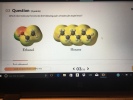 Two separate questions.
03 Question (3 points) Which intermolecular force(s) do the following pairs of molecules experience? Ethanol Hexane 03:31 > 21 OF 31QUESTIONS COMPLETED 岳 Type here to search
Two separate questions.
03 Question (3 points) Which intermolecular force(s) do the following pairs of molecules experience? Ethanol Hexane 03:31 > 21 OF 31QUESTIONS COMPLETED 岳 Type here to search
What intermolecular attractions will be formed when the following substances condense from the gas phase? X...
 What intermolecular attractions will be formed when the following substances condense from the gas phase? X Incorrect. Is this molecule polar or capable of hydrogen bonding? Recall that London forces occur between all molecules. (a) hexane (CH34) hydrogen bonding lonic bonding dipole-dipole London forces x Incorrect. Is the oxygen bound to an H, or is this an ether, which cannot hydrogen bond? Recall that all molecules will have London forces. (b) acetone (HACCOCH) London forces hydrogen bonding dipole-dipole (c) jodine,...
What type(s) of intermolecular forces are expected between SO2Cl2 molecules? ball & stick V - labels...
 What type(s) of intermolecular forces are expected between SO2Cl2 molecules? ball & stick V - labels Indicate with a Y (yes) or an N (no) which apply. dipole forces induced dipole forces hydrogen bonding What type(s) of intermolecular forces are expected between PC13 molecules? Choose all that apply dispersion hydrogen bonding dipole-dipole ion-ion What type(s) of intermolecular forces are expected between H20 molecules? ball & stick v + labels Indicate with a Y (yes) or an N (no) which apply....
UP Determine what type of intermolecular forces are in the following molecules. a) N2 b) HCN...
 UP Determine what type of intermolecular forces are in the following molecules. a) N2 b) HCN c) CCL d) MgBr2 e) CH CI Dispersion forces only because nonpolar molecules) f) CH3CO2H 5. Which of the following substances would you expect to have a nonzero dipole moment? Explain, and show the direction of each. a) NF3 b) CH3NH2 c) XeF2 d) PCI e) XeFg f) BF;
Match the following with the type of intermolecular force it is most likely to experience. 1...
 Match the following with the type of intermolecular force it is most likely to experience. 1 hydrogen bonding 1. CH3OH London dispersion 2. C12 3. HBr gas dipole dipole
1.Which attractions are stronger: intermolecular or intramolecular? 2.How many times stronger is a covalent bond compared...
1.Which attractions are stronger: intermolecular or intramolecular? 2.How many times stronger is a covalent bond compared to a dipole-dipole attraction? 3.What evidence is there that nonpolar molecules attract each other? 4.Which chemical in table 10.1 has the weakest intermolecular forces? Which has the strongest? How can you tell? 5.Suggest some ways that the dipoles in London forces are different from the dipoles in dipole-dipole attractions. 6.A) Which would have a lower boiling point: O2or F2? Explain. B) Which would have a lower boiling...
Predict the largest intermolecular force between the two molecules (or atoms) in each of the following...
 Predict the largest intermolecular force between the two
molecules (or atoms) in each of the following cases:(Choose
between: Ion-Dipole, Dipole-Dipole, H Bond, Ion-Induced Dipole,
Dipole-Induced Dipole, or Dispersion Forces)
a) (CH3)2CO -
(CH3)2CO (two molecules of acetone)
b)
H2 - Ne
c) H2O - H2
d) H2O - (CH3)2CO
e) HF - CH4
f) HF - (CH3)2CO
g) O2 - CH4
h) CH3OH - CH3CH2OH
Predict the largest intermolecular force between the two
molecules (or atoms) in each of the following cases:(Choose
between: Ion-Dipole, Dipole-Dipole, H Bond, Ion-Induced Dipole,
Dipole-Induced Dipole, or Dispersion Forces)
a) (CH3)2CO -
(CH3)2CO (two molecules of acetone)
b)
H2 - Ne
c) H2O - H2
d) H2O - (CH3)2CO
e) HF - CH4
f) HF - (CH3)2CO
g) O2 - CH4
h) CH3OH - CH3CH2OH
QUESTION 1 Identify the most important type of intermolecular force that would exist between neighboring molecules...
 QUESTION 1 Identify the most important type of intermolecular force that would exist between neighboring molecules in CH3CH2COOH A. London dispersion forces B. Dipole-dipole forces OC. Hydrogen bonding QUESTION 2 Identify the most important type of intermolecular force that would exist between neighboring molecules in NF3 O A. London dispersion forces B. Dipole-dipole forces OC. Hydrogen bonding QUESTION 3 Identify the most important type of intermolecular force that would exist between neighboring molecules in SO3 A. London dispersion forces B....
What type(s) of intermolecular forces is (are) expected between SbF3 molecules? Choose all that apply a....
What type(s) of intermolecular forces is (are) expected between SbF3 molecules? Choose all that apply a. dispersion b. ion-ion c. hydrogen bonding d. dipole-dipole
 What type of intermolecular forces exist between the molecules which have the following structure? dispersion forces hydrogen bonding ion-ion attraction dipole-dipole attractions Petaluma forces
 Two separate questions.
03 Question (3 points) Which intermolecular force(s) do the following pairs of molecules experience? Ethanol Hexane 03:31 > 21 OF 31QUESTIONS COMPLETED 岳 Type here to search
Two separate questions.
03 Question (3 points) Which intermolecular force(s) do the following pairs of molecules experience? Ethanol Hexane 03:31 > 21 OF 31QUESTIONS COMPLETED 岳 Type here to search
 What intermolecular attractions will be formed when the following substances condense from the gas phase? X Incorrect. Is this molecule polar or capable of hydrogen bonding? Recall that London forces occur between all molecules. (a) hexane (CH34) hydrogen bonding lonic bonding dipole-dipole London forces x Incorrect. Is the oxygen bound to an H, or is this an ether, which cannot hydrogen bond? Recall that all molecules will have London forces. (b) acetone (HACCOCH) London forces hydrogen bonding dipole-dipole (c) jodine,...
 What type(s) of intermolecular forces are expected between SO2Cl2 molecules? ball & stick V - labels Indicate with a Y (yes) or an N (no) which apply. dipole forces induced dipole forces hydrogen bonding What type(s) of intermolecular forces are expected between PC13 molecules? Choose all that apply dispersion hydrogen bonding dipole-dipole ion-ion What type(s) of intermolecular forces are expected between H20 molecules? ball & stick v + labels Indicate with a Y (yes) or an N (no) which apply....
 UP Determine what type of intermolecular forces are in the following molecules. a) N2 b) HCN c) CCL d) MgBr2 e) CH CI Dispersion forces only because nonpolar molecules) f) CH3CO2H 5. Which of the following substances would you expect to have a nonzero dipole moment? Explain, and show the direction of each. a) NF3 b) CH3NH2 c) XeF2 d) PCI e) XeFg f) BF;
 Match the following with the type of intermolecular force it is most likely to experience. 1 hydrogen bonding 1. CH3OH London dispersion 2. C12 3. HBr gas dipole dipole
 Predict the largest intermolecular force between the two
molecules (or atoms) in each of the following cases:(Choose
between: Ion-Dipole, Dipole-Dipole, H Bond, Ion-Induced Dipole,
Dipole-Induced Dipole, or Dispersion Forces)
a) (CH3)2CO -
(CH3)2CO (two molecules of acetone)
b)
H2 - Ne
c) H2O - H2
d) H2O - (CH3)2CO
e) HF - CH4
f) HF - (CH3)2CO
g) O2 - CH4
h) CH3OH - CH3CH2OH
Predict the largest intermolecular force between the two
molecules (or atoms) in each of the following cases:(Choose
between: Ion-Dipole, Dipole-Dipole, H Bond, Ion-Induced Dipole,
Dipole-Induced Dipole, or Dispersion Forces)
a) (CH3)2CO -
(CH3)2CO (two molecules of acetone)
b)
H2 - Ne
c) H2O - H2
d) H2O - (CH3)2CO
e) HF - CH4
f) HF - (CH3)2CO
g) O2 - CH4
h) CH3OH - CH3CH2OH
 QUESTION 1 Identify the most important type of intermolecular force that would exist between neighboring molecules in CH3CH2COOH A. London dispersion forces B. Dipole-dipole forces OC. Hydrogen bonding QUESTION 2 Identify the most important type of intermolecular force that would exist between neighboring molecules in NF3 O A. London dispersion forces B. Dipole-dipole forces OC. Hydrogen bonding QUESTION 3 Identify the most important type of intermolecular force that would exist between neighboring molecules in SO3 A. London dispersion forces B....
Most questions answered within 3 hours.
-
Where is the error in this code sequence?
String s1 = "Hello";
String s2 = "ello";...
asked 10 months ago -
Financial data for Joel de Paris, Inc., for last year
follow:
Joel de Paris, Inc.
Balance...
asked 10 months ago -
Consider this reaction:
Al2(SO4)3 (aq)+ BaCl3
(aq) Al2Cl6 (aq)- +
3BaSO4(s) . What is the...
asked 10 months ago -
Suppose that Savneet is considering increasing her
recent random sample from 20 car rentals to 40...
asked 10 months ago -
Trucks arrive at an unloading terminal at an average rate of 120
per hour.
Trucks arrive...
asked 10 months ago -
Why are methanol and ethanol completely soluble in water while
octanol is not very little soluble....
asked 10 months ago -
A facilities manager at a university reads in a research report
that the mean amount of...
asked 10 months ago -
When the CuSO4 is rehydrated by adding water to the anhydrous
compound, is this an endothermic...
asked 10 months ago -
A ray of sunlight is passing from diamond into crown glass; the
angle of incidence is...
asked 10 months ago -
A block of mass 0.249 kg is placed on top of a light, vertical
spring of...
asked 10 months ago -
how do the kidneys compensate in the presences of acidosis
a) trigger hyperventilate
b) reserve acid...
asked 10 months ago -
Question 501 pts
The rental rate of capital to the firm increases. Which of the
following...
asked 10 months ago