Assuming that you had an agonist and an antagonist for every autonomic transmitter receptor, how could...
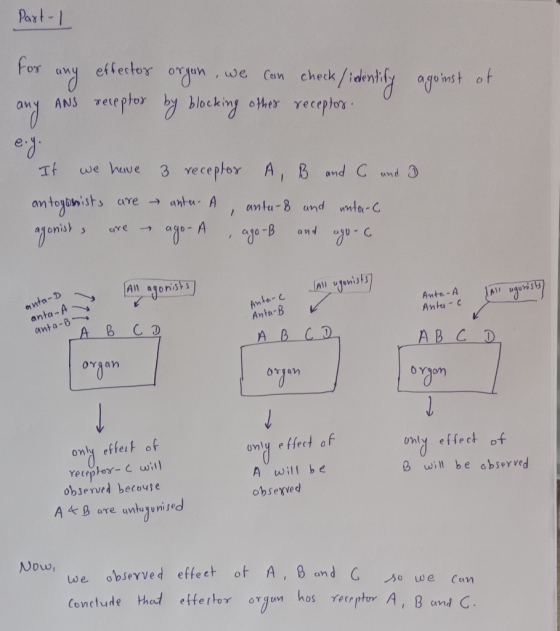
- Assuming that you had an agonist and an antagonist for every autonomic transmitter receptor, how could you determine which receptor types exist in any autonomically controlled effector?
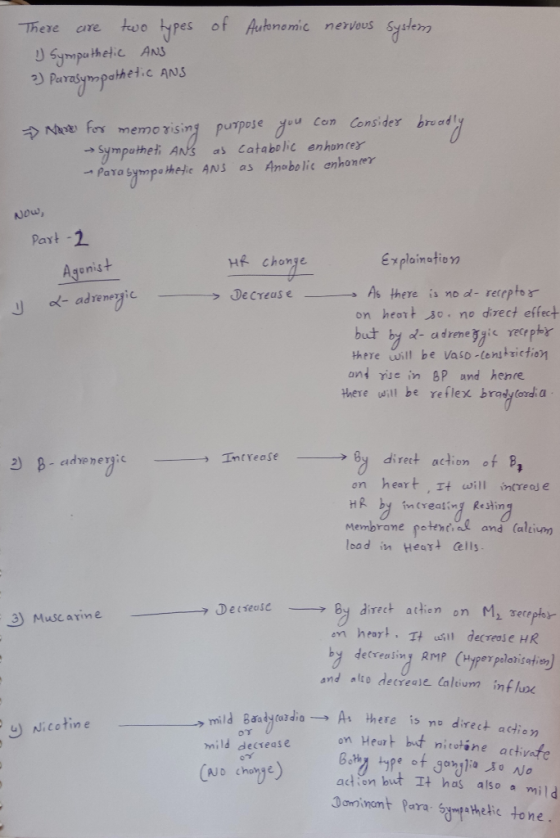
- Using the method you defined in Question 1 and your knowledge
of the Autonomic control of the function of the internal organs,
predict the effects (increase, decrease, or no change) of the
following autonomic agonists on heart rate (HR).
AGONIST HR CHANGE
alpha-adrenergic
beta-adrenergic
muscarinic
nicotinic
- Using autonomic pharmacological agents, how could you determine
which receptors in an organ are subjected to a tonic release of
neurotransmitter? By releasing an antagonist to the specific organ
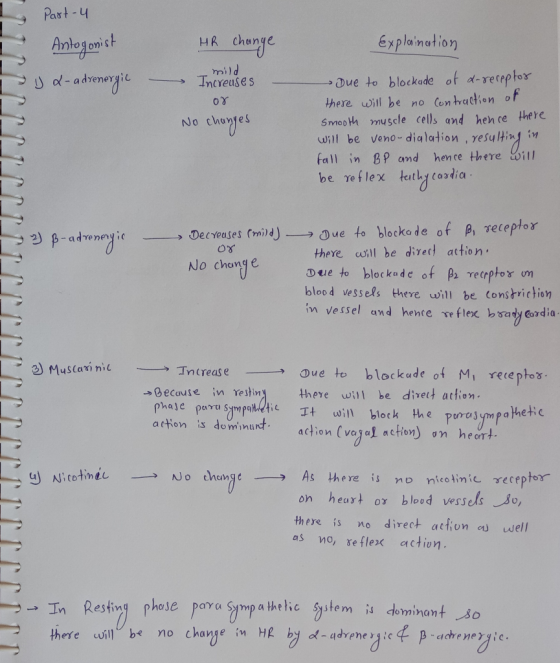
you are looking at. 4. Using your answer to Question 3 and your
knowledge of the autonomic control of heart rate (HR), predict the
heart changes (Indicate: increase, decrease, or no change next to
each receptor kind) the pharmacological agents listed in the table
below would produce in a resting individual.
ANTAGONIST HR CHANGE
alpha-adrenergic
beta-adrenergic
muscarinic
nicotinic
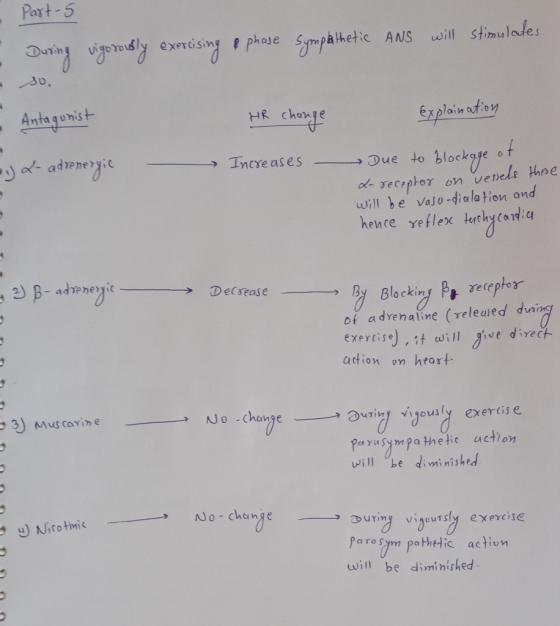
- Predict the heart rate change that the agents would produce in
a vigorously exercising individual.
ANTAGONIST HR CHANGE
alpha-adrenergic
beta-adrenergic
muscarinic
nicotinic
Homework Answers
THIS QUESTION COMPRISES 5 PARTs
ANSWER OF EACH PART IS AS BELOW
PART 1
BY USING ANTAGONIST AND AGONIST, and OBSERVING THE EFFECT WE CAN CONCLUDE THAT ANY EFFECTOR ORGAN HAS WHICH TYPE OF RECEPTOR.
PART 2
PART 3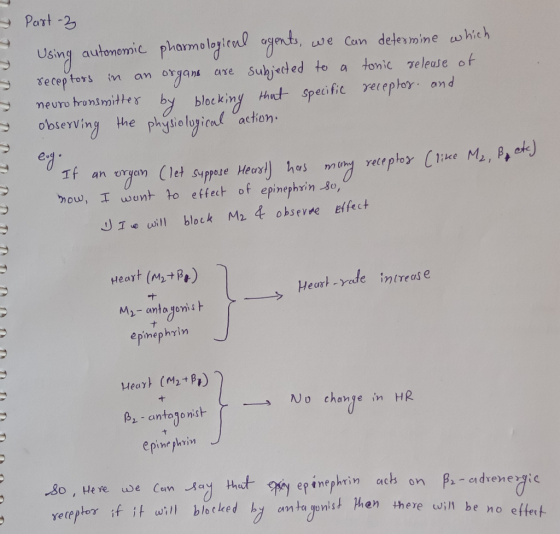
PART 4
PART 5
I HOPE THIS WILL HELP YOU A LOT FOR BETTER UNDERSTANDING OF RECEPTOR ALSO.
Add Answer to:
Assuming that you had an agonist and an antagonist for every
autonomic transmitter receptor, how could...
make a outline of the ans system 1. two divisions of ans and alternate terms associated...
 make a outline of the ans system
1. two divisions of ans and alternate terms associated
2. neurotransmitters for each. indicate location Within the
division where NT is released
3. receptor type with main location
4. organ response to stimulation list these specific organs eyes
hear lungs vessels gi tract and bladder then tell which response is
generated in that organ when stimulated
5 . lust drug name which interact with the receptors in each
division including agonist and antagonist...
make a outline of the ans system
1. two divisions of ans and alternate terms associated
2. neurotransmitters for each. indicate location Within the
division where NT is released
3. receptor type with main location
4. organ response to stimulation list these specific organs eyes
hear lungs vessels gi tract and bladder then tell which response is
generated in that organ when stimulated
5 . lust drug name which interact with the receptors in each
division including agonist and antagonist...
Drugs Affecting the Autonomic Nervous System_crossword puzzle Across 2. Drugs with a specific receptor affinity that...
 Drugs Affecting the Autonomic Nervous System_crossword
puzzle
Across
2. Drugs with a specific receptor affinity that
mimic the body's natural chemicals.
4. Synthetic antimuscarinic drug used for the
treatment of overactive bladder.
6. The nurse should carefully monitor for this
potential side effect when giving a beta blocker.
8. Direct-acting cholinergic agonist used to
treat urinary retention.
9. Symptoms may include circulatory collapse,
hypotension, bloody diarrhea, shock, and cardiac arrest.
11. Receptor sites for the catecholamines
norepinephrine and epinephrine.
12....
Drugs Affecting the Autonomic Nervous System_crossword
puzzle
Across
2. Drugs with a specific receptor affinity that
mimic the body's natural chemicals.
4. Synthetic antimuscarinic drug used for the
treatment of overactive bladder.
6. The nurse should carefully monitor for this
potential side effect when giving a beta blocker.
8. Direct-acting cholinergic agonist used to
treat urinary retention.
9. Symptoms may include circulatory collapse,
hypotension, bloody diarrhea, shock, and cardiac arrest.
11. Receptor sites for the catecholamines
norepinephrine and epinephrine.
12....
Can you please help me to find Possible test questions? Course Here.com Test #4 " Autonomic...
 Can you please help me to find Possible test questions?
Course Here.com Test #4 " Autonomic Nervous System Overview of the Autonomic Nervous System (ANSH Maior Functions: maintain optimal muscle in order to maintain homeostatic state within the body Aalso is inv performance of visceral organs, glands, smooth muscle, and cardiac not under conscious control: regulates heart rate, blood pressure, MOST "effectors" (organs & tissues regulated) are visceral- r function, and secretions emperaturs smooth musele contraction, glandula most are not...
Can you please help me to find Possible test questions?
Course Here.com Test #4 " Autonomic Nervous System Overview of the Autonomic Nervous System (ANSH Maior Functions: maintain optimal muscle in order to maintain homeostatic state within the body Aalso is inv performance of visceral organs, glands, smooth muscle, and cardiac not under conscious control: regulates heart rate, blood pressure, MOST "effectors" (organs & tissues regulated) are visceral- r function, and secretions emperaturs smooth musele contraction, glandula most are not...
Many pharmaceuticals act on the autonomic nervous system; either by mimicking Ach or NE and activating...
Many pharmaceuticals act on the autonomic nervous system; either by mimicking Ach or NE and activating their receptors, or by blocking their receptors. Each of these drugs can have side effects. Choose any one of the following pharmaceuticals and: 1) state whether it is targeting sympathetic or parasympathetic effectors based on the receptor type, 2) explain why/how it could have the treatment effect, and 3) predict which of the listed side effects it would have, with a brief explanation why....
ame: Date 1. The nurse administers subcutaneous epinephrine to a patient who is experiencing an anaphylactic...
 ame: Date 1. The nurse administers subcutaneous epinephrine to a patient who is experiencing an anaphylactic reaction. The nurse should expect to monitor the patient for which symptom? a. Bradycardia b. Tachycardia c. Hypotension d. Hypoglycemia 2. Propranolol (Ideral) is an Adrenergic Blocker used for the treatment of a. Hypertension b. Angina pectoris c. Cardiac Arrhythmias d. All of the above 3. Which part of the Autonomic nervous system helps the body be ready for emergencies? a. parasympathetic b. Adrenal...
 make a outline of the ans system
1. two divisions of ans and alternate terms associated
2. neurotransmitters for each. indicate location Within the
division where NT is released
3. receptor type with main location
4. organ response to stimulation list these specific organs eyes
hear lungs vessels gi tract and bladder then tell which response is
generated in that organ when stimulated
5 . lust drug name which interact with the receptors in each
division including agonist and antagonist...
make a outline of the ans system
1. two divisions of ans and alternate terms associated
2. neurotransmitters for each. indicate location Within the
division where NT is released
3. receptor type with main location
4. organ response to stimulation list these specific organs eyes
hear lungs vessels gi tract and bladder then tell which response is
generated in that organ when stimulated
5 . lust drug name which interact with the receptors in each
division including agonist and antagonist...
 Drugs Affecting the Autonomic Nervous System_crossword
puzzle
Across
2. Drugs with a specific receptor affinity that
mimic the body's natural chemicals.
4. Synthetic antimuscarinic drug used for the
treatment of overactive bladder.
6. The nurse should carefully monitor for this
potential side effect when giving a beta blocker.
8. Direct-acting cholinergic agonist used to
treat urinary retention.
9. Symptoms may include circulatory collapse,
hypotension, bloody diarrhea, shock, and cardiac arrest.
11. Receptor sites for the catecholamines
norepinephrine and epinephrine.
12....
Drugs Affecting the Autonomic Nervous System_crossword
puzzle
Across
2. Drugs with a specific receptor affinity that
mimic the body's natural chemicals.
4. Synthetic antimuscarinic drug used for the
treatment of overactive bladder.
6. The nurse should carefully monitor for this
potential side effect when giving a beta blocker.
8. Direct-acting cholinergic agonist used to
treat urinary retention.
9. Symptoms may include circulatory collapse,
hypotension, bloody diarrhea, shock, and cardiac arrest.
11. Receptor sites for the catecholamines
norepinephrine and epinephrine.
12....
 Can you please help me to find Possible test questions?
Course Here.com Test #4 " Autonomic Nervous System Overview of the Autonomic Nervous System (ANSH Maior Functions: maintain optimal muscle in order to maintain homeostatic state within the body Aalso is inv performance of visceral organs, glands, smooth muscle, and cardiac not under conscious control: regulates heart rate, blood pressure, MOST "effectors" (organs & tissues regulated) are visceral- r function, and secretions emperaturs smooth musele contraction, glandula most are not...
Can you please help me to find Possible test questions?
Course Here.com Test #4 " Autonomic Nervous System Overview of the Autonomic Nervous System (ANSH Maior Functions: maintain optimal muscle in order to maintain homeostatic state within the body Aalso is inv performance of visceral organs, glands, smooth muscle, and cardiac not under conscious control: regulates heart rate, blood pressure, MOST "effectors" (organs & tissues regulated) are visceral- r function, and secretions emperaturs smooth musele contraction, glandula most are not...
 ame: Date 1. The nurse administers subcutaneous epinephrine to a patient who is experiencing an anaphylactic reaction. The nurse should expect to monitor the patient for which symptom? a. Bradycardia b. Tachycardia c. Hypotension d. Hypoglycemia 2. Propranolol (Ideral) is an Adrenergic Blocker used for the treatment of a. Hypertension b. Angina pectoris c. Cardiac Arrhythmias d. All of the above 3. Which part of the Autonomic nervous system helps the body be ready for emergencies? a. parasympathetic b. Adrenal...
Most questions answered within 3 hours.
-
Where is the error in this code sequence?
String s1 = "Hello";
String s2 = "ello";...
asked 10 months ago -
Financial data for Joel de Paris, Inc., for last year
follow:
Joel de Paris, Inc.
Balance...
asked 10 months ago -
Consider this reaction:
Al2(SO4)3 (aq)+ BaCl3
(aq) Al2Cl6 (aq)- +
3BaSO4(s) . What is the...
asked 10 months ago -
Suppose that Savneet is considering increasing her
recent random sample from 20 car rentals to 40...
asked 10 months ago -
Trucks arrive at an unloading terminal at an average rate of 120
per hour.
Trucks arrive...
asked 10 months ago -
Why are methanol and ethanol completely soluble in water while
octanol is not very little soluble....
asked 10 months ago -
A facilities manager at a university reads in a research report
that the mean amount of...
asked 10 months ago -
When the CuSO4 is rehydrated by adding water to the anhydrous
compound, is this an endothermic...
asked 10 months ago -
A ray of sunlight is passing from diamond into crown glass; the
angle of incidence is...
asked 10 months ago -
A block of mass 0.249 kg is placed on top of a light, vertical
spring of...
asked 10 months ago -
how do the kidneys compensate in the presences of acidosis
a) trigger hyperventilate
b) reserve acid...
asked 10 months ago -
Question 501 pts
The rental rate of capital to the firm increases. Which of the
following...
asked 10 months ago