
Homework Answers
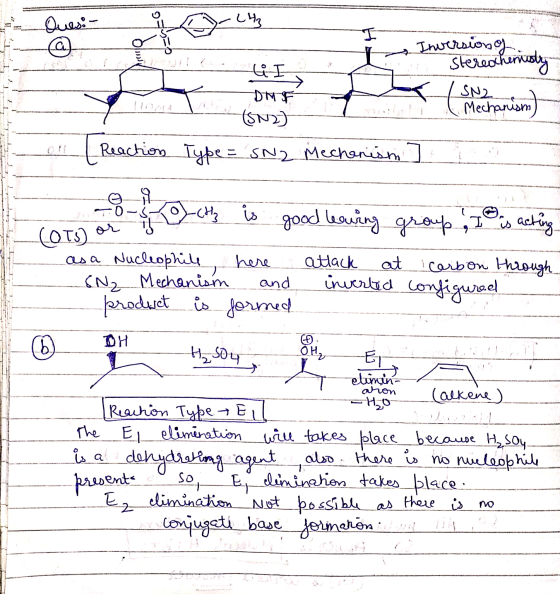
Add Answer to:
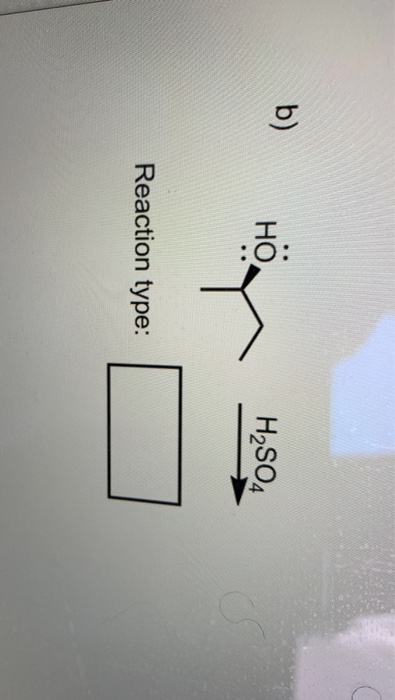
the instructions for both are in the first photo, thank
you!
1) Draw the structure of...
please explain in detail. Thank you in advance . 1. Circle the mechanism (SN2, SN1, E2,...
 please explain in detail. Thank you in advance .
1. Circle the mechanism (SN2, SN1, E2, or E1) responsible for the formation of each product in this reaction. If the product cannot be formed in the reaction, circle "not a product". (2 pts) CI CHE CH3 CHE CH3 осна SN2 SN1 E2 E1 S2 SN1 E2 E1 SN2 Sn1 E2 E1 SN2 SN1 E2 E1 not a product not a product not a product not a product 2. These reactions...
please explain in detail. Thank you in advance .
1. Circle the mechanism (SN2, SN1, E2, or E1) responsible for the formation of each product in this reaction. If the product cannot be formed in the reaction, circle "not a product". (2 pts) CI CHE CH3 CHE CH3 осна SN2 SN1 E2 E1 S2 SN1 E2 E1 SN2 Sn1 E2 E1 SN2 SN1 E2 E1 not a product not a product not a product not a product 2. These reactions...
Q1. Identify the reaction mechanism most likely to take place (E1, SN1, E2, SN2 or a...
 Q1. Identify the reaction mechanism most likely to take place (E1, SN1, E2, SN2 or a combination of these) in each of the following cases. Draw the major product(s), include stereochemistry when relevant. Br -OtBu Br NaCN, DMF → CI Носна 1. Nal/acetone 2. NaCN/DMF NaoMe H2SO4 OH Lyon CN (CH3)2CO CI NaOH →
1. The chiral compound in the center of the diagram below can undergo three different reactions. Fill in product struct...
 1. The chiral compound in the center of the diagram below can undergo three different reactions. Fill in product structures in each box and give their stereochemistry. For the Sul reaction the two products are enantiomers of each other. For the E1 reaction products, two are diastereomers of each other and the third is a constitutional isomer of the other two. H30 NaOH H20 E1 E2 Sn1 NaOH SN2 2. Draw the structure of the major product of the reaction...
Thank you so much! (2 pts) Draw the major elimination products and Identify the mechanism responsible...
 Thank you so much!
(2 pts) Draw the major elimination products and Identify the mechanism responsible (E1 or E2). If both E and Z isomers form, only draw the E alkene. If only one isomer forms, label the alkene "E,""Z," or neither 1. NaOCH3 а. Br НОСHЗ b. НОСНЗ C. CI NaOCH3 d. (6 pts) Draw the substitution and/or elimination product(s) for the following reactions and identify 2. the mechanism responsible (SN1, SN2, E1, or E2) for each product drawn....
Thank you so much!
(2 pts) Draw the major elimination products and Identify the mechanism responsible (E1 or E2). If both E and Z isomers form, only draw the E alkene. If only one isomer forms, label the alkene "E,""Z," or neither 1. NaOCH3 а. Br НОСHЗ b. НОСНЗ C. CI NaOCH3 d. (6 pts) Draw the substitution and/or elimination product(s) for the following reactions and identify 2. the mechanism responsible (SN1, SN2, E1, or E2) for each product drawn....
3. For each reaction, draw the structure of the major product(s) including stereochemistry where appropriate. Fill n t...
 3. For each reaction, draw the structure of the major product(s) including stereochemistry where appropriate. Fill n the box below each arrow with the mechanism(s) that will be followed (SN1/E1, SN2, or E2). For SN1/E1 reactions, draw products for both. NaCN DMF tBuOH 言言言 MeOH * | CH30 CH OH DMSO R-2-bromopentane
16. Give the major product that you would expect to be formed in each of the...
 16. Give the major product that you would expect to be formed in each of the following reactions. If you think there is no reaction write NR after the arrow. In each case give the mechanism (SN1, SN2, E1 or E2) by which the product is formed. Also indicate the correct stereochemistry when applicable. Both product and the mechanism should be correct to get credit. No partial credit. Nal -BuOK Acetone t-Buo NaSH DMF Br, H NaOMe DMSO MeOH,rt t-BuOH...
This is for an organic 1 class! Thank you! Write a mechanism that predicts all possible...
 This is for an organic 1 class! Thank you!
Write a mechanism that predicts all possible stereochemical products of the following five reactions, and indicate whether the reactions are Sn2, Sn1, E2, or E1.
This is for an organic 1 class! Thank you!
Write a mechanism that predicts all possible stereochemical products of the following five reactions, and indicate whether the reactions are Sn2, Sn1, E2, or E1.
3. Complete each of the following reactions. Draw the structure of the organic product or products...
 3. Complete each of the following reactions. Draw the structure of the organic product or products in the space provided. Show stereochemistry if appropriate. (3 points each) SN2 reaction (a) (CH3)CHCH2Cl + NaCN Sn1 reaction (b) (CH3)CHCH,CI + NaCN (C) M Sn2 reaction ¢l + NaOH - ACH. E1 reaction (d) (CH3)3CCH,OH + HCI major product Ez reaction Cl + NaOH - LCH3 н Ereaction Cl + H20
4. Draw the organic product of these reactions. Note that in so some cases, a 2-step...
 4. Draw the organic product of these reactions. Note that in so some cases, a 2-step process is written in this form. 1. reagents for 1st step REACTANT - PRODUCT 2. reagents for 2nd step OH + HB m i + HCI- + HCI + conc. H2SO4(aq) heat OH 1. NaOH 2. 1. mCPBA 2. H30+ 1. NaH CrO3, H2SO4(aq) OH acetone 5. State the major pathway by which these reactions wo product of that pathway. way by which these...
I need help with B. Professor's answer is SN2 but I thought it was E2 25. Draw the major product(s) expected for eac...
 I
need help with B. Professor's answer is SN2 but I thought it was E2
25. Draw the major product(s) expected for each reaction and also how each product is formed (options: SN1, SN2, E1, E2). Some reactions may occur via multiple pathways, in which case you should draw the major product for each pathway. Be sure to account for stereochemistry in your answers. If there is no reaction, write "No Reaction". Ez AL HACI 10 BuOK BuOH No SN...
I
need help with B. Professor's answer is SN2 but I thought it was E2
25. Draw the major product(s) expected for each reaction and also how each product is formed (options: SN1, SN2, E1, E2). Some reactions may occur via multiple pathways, in which case you should draw the major product for each pathway. Be sure to account for stereochemistry in your answers. If there is no reaction, write "No Reaction". Ez AL HACI 10 BuOK BuOH No SN...
 please explain in detail. Thank you in advance .
1. Circle the mechanism (SN2, SN1, E2, or E1) responsible for the formation of each product in this reaction. If the product cannot be formed in the reaction, circle "not a product". (2 pts) CI CHE CH3 CHE CH3 осна SN2 SN1 E2 E1 S2 SN1 E2 E1 SN2 Sn1 E2 E1 SN2 SN1 E2 E1 not a product not a product not a product not a product 2. These reactions...
please explain in detail. Thank you in advance .
1. Circle the mechanism (SN2, SN1, E2, or E1) responsible for the formation of each product in this reaction. If the product cannot be formed in the reaction, circle "not a product". (2 pts) CI CHE CH3 CHE CH3 осна SN2 SN1 E2 E1 S2 SN1 E2 E1 SN2 Sn1 E2 E1 SN2 SN1 E2 E1 not a product not a product not a product not a product 2. These reactions...
 Q1. Identify the reaction mechanism most likely to take place (E1, SN1, E2, SN2 or a combination of these) in each of the following cases. Draw the major product(s), include stereochemistry when relevant. Br -OtBu Br NaCN, DMF → CI Носна 1. Nal/acetone 2. NaCN/DMF NaoMe H2SO4 OH Lyon CN (CH3)2CO CI NaOH →
 1. The chiral compound in the center of the diagram below can undergo three different reactions. Fill in product structures in each box and give their stereochemistry. For the Sul reaction the two products are enantiomers of each other. For the E1 reaction products, two are diastereomers of each other and the third is a constitutional isomer of the other two. H30 NaOH H20 E1 E2 Sn1 NaOH SN2 2. Draw the structure of the major product of the reaction...
 Thank you so much!
(2 pts) Draw the major elimination products and Identify the mechanism responsible (E1 or E2). If both E and Z isomers form, only draw the E alkene. If only one isomer forms, label the alkene "E,""Z," or neither 1. NaOCH3 а. Br НОСHЗ b. НОСНЗ C. CI NaOCH3 d. (6 pts) Draw the substitution and/or elimination product(s) for the following reactions and identify 2. the mechanism responsible (SN1, SN2, E1, or E2) for each product drawn....
Thank you so much!
(2 pts) Draw the major elimination products and Identify the mechanism responsible (E1 or E2). If both E and Z isomers form, only draw the E alkene. If only one isomer forms, label the alkene "E,""Z," or neither 1. NaOCH3 а. Br НОСHЗ b. НОСНЗ C. CI NaOCH3 d. (6 pts) Draw the substitution and/or elimination product(s) for the following reactions and identify 2. the mechanism responsible (SN1, SN2, E1, or E2) for each product drawn....
 3. For each reaction, draw the structure of the major product(s) including stereochemistry where appropriate. Fill n the box below each arrow with the mechanism(s) that will be followed (SN1/E1, SN2, or E2). For SN1/E1 reactions, draw products for both. NaCN DMF tBuOH 言言言 MeOH * | CH30 CH OH DMSO R-2-bromopentane
 16. Give the major product that you would expect to be formed in each of the following reactions. If you think there is no reaction write NR after the arrow. In each case give the mechanism (SN1, SN2, E1 or E2) by which the product is formed. Also indicate the correct stereochemistry when applicable. Both product and the mechanism should be correct to get credit. No partial credit. Nal -BuOK Acetone t-Buo NaSH DMF Br, H NaOMe DMSO MeOH,rt t-BuOH...
 This is for an organic 1 class! Thank you!
Write a mechanism that predicts all possible stereochemical products of the following five reactions, and indicate whether the reactions are Sn2, Sn1, E2, or E1.
This is for an organic 1 class! Thank you!
Write a mechanism that predicts all possible stereochemical products of the following five reactions, and indicate whether the reactions are Sn2, Sn1, E2, or E1.
 3. Complete each of the following reactions. Draw the structure of the organic product or products in the space provided. Show stereochemistry if appropriate. (3 points each) SN2 reaction (a) (CH3)CHCH2Cl + NaCN Sn1 reaction (b) (CH3)CHCH,CI + NaCN (C) M Sn2 reaction ¢l + NaOH - ACH. E1 reaction (d) (CH3)3CCH,OH + HCI major product Ez reaction Cl + NaOH - LCH3 н Ereaction Cl + H20
 4. Draw the organic product of these reactions. Note that in so some cases, a 2-step process is written in this form. 1. reagents for 1st step REACTANT - PRODUCT 2. reagents for 2nd step OH + HB m i + HCI- + HCI + conc. H2SO4(aq) heat OH 1. NaOH 2. 1. mCPBA 2. H30+ 1. NaH CrO3, H2SO4(aq) OH acetone 5. State the major pathway by which these reactions wo product of that pathway. way by which these...
 I
need help with B. Professor's answer is SN2 but I thought it was E2
25. Draw the major product(s) expected for each reaction and also how each product is formed (options: SN1, SN2, E1, E2). Some reactions may occur via multiple pathways, in which case you should draw the major product for each pathway. Be sure to account for stereochemistry in your answers. If there is no reaction, write "No Reaction". Ez AL HACI 10 BuOK BuOH No SN...
I
need help with B. Professor's answer is SN2 but I thought it was E2
25. Draw the major product(s) expected for each reaction and also how each product is formed (options: SN1, SN2, E1, E2). Some reactions may occur via multiple pathways, in which case you should draw the major product for each pathway. Be sure to account for stereochemistry in your answers. If there is no reaction, write "No Reaction". Ez AL HACI 10 BuOK BuOH No SN...
Most questions answered within 3 hours.
-
Where is the error in this code sequence?
String s1 = "Hello";
String s2 = "ello";...
asked 10 months ago -
Financial data for Joel de Paris, Inc., for last year
follow:
Joel de Paris, Inc.
Balance...
asked 10 months ago -
Consider this reaction:
Al2(SO4)3 (aq)+ BaCl3
(aq) Al2Cl6 (aq)- +
3BaSO4(s) . What is the...
asked 10 months ago -
Suppose that Savneet is considering increasing her
recent random sample from 20 car rentals to 40...
asked 10 months ago -
Trucks arrive at an unloading terminal at an average rate of 120
per hour.
Trucks arrive...
asked 10 months ago -
Why are methanol and ethanol completely soluble in water while
octanol is not very little soluble....
asked 10 months ago -
A facilities manager at a university reads in a research report
that the mean amount of...
asked 10 months ago -
When the CuSO4 is rehydrated by adding water to the anhydrous
compound, is this an endothermic...
asked 10 months ago -
A ray of sunlight is passing from diamond into crown glass; the
angle of incidence is...
asked 10 months ago -
A block of mass 0.249 kg is placed on top of a light, vertical
spring of...
asked 10 months ago -
how do the kidneys compensate in the presences of acidosis
a) trigger hyperventilate
b) reserve acid...
asked 10 months ago -
Question 501 pts
The rental rate of capital to the firm increases. Which of the
following...
asked 10 months ago