
Homework Answers
Add Answer to:
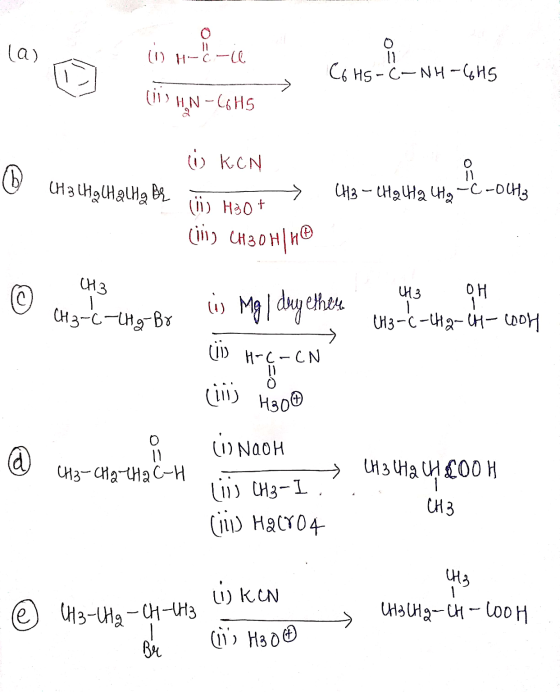
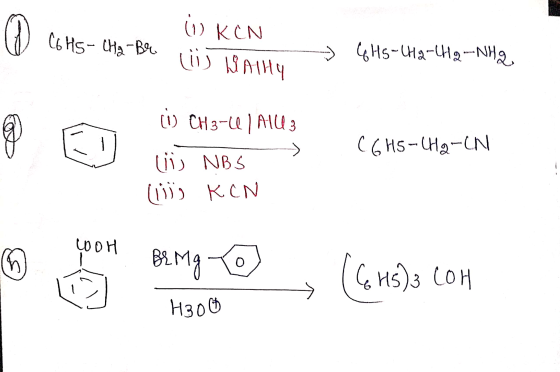
7. Suggest a practical method for the following conversions. benzene as the only source of carbon...
Mechanism #1. Suggest a mechanism for the following reaction and propose a practical method to the equilibrium to t...
 Mechanism #1. Suggest a mechanism for the following reaction and propose a practical method to the equilibrium to the right. actical method for driving C ome onsenson - OCH3 + CH (CH), OH H Choose O(CH2),CH, + CH,OH
H3C Br СНа -С-Сн, ОН (d) for carrying out each of the following conversions to yield...
 H3C Br СНа -С-Сн, ОН (d) for carrying out each of the following conversions to yield a 12 Suggest conditions for carrying out each of the following product that is as free of isomers as possible (a) HO OH CH, CH3 H₃ C CH-(CH₂-ci Hz CH-(CH2)-OH H₃C H₃C 22
Mechanism #1. Suggest a mechanism for the following reaction and propose a practical method for driving...
 Mechanism #1. Suggest a mechanism for the following reaction and propose a practical method for driving the equilibrium to the right. obr. wown in boven TOCH + CH (CH),OH b(CH2-CH3 + CHOH Mechanism #2. The hydrolysis of esters using base (typically NaOH) is termed "saponification", and is often used to make soaps. Propose a mechanism for the saponification reaction shown below. Remember, hydroxide is a strong nucleophile. & non ha and
1) Order the following from least reactive o most CH-8-0-8-CH, -OCHCH, CH-8-a 2) What is the...
 1) Order the following from least reactive o most CH-8-0-8-CH, -OCHCH, CH-8-a 2) What is the IUPAC name? CHO CH3-CH=CH-CH-C-OH 3) Which is the strongest acid? CF,CH,COH CF,COH CCI,COH 4) What is the product of this reaction? (CH3),CHCH_Li-2.990 Ft 5) What is the missing reagent? W CH OH ~ CO,H 6) What is the product? CH,CH, Mgr 7) What is the product of the following reaction? CH,-&- COMME 8) Draw the structure of a 4 carbon containing lactone. 9) Provide...
1) Order the following from least reactive o most | ca, -o--CH, CH --CH-CH, CH3-8-a 2) What is the IUPAC name? CH,...
 1) Order the following from least reactive o most | ca, -o--CH, CH --CH-CH, CH3-8-a 2) What is the IUPAC name? CH, . CH3-CH=CH-CH-C-OH 3) Which is the strongest acid? CF,CH.CH CECOH cc.,ČOH 4) What is the product of this reaction? (CH3),CHCH,Li 2.490. 5) What is the missing reagent? CH,он л соно 6) What is the product? CH,CH-MgBr 7) What is the product of the following reaction? CH,-6-g ĐH,CH,NH, . 8) Draw the structure of a 4 carbon containing lactone....
5-80 4.4 7) What is the product of the following reaction? CHy-C-aa,CH-N 8) Draw the structure of a 4 carbon contai...
 5-80 4.4 7) What is the product of the following reaction? CHy-C-aa,CH-N 8) Draw the structure of a 4 carbon containing lactone. CH-CH CH-CH-C-OH 9) Provide the major organic product of the reaction below. CECO Soto o louboin d CH-CH-оH CCFCOH CPCHCOH H (cat.) 0) Which of the following can produce Benzoic acid from benzene? 1) HNO3, H,SO 2) CH,CL. AICI 3) NaNO2, HCl, cold 4) CUCN 1) HNO3, H,SO H 2) Fe, HCI 3) NANO,, HCI, cold 4) CUCN...
please help. thanks in advance! 6 Which of the following arrows correctly points to the anomeric carbon? 7. Of the following, what is the most likely reason that cooking with Nutrasweet (Aspartam...
 please help. thanks in advance!
6 Which of the following arrows correctly points to the anomeric carbon? 7. Of the following, what is the most likely reason that cooking with Nutrasweet (Aspartame) destroys the sweetness? HO-C-CH2-CH-C-N-CH-C-OCH NH2 CH2-CsHs Aspartame 8. A heptapeptide containing 2 alanine residues and one each of glutamine, phenylalanine, roline, tyrosine and valine was analyzed as follows: 1. Treatmen w 2,4-dinitrofluorobenzene followed by complete hydrolysis yielded 2,4-dinitrophenylalanine. 2. Partial hydrolysis with aqueous acid yielded the following fragments:...
please help. thanks in advance!
6 Which of the following arrows correctly points to the anomeric carbon? 7. Of the following, what is the most likely reason that cooking with Nutrasweet (Aspartame) destroys the sweetness? HO-C-CH2-CH-C-N-CH-C-OCH NH2 CH2-CsHs Aspartame 8. A heptapeptide containing 2 alanine residues and one each of glutamine, phenylalanine, roline, tyrosine and valine was analyzed as follows: 1. Treatmen w 2,4-dinitrofluorobenzene followed by complete hydrolysis yielded 2,4-dinitrophenylalanine. 2. Partial hydrolysis with aqueous acid yielded the following fragments:...
1. [10 pts] Consider the elimination reaction for the following alkyl halide with sodium methoxide in...
 1. [10 pts] Consider the elimination reaction for the following alkyl halide with sodium methoxide in methanol (Na* OCH, CH,OH). CH NaOme MeOH CH Compound A Problem 2c Draw the major expected organic product (a) Redraw Compound A as seen in Viewpoint I below left as a Newman projection on the template provided in Problem 2a (below). Hint: Fill in missing Hs ar C2 and C3 to help you get started! (b) Rotate the C2 C3 bond to obtain the...
What is the correct name for the following compound? d) 5-oxo-3-octenoic acid What is the defining...
 What is the correct name for the following compound? d) 5-oxo-3-octenoic acid What is the defining functional group of a carboxylic acid? a) an-H attached to a carbonyl group b) an-H attached to a carbon-carbon triple bond c) an-OH attached to a carbonyl group d) an -OH group attached to a O-C double bond e) an-OH group attached to an aromatic ring To convert a carboxylic acid to an aldehyde a) convert the acid to an acid chloride, then use...
1) Name the following carboxylic acids (use both IUPAC and common names): ОН ОН (b) (c)...
 1) Name the following carboxylic acids (use both IUPAC and common names): ОН ОН (b) (c) ОН ОН (d) Br ОН ОН NH2 2) Draw the condensed and line structures for the following compounds (a) 3,4-dimethylhexanoic acid (b) Phenylacetic acid (c) 3,4-dinitrobenzoic acid (d) 2,2,3-triflurobutanoic acid (e) 3-hydroxybutanoic acid (1) o-hydroxybenzoic acid (g) a-aminopropionic acid 3) Name the following dicarboxylic acids (use both IUPAC and common names) Он (а) НО ОН НО. (b) он ОН ОН (d) ОН он ОН...
 Mechanism #1. Suggest a mechanism for the following reaction and propose a practical method to the equilibrium to the right. actical method for driving C ome onsenson - OCH3 + CH (CH), OH H Choose O(CH2),CH, + CH,OH
 H3C Br СНа -С-Сн, ОН (d) for carrying out each of the following conversions to yield a 12 Suggest conditions for carrying out each of the following product that is as free of isomers as possible (a) HO OH CH, CH3 H₃ C CH-(CH₂-ci Hz CH-(CH2)-OH H₃C H₃C 22
 Mechanism #1. Suggest a mechanism for the following reaction and propose a practical method for driving the equilibrium to the right. obr. wown in boven TOCH + CH (CH),OH b(CH2-CH3 + CHOH Mechanism #2. The hydrolysis of esters using base (typically NaOH) is termed "saponification", and is often used to make soaps. Propose a mechanism for the saponification reaction shown below. Remember, hydroxide is a strong nucleophile. & non ha and
 1) Order the following from least reactive o most CH-8-0-8-CH, -OCHCH, CH-8-a 2) What is the IUPAC name? CHO CH3-CH=CH-CH-C-OH 3) Which is the strongest acid? CF,CH,COH CF,COH CCI,COH 4) What is the product of this reaction? (CH3),CHCH_Li-2.990 Ft 5) What is the missing reagent? W CH OH ~ CO,H 6) What is the product? CH,CH, Mgr 7) What is the product of the following reaction? CH,-&- COMME 8) Draw the structure of a 4 carbon containing lactone. 9) Provide...
 1) Order the following from least reactive o most | ca, -o--CH, CH --CH-CH, CH3-8-a 2) What is the IUPAC name? CH, . CH3-CH=CH-CH-C-OH 3) Which is the strongest acid? CF,CH.CH CECOH cc.,ČOH 4) What is the product of this reaction? (CH3),CHCH,Li 2.490. 5) What is the missing reagent? CH,он л соно 6) What is the product? CH,CH-MgBr 7) What is the product of the following reaction? CH,-6-g ĐH,CH,NH, . 8) Draw the structure of a 4 carbon containing lactone....
 5-80 4.4 7) What is the product of the following reaction? CHy-C-aa,CH-N 8) Draw the structure of a 4 carbon containing lactone. CH-CH CH-CH-C-OH 9) Provide the major organic product of the reaction below. CECO Soto o louboin d CH-CH-оH CCFCOH CPCHCOH H (cat.) 0) Which of the following can produce Benzoic acid from benzene? 1) HNO3, H,SO 2) CH,CL. AICI 3) NaNO2, HCl, cold 4) CUCN 1) HNO3, H,SO H 2) Fe, HCI 3) NANO,, HCI, cold 4) CUCN...
 please help. thanks in advance!
6 Which of the following arrows correctly points to the anomeric carbon? 7. Of the following, what is the most likely reason that cooking with Nutrasweet (Aspartame) destroys the sweetness? HO-C-CH2-CH-C-N-CH-C-OCH NH2 CH2-CsHs Aspartame 8. A heptapeptide containing 2 alanine residues and one each of glutamine, phenylalanine, roline, tyrosine and valine was analyzed as follows: 1. Treatmen w 2,4-dinitrofluorobenzene followed by complete hydrolysis yielded 2,4-dinitrophenylalanine. 2. Partial hydrolysis with aqueous acid yielded the following fragments:...
please help. thanks in advance!
6 Which of the following arrows correctly points to the anomeric carbon? 7. Of the following, what is the most likely reason that cooking with Nutrasweet (Aspartame) destroys the sweetness? HO-C-CH2-CH-C-N-CH-C-OCH NH2 CH2-CsHs Aspartame 8. A heptapeptide containing 2 alanine residues and one each of glutamine, phenylalanine, roline, tyrosine and valine was analyzed as follows: 1. Treatmen w 2,4-dinitrofluorobenzene followed by complete hydrolysis yielded 2,4-dinitrophenylalanine. 2. Partial hydrolysis with aqueous acid yielded the following fragments:...
 1. [10 pts] Consider the elimination reaction for the following alkyl halide with sodium methoxide in methanol (Na* OCH, CH,OH). CH NaOme MeOH CH Compound A Problem 2c Draw the major expected organic product (a) Redraw Compound A as seen in Viewpoint I below left as a Newman projection on the template provided in Problem 2a (below). Hint: Fill in missing Hs ar C2 and C3 to help you get started! (b) Rotate the C2 C3 bond to obtain the...
 What is the correct name for the following compound? d) 5-oxo-3-octenoic acid What is the defining functional group of a carboxylic acid? a) an-H attached to a carbonyl group b) an-H attached to a carbon-carbon triple bond c) an-OH attached to a carbonyl group d) an -OH group attached to a O-C double bond e) an-OH group attached to an aromatic ring To convert a carboxylic acid to an aldehyde a) convert the acid to an acid chloride, then use...
 1) Name the following carboxylic acids (use both IUPAC and common names): ОН ОН (b) (c) ОН ОН (d) Br ОН ОН NH2 2) Draw the condensed and line structures for the following compounds (a) 3,4-dimethylhexanoic acid (b) Phenylacetic acid (c) 3,4-dinitrobenzoic acid (d) 2,2,3-triflurobutanoic acid (e) 3-hydroxybutanoic acid (1) o-hydroxybenzoic acid (g) a-aminopropionic acid 3) Name the following dicarboxylic acids (use both IUPAC and common names) Он (а) НО ОН НО. (b) он ОН ОН (d) ОН он ОН...
Most questions answered within 3 hours.
-
Where is the error in this code sequence?
String s1 = "Hello";
String s2 = "ello";...
asked 10 months ago -
Financial data for Joel de Paris, Inc., for last year
follow:
Joel de Paris, Inc.
Balance...
asked 10 months ago -
Consider this reaction:
Al2(SO4)3 (aq)+ BaCl3
(aq) Al2Cl6 (aq)- +
3BaSO4(s) . What is the...
asked 10 months ago -
Suppose that Savneet is considering increasing her
recent random sample from 20 car rentals to 40...
asked 10 months ago -
Trucks arrive at an unloading terminal at an average rate of 120
per hour.
Trucks arrive...
asked 10 months ago -
Why are methanol and ethanol completely soluble in water while
octanol is not very little soluble....
asked 10 months ago -
A facilities manager at a university reads in a research report
that the mean amount of...
asked 10 months ago -
When the CuSO4 is rehydrated by adding water to the anhydrous
compound, is this an endothermic...
asked 10 months ago -
A ray of sunlight is passing from diamond into crown glass; the
angle of incidence is...
asked 10 months ago -
A block of mass 0.249 kg is placed on top of a light, vertical
spring of...
asked 10 months ago -
how do the kidneys compensate in the presences of acidosis
a) trigger hyperventilate
b) reserve acid...
asked 10 months ago -
Question 501 pts
The rental rate of capital to the firm increases. Which of the
following...
asked 10 months ago