
Homework Answers
Solution,
As per given details,
f(x) = x ln(x)
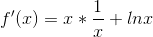


= 3.091864062
error = 1.859*10-4

=3.116255515
error = 3.116255515 - 3.11615
= 1.055*10-4

= 3.140066163

= 3.163323026
error = 2.019*10-4
| x | f(x) | f'(x) | error |
| 8.1 | 16.94410 | 3.09205 | 1.859*10-4 |
| 8.3 | 17.56492 | 3.11615 | 1.055*10-4 |
| 8.5 | 18.19056 | 3.139975 | 9.11*10-4 |
| 8.7 | 18.82091 | 3.163525 | 2.019*10-4 |
Add Answer to:
solve the error bound in part b for numerical analysis
Question one (a) Use the most...
Question involving Simpon's rule, Midpoint rule, and the error bound rule. How do I solve for b),...
 Question involving Simpon's rule, Midpoint rule, and the error
bound rule. How do I solve for b), d), and g)?
Let f(x)-ecos(x) and 1 -Ís2π f(x) dx (a) Use M1o to approximate I to six decimal places. M17.95492651755339 (b) Use the fact that |f"(x)| e on [0, 2T to obtain an upper bound on the absolute error EM of the approximation from (a). Make sure your answer is correct to six decimal places EM0.16234848503 (c) Use Si0 to approximate I...
Question involving Simpon's rule, Midpoint rule, and the error
bound rule. How do I solve for b), d), and g)?
Let f(x)-ecos(x) and 1 -Ís2π f(x) dx (a) Use M1o to approximate I to six decimal places. M17.95492651755339 (b) Use the fact that |f"(x)| e on [0, 2T to obtain an upper bound on the absolute error EM of the approximation from (a). Make sure your answer is correct to six decimal places EM0.16234848503 (c) Use Si0 to approximate I...
the question is from my Numerical methods and analysis course et /()-sin(), where is measured in radians. (a...
 the
question is from my Numerical methods and analysis course
et /()-sin(), where is measured in radians. (a). Calculate approximations to ) using Theorem 6.1 with h-0.1, h-0.01 and h-0.001, Carry eight or nine decimal places. (b). Compare with the value /(0.8)-cos(08), i.e. calculating the error of approximation. s(0.8) Theorem 6.1 (Centered Formula of Order 0(h)). Assume that fe Cla, bl and that x -h. x, x + h e la, bl. Then The notation S) stands for the set...
the
question is from my Numerical methods and analysis course
et /()-sin(), where is measured in radians. (a). Calculate approximations to ) using Theorem 6.1 with h-0.1, h-0.01 and h-0.001, Carry eight or nine decimal places. (b). Compare with the value /(0.8)-cos(08), i.e. calculating the error of approximation. s(0.8) Theorem 6.1 (Centered Formula of Order 0(h)). Assume that fe Cla, bl and that x -h. x, x + h e la, bl. Then The notation S) stands for the set...
this is numerical analysis. Please do a and b 4. Consider the ordinary differential equation 1'(x)...
 this is numerical analysis. Please do a and b
4. Consider the ordinary differential equation 1'(x) = f(x, y(x)), y(ro) = Yo. (1) (a) Use numerical integration to derive the trapezoidal method for the above with uniform step size h. (You don't have to give the truncation error.) (b) Given below is a multistep method for solving (1) (with uniform step size h): bo +1 = 34 – 2n=1 + h (362. Yn) = f(n=1, 4n-1)) What is the truncation...
this is numerical analysis. Please do a and b
4. Consider the ordinary differential equation 1'(x) = f(x, y(x)), y(ro) = Yo. (1) (a) Use numerical integration to derive the trapezoidal method for the above with uniform step size h. (You don't have to give the truncation error.) (b) Given below is a multistep method for solving (1) (with uniform step size h): bo +1 = 34 – 2n=1 + h (362. Yn) = f(n=1, 4n-1)) What is the truncation...
Can you help solve Problem 5 part c? Problem 5: . (a) Find the Taylor polynomials Τη ( ) for f(z)-1. centered at a-1 b) Compute the error bound for |f (2) Tn (2) (c) Find |f(2)-i00p(2) Problem 5...
 Can you help solve Problem 5 part c?
Problem 5: . (a) Find the Taylor polynomials Τη ( ) for f(z)-1. centered at a-1 b) Compute the error bound for |f (2) Tn (2) (c) Find |f(2)-i00p(2)
Problem 5: . (a) Find the Taylor polynomials Τη ( ) for f(z)-1. centered at a-1 b) Compute the error bound for |f (2) Tn (2) (c) Find |f(2)-i00p(2)
Can you help solve Problem 5 part c?
Problem 5: . (a) Find the Taylor polynomials Τη ( ) for f(z)-1. centered at a-1 b) Compute the error bound for |f (2) Tn (2) (c) Find |f(2)-i00p(2)
Problem 5: . (a) Find the Taylor polynomials Τη ( ) for f(z)-1. centered at a-1 b) Compute the error bound for |f (2) Tn (2) (c) Find |f(2)-i00p(2)
Need answer of part b solve part b using this formula [A] Find the 3rd degree...
 Need answer of part b
solve part b using this formula
[A] Find the 3rd degree Taylor Polynomial for f(x) = V centered at x = 8. Clearly show all derivatives involved as well as the values obtained from those derivatives as was done in Example 2 from Section 11.1 of the book and Examples 1 and 2 in the Unit 4.1 Summary Notes. Simplify the coefficients in your final answer (no factorials in the final answer; do not use...
Need answer of part b
solve part b using this formula
[A] Find the 3rd degree Taylor Polynomial for f(x) = V centered at x = 8. Clearly show all derivatives involved as well as the values obtained from those derivatives as was done in Example 2 from Section 11.1 of the book and Examples 1 and 2 in the Unit 4.1 Summary Notes. Simplify the coefficients in your final answer (no factorials in the final answer; do not use...
7. Give the formula of avoiding roundoff error to solve each of the fol- lowing problem...
 7. Give the formula of avoiding roundoff error to solve each of the fol- lowing problem and compute the numerical values. All the results are approximated to 4 digits with rounding arithmetic. (1). Find the roots of the quadratic equation 123 1 2+ 1 0 4 6 (Hint: first observe b and 62 - 4ac) -5+ b2 - 4ac c/a (Answer:21 22 = ; 21 = 92.24, 22 2a I 1 10-3) 5.420 x 9 (2). Compute In (50 –...
Please answer a,b and d(most important) . TQ (BEKG 2443) PART B: ANSWER ONE QUESTION ONLY...
 Please answer a,b and d(most important) . TQ
(BEKG 2443) PART B: ANSWER ONE QUESTION ONLY QUESTION 4 Given S is a surface for a part of the sphere x2 + y2 + x2 = 4 that lies above the cone z = √ x² + y² (a) Find a parametric representation for the surface S in terms of 6 and 0. Then, determine the domain of O and e. (5 marks) (b) Based on the expression written in (a),...
Please answer a,b and d(most important) . TQ
(BEKG 2443) PART B: ANSWER ONE QUESTION ONLY QUESTION 4 Given S is a surface for a part of the sphere x2 + y2 + x2 = 4 that lies above the cone z = √ x² + y² (a) Find a parametric representation for the surface S in terms of 6 and 0. Then, determine the domain of O and e. (5 marks) (b) Based on the expression written in (a),...
Problems 473 results from parts (a), (b), and (c). What model seems most plausible? How do the da...
 can you answer question 9 please
Problems 473 results from parts (a), (b), and (c). What model seems most plausible? How do the data limit your conclusions? tle the data from Freund (1979), presented in Problem 22 in Chapter 14. Taking be model discussed there as the maximum model, repeat parts (a) through (h) of Problem 6. In part (h), note the possible role of collinearity. A random sample of data was collected on residential sales in a large city....
can you answer question 9 please
Problems 473 results from parts (a), (b), and (c). What model seems most plausible? How do the data limit your conclusions? tle the data from Freund (1979), presented in Problem 22 in Chapter 14. Taking be model discussed there as the maximum model, repeat parts (a) through (h) of Problem 6. In part (h), note the possible role of collinearity. A random sample of data was collected on residential sales in a large city....
I am very confused on number one of Part 1 of my lab analysis. This lab...
 I am very confused on number one of Part 1 of my lab analysis.
This lab was focused on 2D collisions with the purpose to verify
the Law of Conservation of Momentum using straight and angled
collisions. I have attached a picture of the procedure from part 1,
my data, and the analysis question I am stuck on. Again, it is
question #1 on the Parts I and II Analysis section. Please
help!!
Part I: Mass of Ball A (gray...
I am very confused on number one of Part 1 of my lab analysis.
This lab was focused on 2D collisions with the purpose to verify
the Law of Conservation of Momentum using straight and angled
collisions. I have attached a picture of the procedure from part 1,
my data, and the analysis question I am stuck on. Again, it is
question #1 on the Parts I and II Analysis section. Please
help!!
Part I: Mass of Ball A (gray...
4.3 Analysis Assignment #4 Note 1: all assignments moving forward must adhere to the appropriate Six Ste...
 4.3 Analysis Assignment #4 Note 1: all assignments moving forward must adhere to the appropriate Six Step Process (SSP). As our study materials have specified, the SSP has 3 versions. Version 1 is to be used for all t-tests; for all correlation analyses and Version 3 is be used for all regression analyses. Note 2: The data sets for Q1, Q2 and Q3 below can be downloaded here. Week 4 Analysis Assignments.xlsx Q1: (30 points) Complete the following data analysis:...
 Question involving Simpon's rule, Midpoint rule, and the error
bound rule. How do I solve for b), d), and g)?
Let f(x)-ecos(x) and 1 -Ís2π f(x) dx (a) Use M1o to approximate I to six decimal places. M17.95492651755339 (b) Use the fact that |f"(x)| e on [0, 2T to obtain an upper bound on the absolute error EM of the approximation from (a). Make sure your answer is correct to six decimal places EM0.16234848503 (c) Use Si0 to approximate I...
Question involving Simpon's rule, Midpoint rule, and the error
bound rule. How do I solve for b), d), and g)?
Let f(x)-ecos(x) and 1 -Ís2π f(x) dx (a) Use M1o to approximate I to six decimal places. M17.95492651755339 (b) Use the fact that |f"(x)| e on [0, 2T to obtain an upper bound on the absolute error EM of the approximation from (a). Make sure your answer is correct to six decimal places EM0.16234848503 (c) Use Si0 to approximate I...
 the
question is from my Numerical methods and analysis course
et /()-sin(), where is measured in radians. (a). Calculate approximations to ) using Theorem 6.1 with h-0.1, h-0.01 and h-0.001, Carry eight or nine decimal places. (b). Compare with the value /(0.8)-cos(08), i.e. calculating the error of approximation. s(0.8) Theorem 6.1 (Centered Formula of Order 0(h)). Assume that fe Cla, bl and that x -h. x, x + h e la, bl. Then The notation S) stands for the set...
the
question is from my Numerical methods and analysis course
et /()-sin(), where is measured in radians. (a). Calculate approximations to ) using Theorem 6.1 with h-0.1, h-0.01 and h-0.001, Carry eight or nine decimal places. (b). Compare with the value /(0.8)-cos(08), i.e. calculating the error of approximation. s(0.8) Theorem 6.1 (Centered Formula of Order 0(h)). Assume that fe Cla, bl and that x -h. x, x + h e la, bl. Then The notation S) stands for the set...
 this is numerical analysis. Please do a and b
4. Consider the ordinary differential equation 1'(x) = f(x, y(x)), y(ro) = Yo. (1) (a) Use numerical integration to derive the trapezoidal method for the above with uniform step size h. (You don't have to give the truncation error.) (b) Given below is a multistep method for solving (1) (with uniform step size h): bo +1 = 34 – 2n=1 + h (362. Yn) = f(n=1, 4n-1)) What is the truncation...
this is numerical analysis. Please do a and b
4. Consider the ordinary differential equation 1'(x) = f(x, y(x)), y(ro) = Yo. (1) (a) Use numerical integration to derive the trapezoidal method for the above with uniform step size h. (You don't have to give the truncation error.) (b) Given below is a multistep method for solving (1) (with uniform step size h): bo +1 = 34 – 2n=1 + h (362. Yn) = f(n=1, 4n-1)) What is the truncation...
 Can you help solve Problem 5 part c?
Problem 5: . (a) Find the Taylor polynomials Τη ( ) for f(z)-1. centered at a-1 b) Compute the error bound for |f (2) Tn (2) (c) Find |f(2)-i00p(2)
Problem 5: . (a) Find the Taylor polynomials Τη ( ) for f(z)-1. centered at a-1 b) Compute the error bound for |f (2) Tn (2) (c) Find |f(2)-i00p(2)
Can you help solve Problem 5 part c?
Problem 5: . (a) Find the Taylor polynomials Τη ( ) for f(z)-1. centered at a-1 b) Compute the error bound for |f (2) Tn (2) (c) Find |f(2)-i00p(2)
Problem 5: . (a) Find the Taylor polynomials Τη ( ) for f(z)-1. centered at a-1 b) Compute the error bound for |f (2) Tn (2) (c) Find |f(2)-i00p(2)
 Need answer of part b
solve part b using this formula
[A] Find the 3rd degree Taylor Polynomial for f(x) = V centered at x = 8. Clearly show all derivatives involved as well as the values obtained from those derivatives as was done in Example 2 from Section 11.1 of the book and Examples 1 and 2 in the Unit 4.1 Summary Notes. Simplify the coefficients in your final answer (no factorials in the final answer; do not use...
Need answer of part b
solve part b using this formula
[A] Find the 3rd degree Taylor Polynomial for f(x) = V centered at x = 8. Clearly show all derivatives involved as well as the values obtained from those derivatives as was done in Example 2 from Section 11.1 of the book and Examples 1 and 2 in the Unit 4.1 Summary Notes. Simplify the coefficients in your final answer (no factorials in the final answer; do not use...
 7. Give the formula of avoiding roundoff error to solve each of the fol- lowing problem and compute the numerical values. All the results are approximated to 4 digits with rounding arithmetic. (1). Find the roots of the quadratic equation 123 1 2+ 1 0 4 6 (Hint: first observe b and 62 - 4ac) -5+ b2 - 4ac c/a (Answer:21 22 = ; 21 = 92.24, 22 2a I 1 10-3) 5.420 x 9 (2). Compute In (50 –...
 Please answer a,b and d(most important) . TQ
(BEKG 2443) PART B: ANSWER ONE QUESTION ONLY QUESTION 4 Given S is a surface for a part of the sphere x2 + y2 + x2 = 4 that lies above the cone z = √ x² + y² (a) Find a parametric representation for the surface S in terms of 6 and 0. Then, determine the domain of O and e. (5 marks) (b) Based on the expression written in (a),...
Please answer a,b and d(most important) . TQ
(BEKG 2443) PART B: ANSWER ONE QUESTION ONLY QUESTION 4 Given S is a surface for a part of the sphere x2 + y2 + x2 = 4 that lies above the cone z = √ x² + y² (a) Find a parametric representation for the surface S in terms of 6 and 0. Then, determine the domain of O and e. (5 marks) (b) Based on the expression written in (a),...
 can you answer question 9 please
Problems 473 results from parts (a), (b), and (c). What model seems most plausible? How do the data limit your conclusions? tle the data from Freund (1979), presented in Problem 22 in Chapter 14. Taking be model discussed there as the maximum model, repeat parts (a) through (h) of Problem 6. In part (h), note the possible role of collinearity. A random sample of data was collected on residential sales in a large city....
can you answer question 9 please
Problems 473 results from parts (a), (b), and (c). What model seems most plausible? How do the data limit your conclusions? tle the data from Freund (1979), presented in Problem 22 in Chapter 14. Taking be model discussed there as the maximum model, repeat parts (a) through (h) of Problem 6. In part (h), note the possible role of collinearity. A random sample of data was collected on residential sales in a large city....
 I am very confused on number one of Part 1 of my lab analysis.
This lab was focused on 2D collisions with the purpose to verify
the Law of Conservation of Momentum using straight and angled
collisions. I have attached a picture of the procedure from part 1,
my data, and the analysis question I am stuck on. Again, it is
question #1 on the Parts I and II Analysis section. Please
help!!
Part I: Mass of Ball A (gray...
I am very confused on number one of Part 1 of my lab analysis.
This lab was focused on 2D collisions with the purpose to verify
the Law of Conservation of Momentum using straight and angled
collisions. I have attached a picture of the procedure from part 1,
my data, and the analysis question I am stuck on. Again, it is
question #1 on the Parts I and II Analysis section. Please
help!!
Part I: Mass of Ball A (gray...
 4.3 Analysis Assignment #4 Note 1: all assignments moving forward must adhere to the appropriate Six Step Process (SSP). As our study materials have specified, the SSP has 3 versions. Version 1 is to be used for all t-tests; for all correlation analyses and Version 3 is be used for all regression analyses. Note 2: The data sets for Q1, Q2 and Q3 below can be downloaded here. Week 4 Analysis Assignments.xlsx Q1: (30 points) Complete the following data analysis:...
Most questions answered within 3 hours.
-
Where is the error in this code sequence?
String s1 = "Hello";
String s2 = "ello";...
asked 10 months ago -
Financial data for Joel de Paris, Inc., for last year
follow:
Joel de Paris, Inc.
Balance...
asked 10 months ago -
Consider this reaction:
Al2(SO4)3 (aq)+ BaCl3
(aq) Al2Cl6 (aq)- +
3BaSO4(s) . What is the...
asked 10 months ago -
Suppose that Savneet is considering increasing her
recent random sample from 20 car rentals to 40...
asked 10 months ago -
Trucks arrive at an unloading terminal at an average rate of 120
per hour.
Trucks arrive...
asked 10 months ago -
Why are methanol and ethanol completely soluble in water while
octanol is not very little soluble....
asked 10 months ago -
A facilities manager at a university reads in a research report
that the mean amount of...
asked 10 months ago -
When the CuSO4 is rehydrated by adding water to the anhydrous
compound, is this an endothermic...
asked 10 months ago -
A ray of sunlight is passing from diamond into crown glass; the
angle of incidence is...
asked 10 months ago -
A block of mass 0.249 kg is placed on top of a light, vertical
spring of...
asked 10 months ago -
how do the kidneys compensate in the presences of acidosis
a) trigger hyperventilate
b) reserve acid...
asked 10 months ago -
Question 501 pts
The rental rate of capital to the firm increases. Which of the
following...
asked 10 months ago