The electric potential changes from 0 to 100V. A particle with a charge of 1mc starts at rest and reaches a velocity of 1.39 m/s in 2.78seconds.
What is the mass of this particle?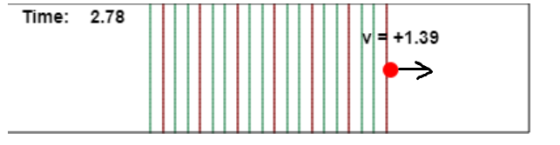
Homework Answers

Add Answer to:
The electric potential changes from 0 to 100V. A particle with a
charge of 1mc starts...
1. A particle of mass m and charge q is dropped from height of 3h above...
 1. A particle of mass m and charge q is dropped from height of 3h above the ground. The particle starts from rest and its starting position is (x, y) (0,3h). At height 2h, the particle enters a uniform electric field of magnitude E pointing in the negative r direction. The magnitude of the force on the particle due to the electric field is qE. The particle exits the electric field at height h. A cup is placed at position...
1. A particle of mass m and charge q is dropped from height of 3h above...
1. A particle of mass m and charge q is dropped from height of 3h above the ground. The particle starts from rest and its starting position is (x, y) = (0, 3h). At height 2h, the particle enters a uniform electric field of magnitude E pointing in the negative x direction. The magnitude of the force on the particle due to the electric field is qE. The particle exits the electric field at height h. A cup is placed...
40) The potential at a distance of 2 m from a positive charge is 100V. What...
 40) The potential at a distance of 2 m from a positive charge is 100V. What is the potential 4 m away from the same charge? 25V sov 100v 400v 4b 58) The potential at the exact center of a square is 3V when a charge +Q is located at one of the square's corners. What is the potential at the squares center when each of the other corners is also filled with a charge of +Q? (0 3V (9v...
744211) (Electric Potential and Potential Energy) The particle of mass, 0.0 56 kg cames a net...
 744211) (Electric Potential and Potential Energy) The particle of mass, 0.0 56 kg cames a net charge of g 00462PC Theparticle is placed har aybetween two oppositeey charged plates that have an electe potential drierence i0.0 V across the t o plates as shown in the figure. The particle is then released from rest Calculate the velocity of the charge when it strikes the negatively charged plate +5 V -5 V
A particle of rest mass mo and charge q is accelerated from rest by a uniform (in the lab frame) electric field Ei. What are the velocity and position of the particle (as a function of time) a. in th...
 A particle of rest mass mo and charge q is accelerated from rest by a uniform (in the lab frame) electric field Ei. What are the velocity and position of the particle (as a function of time) a. in the lab frame? b. in the rest frame of an observer moving with a velocity vok relative to the lab? c. (Optional) Plot the position and speed of an electron in a uniform field of magnitude 1 MV/m for the time...
A particle starts from the origin at t = 0 with an initial velocity of 5.0...
 A particle starts from the origin at t = 0 with an initial
velocity of 5.0 m/s along the positive x axis. If the acceleration
is (–3.0i + 4.5j) m/s^2, determine the velocity and position of the
particle at the moment it reaches its maximum x coordinate.
Can someone explain why
when the particle reaches it maximum x coordinate?
A particle starts from the origin at t = 0 with an initial
velocity of 5.0 m/s along the positive x axis. If the acceleration
is (–3.0i + 4.5j) m/s^2, determine the velocity and position of the
particle at the moment it reaches its maximum x coordinate.
Can someone explain why
when the particle reaches it maximum x coordinate?
A charged particle of mass 1 kg and charge 2 C starts at the origin with...
A charged particle of mass 1 kg and charge 2 C starts at the origin with zero initial velocity in a region where E = 3az V/m. Find (a) The force on the particle (b) The time it takes to reach point P(0, 0, 12 m) (c) Its velocity and acceleration at P (d) Its K.E. at P.
Question 9 The particle of mass, m 0.00859 kg carries a net charge of q 0.0950...
 Question 9 The particle of mass, m 0.00859 kg carries a net charge of q 0.0950 μC. The particle is placed halfway between two oppositely charged plates that have an electric potential diference 10 V across the two plates, as shown in the figure. The particle is then released from rest. Calculate the velocity of the charge when it strikes the negatively charged plate. +5 V -5 V Enter answer here 0.09 m/s 0.09 m/s ae Your
A particle starts from the origin at t = 0 with an initial velocity of 5.5...
A particle starts from the origin at t = 0 with an initial velocity of 5.5 m/s along the positive x axis.If the acceleration is (-2.9 i^ + 4.7 j^)m/s2, determine (a)the velocity and (b)position of the particle at the moment it reaches its maximum x coordinate
A small particle has charge +5.00 µC and mass m. It moves from point A, where...
A small particle has charge +5.00 µC and mass m. It moves from point A, where the electric potential is VA = +400 V, to point B, where the electric potential is VB = +800 V. The electric force is the only force acting on the particle. The particle has speed 5.00 m/s at point A, and a speed of 4.25 m/s at point B. What is the mass of the particle m?
 1. A particle of mass m and charge q is dropped from height of 3h above the ground. The particle starts from rest and its starting position is (x, y) (0,3h). At height 2h, the particle enters a uniform electric field of magnitude E pointing in the negative r direction. The magnitude of the force on the particle due to the electric field is qE. The particle exits the electric field at height h. A cup is placed at position...
 40) The potential at a distance of 2 m from a positive charge is 100V. What is the potential 4 m away from the same charge? 25V sov 100v 400v 4b 58) The potential at the exact center of a square is 3V when a charge +Q is located at one of the square's corners. What is the potential at the squares center when each of the other corners is also filled with a charge of +Q? (0 3V (9v...
 744211) (Electric Potential and Potential Energy) The particle of mass, 0.0 56 kg cames a net charge of g 00462PC Theparticle is placed har aybetween two oppositeey charged plates that have an electe potential drierence i0.0 V across the t o plates as shown in the figure. The particle is then released from rest Calculate the velocity of the charge when it strikes the negatively charged plate +5 V -5 V
 A particle of rest mass mo and charge q is accelerated from rest by a uniform (in the lab frame) electric field Ei. What are the velocity and position of the particle (as a function of time) a. in the lab frame? b. in the rest frame of an observer moving with a velocity vok relative to the lab? c. (Optional) Plot the position and speed of an electron in a uniform field of magnitude 1 MV/m for the time...
 A particle starts from the origin at t = 0 with an initial
velocity of 5.0 m/s along the positive x axis. If the acceleration
is (–3.0i + 4.5j) m/s^2, determine the velocity and position of the
particle at the moment it reaches its maximum x coordinate.
Can someone explain why
when the particle reaches it maximum x coordinate?
A particle starts from the origin at t = 0 with an initial
velocity of 5.0 m/s along the positive x axis. If the acceleration
is (–3.0i + 4.5j) m/s^2, determine the velocity and position of the
particle at the moment it reaches its maximum x coordinate.
Can someone explain why
when the particle reaches it maximum x coordinate?
 Question 9 The particle of mass, m 0.00859 kg carries a net charge of q 0.0950 μC. The particle is placed halfway between two oppositely charged plates that have an electric potential diference 10 V across the two plates, as shown in the figure. The particle is then released from rest. Calculate the velocity of the charge when it strikes the negatively charged plate. +5 V -5 V Enter answer here 0.09 m/s 0.09 m/s ae Your
Most questions answered within 3 hours.
-
Where is the error in this code sequence?
String s1 = "Hello";
String s2 = "ello";...
asked 11 months ago -
Financial data for Joel de Paris, Inc., for last year
follow:
Joel de Paris, Inc.
Balance...
asked 11 months ago -
Consider this reaction:
Al2(SO4)3 (aq)+ BaCl3
(aq) Al2Cl6 (aq)- +
3BaSO4(s) . What is the...
asked 11 months ago -
Suppose that Savneet is considering increasing her
recent random sample from 20 car rentals to 40...
asked 11 months ago -
Trucks arrive at an unloading terminal at an average rate of 120
per hour.
Trucks arrive...
asked 11 months ago -
Why are methanol and ethanol completely soluble in water while
octanol is not very little soluble....
asked 11 months ago -
A facilities manager at a university reads in a research report
that the mean amount of...
asked 11 months ago -
When the CuSO4 is rehydrated by adding water to the anhydrous
compound, is this an endothermic...
asked 11 months ago -
A ray of sunlight is passing from diamond into crown glass; the
angle of incidence is...
asked 11 months ago -
A block of mass 0.249 kg is placed on top of a light, vertical
spring of...
asked 11 months ago -
how do the kidneys compensate in the presences of acidosis
a) trigger hyperventilate
b) reserve acid...
asked 11 months ago -
Question 501 pts
The rental rate of capital to the firm increases. Which of the
following...
asked 11 months ago