
Homework Answers
I request you to understand this concept first,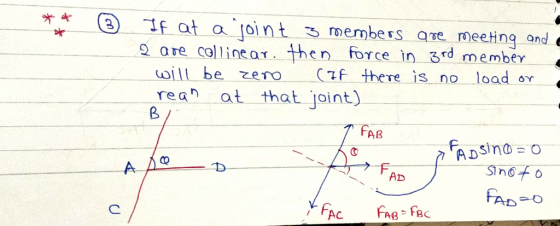
Now our problem
 h
h
I request you to try these iterations yourself for better
understanding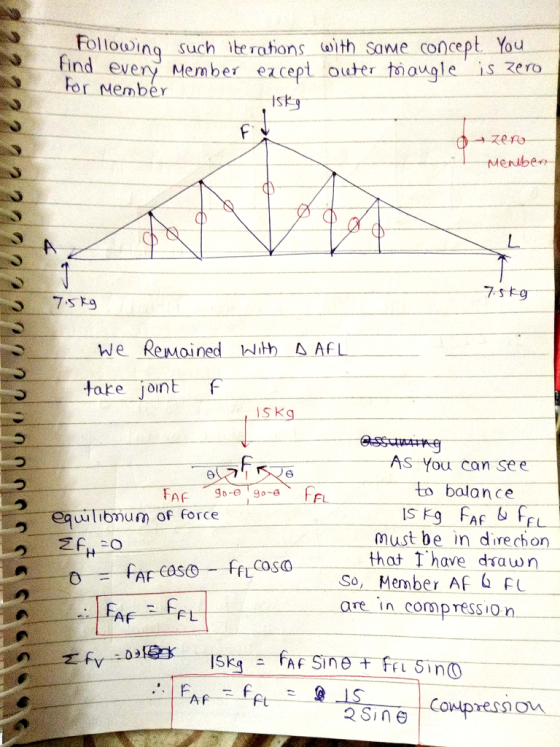
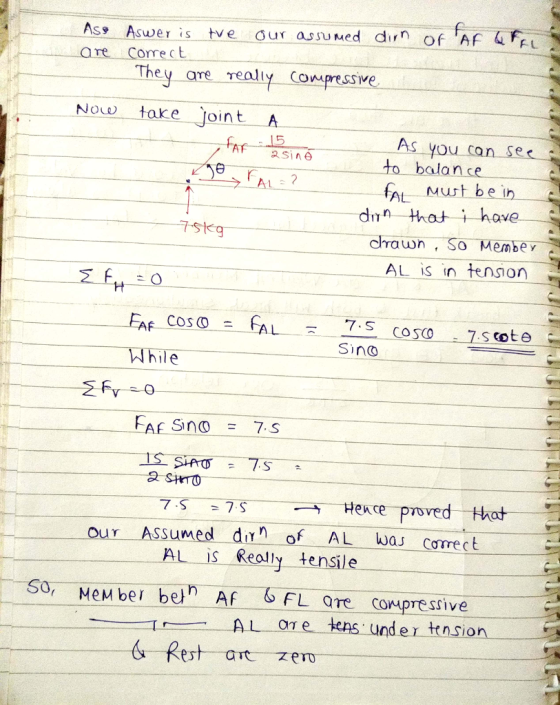
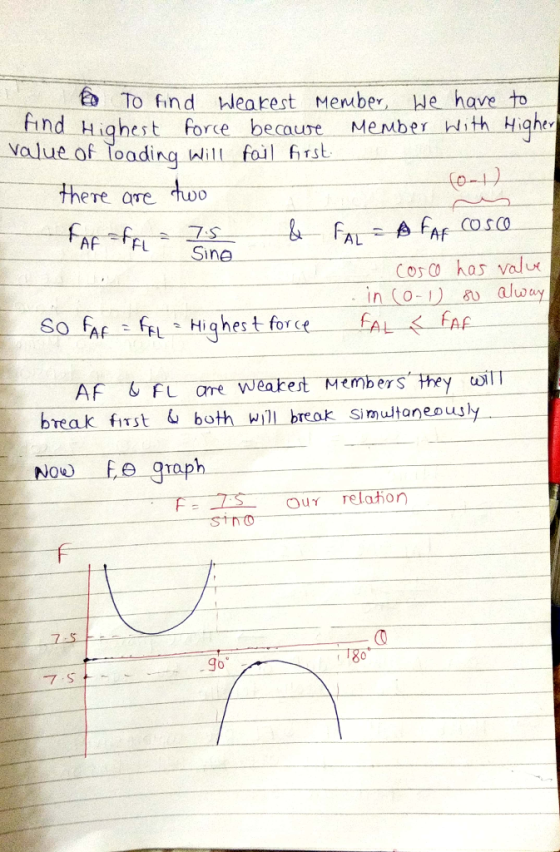
IN such way we observed that our truss will fail in compression.
please go through answer again for better understanding.
THSNK YOU
PLEASE LIKE , IF YOU FIND THIS USEFUL
Add Answer to:
1. Design and analyze a bridge. Your truss structure should be made entirely of 2 force...
Designing a truss bridge This lab involves the design of a truss bridge, which is a...
 Designing a truss bridge This lab involves the design of a truss bridge, which is a Pratt truss and should be designed to handle the loads shown in Fig- ure l (1 kip = 1000 lb). Note that the loads are the same on each of the two trusses for the bridge, so what is in Figure 1 is only half the loading on the bridge. Your job is to develop an optimal design for the bridge, Figure 1. Schematic...
2. Determine the force in members HI, BH, and BI of the Howe bridge truss. Indicate...
 2. Determine the force in members HI, BH, and BI of the Howe bridge truss. Indicate if the members are in tension or compression. 0N GOIN 40 kN 网20 kN 4 m 6okN --Dーーーネ 16 m, 4@4m
Your goal is to design a bridge with a 8-meter span, connecting points A and C...
 Your goal is to design a bridge with a 8-meter span, connecting
points A and C as illustrated below. In your design, you have to
satisfy the following constraints:
? Your bridge design should support a total vertical load P = 90
kN. Split the load equally among the joints in the bridge deck,
excluding the support joints A and C. For example, the truss above
will have all the load P applied to joint B. ? The height of...
Your goal is to design a bridge with a 8-meter span, connecting
points A and C as illustrated below. In your design, you have to
satisfy the following constraints:
? Your bridge design should support a total vertical load P = 90
kN. Split the load equally among the joints in the bridge deck,
excluding the support joints A and C. For example, the truss above
will have all the load P applied to joint B. ? The height of...
Problem 1 Analyze the truss structure (statically determinate) shown below. The diameter of the c...
 Problem 1 Analyze the truss structure (statically determinate) shown below. The diameter of the circular truss members is 4 cm. The material used has an elastic modulus E-160GPa 1. Calculate the forces in each truss member. 2. Calculate the horizontal and vertical displacements 1 KN of the truss nodes B and C Calculate the margin of safety. Note: Tension members can fail by stress failure and compression members can fail by stress failure or buckling. 3. 1.732 m 2 KN...
Problem 1 Analyze the truss structure (statically determinate) shown below. The diameter of the c...
 Problem 1 Analyze the truss structure (statically determinate) shown below. The diameter of the circular truss members is 4 cm. The material used has an elastic modulus E-160GPa 1. Calculate the forces in each truss member. 2. Calculate the horizontal and vertical displacements 1 KN of the truss nodes B and C Calculate the margin of safety. Note: Tension members can fail by stress failure and compression members can fail by stress failure or buckling. 3. 1.732 m 2 KN...
Problem #11 Draw the influence line for the force in member IH of the bridge truss....
 Problem #11 Draw the influence line for the force in member IH of the bridge truss. Determine the maximum force (tension or compression) that can be developed in this member due to a 72-k truck having the wheel loads shown. Assume the truck can travel in either direction along the center of the deck, so that half its load is transferred to each of the two side trusses. Also assume the members are pin connected at the gusset plates. 32...
Practice Example 2 (MOS) A stadium roof truss is loaded as shown. Determine the force in...
 Practice Example 2 (MOS) A stadium roof truss is loaded as shown. Determine the force in members AB, AG, and FG. State whether the member is in Tension or Compression 0.9 kips L.8 kips 1.8 kips 0.9 kips 9 ft -12 ft-14 ft 14 ft 315 ft
Find the force in member GC of the loaded truss using method of sections and of joints and compare your answer. Which elements are in compression and which in tension. Are there any zero force me...
 Find the force in member GC of the loaded truss using method of sections and of joints and compare your answer. Which elements are in compression and which in tension. Are there any zero force member? Why or why not. are 1010 2 kips 20° 4 kips 4 kips 2 kips
Find the force in member GC of the loaded truss using method of sections and of joints and compare your answer. Which elements are in compression and which in...
Find the force in member GC of the loaded truss using method of sections and of joints and compare your answer. Which elements are in compression and which in tension. Are there any zero force member? Why or why not. are 1010 2 kips 20° 4 kips 4 kips 2 kips
Find the force in member GC of the loaded truss using method of sections and of joints and compare your answer. Which elements are in compression and which in...
Problem No. 2 (100 points) For the Baltimore bridge truss shown below answer the following questions:...
 Problem No. 2 (100 points) For the Baltimore bridge truss shown below answer the following questions: 1) Calculate Reaction Forces (FBD is already drawn assuming a pin support at A and a roller support at I) (10) 2) What is status of the Truss (determinate or indeterminate)? (10) 3) Obtain ALL the Zero force member (30) 4) Using method of Joints, find force in member PF and PG specify if these forces are in Tension or Compression? (25) 5) Using...
Determine the force in members CD and CM of the Baltimore bridge truss and state if...
 Determine the force in members CD and CM of the Baltimore bridge truss and state if the members are in tension or compression. Also, indicate all zero-force members. SK 2 m 0 H = SB C D E F G 2 kN 5 KN 3 KN 2 KN - 16 m, 8 @ 2 m 1. A light ray is incident from air on the surface of water (n=1.33) at an angle of 60° with the normal on the surface....
 Designing a truss bridge This lab involves the design of a truss bridge, which is a Pratt truss and should be designed to handle the loads shown in Fig- ure l (1 kip = 1000 lb). Note that the loads are the same on each of the two trusses for the bridge, so what is in Figure 1 is only half the loading on the bridge. Your job is to develop an optimal design for the bridge, Figure 1. Schematic...
 2. Determine the force in members HI, BH, and BI of the Howe bridge truss. Indicate if the members are in tension or compression. 0N GOIN 40 kN 网20 kN 4 m 6okN --Dーーーネ 16 m, 4@4m
 Your goal is to design a bridge with a 8-meter span, connecting
points A and C as illustrated below. In your design, you have to
satisfy the following constraints:
? Your bridge design should support a total vertical load P = 90
kN. Split the load equally among the joints in the bridge deck,
excluding the support joints A and C. For example, the truss above
will have all the load P applied to joint B. ? The height of...
Your goal is to design a bridge with a 8-meter span, connecting
points A and C as illustrated below. In your design, you have to
satisfy the following constraints:
? Your bridge design should support a total vertical load P = 90
kN. Split the load equally among the joints in the bridge deck,
excluding the support joints A and C. For example, the truss above
will have all the load P applied to joint B. ? The height of...
 Problem 1 Analyze the truss structure (statically determinate) shown below. The diameter of the circular truss members is 4 cm. The material used has an elastic modulus E-160GPa 1. Calculate the forces in each truss member. 2. Calculate the horizontal and vertical displacements 1 KN of the truss nodes B and C Calculate the margin of safety. Note: Tension members can fail by stress failure and compression members can fail by stress failure or buckling. 3. 1.732 m 2 KN...
 Problem 1 Analyze the truss structure (statically determinate) shown below. The diameter of the circular truss members is 4 cm. The material used has an elastic modulus E-160GPa 1. Calculate the forces in each truss member. 2. Calculate the horizontal and vertical displacements 1 KN of the truss nodes B and C Calculate the margin of safety. Note: Tension members can fail by stress failure and compression members can fail by stress failure or buckling. 3. 1.732 m 2 KN...
 Problem #11 Draw the influence line for the force in member IH of the bridge truss. Determine the maximum force (tension or compression) that can be developed in this member due to a 72-k truck having the wheel loads shown. Assume the truck can travel in either direction along the center of the deck, so that half its load is transferred to each of the two side trusses. Also assume the members are pin connected at the gusset plates. 32...
 Practice Example 2 (MOS) A stadium roof truss is loaded as shown. Determine the force in members AB, AG, and FG. State whether the member is in Tension or Compression 0.9 kips L.8 kips 1.8 kips 0.9 kips 9 ft -12 ft-14 ft 14 ft 315 ft
 Find the force in member GC of the loaded truss using method of sections and of joints and compare your answer. Which elements are in compression and which in tension. Are there any zero force member? Why or why not. are 1010 2 kips 20° 4 kips 4 kips 2 kips
Find the force in member GC of the loaded truss using method of sections and of joints and compare your answer. Which elements are in compression and which in...
Find the force in member GC of the loaded truss using method of sections and of joints and compare your answer. Which elements are in compression and which in tension. Are there any zero force member? Why or why not. are 1010 2 kips 20° 4 kips 4 kips 2 kips
Find the force in member GC of the loaded truss using method of sections and of joints and compare your answer. Which elements are in compression and which in...
 Problem No. 2 (100 points) For the Baltimore bridge truss shown below answer the following questions: 1) Calculate Reaction Forces (FBD is already drawn assuming a pin support at A and a roller support at I) (10) 2) What is status of the Truss (determinate or indeterminate)? (10) 3) Obtain ALL the Zero force member (30) 4) Using method of Joints, find force in member PF and PG specify if these forces are in Tension or Compression? (25) 5) Using...
 Determine the force in members CD and CM of the Baltimore bridge truss and state if the members are in tension or compression. Also, indicate all zero-force members. SK 2 m 0 H = SB C D E F G 2 kN 5 KN 3 KN 2 KN - 16 m, 8 @ 2 m 1. A light ray is incident from air on the surface of water (n=1.33) at an angle of 60° with the normal on the surface....
Most questions answered within 3 hours.
-
Where is the error in this code sequence?
String s1 = "Hello";
String s2 = "ello";...
asked 11 months ago -
Financial data for Joel de Paris, Inc., for last year
follow:
Joel de Paris, Inc.
Balance...
asked 11 months ago -
Consider this reaction:
Al2(SO4)3 (aq)+ BaCl3
(aq) Al2Cl6 (aq)- +
3BaSO4(s) . What is the...
asked 11 months ago -
Suppose that Savneet is considering increasing her
recent random sample from 20 car rentals to 40...
asked 11 months ago -
Trucks arrive at an unloading terminal at an average rate of 120
per hour.
Trucks arrive...
asked 11 months ago -
Why are methanol and ethanol completely soluble in water while
octanol is not very little soluble....
asked 11 months ago -
A facilities manager at a university reads in a research report
that the mean amount of...
asked 11 months ago -
When the CuSO4 is rehydrated by adding water to the anhydrous
compound, is this an endothermic...
asked 11 months ago -
A ray of sunlight is passing from diamond into crown glass; the
angle of incidence is...
asked 11 months ago -
A block of mass 0.249 kg is placed on top of a light, vertical
spring of...
asked 11 months ago -
how do the kidneys compensate in the presences of acidosis
a) trigger hyperventilate
b) reserve acid...
asked 11 months ago -
Question 501 pts
The rental rate of capital to the firm increases. Which of the
following...
asked 11 months ago