
Homework Answers

Add Answer to:
Table 20.1 Half Reaction E°(V). F2 (g) + 2e →2F (aq) +2.87 Cl2 (g) + 2e...
a. Cl2 b. F2 c. Br2 d. I2 e. All of the halogens have equal strength...
 a.
Cl2
b.
F2
c.
Br2
d.
I2
e.
All of the halogens have equal strength as oxidizing agents.
E°(V +2.87 +1.359 +1.065 +1.23 +0.799 Table 20.1 Half Reaction F2 (8) 2e → 2F- (ag) Cl2(8) 2e → 2Cl- (aq) Br21) 2e → 2Br" (ag) 02 (elut 4H+ (ag) + 4e + 2H20 (1) Agte → Ag (5) Fe3+ (aq) → Fe2+ (aq) 12 (5) + 2e – 21 (ag) Cu2+ + 2e - Cu (s) 2H+ + 2e →...
a.
Cl2
b.
F2
c.
Br2
d.
I2
e.
All of the halogens have equal strength as oxidizing agents.
E°(V +2.87 +1.359 +1.065 +1.23 +0.799 Table 20.1 Half Reaction F2 (8) 2e → 2F- (ag) Cl2(8) 2e → 2Cl- (aq) Br21) 2e → 2Br" (ag) 02 (elut 4H+ (ag) + 4e + 2H20 (1) Agte → Ag (5) Fe3+ (aq) → Fe2+ (aq) 12 (5) + 2e – 21 (ag) Cu2+ + 2e - Cu (s) 2H+ + 2e →...
16. Determine the oxidation state and the coordination number of the metal ion in the following...
 16. Determine the oxidation state and the coordination number of the metal ion in the following coordination compound: [Co(H20)4(NH3)(OH)]Ch Oxidation number Coordination number 17. Use the redox table below to answer the following questions: Which is the weakest reducing agent in the table? Which is the strongest oxidizing agent in the table? Name the elements or ions that can be oxidized by Pb2* ETV) Half Reaction +2.87 F2 (g) + 2e-→ 2F-(aq) +1.359 Cl2(g)2 2Cl- (aq) Br20) 22Br (ag) O2(8)...
Standard Electrode Potentials at 25?C Reduction Half-Reaction E?(V) F2(g)+2e? ?2F?(aq) 2.87 Au3+(aq)+3e? ?Au(s) 1.50 Cl2(g)+2e? ?2Cl?(aq)...
Standard Electrode Potentials at 25?C Reduction Half-Reaction E?(V) F2(g)+2e? ?2F?(aq) 2.87 Au3+(aq)+3e? ?Au(s) 1.50 Cl2(g)+2e? ?2Cl?(aq) 1.36 O2(g)+4H+(aq)+4e? ?2H2O(l) 1.23 Br2(l)+2e? ?2Br?(aq) 1.09 NO3?(aq)+4H+(aq)+3e? ?NO(g)+2H2O(l) 0.96 Ag+(aq)+e? ?Ag(s) 0.80 I2(s)+2e? ?2I?(aq) 0.54 Cu2+(aq)+2e? ?Cu(s) 0.16 2H+(aq)+2e? ?H2(g) 0 Cr3+(aq)+3e? ?Cr(s) -0.73 2H2O(l)+2e? ?H2(g)+2OH?(aq) -0.83 Mn2+(aq)+2e? ?Mn(s) -1.18 How can the table be used to predict whether or not a metal will dissolve in HCl? In HNO3? Drag the terms on the left to the appropriate blanks on the right to...
Consider the following half-reactions: Half-reaction F2(g) + 2e - 2H+ (aq) + 2 Mn2+ (aq) +...
 Consider the following half-reactions: Half-reaction F2(g) + 2e - 2H+ (aq) + 2 Mn2+ (aq) + 2e E° (V) 2F (aq) 2.870V H2(g) 0.000V Mn(s) -1.180V The strongest oxidizing agent is: enter formula / / The weakest oxidizing agent is: / The weakest reducing agent is: The strongest reducing agent is: Will Mn2+ (aq) reduce F2(g) to F"(aq)? Which species can be reduced by H2(g)? If none, leave box blank. Consider the following half-reactions: Half-reaction E° (V) Br2(1) + 2e...
Consider the following half-reactions: Half-reaction E° (V) F2(g) +2e - →2F (aq) 2.870V 2H*(aq) + 2e...
 Consider the following half-reactions: Half-reaction E° (V) F2(g) +2e - →2F (aq) 2.870V 2H*(aq) + 2e - H2(g) 0.000V Cr3+ (aq) + 3e — Cr(s) -0.740V (1) The strongest oxidizing agent is: enter formula (2) The weakest oxidizing agent is: (3) The weakest reducing agent is: (4) The strongest reducing agent is: (5) Will F2(g) oxidize Cr(s) to Cr3+ (aq)? (6) Which species can be oxidized by H(aq)? If none, leave box blank.
Consider the following half-reactions: Half-reaction E° (V) Cl2(g) + 2e - →2Cl(aq) 1.360V Ni2+(aq) + 2e...
 Consider the following half-reactions: Half-reaction E° (V) Cl2(g) + 2e - →2Cl(aq) 1.360V Ni2+(aq) + 2e Ni(s) -0.250V Mg- (aq) + 2e → Mg(s) -2.370v (1) The weakest oxidizing agent is: enter formula (2) The strongest reducing agent is: (3) The strongest oxidizing agent is: (4) The weakest reducing agent is: (5) Will Cl(aq) reduce Mg2+(aq) to Mg(s)? (6) Which species can be reduced by Ni(s)? If none, leave box blank.
Given: 2H+(aq)+2e– ⇌H2(g);E°=0.00 Li+(aq)+e– ⇌Li(s);E°=–3.04V F2(g)+2e– ⇌2F–(aq);E°=2.87 Al3+(aq)+3e– ⇌Al(s);E°=–1.66V Pb2+(aq)+2e– ⇌Pb(s);E°=–0.13V Under standard-state conditions, which is...
Given: 2H+(aq)+2e– ⇌H2(g);E°=0.00 Li+(aq)+e– ⇌Li(s);E°=–3.04V F2(g)+2e– ⇌2F–(aq);E°=2.87 Al3+(aq)+3e– ⇌Al(s);E°=–1.66V Pb2+(aq)+2e– ⇌Pb(s);E°=–0.13V Under standard-state conditions, which is the strongest oxidizing agent? Select one: a. Pb2+ b. Al3+ c. F2 d. Li+ e.H+
Table 2012 HalfReaction EM Fight 2 – 2 (aq) Cl, ig) + 2er -+ 20- (aq)...
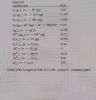 Table 2012 HalfReaction EM Fight 2 – 2 (aq) Cl, ig) + 2er -+ 20- (aq) Br2 + 2e -2Br (aq) Oz (g) + 4H+ (aq) + 4 + 2H20l) +1.23 +799 F2 (29 +0.536 1.2 + 21 lag) Cu2+ + 2e + Co (5) - H, WLAN 0 Ni?u=24 - Vi (5) Which of the halogens in Table 20.1 is the weakest occidizing agent?
help with these please Consider the following half-reactions: Half-reaction Eo (V) F2(g)+ 2e 2F (aq) 2.870V...
 help with these please
Consider the following half-reactions: Half-reaction Eo (V) F2(g)+ 2e 2F (aq) 2.870V Sn2 (aq) + 2e- Sn(s) 0.140V Cr3 (aq) + 3e° _ Cr(s)-0.740V (1) The strongest oxidizing agent is: enter formula (2) The weakest oxidizing agent is: (3) The weakest reducing agent is: (4) The strongest reducing agent is: (5) Will F2(g) oxidize Cr(s) to Cr3 (aq)? (6) Which species can be oxidized by Sn2 (aq)? If none, leave box blank. Consider the following half-reactions:...
help with these please
Consider the following half-reactions: Half-reaction Eo (V) F2(g)+ 2e 2F (aq) 2.870V Sn2 (aq) + 2e- Sn(s) 0.140V Cr3 (aq) + 3e° _ Cr(s)-0.740V (1) The strongest oxidizing agent is: enter formula (2) The weakest oxidizing agent is: (3) The weakest reducing agent is: (4) The strongest reducing agent is: (5) Will F2(g) oxidize Cr(s) to Cr3 (aq)? (6) Which species can be oxidized by Sn2 (aq)? If none, leave box blank. Consider the following half-reactions:...
Refer to this table of reduction potentials to answer the questions. Reduction half-reaction Potential (V) +2.87...
 Refer to this table of reduction potentials to answer the questions. Reduction half-reaction Potential (V) +2.87 Electrolytic cells use electricity to cause a nonspontaneous redox reaction to occur. An electrolytic cell is constructed using the following components: • a power source, such as a battery, • the substance that will undergo electrolysis, and • two inert electrodes (usually platinum), which serve as the electrical connection between the power source and the substance undergoing electrolysis. As with any cell, oxidation occurs...
 a.
Cl2
b.
F2
c.
Br2
d.
I2
e.
All of the halogens have equal strength as oxidizing agents.
E°(V +2.87 +1.359 +1.065 +1.23 +0.799 Table 20.1 Half Reaction F2 (8) 2e → 2F- (ag) Cl2(8) 2e → 2Cl- (aq) Br21) 2e → 2Br" (ag) 02 (elut 4H+ (ag) + 4e + 2H20 (1) Agte → Ag (5) Fe3+ (aq) → Fe2+ (aq) 12 (5) + 2e – 21 (ag) Cu2+ + 2e - Cu (s) 2H+ + 2e →...
a.
Cl2
b.
F2
c.
Br2
d.
I2
e.
All of the halogens have equal strength as oxidizing agents.
E°(V +2.87 +1.359 +1.065 +1.23 +0.799 Table 20.1 Half Reaction F2 (8) 2e → 2F- (ag) Cl2(8) 2e → 2Cl- (aq) Br21) 2e → 2Br" (ag) 02 (elut 4H+ (ag) + 4e + 2H20 (1) Agte → Ag (5) Fe3+ (aq) → Fe2+ (aq) 12 (5) + 2e – 21 (ag) Cu2+ + 2e - Cu (s) 2H+ + 2e →...
 16. Determine the oxidation state and the coordination number of the metal ion in the following coordination compound: [Co(H20)4(NH3)(OH)]Ch Oxidation number Coordination number 17. Use the redox table below to answer the following questions: Which is the weakest reducing agent in the table? Which is the strongest oxidizing agent in the table? Name the elements or ions that can be oxidized by Pb2* ETV) Half Reaction +2.87 F2 (g) + 2e-→ 2F-(aq) +1.359 Cl2(g)2 2Cl- (aq) Br20) 22Br (ag) O2(8)...
 Consider the following half-reactions: Half-reaction F2(g) + 2e - 2H+ (aq) + 2 Mn2+ (aq) + 2e E° (V) 2F (aq) 2.870V H2(g) 0.000V Mn(s) -1.180V The strongest oxidizing agent is: enter formula / / The weakest oxidizing agent is: / The weakest reducing agent is: The strongest reducing agent is: Will Mn2+ (aq) reduce F2(g) to F"(aq)? Which species can be reduced by H2(g)? If none, leave box blank. Consider the following half-reactions: Half-reaction E° (V) Br2(1) + 2e...
 Consider the following half-reactions: Half-reaction E° (V) F2(g) +2e - →2F (aq) 2.870V 2H*(aq) + 2e - H2(g) 0.000V Cr3+ (aq) + 3e — Cr(s) -0.740V (1) The strongest oxidizing agent is: enter formula (2) The weakest oxidizing agent is: (3) The weakest reducing agent is: (4) The strongest reducing agent is: (5) Will F2(g) oxidize Cr(s) to Cr3+ (aq)? (6) Which species can be oxidized by H(aq)? If none, leave box blank.
 Consider the following half-reactions: Half-reaction E° (V) Cl2(g) + 2e - →2Cl(aq) 1.360V Ni2+(aq) + 2e Ni(s) -0.250V Mg- (aq) + 2e → Mg(s) -2.370v (1) The weakest oxidizing agent is: enter formula (2) The strongest reducing agent is: (3) The strongest oxidizing agent is: (4) The weakest reducing agent is: (5) Will Cl(aq) reduce Mg2+(aq) to Mg(s)? (6) Which species can be reduced by Ni(s)? If none, leave box blank.
 Table 2012 HalfReaction EM Fight 2 – 2 (aq) Cl, ig) + 2er -+ 20- (aq) Br2 + 2e -2Br (aq) Oz (g) + 4H+ (aq) + 4 + 2H20l) +1.23 +799 F2 (29 +0.536 1.2 + 21 lag) Cu2+ + 2e + Co (5) - H, WLAN 0 Ni?u=24 - Vi (5) Which of the halogens in Table 20.1 is the weakest occidizing agent?
 help with these please
Consider the following half-reactions: Half-reaction Eo (V) F2(g)+ 2e 2F (aq) 2.870V Sn2 (aq) + 2e- Sn(s) 0.140V Cr3 (aq) + 3e° _ Cr(s)-0.740V (1) The strongest oxidizing agent is: enter formula (2) The weakest oxidizing agent is: (3) The weakest reducing agent is: (4) The strongest reducing agent is: (5) Will F2(g) oxidize Cr(s) to Cr3 (aq)? (6) Which species can be oxidized by Sn2 (aq)? If none, leave box blank. Consider the following half-reactions:...
help with these please
Consider the following half-reactions: Half-reaction Eo (V) F2(g)+ 2e 2F (aq) 2.870V Sn2 (aq) + 2e- Sn(s) 0.140V Cr3 (aq) + 3e° _ Cr(s)-0.740V (1) The strongest oxidizing agent is: enter formula (2) The weakest oxidizing agent is: (3) The weakest reducing agent is: (4) The strongest reducing agent is: (5) Will F2(g) oxidize Cr(s) to Cr3 (aq)? (6) Which species can be oxidized by Sn2 (aq)? If none, leave box blank. Consider the following half-reactions:...
 Refer to this table of reduction potentials to answer the questions. Reduction half-reaction Potential (V) +2.87 Electrolytic cells use electricity to cause a nonspontaneous redox reaction to occur. An electrolytic cell is constructed using the following components: • a power source, such as a battery, • the substance that will undergo electrolysis, and • two inert electrodes (usually platinum), which serve as the electrical connection between the power source and the substance undergoing electrolysis. As with any cell, oxidation occurs...
Most questions answered within 3 hours.
-
Where is the error in this code sequence?
String s1 = "Hello";
String s2 = "ello";...
asked 10 months ago -
Financial data for Joel de Paris, Inc., for last year
follow:
Joel de Paris, Inc.
Balance...
asked 10 months ago -
Consider this reaction:
Al2(SO4)3 (aq)+ BaCl3
(aq) Al2Cl6 (aq)- +
3BaSO4(s) . What is the...
asked 10 months ago -
Suppose that Savneet is considering increasing her
recent random sample from 20 car rentals to 40...
asked 10 months ago -
Trucks arrive at an unloading terminal at an average rate of 120
per hour.
Trucks arrive...
asked 10 months ago -
Why are methanol and ethanol completely soluble in water while
octanol is not very little soluble....
asked 10 months ago -
A facilities manager at a university reads in a research report
that the mean amount of...
asked 10 months ago -
When the CuSO4 is rehydrated by adding water to the anhydrous
compound, is this an endothermic...
asked 10 months ago -
A ray of sunlight is passing from diamond into crown glass; the
angle of incidence is...
asked 10 months ago -
A block of mass 0.249 kg is placed on top of a light, vertical
spring of...
asked 10 months ago -
how do the kidneys compensate in the presences of acidosis
a) trigger hyperventilate
b) reserve acid...
asked 10 months ago -
Question 501 pts
The rental rate of capital to the firm increases. Which of the
following...
asked 10 months ago