
Homework Answers
Add Answer to:
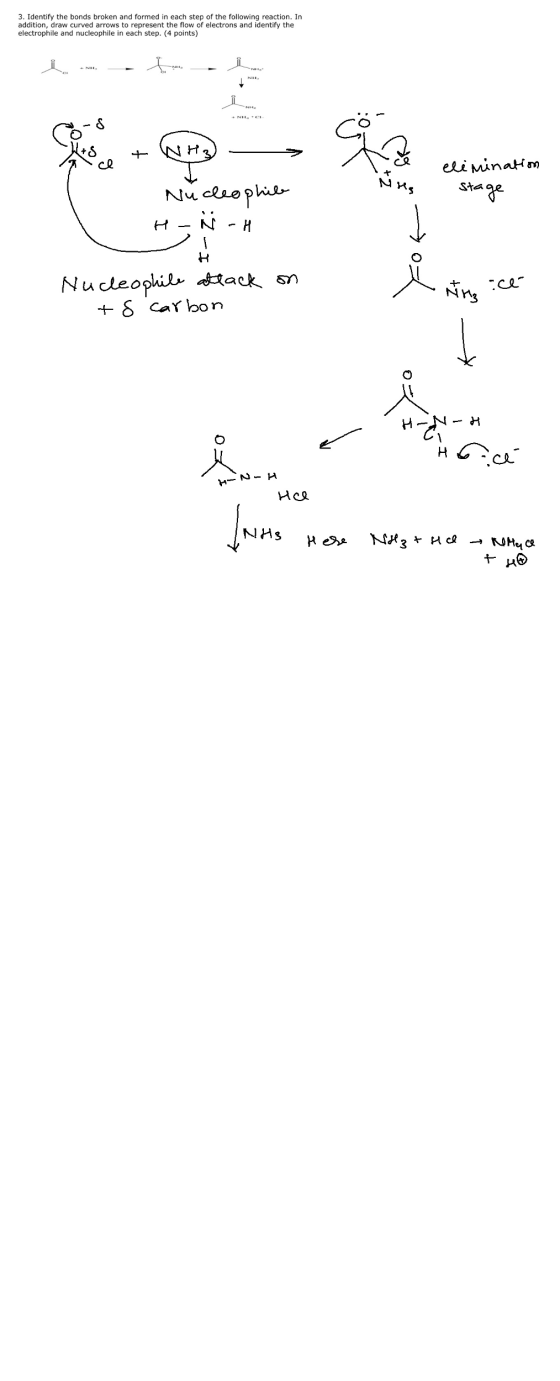
Identify the bonds broken and formed in each step of the following reaction. In addition, draw...
PLEASE ANSWER EVERYTHING Using curved arrows, propose a mechanism for the following reaction. In addition, draw...
 PLEASE ANSWER EVERYTHING
Using curved arrows, propose a mechanism for the following reaction. In addition, draw in all lone pair of electrons and positive charges that are needed. Finally, label the Lewis acid, Lewis base, nucleophile, and electrophile in each step. acid catalyst Paraldehyde(a sedative and hyptonic agent)
PLEASE ANSWER EVERYTHING
Using curved arrows, propose a mechanism for the following reaction. In addition, draw in all lone pair of electrons and positive charges that are needed. Finally, label the Lewis acid, Lewis base, nucleophile, and electrophile in each step. acid catalyst Paraldehyde(a sedative and hyptonic agent)
Draw the mechanisms arrows that would show how the product is formed in each elementary step....
 Draw the mechanisms arrows that would show how the product is
formed in each elementary step. Make sure to draw the products of
the reaction and name the elementary reaction step(proton transfer,
sn2, coordination, heterolysis, e2, nucleophilic addition,
carbocation rearrangement, nucleophile elimination, electrophilic
addition, electrophile elimination).
Draw the mechanisms arrows that would show how the product is
formed in each elementary step. Make sure to draw the products of
the reaction and name the elementary reaction step(proton transfer,
sn2, coordination, heterolysis, e2, nucleophilic addition,
carbocation rearrangement, nucleophile elimination, electrophilic
addition, electrophile elimination).
Classify each structure below as a nucleophile or electrophile, and briefly explain your choice Identify and...
 Classify each structure below as a nucleophile or electrophile, and briefly explain your choice Identify and label the nucleophile and electrophile in each reaction below. Then add curved arrows to indicate the flow of electrons in each.
Predict the product of the reaction mechanisms. Identify the electrophile and nucleophile in each reaction. Propose...
 Predict the product of the reaction mechanisms. Identify the electrophile and nucleophile in each reaction. Propose a mechanism for each reaction below. This means show curved arrows. You may want to fill in any nonbonding electrons. Show an example of each of the following types of reactions and explain why it is that type: Addition elimination Rearrangement Substitution
Draw curved arrows to show the movement of electrons in this step of the mechanism.
 Electrophilic addition of bromine, Br-, to alkenes yields a 1,2-dibromoalkane. The reaction proceeds through a cyclic intermediate known as a bromonium ion. The reaction occurs in an anhydrous solvent such as CH2Cl2 In the second step of the reaction, bromide is the nucleophile and attacks at one of the carbons of the bromonium ion to yield the product. Due to steric clashes, the bromide ion always attacks the carbon from the opposite face of the bromonium ion so that a product...
Draw curved arrows to show the movement of electrons in this step of the mechanism.
 Electrophilic addition of bromine, Br2, to alkenes yields a 1,2-dibromoalkane. The reaction proceeds through a cyclic intermediate known as a bromonium ion. The reaction occurs in an anhydrous solvent such as CH2Cl2 In the second step of the reaction, bromide is the nucleophile and attacks at one of the carbons of the bromonium ion to yield the product. Due to steric clashes, the bromide ion always attacks the carbon from the opposite face of the bromonium ion so that a product...
1. For each reaction below, draw the reaction mechanism for the rate determining step. On the...
 1. For each reaction below, draw the reaction mechanism for the rate determining step. On the starting structures, draw all appropriate arrows to indicate the flow of electrons. Fill in the box above the arrows with the reaction mechanism as SN1 or SN2. Draw the first key transition state and product(s). Use dotted lines to indicate bonds that are in the process of being broken or made. Write all formal charges. H H-02 + HC Transition State H3C H-OCH, +...
1. For each reaction below, draw the reaction mechanism for the rate determining step. On the...
 1. For each reaction below, draw the reaction mechanism for the rate determining step. On the starting structures, draw all appropriate arrows to indicate the flow of electrons. Fill in the box above the arrows with the reaction mechanism as SN1 or SN2. Draw the first key transition state and product(s). Use dotted lines to indicate bonds that are in the process of being broken or made. Write all formal charges н H- Н,с Transition State Нас н— осн, Нас...
1. For each reaction below, draw the reaction mechanism for the rate determining step. On the...
 1. For each reaction below, draw the reaction mechanism for the rate determining step. On the starting structures, draw all appropriate arrows to indicate the flow of electrons. Fill in the box above the arrows with the reaction mechanism as SN1 or SN2. Draw the first key transition state and product(s). Use dotted lines to indicate bonds that are in the process of being broken or made. Write all formal charges. *- _ - нс" Transition State HAC CHS H-OCH,...
1. For each reaction below, draw the reaction mechanism for the rate determining step. On the...
 1. For each reaction below, draw the reaction mechanism for the rate determining step. On the starting structures, draw all appropriate arrows to indicate the flow of electrons. Fill in the box above the arrows with the reaction mechanism as SN1 or SN2. Draw the first key transition state and product(s). Use dotted lines to indicate bonds that are in the process of being broken or made. Write all formal charges HC CI: Transition State T- -- м ен, HÖCH,...
 PLEASE ANSWER EVERYTHING
Using curved arrows, propose a mechanism for the following reaction. In addition, draw in all lone pair of electrons and positive charges that are needed. Finally, label the Lewis acid, Lewis base, nucleophile, and electrophile in each step. acid catalyst Paraldehyde(a sedative and hyptonic agent)
PLEASE ANSWER EVERYTHING
Using curved arrows, propose a mechanism for the following reaction. In addition, draw in all lone pair of electrons and positive charges that are needed. Finally, label the Lewis acid, Lewis base, nucleophile, and electrophile in each step. acid catalyst Paraldehyde(a sedative and hyptonic agent)
 Draw the mechanisms arrows that would show how the product is
formed in each elementary step. Make sure to draw the products of
the reaction and name the elementary reaction step(proton transfer,
sn2, coordination, heterolysis, e2, nucleophilic addition,
carbocation rearrangement, nucleophile elimination, electrophilic
addition, electrophile elimination).
Draw the mechanisms arrows that would show how the product is
formed in each elementary step. Make sure to draw the products of
the reaction and name the elementary reaction step(proton transfer,
sn2, coordination, heterolysis, e2, nucleophilic addition,
carbocation rearrangement, nucleophile elimination, electrophilic
addition, electrophile elimination).
 Classify each structure below as a nucleophile or electrophile, and briefly explain your choice Identify and label the nucleophile and electrophile in each reaction below. Then add curved arrows to indicate the flow of electrons in each.
 Predict the product of the reaction mechanisms. Identify the electrophile and nucleophile in each reaction. Propose a mechanism for each reaction below. This means show curved arrows. You may want to fill in any nonbonding electrons. Show an example of each of the following types of reactions and explain why it is that type: Addition elimination Rearrangement Substitution
 1. For each reaction below, draw the reaction mechanism for the rate determining step. On the starting structures, draw all appropriate arrows to indicate the flow of electrons. Fill in the box above the arrows with the reaction mechanism as SN1 or SN2. Draw the first key transition state and product(s). Use dotted lines to indicate bonds that are in the process of being broken or made. Write all formal charges. H H-02 + HC Transition State H3C H-OCH, +...
 1. For each reaction below, draw the reaction mechanism for the rate determining step. On the starting structures, draw all appropriate arrows to indicate the flow of electrons. Fill in the box above the arrows with the reaction mechanism as SN1 or SN2. Draw the first key transition state and product(s). Use dotted lines to indicate bonds that are in the process of being broken or made. Write all formal charges н H- Н,с Transition State Нас н— осн, Нас...
 1. For each reaction below, draw the reaction mechanism for the rate determining step. On the starting structures, draw all appropriate arrows to indicate the flow of electrons. Fill in the box above the arrows with the reaction mechanism as SN1 or SN2. Draw the first key transition state and product(s). Use dotted lines to indicate bonds that are in the process of being broken or made. Write all formal charges. *- _ - нс" Transition State HAC CHS H-OCH,...
 1. For each reaction below, draw the reaction mechanism for the rate determining step. On the starting structures, draw all appropriate arrows to indicate the flow of electrons. Fill in the box above the arrows with the reaction mechanism as SN1 or SN2. Draw the first key transition state and product(s). Use dotted lines to indicate bonds that are in the process of being broken or made. Write all formal charges HC CI: Transition State T- -- м ен, HÖCH,...
Most questions answered within 3 hours.
-
Where is the error in this code sequence?
String s1 = "Hello";
String s2 = "ello";...
asked 10 months ago -
Financial data for Joel de Paris, Inc., for last year
follow:
Joel de Paris, Inc.
Balance...
asked 10 months ago -
Consider this reaction:
Al2(SO4)3 (aq)+ BaCl3
(aq) Al2Cl6 (aq)- +
3BaSO4(s) . What is the...
asked 10 months ago -
Suppose that Savneet is considering increasing her
recent random sample from 20 car rentals to 40...
asked 10 months ago -
Trucks arrive at an unloading terminal at an average rate of 120
per hour.
Trucks arrive...
asked 10 months ago -
Why are methanol and ethanol completely soluble in water while
octanol is not very little soluble....
asked 10 months ago -
A facilities manager at a university reads in a research report
that the mean amount of...
asked 10 months ago -
When the CuSO4 is rehydrated by adding water to the anhydrous
compound, is this an endothermic...
asked 10 months ago -
A ray of sunlight is passing from diamond into crown glass; the
angle of incidence is...
asked 10 months ago -
A block of mass 0.249 kg is placed on top of a light, vertical
spring of...
asked 10 months ago -
how do the kidneys compensate in the presences of acidosis
a) trigger hyperventilate
b) reserve acid...
asked 10 months ago -
Question 501 pts
The rental rate of capital to the firm increases. Which of the
following...
asked 10 months ago