(a) List the specication of an m-bit Linear Feedback Shift Register (LFSR). (b) An m-sequence is...
(a) List the specication of an m-bit Linear Feedback Shift
Register (LFSR). (b) An m-sequence is a maximal sequence that can
be generated using an LFSR, show how you can construct a
maximum output sequence from an m-bit LFSR. (c) What is the maximum
period of the output sequence? (d) What is the linear span of an
m-sequence?
Homework Answers
a)
Linear Feedback Shift Registers (LFSRs)
• Efficient plan for Test Pattern Generators and
Yield Response Analyzers (additionally utilized as a part of CRC)
– FFs in addition to a couple of XOR entryways
– superior to counter
• less entryways
• higher clock recurrence
• Two sorts of LFSRs
– External Feedback
– Internal Feedback
• higher clock recurrence
• Characteristic polynomial
– characterized by XOR positions
–P(x) =x4+x3+x+1 in the two cases
Trademark polynomial of LFSR
•n= # of FFs = level of polynomial
• XOR input association with FFI⇔coefficient of xI– coefficient = 0 if no association
– coefficient = 1 if association
– coefficients constantly incorporated into trademark polynomial:
•xn(level of polynomial and essential input)
•x0= 1 (standard contribution to move enroll)
• Note: condition of the LFSR⇔polynomial of degree n- 1
•Example:P(x) =x3+x+ 1
A LFSR produces intermittent grouping
– must begin in a non-zero state,
• The greatest length of a LFSR grouping is 2n- 1
– does not produce each of the 0s design (stalls out in that state)
• The trademark polynomial of a LFSR creating a most extreme length grouping is a
crude polynomial
• A most extreme length grouping is pseudo-arbitrary: – number of 1s = number of 0s + 1
– same number of keeps running of consectuive 1s – 1/2 of the runs have length 1
– 1/4 of the runs have length 2
– ... (for whatever length of time that portions result in basic quantities of runs)
Illustration: Characteristic polynomial is
P (x) =x3+x+ 1
• Beginning at all 1s state
– 7 clock cycles to rehash
– maximal length = 2n- 1
– polynomial is crude
• Properties:
– four 1s and three 0s
– 4 runs:
• 2 keeps running of length 1 (one 0 and one 1)
• 1 keep running of length 2 (0s)
• 1 keep running of length 3 (1s)
• Note: outer and inward LFSRs with same crude
polynomial don't produce same succession (just same length)
b)
Maximal Length Sequences
LFSR generators create what are called direct recursive arrangements (LRS) since all activities are straight. As a rule, the length of the arrangement before redundancy happens relies on two factors, the input taps and the underlying state. A LFSR of any given size m (number of registers) is equipped for delivering each conceivable state amid the period N=2m-1 shifts, however will do as such just if appropriate criticism taps have been picked. For instance, such an eight phase LFSR will contain each conceivable blend of zeros after 255 movements. Such an arrangement is known as a maximal length grouping, maximal succession, or less regularly, most extreme length arrangement. It is regularly condensed as m-grouping. In specific businesses m-groupings are alluded to as a pseudonoise (PN) or pseudorandom successions, because of their ideal commotion like qualities. (Casually, even non-maximal successions are frequently called pseudonoise or pseudorandom arrangements.)
In fact talking, maximal length generators can really create two arrangements. The first- - the minor one- - has a length of one, and happens when the underlying condition of the generator is set to each of the zeros. (The generator just stays in the zero state inconclusively.) The other one- - the helpful one- - has a length of 2m-1. Together, these two arrangements represent every one of the 2m conditions of a m-bit state enroll.
At the point when the input taps of a LFSR are non-maximal, the length of the produced grouping relies on the underlying condition of the LFSR. A non-maximal generator is fit for creating at least two remarkable successions (in addition to the trifling each of the zeros one), with the underlying state figuring out which is delivered. Every one of these successions is alluded to as a state space of the generator. Together, every non-maximal succession the generator can create represents each of the 2m conditions of a m-bit state enlist.
Properties of non-maximal arrangements are for the most part second rate compared to those of maximal groupings. So the utilization of non-maximal groupings in genuine frameworks is normally maintained a strategic distance from for their maximal-length partners.
c)
M-Sequence Properties
Properties of m-groupings incorporate the accompanying:
1. A m-bit enlist delivers a m-succession of period 2m-1.
2. A m-grouping contains precisely 2(m-1) ones and 2(m-1)- 1 zeros.
3. The modulo-2 whole of a m-grouping and another stage (i.e. time-deferred rendition) of a similar grouping yields yet a third period of the arrangement.
3a. (An end product of 3.) Each phase of a m-succession generator goes through some period of the arrangement. (While this is evident with a Fibonacci LFSR, it may not be with a Galois LFSR.)
4. A sliding window of length m, go along a m-arrangement for 2m-1 positions, will traverse each conceivable m-bit number, with the exception of every one of the zeros, once and just once. That is, each condition of a m-bit state enlist will be experienced, except for every one of the zeros.
5. Characterize a keep running of length r to be a succession of r back to back indistinguishable numbers, sectioned by non-level with numbers. At that point in any m-arrangement there are:
1 keep running of ones of length m.
1 keep running of zeros of length m-1.
1 keep running of ones and 1 keep running of zeros, every one of length m-2.
2 keeps running of ones and 2 keeps running of zeros, every one of length m-3.
4 keeps running of ones and 4 keeps running of zeros, every one of length m-4.
.
.
.
2m-3 keeps running of ones and 2m-3 keeps running of zeros, every one of length 1.
6. On the off chance that a m-grouping is mapped to a simple time-fluctuating waveform, by mapping every twofold zero to - 1 and every parallel one to +1, at that point the autocorrelation work for the subsequent waveform will be solidarity for zero deferral, and - 1/(2m-1) for any postpone more noteworthy that one piece, either positive or negative in time. The state of the autocorrelation work between - 1 bit and +1 bit will be triangular, revolved around time 0. That is, the capacity will rise directly from time = - (one-piece) to time 0, and afterward decrease straightly from time 0 to time = +(one-bit).
Other fascinating actualities with respect to m-successions and input sets that create them incorporate the accompanying:
1. On the off chance that the request of the criticism taps (as characterized in Figures 1 and 2) is switched, the subsequent grouping will be the time inversion of the first succession, and will likewise be a m-arrangement.
2. The criticism set for any given m-grouping comprises of a significantly number of taps, never odd (as characterized in Figures 1 and 2, including yield gm yet excluding input g0).
Add Answer to:
(a) List the specication of an m-bit Linear Feedback Shift
Register (LFSR). (b) An m-sequence is...
5.28 The Verilog code in Figure P5.9 represents a 3-bit linear-feedback shift register (LFSR) This type...
 5.28 The Verilog code in Figure P5.9 represents a 3-bit linear-feedback shift register (LFSR) This type of circuit generates a counting sequence of pseudo-random numbers that repeats after 2" - 1 clock cycles, where n is the number of flip-flops in the LFSR. Synthesize a circuit to implement the LFSR in a chip. Draw a diagram of the circuit. Simulate the circuit's behavior by loading the pattern 001 into the LFSR and then enabling the register to count. What is...
VHDL Using D-flip-flops, generate an 8-bit LFSR (Linear Feedbaclk Shift-Register). For every bit, include a Binary Cont...
 VHDL
Using D-flip-flops, generate an 8-bit LFSR (Linear Feedbaclk Shift-Register). For every bit, include a Binary Control (BC) value that can turn the contribution of the flip-flop output to the XOR input on or off (1 for ON, 0 for OFF). For the 8-bit LFSR include a 7-bit ge- neric BIT_VECTOR that can configure contribution of LFSR flip-flops to the LFSR feedback. The right-most flip-flop output has no XOR, and the left-most flip-flop input is fed by the feedback line...
VHDL
Using D-flip-flops, generate an 8-bit LFSR (Linear Feedbaclk Shift-Register). For every bit, include a Binary Control (BC) value that can turn the contribution of the flip-flop output to the XOR input on or off (1 for ON, 0 for OFF). For the 8-bit LFSR include a 7-bit ge- neric BIT_VECTOR that can configure contribution of LFSR flip-flops to the LFSR feedback. The right-most flip-flop output has no XOR, and the left-most flip-flop input is fed by the feedback line...
6. Consider the linear feedback shift register (LFSR) with k - 5 5, p 2, and c- (11101). Then (a)...
 6. Consider the linear feedback shift register (LFSR) with k - 5 5, p 2, and c- (11101). Then (a) What is the feedback polynomial f(x)? (b) Find the possible periods of the sequences generated by the LSFR (c) Is f(x) primitive?
6. Consider the linear feedback shift register (LFSR) with k - 5 5, p 2, and c- (11101). Then (a) What is the feedback polynomial f(x)? (b) Find the possible periods of the sequences generated by the LSFR...
6. Consider the linear feedback shift register (LFSR) with k - 5 5, p 2, and c- (11101). Then (a) What is the feedback polynomial f(x)? (b) Find the possible periods of the sequences generated by the LSFR (c) Is f(x) primitive?
6. Consider the linear feedback shift register (LFSR) with k - 5 5, p 2, and c- (11101). Then (a) What is the feedback polynomial f(x)? (b) Find the possible periods of the sequences generated by the LSFR...
Consider the LSFR (Linear Feedback Shift Register) with 4 register. Suppose the first 8 bits of...
Consider the LSFR (Linear Feedback Shift Register) with 4 register. Suppose the first 8 bits of the output stream are 0010 0011. What are the secret key(s)?
b. (i) Draw the circuit diagram of a 4-bit shift register using D-flip-flop. (2 marks) (ii)...
 b. (i) Draw the circuit diagram of a 4-bit shift register using D-flip-flop. (2 marks) (ii) Supposing the 4-bit data 1011 is to be transfer in a 4-stage shift register using D-flip- flop, right-out the corresponding output of each of the flip-flop after the 6th clock pulses. (4 marks) c. Design a synchronous counter that go through the state 3, 4, 5, 7,8, 9, 10 . (13 marks)
3 Theory A shift register is a series of flip-flops connected so that data can be...
 3 Theory A shift register is a series of flip-flops connected so that data can be transferred to a neighbor each time the clock pulse is active. An example is the display on your calculator. As numbers are entered on the keypad, the previously entered numbers are shifted to the left. Shift registers can be made to shift data to the left, to the right, or in either direction (bi-directional), using a control signal. They can be made from either...
Multiple Choice 1. A. Linear feedback shift registers (LFSRs) are ________________ used in cryptography. (a) always...
Multiple Choice 1. A. Linear feedback shift registers (LFSRs) are ________________ used in cryptography. (a) always (b) never (c) rarely (d) regularly B. The claim that quantum cryptography is secure _________different from all previous claims. (a) has yet to be proven to be (b) is qualitatively (c) is slightly (d) is not C. Both DES and AES use _________________ bit substitution and permutation encryption primitives. (a) simple (b) different (c) identical (d) similar
Design a 4-bit register using four J-K flip-flops (D4, D3, D2, and D1) with the following...
Design a 4-bit register using four J-K flip-flops (D4, D3, D2, and D1) with the following behaviour. There are two control inputs, M (mode) and L (load). When L and M are both high, data is loaded in parallel from the data inputs A4, A3, A2, and A1. When M is high and L is low, there is a circular left shift of the data in the register. If you can explain the work, that would be great. Really struggling...
Figure 3 shows two 5-bit registers, AC and M, which together form a shift register. These...
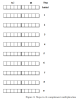 Figure 3 shows two 5-bit registers, AC and M, which together
form a shift register. These reqisters are part of a 2s complement
multipler that uses the add/shift method. Let the multiplicand be Y
= ?14 and the multiplier be X = ?7. Execute the steps of the
add/shift 2s complement multiplication procedure and fill in the
contents of the AC-M registers at the end of each step. Note: You
must determine what the last step will be. Filling in...
Figure 3 shows two 5-bit registers, AC and M, which together
form a shift register. These reqisters are part of a 2s complement
multipler that uses the add/shift method. Let the multiplicand be Y
= ?14 and the multiplier be X = ?7. Execute the steps of the
add/shift 2s complement multiplication procedure and fill in the
contents of the AC-M registers at the end of each step. Note: You
must determine what the last step will be. Filling in...
5) You transmit a 4-bit binary sequence. a) List the Sample Space set. b) List Event...
5) You transmit a 4-bit binary sequence. a) List the Sample Space set. b) List Event 1, all elements with one zero. c) List Event 2, all elements with two zeros. d) List Event 3, all elements that start with a zero.
 5.28 The Verilog code in Figure P5.9 represents a 3-bit linear-feedback shift register (LFSR) This type of circuit generates a counting sequence of pseudo-random numbers that repeats after 2" - 1 clock cycles, where n is the number of flip-flops in the LFSR. Synthesize a circuit to implement the LFSR in a chip. Draw a diagram of the circuit. Simulate the circuit's behavior by loading the pattern 001 into the LFSR and then enabling the register to count. What is...
 VHDL
Using D-flip-flops, generate an 8-bit LFSR (Linear Feedbaclk Shift-Register). For every bit, include a Binary Control (BC) value that can turn the contribution of the flip-flop output to the XOR input on or off (1 for ON, 0 for OFF). For the 8-bit LFSR include a 7-bit ge- neric BIT_VECTOR that can configure contribution of LFSR flip-flops to the LFSR feedback. The right-most flip-flop output has no XOR, and the left-most flip-flop input is fed by the feedback line...
VHDL
Using D-flip-flops, generate an 8-bit LFSR (Linear Feedbaclk Shift-Register). For every bit, include a Binary Control (BC) value that can turn the contribution of the flip-flop output to the XOR input on or off (1 for ON, 0 for OFF). For the 8-bit LFSR include a 7-bit ge- neric BIT_VECTOR that can configure contribution of LFSR flip-flops to the LFSR feedback. The right-most flip-flop output has no XOR, and the left-most flip-flop input is fed by the feedback line...
 6. Consider the linear feedback shift register (LFSR) with k - 5 5, p 2, and c- (11101). Then (a) What is the feedback polynomial f(x)? (b) Find the possible periods of the sequences generated by the LSFR (c) Is f(x) primitive?
6. Consider the linear feedback shift register (LFSR) with k - 5 5, p 2, and c- (11101). Then (a) What is the feedback polynomial f(x)? (b) Find the possible periods of the sequences generated by the LSFR...
6. Consider the linear feedback shift register (LFSR) with k - 5 5, p 2, and c- (11101). Then (a) What is the feedback polynomial f(x)? (b) Find the possible periods of the sequences generated by the LSFR (c) Is f(x) primitive?
6. Consider the linear feedback shift register (LFSR) with k - 5 5, p 2, and c- (11101). Then (a) What is the feedback polynomial f(x)? (b) Find the possible periods of the sequences generated by the LSFR...
 b. (i) Draw the circuit diagram of a 4-bit shift register using D-flip-flop. (2 marks) (ii) Supposing the 4-bit data 1011 is to be transfer in a 4-stage shift register using D-flip- flop, right-out the corresponding output of each of the flip-flop after the 6th clock pulses. (4 marks) c. Design a synchronous counter that go through the state 3, 4, 5, 7,8, 9, 10 . (13 marks)
 3 Theory A shift register is a series of flip-flops connected so that data can be transferred to a neighbor each time the clock pulse is active. An example is the display on your calculator. As numbers are entered on the keypad, the previously entered numbers are shifted to the left. Shift registers can be made to shift data to the left, to the right, or in either direction (bi-directional), using a control signal. They can be made from either...
 Figure 3 shows two 5-bit registers, AC and M, which together
form a shift register. These reqisters are part of a 2s complement
multipler that uses the add/shift method. Let the multiplicand be Y
= ?14 and the multiplier be X = ?7. Execute the steps of the
add/shift 2s complement multiplication procedure and fill in the
contents of the AC-M registers at the end of each step. Note: You
must determine what the last step will be. Filling in...
Figure 3 shows two 5-bit registers, AC and M, which together
form a shift register. These reqisters are part of a 2s complement
multipler that uses the add/shift method. Let the multiplicand be Y
= ?14 and the multiplier be X = ?7. Execute the steps of the
add/shift 2s complement multiplication procedure and fill in the
contents of the AC-M registers at the end of each step. Note: You
must determine what the last step will be. Filling in...
Most questions answered within 3 hours.
-
Where is the error in this code sequence?
String s1 = "Hello";
String s2 = "ello";...
asked 10 months ago -
Financial data for Joel de Paris, Inc., for last year
follow:
Joel de Paris, Inc.
Balance...
asked 10 months ago -
Consider this reaction:
Al2(SO4)3 (aq)+ BaCl3
(aq) Al2Cl6 (aq)- +
3BaSO4(s) . What is the...
asked 10 months ago -
Suppose that Savneet is considering increasing her
recent random sample from 20 car rentals to 40...
asked 10 months ago -
Trucks arrive at an unloading terminal at an average rate of 120
per hour.
Trucks arrive...
asked 10 months ago -
Why are methanol and ethanol completely soluble in water while
octanol is not very little soluble....
asked 10 months ago -
A facilities manager at a university reads in a research report
that the mean amount of...
asked 10 months ago -
When the CuSO4 is rehydrated by adding water to the anhydrous
compound, is this an endothermic...
asked 10 months ago -
A ray of sunlight is passing from diamond into crown glass; the
angle of incidence is...
asked 10 months ago -
A block of mass 0.249 kg is placed on top of a light, vertical
spring of...
asked 10 months ago -
how do the kidneys compensate in the presences of acidosis
a) trigger hyperventilate
b) reserve acid...
asked 10 months ago -
Question 501 pts
The rental rate of capital to the firm increases. Which of the
following...
asked 10 months ago