For the reaction in figure 1, label the nucleophile, the electrophile, and the peptide bond. Propose...
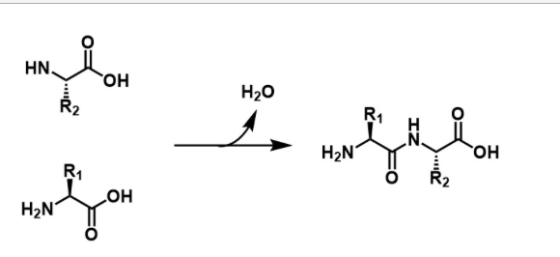
For the reaction in figure 1, label the nucleophile, the electrophile, and the peptide bond. Propose a mechanism for the formation of the peptide bond in the above reaction.
Homework Answers

Add Answer to:
For the reaction in figure 1, label the nucleophile, the
electrophile, and the peptide bond. Propose...
Label: 1. nucleophile 2. Electrophile 3. Leaving group Also, draw a reasonable, step by step arrow...
 Label:
1. nucleophile
2. Electrophile
3. Leaving group
Also, draw a reasonable, step by step arrow pushing mechanism
for the overall reaction!
REVIEW INSIGHT H RHNOC HMTS ONA NE но он но он Lysine peptide S-adenosylmethionine Methyllysine peptide S-adenosylhomocysteine Substrate product Figure 1 Mechanism of lysine methylation catalysed by histone lysine methyltransferases. The lysine amino group of the substrate histone polypeptide engages in an SN 2 reaction with the activated co-factor S-adenosylmethionine (SAM), resulting in the formation of an N-methylated...
Label:
1. nucleophile
2. Electrophile
3. Leaving group
Also, draw a reasonable, step by step arrow pushing mechanism
for the overall reaction!
REVIEW INSIGHT H RHNOC HMTS ONA NE но он но он Lysine peptide S-adenosylmethionine Methyllysine peptide S-adenosylhomocysteine Substrate product Figure 1 Mechanism of lysine methylation catalysed by histone lysine methyltransferases. The lysine amino group of the substrate histone polypeptide engages in an SN 2 reaction with the activated co-factor S-adenosylmethionine (SAM), resulting in the formation of an N-methylated...
Label: -nucleophile -electrophile -leaving group Draw a reasonable, step by step arrow pushing mechanism for the...
 Label:
-nucleophile
-electrophile
-leaving group
Draw a reasonable, step by step arrow pushing mechanism for
the overall reaction. You may abbreviate non-involved parts of any
of the molecules with 'R' groups, and you can assume that water is
present in the reaction (to act as either an acid or a base).
REVIEW INSIGHT Hмт RHNOC ON NH NO но он но он Lysine peptide S-adenosylmethionine Methyllysine peptide S-adenosy homocysteine substrate product Figure 1 Mechanism of lysine methylation catalysed by histone...
Label:
-nucleophile
-electrophile
-leaving group
Draw a reasonable, step by step arrow pushing mechanism for
the overall reaction. You may abbreviate non-involved parts of any
of the molecules with 'R' groups, and you can assume that water is
present in the reaction (to act as either an acid or a base).
REVIEW INSIGHT Hмт RHNOC ON NH NO но он но он Lysine peptide S-adenosylmethionine Methyllysine peptide S-adenosy homocysteine substrate product Figure 1 Mechanism of lysine methylation catalysed by histone...
propose a mechanism that shows the following transformation, find your electrophile and nucleophile Propose a mechanism...
 propose a mechanism that shows the following transformation,
find your electrophile and nucleophile
Propose a mechanism that shows the following transformation (Hint: find your electrophile and nucleophile) al do a SO CI + No H
propose a mechanism that shows the following transformation,
find your electrophile and nucleophile
Propose a mechanism that shows the following transformation (Hint: find your electrophile and nucleophile) al do a SO CI + No H
Predict the product of the reaction mechanisms. Identify the electrophile and nucleophile in each reaction. Propose...
 Predict the product of the reaction mechanisms. Identify the electrophile and nucleophile in each reaction. Propose a mechanism for each reaction below. This means show curved arrows. You may want to fill in any nonbonding electrons. Show an example of each of the following types of reactions and explain why it is that type: Addition elimination Rearrangement Substitution
For the following reaction, label the nucleophile, electrophile, and leaving group, Br + + Br Nucleophile...
 For the following reaction, label the nucleophile, electrophile, and leaving group, Br + + Br Nucleophile Select] Electrophile (Select] Leaving Group [Select] For each of the following pairs, indicate with molecule is the better (stronger) nucleophile. [Select] [ Select] Z-I [Select) [Select]
Which is the nucleophile and which is the electrophile of this Biginelli reaction? Your Biginelli reaction...
 Which is the nucleophile and
which is the electrophile of this Biginelli reaction?
Your Biginelli reaction is performed under Lewis-acidic conditions. One possible step in the synthesis, as shown in the lab manual, is the Knovenagel condensation between benzaldehyde and ethyl acetoactate: Ob el con OEt 0OET Consider the mechanism of the Knovenagel reaction, and the reaction conditions. Then, from the list of species shown below, choose the electrophile and the nucleophile that would be involved in the carbon-carbon bond-forming...
Which is the nucleophile and
which is the electrophile of this Biginelli reaction?
Your Biginelli reaction is performed under Lewis-acidic conditions. One possible step in the synthesis, as shown in the lab manual, is the Knovenagel condensation between benzaldehyde and ethyl acetoactate: Ob el con OEt 0OET Consider the mechanism of the Knovenagel reaction, and the reaction conditions. Then, from the list of species shown below, choose the electrophile and the nucleophile that would be involved in the carbon-carbon bond-forming...
Propose a mechanism that shows the following transformation. Hint: find the electrophile and nucleophile. پرتقال OH...
 Propose a mechanism that shows the following transformation. Hint: find the electrophile and nucleophile. پرتقال OH tocic + 50g t
For each reaction on the following slides: a- Identify the nucleophile and electrophile b- use curved...
 For each reaction on the following slides: a- Identify the nucleophile and electrophile b- use curved arrow to show the formation of the substitution products reaction via an S2 mechanism CH,CH,Br + NaCN
Draw the product of the Lewis acid-base reaction. Label the electrophile and nucleophile. H20 draw structure...
 Draw the product of the Lewis acid-base reaction. Label the electrophile and nucleophile. H20 draw structure . (select) (select) <>
4. (4 pts) Label the nucleophile and electrophile and draw the products of the following Si2 reaction. Be sure to i...
 4. (4 pts) Label the nucleophile and electrophile and draw the products of the following Si2 reaction. Be sure to indicate the appropriate stereochemistry. acetone N3 (2 pts) Would the reaction above be faster or slower if each of the following substrates were used instead of trans-1-iodo-4-methylcyclohexane? 5. a. iodoethane FASTER SLOWER b. trans-1-chloro-4-methylcyclohexane FASTER SLOWER
 Label:
1. nucleophile
2. Electrophile
3. Leaving group
Also, draw a reasonable, step by step arrow pushing mechanism
for the overall reaction!
REVIEW INSIGHT H RHNOC HMTS ONA NE но он но он Lysine peptide S-adenosylmethionine Methyllysine peptide S-adenosylhomocysteine Substrate product Figure 1 Mechanism of lysine methylation catalysed by histone lysine methyltransferases. The lysine amino group of the substrate histone polypeptide engages in an SN 2 reaction with the activated co-factor S-adenosylmethionine (SAM), resulting in the formation of an N-methylated...
Label:
1. nucleophile
2. Electrophile
3. Leaving group
Also, draw a reasonable, step by step arrow pushing mechanism
for the overall reaction!
REVIEW INSIGHT H RHNOC HMTS ONA NE но он но он Lysine peptide S-adenosylmethionine Methyllysine peptide S-adenosylhomocysteine Substrate product Figure 1 Mechanism of lysine methylation catalysed by histone lysine methyltransferases. The lysine amino group of the substrate histone polypeptide engages in an SN 2 reaction with the activated co-factor S-adenosylmethionine (SAM), resulting in the formation of an N-methylated...
 Label:
-nucleophile
-electrophile
-leaving group
Draw a reasonable, step by step arrow pushing mechanism for
the overall reaction. You may abbreviate non-involved parts of any
of the molecules with 'R' groups, and you can assume that water is
present in the reaction (to act as either an acid or a base).
REVIEW INSIGHT Hмт RHNOC ON NH NO но он но он Lysine peptide S-adenosylmethionine Methyllysine peptide S-adenosy homocysteine substrate product Figure 1 Mechanism of lysine methylation catalysed by histone...
Label:
-nucleophile
-electrophile
-leaving group
Draw a reasonable, step by step arrow pushing mechanism for
the overall reaction. You may abbreviate non-involved parts of any
of the molecules with 'R' groups, and you can assume that water is
present in the reaction (to act as either an acid or a base).
REVIEW INSIGHT Hмт RHNOC ON NH NO но он но он Lysine peptide S-adenosylmethionine Methyllysine peptide S-adenosy homocysteine substrate product Figure 1 Mechanism of lysine methylation catalysed by histone...
 propose a mechanism that shows the following transformation,
find your electrophile and nucleophile
Propose a mechanism that shows the following transformation (Hint: find your electrophile and nucleophile) al do a SO CI + No H
propose a mechanism that shows the following transformation,
find your electrophile and nucleophile
Propose a mechanism that shows the following transformation (Hint: find your electrophile and nucleophile) al do a SO CI + No H
 Predict the product of the reaction mechanisms. Identify the electrophile and nucleophile in each reaction. Propose a mechanism for each reaction below. This means show curved arrows. You may want to fill in any nonbonding electrons. Show an example of each of the following types of reactions and explain why it is that type: Addition elimination Rearrangement Substitution
 For the following reaction, label the nucleophile, electrophile, and leaving group, Br + + Br Nucleophile Select] Electrophile (Select] Leaving Group [Select] For each of the following pairs, indicate with molecule is the better (stronger) nucleophile. [Select] [ Select] Z-I [Select) [Select]
 Which is the nucleophile and
which is the electrophile of this Biginelli reaction?
Your Biginelli reaction is performed under Lewis-acidic conditions. One possible step in the synthesis, as shown in the lab manual, is the Knovenagel condensation between benzaldehyde and ethyl acetoactate: Ob el con OEt 0OET Consider the mechanism of the Knovenagel reaction, and the reaction conditions. Then, from the list of species shown below, choose the electrophile and the nucleophile that would be involved in the carbon-carbon bond-forming...
Which is the nucleophile and
which is the electrophile of this Biginelli reaction?
Your Biginelli reaction is performed under Lewis-acidic conditions. One possible step in the synthesis, as shown in the lab manual, is the Knovenagel condensation between benzaldehyde and ethyl acetoactate: Ob el con OEt 0OET Consider the mechanism of the Knovenagel reaction, and the reaction conditions. Then, from the list of species shown below, choose the electrophile and the nucleophile that would be involved in the carbon-carbon bond-forming...
 Propose a mechanism that shows the following transformation. Hint: find the electrophile and nucleophile. پرتقال OH tocic + 50g t
 For each reaction on the following slides: a- Identify the nucleophile and electrophile b- use curved arrow to show the formation of the substitution products reaction via an S2 mechanism CH,CH,Br + NaCN
 Draw the product of the Lewis acid-base reaction. Label the electrophile and nucleophile. H20 draw structure . (select) (select) <>
 4. (4 pts) Label the nucleophile and electrophile and draw the products of the following Si2 reaction. Be sure to indicate the appropriate stereochemistry. acetone N3 (2 pts) Would the reaction above be faster or slower if each of the following substrates were used instead of trans-1-iodo-4-methylcyclohexane? 5. a. iodoethane FASTER SLOWER b. trans-1-chloro-4-methylcyclohexane FASTER SLOWER
Most questions answered within 3 hours.
-
Where is the error in this code sequence?
String s1 = "Hello";
String s2 = "ello";...
asked 10 months ago -
Financial data for Joel de Paris, Inc., for last year
follow:
Joel de Paris, Inc.
Balance...
asked 10 months ago -
Consider this reaction:
Al2(SO4)3 (aq)+ BaCl3
(aq) Al2Cl6 (aq)- +
3BaSO4(s) . What is the...
asked 10 months ago -
Suppose that Savneet is considering increasing her
recent random sample from 20 car rentals to 40...
asked 10 months ago -
Trucks arrive at an unloading terminal at an average rate of 120
per hour.
Trucks arrive...
asked 10 months ago -
Why are methanol and ethanol completely soluble in water while
octanol is not very little soluble....
asked 10 months ago -
A facilities manager at a university reads in a research report
that the mean amount of...
asked 10 months ago -
When the CuSO4 is rehydrated by adding water to the anhydrous
compound, is this an endothermic...
asked 10 months ago -
A ray of sunlight is passing from diamond into crown glass; the
angle of incidence is...
asked 10 months ago -
A block of mass 0.249 kg is placed on top of a light, vertical
spring of...
asked 10 months ago -
how do the kidneys compensate in the presences of acidosis
a) trigger hyperventilate
b) reserve acid...
asked 10 months ago -
Question 501 pts
The rental rate of capital to the firm increases. Which of the
following...
asked 10 months ago