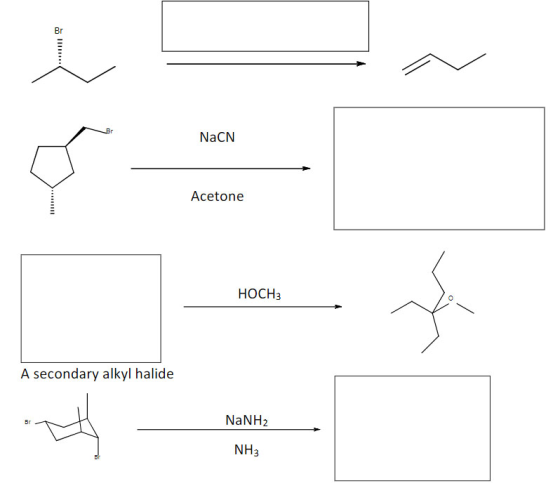
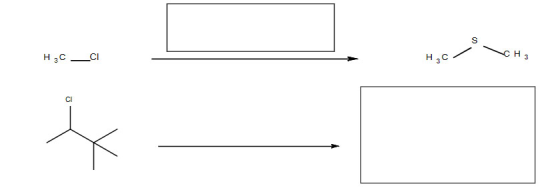
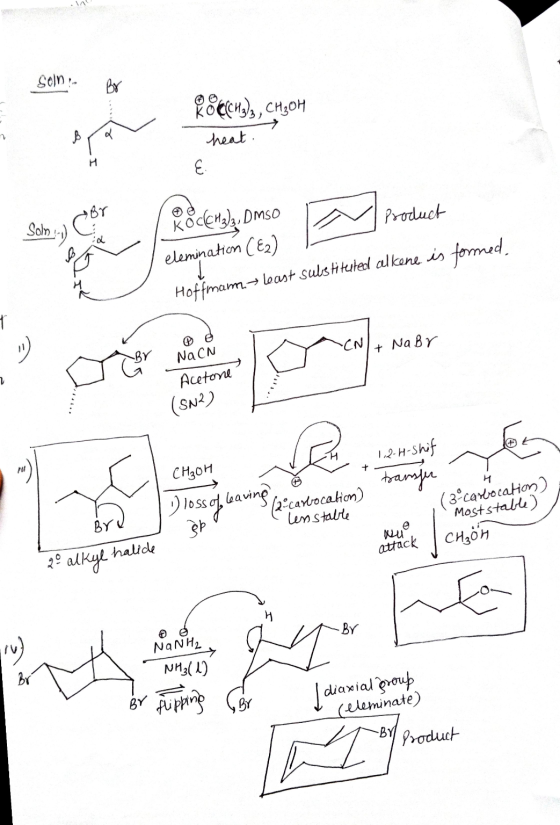
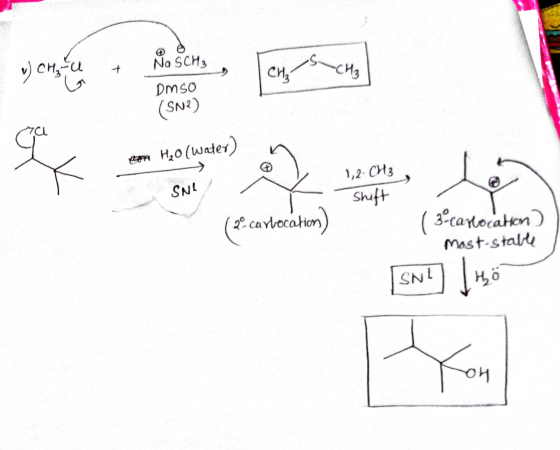
Give the missing pieces of the given reaction.
Homework Answers
Add Answer to:
Give the missing pieces of the given reaction.
Br Br NaCN o Acetone w HOCH3 A...
Select the likely mechanism for the following reaction. NaCN Br acetone H3C H3 CH2 Hucche Нас
 Select the likely mechanism for the following reaction. NaCN Br acetone H3C H3 CH2 Hucche Нас
Select the likely mechanism for the following reaction. NaCN Br acetone "сH Нас Нас CH2 Нас...
 Select the likely mechanism for the following reaction. NaCN Br acetone "сH Нас Нас CH2 Нас Нас Hас CH2 Нас Нас Нас" Нас" Нас
Which reaction pathway is favored given the following substrate and conditions? ci NaBr Acetone O a....
 Which reaction pathway is favored given the following substrate and conditions? ci NaBr Acetone O a. Sn2 b. E2 OC. SNI d. SN2/E2 e. El f. Sni/E1 What is the major Organic product from the following sequence of reactions? O 1) NaNH2 2) Br ou O (b) 0 NHO i NH (d) (e (f) What is the systematic IUPAC name for the following Organic compound? o o a. Butanoic methanoic anhydride b. Ethanoic pentanoic anhydride c Octan-2,4-dione d. Pentylethanoate e....
Unit 3 Hinw '3 SNİSNDELE2 1. Give the major product(s) for the following reactions. Indicate the...
 Unit 3 Hinw '3 SNİSNDELE2 1. Give the major product(s) for the following reactions. Indicate the mec reaction occurs, write "no reaction. s) in operation. If no KOC(CH) (CH COH b. H3C NaNH2 NHy Nal H3C H2CH-CH3 CH,COCH CH OH CH3 2. Give the mechanism of each of the following reactions. NaCN CH CH CHCN NaBr a. CH,CH,CH Br acetone HSCH,CH (CH) CSCH,CH3 HBr Cl + NaCI + CH OH NaOCH CH3OH Br CH OH CH3
Consider the reaction of (R)-2-bromopentane and sodium cyanide in acetone. CN Br Hir.. CH5n + NaCN...
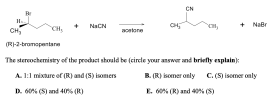 Consider the reaction of (R)-2-bromopentane and sodium cyanide
in acetone.
CN Br Hir.. CH5n + NaCN ch + NaBr CH, acetone CH; (R)-2-bromopentane The stereochemistry of the product should be (circle your answer and briefly explain): A. 1:1 mixture of (R) and (S) isomers B. (R) isomer only C. (S) isomer only D. 60% (S) and 40% (R) E. 60% (R) and 40% (S)
Consider the reaction of (R)-2-bromopentane and sodium cyanide
in acetone.
CN Br Hir.. CH5n + NaCN ch + NaBr CH, acetone CH; (R)-2-bromopentane The stereochemistry of the product should be (circle your answer and briefly explain): A. 1:1 mixture of (R) and (S) isomers B. (R) isomer only C. (S) isomer only D. 60% (S) and 40% (R) E. 60% (R) and 40% (S)
1. For the following Alkyl halide indicate which position will react under SN1 reaction conditions and...
 1. For the following Alkyl halide indicate which position will react under SN1 reaction conditions and under SN2 reaction conditions. Explain your answer. mer 2. Draw the complete mechanism and the products for of the following SN1 reaction paying close attention to stereochemistry. H3C CI CH OH CH2CH3 општироотип солио 3. Provide the product/s for the following reactions. Indicate if the reactions proceed via an SN1, or SN2 mechanism. Indicate proper stereochemistry if it is applicable. Show the mechanisms NaCN...
The acetoacetic ester synthesis is a carbonyl alkylation reaction. It is used to prepare methyl ketones...
 The acetoacetic ester synthesis is a carbonyl alkylation reaction. It is used to prepare methyl ketones from primary alkyl halides, lengthening the carbon chain by three atoms. Thus, the product can be visualized as being a "substituted acetone." The reaction consists of three steps: generation of the enolate anion followed by S2 reaction with a primary alkyl halide, ester hydrolysis under acid conditions, and decarboxylation. 1. NaOEt 2. H2O* 3. heat Br + - H₃C + CO2 + ETOH Hc...
1. Consider the SN2 reaction shown below and answer the following questions.nobl 8 acetone no t...
 1. Consider the SN2 reaction shown below and answer the following questions.nobl 8 acetone no t iNaSCH SCH, + NaBr worl s1918. A. Write the rate law for the reaction. ebiler vil ar to nollurunoonoo oli nison. B. Identify the nucleophile and the electrophile in the reaction. HOCH lo noiden nog orgnismanl.d C. State how each of the following factors would affect the rate of the reaction. CHOW CHOOH glasa a. Increasing the concentration of 1-bromopropane. b. Decreasing the concentration...
10. The following substrate reacts differently with each set of conditions. For each reaction give ALL...
 10. The following substrate reacts differently with each set of conditions. For each reaction give ALL of the products, the mechanism (SN 1, SN2, E1 or E2), and the rate law. You may abbreviate the alkyl halide as R-Br in your rate law. (12) Draw reaction product(s) Mechanism Rate Law NaSH acetone 11. The following compound is shown with no designated stereochemistry. How many stereoisomers are there for this compound? Draw each of them and label them as either chiral...
9.13 Draw a structural formula for the product of each S 2 reaction. Where configuration of...
 9.13 Draw a structural formula for the product of each S 2 reaction. Where configuration of the starting material is given, show the configuration of the product. (a) CH,CH,CH,Cl + CH,CH,O-Nat - (b) (CH3)3N + CHI acetone (c) CHBr + Na*CN- acetone CI + CH2S+Na+ - (d) HC ethanol (e) CHỊCH,CH,Cl + CHỤC=C Li* ( -chĄC + NH; echanol diethyl ether (g) 0 NH + CH3(CHỊ) CHỊC14 (h) CH CH.CH,Br + NaCN to acetone 9.16 Treatment of 1-aminoadamantane, CH, N,...
 Select the likely mechanism for the following reaction. NaCN Br acetone H3C H3 CH2 Hucche Нас
 Select the likely mechanism for the following reaction. NaCN Br acetone "сH Нас Нас CH2 Нас Нас Hас CH2 Нас Нас Нас" Нас" Нас
 Which reaction pathway is favored given the following substrate and conditions? ci NaBr Acetone O a. Sn2 b. E2 OC. SNI d. SN2/E2 e. El f. Sni/E1 What is the major Organic product from the following sequence of reactions? O 1) NaNH2 2) Br ou O (b) 0 NHO i NH (d) (e (f) What is the systematic IUPAC name for the following Organic compound? o o a. Butanoic methanoic anhydride b. Ethanoic pentanoic anhydride c Octan-2,4-dione d. Pentylethanoate e....
 Unit 3 Hinw '3 SNİSNDELE2 1. Give the major product(s) for the following reactions. Indicate the mec reaction occurs, write "no reaction. s) in operation. If no KOC(CH) (CH COH b. H3C NaNH2 NHy Nal H3C H2CH-CH3 CH,COCH CH OH CH3 2. Give the mechanism of each of the following reactions. NaCN CH CH CHCN NaBr a. CH,CH,CH Br acetone HSCH,CH (CH) CSCH,CH3 HBr Cl + NaCI + CH OH NaOCH CH3OH Br CH OH CH3
 Consider the reaction of (R)-2-bromopentane and sodium cyanide
in acetone.
CN Br Hir.. CH5n + NaCN ch + NaBr CH, acetone CH; (R)-2-bromopentane The stereochemistry of the product should be (circle your answer and briefly explain): A. 1:1 mixture of (R) and (S) isomers B. (R) isomer only C. (S) isomer only D. 60% (S) and 40% (R) E. 60% (R) and 40% (S)
Consider the reaction of (R)-2-bromopentane and sodium cyanide
in acetone.
CN Br Hir.. CH5n + NaCN ch + NaBr CH, acetone CH; (R)-2-bromopentane The stereochemistry of the product should be (circle your answer and briefly explain): A. 1:1 mixture of (R) and (S) isomers B. (R) isomer only C. (S) isomer only D. 60% (S) and 40% (R) E. 60% (R) and 40% (S)
 1. For the following Alkyl halide indicate which position will react under SN1 reaction conditions and under SN2 reaction conditions. Explain your answer. mer 2. Draw the complete mechanism and the products for of the following SN1 reaction paying close attention to stereochemistry. H3C CI CH OH CH2CH3 општироотип солио 3. Provide the product/s for the following reactions. Indicate if the reactions proceed via an SN1, or SN2 mechanism. Indicate proper stereochemistry if it is applicable. Show the mechanisms NaCN...
 The acetoacetic ester synthesis is a carbonyl alkylation reaction. It is used to prepare methyl ketones from primary alkyl halides, lengthening the carbon chain by three atoms. Thus, the product can be visualized as being a "substituted acetone." The reaction consists of three steps: generation of the enolate anion followed by S2 reaction with a primary alkyl halide, ester hydrolysis under acid conditions, and decarboxylation. 1. NaOEt 2. H2O* 3. heat Br + - H₃C + CO2 + ETOH Hc...
 1. Consider the SN2 reaction shown below and answer the following questions.nobl 8 acetone no t iNaSCH SCH, + NaBr worl s1918. A. Write the rate law for the reaction. ebiler vil ar to nollurunoonoo oli nison. B. Identify the nucleophile and the electrophile in the reaction. HOCH lo noiden nog orgnismanl.d C. State how each of the following factors would affect the rate of the reaction. CHOW CHOOH glasa a. Increasing the concentration of 1-bromopropane. b. Decreasing the concentration...
 10. The following substrate reacts differently with each set of conditions. For each reaction give ALL of the products, the mechanism (SN 1, SN2, E1 or E2), and the rate law. You may abbreviate the alkyl halide as R-Br in your rate law. (12) Draw reaction product(s) Mechanism Rate Law NaSH acetone 11. The following compound is shown with no designated stereochemistry. How many stereoisomers are there for this compound? Draw each of them and label them as either chiral...
 9.13 Draw a structural formula for the product of each S 2 reaction. Where configuration of the starting material is given, show the configuration of the product. (a) CH,CH,CH,Cl + CH,CH,O-Nat - (b) (CH3)3N + CHI acetone (c) CHBr + Na*CN- acetone CI + CH2S+Na+ - (d) HC ethanol (e) CHỊCH,CH,Cl + CHỤC=C Li* ( -chĄC + NH; echanol diethyl ether (g) 0 NH + CH3(CHỊ) CHỊC14 (h) CH CH.CH,Br + NaCN to acetone 9.16 Treatment of 1-aminoadamantane, CH, N,...
Most questions answered within 3 hours.
-
Where is the error in this code sequence?
String s1 = "Hello";
String s2 = "ello";...
asked 11 months ago -
Financial data for Joel de Paris, Inc., for last year
follow:
Joel de Paris, Inc.
Balance...
asked 11 months ago -
Consider this reaction:
Al2(SO4)3 (aq)+ BaCl3
(aq) Al2Cl6 (aq)- +
3BaSO4(s) . What is the...
asked 11 months ago -
Suppose that Savneet is considering increasing her
recent random sample from 20 car rentals to 40...
asked 11 months ago -
Trucks arrive at an unloading terminal at an average rate of 120
per hour.
Trucks arrive...
asked 11 months ago -
Why are methanol and ethanol completely soluble in water while
octanol is not very little soluble....
asked 11 months ago -
A facilities manager at a university reads in a research report
that the mean amount of...
asked 11 months ago -
When the CuSO4 is rehydrated by adding water to the anhydrous
compound, is this an endothermic...
asked 11 months ago -
A ray of sunlight is passing from diamond into crown glass; the
angle of incidence is...
asked 11 months ago -
A block of mass 0.249 kg is placed on top of a light, vertical
spring of...
asked 11 months ago -
how do the kidneys compensate in the presences of acidosis
a) trigger hyperventilate
b) reserve acid...
asked 11 months ago -
Question 501 pts
The rental rate of capital to the firm increases. Which of the
following...
asked 11 months ago