volume
A pyramid with height h and base an equilateral trianglewith side a (a tetrahedron)
Homework Answers
Volume of pyramid=1/3(area of base)*height of pyramid
Please help with these. I have no idea how to do them. For problems 1-7, find...
 Please help with these. I have no idea how to do them.
For problems 1-7, find the volume of the solid formed by rotating the region bounded by the given curves about the indicated axis. 4. y = x1, x = 0, y = 1 (in the first quadrant); about the y-axis 6. y = -x - 2 + 2, y = 0; about the x-axis 8. Find the volume of the frustum of a right circular cone with height...
Please help with these. I have no idea how to do them.
For problems 1-7, find the volume of the solid formed by rotating the region bounded by the given curves about the indicated axis. 4. y = x1, x = 0, y = 1 (in the first quadrant); about the y-axis 6. y = -x - 2 + 2, y = 0; about the x-axis 8. Find the volume of the frustum of a right circular cone with height...
Please provide clear explanation as I need to study for exam. Thanks I will upvote the...
 Please provide clear explanation as I need to study for exam.
Thanks I will upvote the best and neat answer
Find the volume V of the described solid S. A frustum of a pyramid with square base of side b, square top of side a, and height h a b V = What happens if a = b? (Enter your answer in terms of b and h.) We get a ---Select-- with volume V = What happens if a =...
Please provide clear explanation as I need to study for exam.
Thanks I will upvote the best and neat answer
Find the volume V of the described solid S. A frustum of a pyramid with square base of side b, square top of side a, and height h a b V = What happens if a = b? (Enter your answer in terms of b and h.) We get a ---Select-- with volume V = What happens if a =...
&3 A syare Pyramid har side= st and heaet-12.ft. Find the olme. S. A. - Sam daubles the height of the Pyramid....
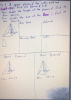 &3 A syare Pyramid har side= st and heaet-12.ft. Find the olme. S. A. - Sam daubles the height of the Pyramid. Find new Volume. Kim dables the volume. of the Base Find it arca new Arca Base Jolunt S.A= Per oe ter Base Sams Pyramid kim Prantd New Valume Nen Volume
&3 A syare Pyramid har side= st and heaet-12.ft. Find the olme. S. A. - Sam daubles the height of the Pyramid. Find new Volume. Kim dables the...
&3 A syare Pyramid har side= st and heaet-12.ft. Find the olme. S. A. - Sam daubles the height of the Pyramid. Find new Volume. Kim dables the volume. of the Base Find it arca new Arca Base Jolunt S.A= Per oe ter Base Sams Pyramid kim Prantd New Valume Nen Volume
&3 A syare Pyramid har side= st and heaet-12.ft. Find the olme. S. A. - Sam daubles the height of the Pyramid. Find new Volume. Kim dables the...
Hello, can someone help me with this problem? Ps: We should use integral to solve this problem. T...
 Hello, can someone help me with this problem? Ps: We should
use integral to solve this problem. Thank you
ind the volume of a frustum of a pyramid with square base of side b, square top of side a, and height h.
ind the volume of a frustum of a pyramid with square base of side b, square top of side a, and height h.
Hello, can someone help me with this problem? Ps: We should
use integral to solve this problem. Thank you
ind the volume of a frustum of a pyramid with square base of side b, square top of side a, and height h.
ind the volume of a frustum of a pyramid with square base of side b, square top of side a, and height h.
11. Find the volume of the given right tetrahedron. (Hint: Consider slices perpendicular to one of...
 11. Find the volume of the given right tetrahedron. (Hint: Consider slices perpendicular to one of the labeled edges.) 3. The solid lies between planes perpendicular to the x-axis at x= -1 and x = 1. The cross-sections perpendicular to the I-axis between these planes are squares whose bases run from the semicircle y = -VI-to the semicircle y = VI- 4. The solid lies between planes perpendicular to the x-axis at x= -1 and .x = 1. The cross-sections...
(1) Consider the solid S described below. The base of S is the triangular region with...
(1) Consider the solid S described below. The base of S is the triangular region with vertices (0, 0), (3, 0), and (0, 3). Cross-sections perpendicular to the y-axis are equilateral triangles. Find the volume V of this solid. V = (2)Consider the solid S described below. The base of S is the triangular region with vertices (0, 0), (1, 0), and (0, 1). Cross-sections perpendicular to the x-axis are squares. Find the volume V of this solid. V =...
(a) A pyramid has a height of 458 ft and its base covers an area of...
 (a) A pyramid has a height of 458 ft and its base covers an area of 14.0 acres (see figure below). The volume of a pyramid is given by the expression where B is the area of the base and h is the height. Find the volume of this pyramid in cubic meters. (1 acre 43,560 ft) m3 What If? If the height of the pyramid were increased to 517 ft and the height to base area ratio of the...
The following exercise is based upon the "uniqueness of volume." A tetrahedron (not rectangular) has vertices...
 The following exercise is based upon the "uniqueness of volume." A tetrahedron (not rectangular) has vertices at A, B, C, and D. The length of the altitude from A to the base (ABCD) measures 6 in. It is given that m BCD = 90°, BC = 6 in., and CD = 9 in. B i (a) Find the volume (in cubic inches) of the pyramid. in3 (b) Find the length (in inches) of the altitude from vertex D to the...
A pyramid has a height of 455 ft and its base covers an area of 12.0...
A pyramid has a height of 455 ft and its base covers an area of 12.0 acres (see figure below). The volume of a pyramid is given by the expression V =1/3Bh where B is the area of the base and h is the height. Find the volume of this pyramid in cubic meters. (1 acre = 43,560 ft2)
Problem 4 he structure of the NH3 molecule is approximately that of an equilateral tetrahedron, with...
 Problem 4 he structure of the NH3 molecule is approximately that of an equilateral tetrahedron, with three H+ ions forming the base and an N3- ion at the apex of the tetrahedron. The length of each side is 1.64 x 10⁻¹⁰ m. Calculate the force that acts on each ion.
 Please help with these. I have no idea how to do them.
For problems 1-7, find the volume of the solid formed by rotating the region bounded by the given curves about the indicated axis. 4. y = x1, x = 0, y = 1 (in the first quadrant); about the y-axis 6. y = -x - 2 + 2, y = 0; about the x-axis 8. Find the volume of the frustum of a right circular cone with height...
Please help with these. I have no idea how to do them.
For problems 1-7, find the volume of the solid formed by rotating the region bounded by the given curves about the indicated axis. 4. y = x1, x = 0, y = 1 (in the first quadrant); about the y-axis 6. y = -x - 2 + 2, y = 0; about the x-axis 8. Find the volume of the frustum of a right circular cone with height...
 Please provide clear explanation as I need to study for exam.
Thanks I will upvote the best and neat answer
Find the volume V of the described solid S. A frustum of a pyramid with square base of side b, square top of side a, and height h a b V = What happens if a = b? (Enter your answer in terms of b and h.) We get a ---Select-- with volume V = What happens if a =...
Please provide clear explanation as I need to study for exam.
Thanks I will upvote the best and neat answer
Find the volume V of the described solid S. A frustum of a pyramid with square base of side b, square top of side a, and height h a b V = What happens if a = b? (Enter your answer in terms of b and h.) We get a ---Select-- with volume V = What happens if a =...
 &3 A syare Pyramid har side= st and heaet-12.ft. Find the olme. S. A. - Sam daubles the height of the Pyramid. Find new Volume. Kim dables the volume. of the Base Find it arca new Arca Base Jolunt S.A= Per oe ter Base Sams Pyramid kim Prantd New Valume Nen Volume
&3 A syare Pyramid har side= st and heaet-12.ft. Find the olme. S. A. - Sam daubles the height of the Pyramid. Find new Volume. Kim dables the...
&3 A syare Pyramid har side= st and heaet-12.ft. Find the olme. S. A. - Sam daubles the height of the Pyramid. Find new Volume. Kim dables the volume. of the Base Find it arca new Arca Base Jolunt S.A= Per oe ter Base Sams Pyramid kim Prantd New Valume Nen Volume
&3 A syare Pyramid har side= st and heaet-12.ft. Find the olme. S. A. - Sam daubles the height of the Pyramid. Find new Volume. Kim dables the...
 Hello, can someone help me with this problem? Ps: We should
use integral to solve this problem. Thank you
ind the volume of a frustum of a pyramid with square base of side b, square top of side a, and height h.
ind the volume of a frustum of a pyramid with square base of side b, square top of side a, and height h.
Hello, can someone help me with this problem? Ps: We should
use integral to solve this problem. Thank you
ind the volume of a frustum of a pyramid with square base of side b, square top of side a, and height h.
ind the volume of a frustum of a pyramid with square base of side b, square top of side a, and height h.
 11. Find the volume of the given right tetrahedron. (Hint: Consider slices perpendicular to one of the labeled edges.) 3. The solid lies between planes perpendicular to the x-axis at x= -1 and x = 1. The cross-sections perpendicular to the I-axis between these planes are squares whose bases run from the semicircle y = -VI-to the semicircle y = VI- 4. The solid lies between planes perpendicular to the x-axis at x= -1 and .x = 1. The cross-sections...
 (a) A pyramid has a height of 458 ft and its base covers an area of 14.0 acres (see figure below). The volume of a pyramid is given by the expression where B is the area of the base and h is the height. Find the volume of this pyramid in cubic meters. (1 acre 43,560 ft) m3 What If? If the height of the pyramid were increased to 517 ft and the height to base area ratio of the...
 The following exercise is based upon the "uniqueness of volume." A tetrahedron (not rectangular) has vertices at A, B, C, and D. The length of the altitude from A to the base (ABCD) measures 6 in. It is given that m BCD = 90°, BC = 6 in., and CD = 9 in. B i (a) Find the volume (in cubic inches) of the pyramid. in3 (b) Find the length (in inches) of the altitude from vertex D to the...
 Problem 4 he structure of the NH3 molecule is approximately that of an equilateral tetrahedron, with three H+ ions forming the base and an N3- ion at the apex of the tetrahedron. The length of each side is 1.64 x 10⁻¹⁰ m. Calculate the force that acts on each ion.
Most questions answered within 3 hours.
-
Where is the error in this code sequence?
String s1 = "Hello";
String s2 = "ello";...
asked 10 months ago -
Financial data for Joel de Paris, Inc., for last year
follow:
Joel de Paris, Inc.
Balance...
asked 10 months ago -
Consider this reaction:
Al2(SO4)3 (aq)+ BaCl3
(aq) Al2Cl6 (aq)- +
3BaSO4(s) . What is the...
asked 10 months ago -
Suppose that Savneet is considering increasing her
recent random sample from 20 car rentals to 40...
asked 10 months ago -
Trucks arrive at an unloading terminal at an average rate of 120
per hour.
Trucks arrive...
asked 10 months ago -
Why are methanol and ethanol completely soluble in water while
octanol is not very little soluble....
asked 10 months ago -
A facilities manager at a university reads in a research report
that the mean amount of...
asked 10 months ago -
When the CuSO4 is rehydrated by adding water to the anhydrous
compound, is this an endothermic...
asked 10 months ago -
A ray of sunlight is passing from diamond into crown glass; the
angle of incidence is...
asked 10 months ago -
A block of mass 0.249 kg is placed on top of a light, vertical
spring of...
asked 10 months ago -
how do the kidneys compensate in the presences of acidosis
a) trigger hyperventilate
b) reserve acid...
asked 10 months ago -
Question 501 pts
The rental rate of capital to the firm increases. Which of the
following...
asked 10 months ago