


Homework Answers
Answer
1) among them only electron donating group is alkyl . All the rest are electron withdrawing
hence Ansina alkyl group
2) Answer is option b
please refer the reaction mechanism shown in paper
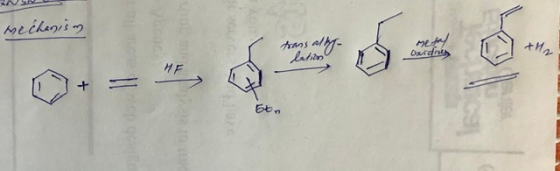
3) For a compound to be aromatic , it should have 4n +2 pi electron where n = 0,1,2,3,4,etc....
if the no of double bonds and lone pairs adds to obey the 4n + 2 rule , then it would be aromatic
in the given options , the option e has only one double bond and a lone pair electron which sum up to only 4 electron and it doesn't obey the 4n+2 rule
so the Amswer is option e
Add Answer to:
Which of the following are not electron-withdrawing groups? b oc Od Oe Sufony Nitro Cyano Carbonyl...
what do the following Pka values tell you about the electron withdrawing abilities of nitro, cyano,...
 what do the following Pka values tell you about the
electron withdrawing abilities of nitro, cyano, chloro, and
hydroxyl groups? Check all that apply. Please and thank you
What do the following pK, values tell you about the electron-withdrawing abilities of nitro, cyano, chloro, and hydroxyl groups? CH,COOH No, 1.68 CH,COOH CN 2.46 H2COOH CH,COOH ĆI 2.86 Cu.Com CH,COOH Os 3.83 Çk.cooh h 4.74 Check all that apply. Nitro and cyano are electron-donating, chloro and hydroxyl groups are electron-withdrawing The...
what do the following Pka values tell you about the
electron withdrawing abilities of nitro, cyano, chloro, and
hydroxyl groups? Check all that apply. Please and thank you
What do the following pK, values tell you about the electron-withdrawing abilities of nitro, cyano, chloro, and hydroxyl groups? CH,COOH No, 1.68 CH,COOH CN 2.46 H2COOH CH,COOH ĆI 2.86 Cu.Com CH,COOH Os 3.83 Çk.cooh h 4.74 Check all that apply. Nitro and cyano are electron-donating, chloro and hydroxyl groups are electron-withdrawing The...
Draw the major product of the following isotope-exchange reaction Do Enter Your Answer A OB OC OD...
 please help
Draw the major product of the following isotope-exchange reaction Do Enter Your Answer A OB OC OD Draw the major product of the following base-catalyzed bromination reaction. CH3 Br2 NaOH Create OscerSkench Answer 7 Which of the following compounds will be more stable in their corresponding enol form than the keto form? Assume that the compounds are dissolved in an non-aqueous solvent like cyclohexane. A 1only B. 2 only C 3only D. 1 and2 E. 1 and 3...
please help
Draw the major product of the following isotope-exchange reaction Do Enter Your Answer A OB OC OD Draw the major product of the following base-catalyzed bromination reaction. CH3 Br2 NaOH Create OscerSkench Answer 7 Which of the following compounds will be more stable in their corresponding enol form than the keto form? Assume that the compounds are dissolved in an non-aqueous solvent like cyclohexane. A 1only B. 2 only C 3only D. 1 and2 E. 1 and 3...
a. Alkenes with electron withdrawing groups are good dienophiles-True/False b. Wolfkishner reaction is helpful to convert an ester to alkane. True false c. Tertiary alcohol will be formed by the r...
 a. Alkenes with electron withdrawing groups are good dienophiles-True/False b. Wolfkishner reaction is helpful to convert an ester to alkane. True false c. Tertiary alcohol will be formed by the reaction between a ketone and Grignard reagent True/ false d. A cyclic conjugated compound with 6 pi electron is aromatic- True/ False e. Addition of CO; to Methyl magnesium bromide is a nucleophilic addition Truel false f A good protecting group should be cleaved during the progress of the reaction-True...
Activating/Deactivating Substituents Below is a list of different substituents and experimental results from attempted electrophilic aromatic...
 Activating/Deactivating Substituents Below is a list of different substituents and experimental results from attempted electrophilic aromatic substitution. PhNR, PHCN PhCHO PhF PhMe PhoMe PhNH Deactivating Activating PhNO, PhSozH Phl PhH PNHAC POH • Is the aromatic ring an [ electrophile / nucleophile ] in these reactions? Which substituents 'activate the ring (i.e. make it more reactive? 0 Alkyl substituents: Activate OR Deactivate o Halide substituents: Activate OR Deactivate o OH, NH substituents: Activate OR Deactivate o carbonyl groups: Activate OR...
True and False questions!! 1. True and False Question (1) Carbonyl compounds have higher boiling points...
 True and False questions!!
1. True and False Question (1) Carbonyl compounds have higher boiling points than hydrocarbons, but lower boiling points than corresponding alcohols. (2) Aldehydes and ketones react with primary amines to form imines and with secondary amines to form enamines. (3) Aldehydes and ketones can be oxidized to carboxylic acids. (4) Diols can form acetal with the ketone or aldehyde to protect them for selective reduction of the ester (5) The electron-withdrawing group in Wittig reagent does...
True and False questions!!
1. True and False Question (1) Carbonyl compounds have higher boiling points than hydrocarbons, but lower boiling points than corresponding alcohols. (2) Aldehydes and ketones react with primary amines to form imines and with secondary amines to form enamines. (3) Aldehydes and ketones can be oxidized to carboxylic acids. (4) Diols can form acetal with the ketone or aldehyde to protect them for selective reduction of the ester (5) The electron-withdrawing group in Wittig reagent does...
Question Completion Status Which of has the the most following carbonyl compounds acidic hydrogen? (B u...
 Question Completion Status Which of has the the most following carbonyl compounds acidic hydrogen? (B u o Type here to search e a Question Completion Status product obtained What from the is the major organic following reaction ? Tom Hit (A) na formed What is from the the major organic product following reaction sequence CCM), cox CH,CQ, H, HoO of the following What is the product reaction sequence > RCOGH, (CH), Cubi H,
I would like all of them answered first 4 are True 1. True and False Question...
 I would like all of them answered
first 4 are True
1. True and False Question (1) Carbonyl compounds have higher boiling points than hydrocarbons, but lower boiling points than corresponding alcohols. (2) Aldehydes and ketones react with primary amines to form imines and with secondary amines to form enamines. (3) Aldehydes and ketones can be oxidized to carboxylic acids. (4) Diols can form acetal with the ketone or aldehyde to protect them for selective reduction of the ester (5)...
I would like all of them answered
first 4 are True
1. True and False Question (1) Carbonyl compounds have higher boiling points than hydrocarbons, but lower boiling points than corresponding alcohols. (2) Aldehydes and ketones react with primary amines to form imines and with secondary amines to form enamines. (3) Aldehydes and ketones can be oxidized to carboxylic acids. (4) Diols can form acetal with the ketone or aldehyde to protect them for selective reduction of the ester (5)...
Propose a stepwise mechanism for the following reaction of a B-keto ester. Suggest a reason why...
 Propose a stepwise mechanism for the following reaction of a B-keto ester. Suggest a reason why this rearrangement reaction occurs. [1] NaOET EtOH [2] H2O* Step [1]: 00: OET OS OCH CH O OH OCHCH CO2CH.CH v DE :0: LOE :: CO.CHCH OCH CH HOCH.CH Step (2]: OE CO_CHCH SH OEt :O: OCH CH3 :: OE: 70: : Et CO2CH2CH3 OCH₂CH₂ Step (3): Et0 :0 OE :0: 19:0: 1 OCH CH O OCH CH3 :0 OE 0 O: Et:0 CO.CH.CH...
How many chirality centers does the following molecule contain? CH2CH3 ང་བཅས་པ་རི་ལས་བབས་པ་ CH-CH2-C-CC13 NH2 CH2CH3 O AO...
 How many chirality centers does the following molecule contain? CH2CH3 ང་བཅས་པ་རི་ལས་བབས་པ་ CH-CH2-C-CC13 NH2 CH2CH3 O AO A certain reaction follows an SN2 mechanism. If the nucleophile is changed from H2S to H2Se, what will be the effect on the rate of the reaction? [Reminder: S and Se each have two lone electron pairs.] O A. The rate of the reaction will increase. OB. The rate of the reaction will decrease. C. The rate of the reaction will not change. OB....
can you please help me with these questions? thank you :) 1. 2. 3. What would...
 can you please help me with these questions? thank you
:)
1.
2.
3.
What would be the major product of the following reaction? CH +OH" CHECCH 00 ༡ ཁ་ཡངས་པ། ཕྱི་ ༠་པ། - ༠༨) ང་དང་ཆུང་ I II Cho -CH=CHOCH Ct ©=ductOA)z OH IV ། [༥ ། OBIV (C| | E,། E. V O What would be the major product of the following reaction? OH ? CH, CH.CH но O A. CH3CH2CH2OH + CH3CH2C00 OB. CH,CH2CH2OCCH.CH OC. CH3CH2CHCH2CH Hd OD. снуснаснснясно...
can you please help me with these questions? thank you
:)
1.
2.
3.
What would be the major product of the following reaction? CH +OH" CHECCH 00 ༡ ཁ་ཡངས་པ། ཕྱི་ ༠་པ། - ༠༨) ང་དང་ཆུང་ I II Cho -CH=CHOCH Ct ©=ductOA)z OH IV ། [༥ ། OBIV (C| | E,། E. V O What would be the major product of the following reaction? OH ? CH, CH.CH но O A. CH3CH2CH2OH + CH3CH2C00 OB. CH,CH2CH2OCCH.CH OC. CH3CH2CHCH2CH Hd OD. снуснаснснясно...
 what do the following Pka values tell you about the
electron withdrawing abilities of nitro, cyano, chloro, and
hydroxyl groups? Check all that apply. Please and thank you
What do the following pK, values tell you about the electron-withdrawing abilities of nitro, cyano, chloro, and hydroxyl groups? CH,COOH No, 1.68 CH,COOH CN 2.46 H2COOH CH,COOH ĆI 2.86 Cu.Com CH,COOH Os 3.83 Çk.cooh h 4.74 Check all that apply. Nitro and cyano are electron-donating, chloro and hydroxyl groups are electron-withdrawing The...
what do the following Pka values tell you about the
electron withdrawing abilities of nitro, cyano, chloro, and
hydroxyl groups? Check all that apply. Please and thank you
What do the following pK, values tell you about the electron-withdrawing abilities of nitro, cyano, chloro, and hydroxyl groups? CH,COOH No, 1.68 CH,COOH CN 2.46 H2COOH CH,COOH ĆI 2.86 Cu.Com CH,COOH Os 3.83 Çk.cooh h 4.74 Check all that apply. Nitro and cyano are electron-donating, chloro and hydroxyl groups are electron-withdrawing The...
 please help
Draw the major product of the following isotope-exchange reaction Do Enter Your Answer A OB OC OD Draw the major product of the following base-catalyzed bromination reaction. CH3 Br2 NaOH Create OscerSkench Answer 7 Which of the following compounds will be more stable in their corresponding enol form than the keto form? Assume that the compounds are dissolved in an non-aqueous solvent like cyclohexane. A 1only B. 2 only C 3only D. 1 and2 E. 1 and 3...
please help
Draw the major product of the following isotope-exchange reaction Do Enter Your Answer A OB OC OD Draw the major product of the following base-catalyzed bromination reaction. CH3 Br2 NaOH Create OscerSkench Answer 7 Which of the following compounds will be more stable in their corresponding enol form than the keto form? Assume that the compounds are dissolved in an non-aqueous solvent like cyclohexane. A 1only B. 2 only C 3only D. 1 and2 E. 1 and 3...
 a. Alkenes with electron withdrawing groups are good dienophiles-True/False b. Wolfkishner reaction is helpful to convert an ester to alkane. True false c. Tertiary alcohol will be formed by the reaction between a ketone and Grignard reagent True/ false d. A cyclic conjugated compound with 6 pi electron is aromatic- True/ False e. Addition of CO; to Methyl magnesium bromide is a nucleophilic addition Truel false f A good protecting group should be cleaved during the progress of the reaction-True...
 Activating/Deactivating Substituents Below is a list of different substituents and experimental results from attempted electrophilic aromatic substitution. PhNR, PHCN PhCHO PhF PhMe PhoMe PhNH Deactivating Activating PhNO, PhSozH Phl PhH PNHAC POH • Is the aromatic ring an [ electrophile / nucleophile ] in these reactions? Which substituents 'activate the ring (i.e. make it more reactive? 0 Alkyl substituents: Activate OR Deactivate o Halide substituents: Activate OR Deactivate o OH, NH substituents: Activate OR Deactivate o carbonyl groups: Activate OR...
 True and False questions!!
1. True and False Question (1) Carbonyl compounds have higher boiling points than hydrocarbons, but lower boiling points than corresponding alcohols. (2) Aldehydes and ketones react with primary amines to form imines and with secondary amines to form enamines. (3) Aldehydes and ketones can be oxidized to carboxylic acids. (4) Diols can form acetal with the ketone or aldehyde to protect them for selective reduction of the ester (5) The electron-withdrawing group in Wittig reagent does...
True and False questions!!
1. True and False Question (1) Carbonyl compounds have higher boiling points than hydrocarbons, but lower boiling points than corresponding alcohols. (2) Aldehydes and ketones react with primary amines to form imines and with secondary amines to form enamines. (3) Aldehydes and ketones can be oxidized to carboxylic acids. (4) Diols can form acetal with the ketone or aldehyde to protect them for selective reduction of the ester (5) The electron-withdrawing group in Wittig reagent does...
 Question Completion Status Which of has the the most following carbonyl compounds acidic hydrogen? (B u o Type here to search e a Question Completion Status product obtained What from the is the major organic following reaction ? Tom Hit (A) na formed What is from the the major organic product following reaction sequence CCM), cox CH,CQ, H, HoO of the following What is the product reaction sequence > RCOGH, (CH), Cubi H,
 I would like all of them answered
first 4 are True
1. True and False Question (1) Carbonyl compounds have higher boiling points than hydrocarbons, but lower boiling points than corresponding alcohols. (2) Aldehydes and ketones react with primary amines to form imines and with secondary amines to form enamines. (3) Aldehydes and ketones can be oxidized to carboxylic acids. (4) Diols can form acetal with the ketone or aldehyde to protect them for selective reduction of the ester (5)...
I would like all of them answered
first 4 are True
1. True and False Question (1) Carbonyl compounds have higher boiling points than hydrocarbons, but lower boiling points than corresponding alcohols. (2) Aldehydes and ketones react with primary amines to form imines and with secondary amines to form enamines. (3) Aldehydes and ketones can be oxidized to carboxylic acids. (4) Diols can form acetal with the ketone or aldehyde to protect them for selective reduction of the ester (5)...
 Propose a stepwise mechanism for the following reaction of a B-keto ester. Suggest a reason why this rearrangement reaction occurs. [1] NaOET EtOH [2] H2O* Step [1]: 00: OET OS OCH CH O OH OCHCH CO2CH.CH v DE :0: LOE :: CO.CHCH OCH CH HOCH.CH Step (2]: OE CO_CHCH SH OEt :O: OCH CH3 :: OE: 70: : Et CO2CH2CH3 OCH₂CH₂ Step (3): Et0 :0 OE :0: 19:0: 1 OCH CH O OCH CH3 :0 OE 0 O: Et:0 CO.CH.CH...
 How many chirality centers does the following molecule contain? CH2CH3 ང་བཅས་པ་རི་ལས་བབས་པ་ CH-CH2-C-CC13 NH2 CH2CH3 O AO A certain reaction follows an SN2 mechanism. If the nucleophile is changed from H2S to H2Se, what will be the effect on the rate of the reaction? [Reminder: S and Se each have two lone electron pairs.] O A. The rate of the reaction will increase. OB. The rate of the reaction will decrease. C. The rate of the reaction will not change. OB....
 can you please help me with these questions? thank you
:)
1.
2.
3.
What would be the major product of the following reaction? CH +OH" CHECCH 00 ༡ ཁ་ཡངས་པ། ཕྱི་ ༠་པ། - ༠༨) ང་དང་ཆུང་ I II Cho -CH=CHOCH Ct ©=ductOA)z OH IV ། [༥ ། OBIV (C| | E,། E. V O What would be the major product of the following reaction? OH ? CH, CH.CH но O A. CH3CH2CH2OH + CH3CH2C00 OB. CH,CH2CH2OCCH.CH OC. CH3CH2CHCH2CH Hd OD. снуснаснснясно...
can you please help me with these questions? thank you
:)
1.
2.
3.
What would be the major product of the following reaction? CH +OH" CHECCH 00 ༡ ཁ་ཡངས་པ། ཕྱི་ ༠་པ། - ༠༨) ང་དང་ཆུང་ I II Cho -CH=CHOCH Ct ©=ductOA)z OH IV ། [༥ ། OBIV (C| | E,། E. V O What would be the major product of the following reaction? OH ? CH, CH.CH но O A. CH3CH2CH2OH + CH3CH2C00 OB. CH,CH2CH2OCCH.CH OC. CH3CH2CHCH2CH Hd OD. снуснаснснясно...
Most questions answered within 3 hours.
-
Where is the error in this code sequence?
String s1 = "Hello";
String s2 = "ello";...
asked 11 months ago -
Financial data for Joel de Paris, Inc., for last year
follow:
Joel de Paris, Inc.
Balance...
asked 11 months ago -
Consider this reaction:
Al2(SO4)3 (aq)+ BaCl3
(aq) Al2Cl6 (aq)- +
3BaSO4(s) . What is the...
asked 11 months ago -
Suppose that Savneet is considering increasing her
recent random sample from 20 car rentals to 40...
asked 11 months ago -
Trucks arrive at an unloading terminal at an average rate of 120
per hour.
Trucks arrive...
asked 11 months ago -
Why are methanol and ethanol completely soluble in water while
octanol is not very little soluble....
asked 11 months ago -
A facilities manager at a university reads in a research report
that the mean amount of...
asked 11 months ago -
When the CuSO4 is rehydrated by adding water to the anhydrous
compound, is this an endothermic...
asked 11 months ago -
A ray of sunlight is passing from diamond into crown glass; the
angle of incidence is...
asked 11 months ago -
A block of mass 0.249 kg is placed on top of a light, vertical
spring of...
asked 11 months ago -
how do the kidneys compensate in the presences of acidosis
a) trigger hyperventilate
b) reserve acid...
asked 11 months ago -
Question 501 pts
The rental rate of capital to the firm increases. Which of the
following...
asked 11 months ago