Provide a mechanism for the following reactions showing all intermediastes and using single- or double-headed arrows...
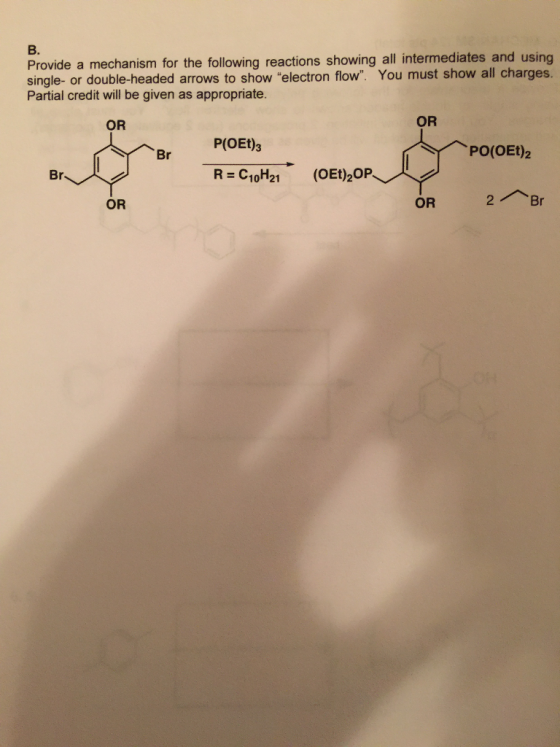
Provide a mechanism for the following reactions showing all
intermediastes and using single- or double-headed arrows to show
"electron flow". You must show all charges.
Homework Answers

Add Answer to:
Provide a mechanism for the following reactions showing all
intermediastes and using single- or double-headed arrows...
Provide a detailed mechanism including curved arrows showing including curved arrows showing electron flow, intermediate structures,...
 Provide a detailed mechanism including curved arrows showing including curved arrows showing electron flow, intermediate structures, formal charges, and reaction arrows. Be su Charges, and reaction arrows. Be sure to show all relevant bonds. Then, answer the associated question. (8 points) Me Me Me Me I TOU VYY 1. NaOH, H2O 2. H2O, HCI Mon ATMe Melanie OH CO2H Mé meste amooodsam slupent This reaction is often in competition with the Aldol processes. Why is this ring contraction favored over...
For the mechanism, show all the steps with multiple reaction arrows, electron arrows, formal charges, etc. CONCEPT QUES...
 For the mechanism, show all the steps with multiple reaction
arrows, electron arrows, formal charges, etc.
CONCEPT QUESTIONS Predict the Product. Provide the stable organic product(s) for the reactions below. 1. Mgº, CH3CH2OCH,CH3 2. CO2 (g) 3. H20, HCI 1. MgBr (1eq.) 2. H20, HCI Mechanism. Using ChemDraw, provide the complete mechanism for the following transformation. You must include appropriate arrows, intermediates, and formal charges. 1. MgCI 2. H20, HCI
For the mechanism, show all the steps with multiple reaction
arrows, electron arrows, formal charges, etc.
CONCEPT QUESTIONS Predict the Product. Provide the stable organic product(s) for the reactions below. 1. Mgº, CH3CH2OCH,CH3 2. CO2 (g) 3. H20, HCI 1. MgBr (1eq.) 2. H20, HCI Mechanism. Using ChemDraw, provide the complete mechanism for the following transformation. You must include appropriate arrows, intermediates, and formal charges. 1. MgCI 2. H20, HCI
Provide a full mechanism for the following reaction. Include intermediates, formal charges, and curved arrows to...
 Provide a full mechanism for the following reaction. Include
intermediates, formal charges, and curved arrows to show electron
flow.
Provide a full mechanism for the following reaction. Include intermediates, formal charges, and curved arrows to show electron flow. H20, H о нон, он вме OH HN
Provide a full mechanism for the following reaction. Include
intermediates, formal charges, and curved arrows to show electron
flow.
Provide a full mechanism for the following reaction. Include intermediates, formal charges, and curved arrows to show electron flow. H20, H о нон, он вме OH HN
Mechanism. Using ChemDraw, provide the complete mechanism for the following transformation. You must include appropriate arrows,...
 Mechanism. Using ChemDraw, provide the complete mechanism for
the following transformation. You must include appropriate arrows,
intermediates, and formal charges.
Mechanism. Using ChemDraw, provide the complete mechanism for the following transformation. You must include appropriate arrows, intermediates, and formal charges. 2. H2O, HCI
Mechanism. Using ChemDraw, provide the complete mechanism for
the following transformation. You must include appropriate arrows,
intermediates, and formal charges.
Mechanism. Using ChemDraw, provide the complete mechanism for the following transformation. You must include appropriate arrows, intermediates, and formal charges. 2. H2O, HCI
CICI 35. (4) Provide a mechanism for the following transformation. You must use curved arrows to...
 CICI 35. (4) Provide a mechanism for the following transformation. You must use curved arrows to represent electron movement and show all formal +/- charges to get full credit. a Nichols heat CHE CH2 OH 36.6) Provide a synthesis for the following amine using a Gabriel synthesis. NH2 37.(4) Draw the 4 possible organic products for each reaction. CHÚNH 38. (4) Draw a structure for the expected product of the following reactions. NH + HEN OH OH
Use arrows to show correct electron flow in the mechanism for the reactions below. Include all...
 Use arrows to show correct electron flow in the mechanism for
the reactions below. Include all intermediate structures correctly
drawn with formal charges.
(e) the Fischer esterification of ethanoic acid with methanol.
Use arrows to show correct electron flow in the mechanism for
the reactions below. Include all intermediate structures correctly
drawn with formal charges.
(e) the Fischer esterification of ethanoic acid with methanol.
Give a detailed mechanism for the reaction below. using the curved arrows to show electron flow....
 Give a detailed mechanism for the reaction below. using the
curved arrows to show electron flow. you must include all the
intermediates and all charges.
access HB
Give a detailed mechanism for the reaction below. using the
curved arrows to show electron flow. you must include all the
intermediates and all charges.
access HB
35. (4) Provide a mechanism for the following transformation. You must use curved arrows to represent...
 35. (4) Provide a mechanism for the following transformation. You must use curved arrows to represent electron movement and show all formal +/- charges to get full credit. heat NCH) CH, OH CH 36. (6) Provide a synthesis for the following amine using a Gabriel synthesis. NH 37.(4) Draw the 4 possible organic products for each reaction. Lly CH,NH 38. (4) Draw a structure for the expected product of the following reactions. wila + HN OH Gila OH
35. (4) Provide a mechanism for the following transformation. You must use curved arrows to represent...
 35. (4) Provide a mechanism for the following transformation. You must use curved arrows to represent electron movement and show all formal +/- charges to get full credit. O NICH heat NICH) CH, OH "CH₂ 36. (6) Provide a synthesis for the following amine using a Gabriel synthesis. NH 37. (4) Draw the 4 possible organic products for each reaction. ily CH,NH. 38. (4) Draw a structure for the expected product of the following reactions, + HN OH Gila OH
Use arrows to show correct electron flow in the mechanism for the reactions below. Include all...
 Use arrows to show correct electron flow in the mechanism for
the reactions below. Include all intermediate structures correctly
drawn with formal charges.
(c) the reaction of a benzoyl chloride and dimethylamine (d) the methylation of a benzoic acid with diazomethane
Use arrows to show correct electron flow in the mechanism for
the reactions below. Include all intermediate structures correctly
drawn with formal charges.
(c) the reaction of a benzoyl chloride and dimethylamine (d) the methylation of a benzoic acid with diazomethane
 Provide a detailed mechanism including curved arrows showing including curved arrows showing electron flow, intermediate structures, formal charges, and reaction arrows. Be su Charges, and reaction arrows. Be sure to show all relevant bonds. Then, answer the associated question. (8 points) Me Me Me Me I TOU VYY 1. NaOH, H2O 2. H2O, HCI Mon ATMe Melanie OH CO2H Mé meste amooodsam slupent This reaction is often in competition with the Aldol processes. Why is this ring contraction favored over...
 For the mechanism, show all the steps with multiple reaction
arrows, electron arrows, formal charges, etc.
CONCEPT QUESTIONS Predict the Product. Provide the stable organic product(s) for the reactions below. 1. Mgº, CH3CH2OCH,CH3 2. CO2 (g) 3. H20, HCI 1. MgBr (1eq.) 2. H20, HCI Mechanism. Using ChemDraw, provide the complete mechanism for the following transformation. You must include appropriate arrows, intermediates, and formal charges. 1. MgCI 2. H20, HCI
For the mechanism, show all the steps with multiple reaction
arrows, electron arrows, formal charges, etc.
CONCEPT QUESTIONS Predict the Product. Provide the stable organic product(s) for the reactions below. 1. Mgº, CH3CH2OCH,CH3 2. CO2 (g) 3. H20, HCI 1. MgBr (1eq.) 2. H20, HCI Mechanism. Using ChemDraw, provide the complete mechanism for the following transformation. You must include appropriate arrows, intermediates, and formal charges. 1. MgCI 2. H20, HCI
 Provide a full mechanism for the following reaction. Include
intermediates, formal charges, and curved arrows to show electron
flow.
Provide a full mechanism for the following reaction. Include intermediates, formal charges, and curved arrows to show electron flow. H20, H о нон, он вме OH HN
Provide a full mechanism for the following reaction. Include
intermediates, formal charges, and curved arrows to show electron
flow.
Provide a full mechanism for the following reaction. Include intermediates, formal charges, and curved arrows to show electron flow. H20, H о нон, он вме OH HN
 Mechanism. Using ChemDraw, provide the complete mechanism for
the following transformation. You must include appropriate arrows,
intermediates, and formal charges.
Mechanism. Using ChemDraw, provide the complete mechanism for the following transformation. You must include appropriate arrows, intermediates, and formal charges. 2. H2O, HCI
Mechanism. Using ChemDraw, provide the complete mechanism for
the following transformation. You must include appropriate arrows,
intermediates, and formal charges.
Mechanism. Using ChemDraw, provide the complete mechanism for the following transformation. You must include appropriate arrows, intermediates, and formal charges. 2. H2O, HCI
 CICI 35. (4) Provide a mechanism for the following transformation. You must use curved arrows to represent electron movement and show all formal +/- charges to get full credit. a Nichols heat CHE CH2 OH 36.6) Provide a synthesis for the following amine using a Gabriel synthesis. NH2 37.(4) Draw the 4 possible organic products for each reaction. CHÚNH 38. (4) Draw a structure for the expected product of the following reactions. NH + HEN OH OH
 Use arrows to show correct electron flow in the mechanism for
the reactions below. Include all intermediate structures correctly
drawn with formal charges.
(e) the Fischer esterification of ethanoic acid with methanol.
Use arrows to show correct electron flow in the mechanism for
the reactions below. Include all intermediate structures correctly
drawn with formal charges.
(e) the Fischer esterification of ethanoic acid with methanol.
 Give a detailed mechanism for the reaction below. using the
curved arrows to show electron flow. you must include all the
intermediates and all charges.
access HB
Give a detailed mechanism for the reaction below. using the
curved arrows to show electron flow. you must include all the
intermediates and all charges.
access HB
 35. (4) Provide a mechanism for the following transformation. You must use curved arrows to represent electron movement and show all formal +/- charges to get full credit. heat NCH) CH, OH CH 36. (6) Provide a synthesis for the following amine using a Gabriel synthesis. NH 37.(4) Draw the 4 possible organic products for each reaction. Lly CH,NH 38. (4) Draw a structure for the expected product of the following reactions. wila + HN OH Gila OH
 35. (4) Provide a mechanism for the following transformation. You must use curved arrows to represent electron movement and show all formal +/- charges to get full credit. O NICH heat NICH) CH, OH "CH₂ 36. (6) Provide a synthesis for the following amine using a Gabriel synthesis. NH 37. (4) Draw the 4 possible organic products for each reaction. ily CH,NH. 38. (4) Draw a structure for the expected product of the following reactions, + HN OH Gila OH
 Use arrows to show correct electron flow in the mechanism for
the reactions below. Include all intermediate structures correctly
drawn with formal charges.
(c) the reaction of a benzoyl chloride and dimethylamine (d) the methylation of a benzoic acid with diazomethane
Use arrows to show correct electron flow in the mechanism for
the reactions below. Include all intermediate structures correctly
drawn with formal charges.
(c) the reaction of a benzoyl chloride and dimethylamine (d) the methylation of a benzoic acid with diazomethane
Most questions answered within 3 hours.
-
Where is the error in this code sequence?
String s1 = "Hello";
String s2 = "ello";...
asked 10 months ago -
Financial data for Joel de Paris, Inc., for last year
follow:
Joel de Paris, Inc.
Balance...
asked 10 months ago -
Consider this reaction:
Al2(SO4)3 (aq)+ BaCl3
(aq) Al2Cl6 (aq)- +
3BaSO4(s) . What is the...
asked 10 months ago -
Suppose that Savneet is considering increasing her
recent random sample from 20 car rentals to 40...
asked 10 months ago -
Trucks arrive at an unloading terminal at an average rate of 120
per hour.
Trucks arrive...
asked 10 months ago -
Why are methanol and ethanol completely soluble in water while
octanol is not very little soluble....
asked 10 months ago -
A facilities manager at a university reads in a research report
that the mean amount of...
asked 10 months ago -
When the CuSO4 is rehydrated by adding water to the anhydrous
compound, is this an endothermic...
asked 10 months ago -
A ray of sunlight is passing from diamond into crown glass; the
angle of incidence is...
asked 10 months ago -
A block of mass 0.249 kg is placed on top of a light, vertical
spring of...
asked 10 months ago -
how do the kidneys compensate in the presences of acidosis
a) trigger hyperventilate
b) reserve acid...
asked 10 months ago -
Question 501 pts
The rental rate of capital to the firm increases. Which of the
following...
asked 10 months ago