A sociologist is interested in the effects of racism on birth weight. He constructs a dataset...
A sociologist is interested in the effects of racism on birth weight. He constructs a dataset containing the birth weight of African American children (in pounds) and their mothers’ self-reported experience with racism during their pregnancy. He divides the children into two groups—those whose mothers reported experiencing no race-related incidents and those whose mothers reported at least one experience of racism during their pregnancy. Assuming birth rates to be normally distributed, answer the following questions.
a. Find the means.
b. Find the variance.
c. Find the standard error of the differences between means.
d. Compute the t ratio.
e. Should you retain or reject the null hypothesis? Explain.
|
No Exposure |
Exposure to Racism |
|
7.2 |
5.4 |
|
8.4 |
6.3 |
|
7.6 |
6.8 |
|
6.9 |
7.2 |
|
9.2 |
6.1 |
|
8.7 |
5.9 |
|
6.9 |
6.8 |
|
7.3 |
7.6 |
|
7.3 |
|
|
7.4 |
Please actually give me the written steps to answer the problem and not a minitab answer.
Preferably a picture of it written on paper with clear handwriting. Thank you in advance.
Homework Answers

Add Answer to:
A sociologist is interested in the effects of racism on birth
weight. He constructs a dataset...
18. A sociologist is interested in the effects of racism on birth weight. He constructs a...
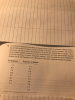 18. A sociologist is interested in the effects of racism on birth weight. He constructs a dataset ing the birth weight of African American children (in pounds experience with racism during their pregnancy. He divides the children into two groups -those contain- and their mothers' self-reported whose mothers at least one experience of racism during their pregnancy. Assuming birth rates to be tributed, test the null hypothesis of no difference in mean birth weight between the two groups. reported experiencing...
1. Does secondhand smoke increase the risk of a low weight birth? A baby is “low...
1. Does secondhand smoke increase the risk of a low weight birth? A baby is “low birth weight” if it weighs less than 5.5 pounds at birth. According to the National Center of Health Statistics, about 7.8% of all babies born in the U.S. are categorized as low birth weight. Researchers randomly select 1200 babies whose mothers had extensive exposure to secondhand smoke during pregnancy. 10.4% of the sample are categorized as low birth weight. Which of the following are...
10. The Beck & Watson article is a Group of answer choices quantitative study qualitative study...
 10. The Beck & Watson article is a
Group of answer choices
quantitative study
qualitative study
11. Beck & Watson examined participants' experiences and
perceptions using what type of research design?
Group of answer choices
particpant obersvation
phenomenology
12. Select the participants in the Beck & Watson study
Group of answer choices
Caucasian women with 2-4 children
Caucasian pregnant women
13. In the Beck & Watson study, data was collected via
a(n)
Group of answer choices
internet study
focus group...
10. The Beck & Watson article is a
Group of answer choices
quantitative study
qualitative study
11. Beck & Watson examined participants' experiences and
perceptions using what type of research design?
Group of answer choices
particpant obersvation
phenomenology
12. Select the participants in the Beck & Watson study
Group of answer choices
Caucasian women with 2-4 children
Caucasian pregnant women
13. In the Beck & Watson study, data was collected via
a(n)
Group of answer choices
internet study
focus group...
14. Select the number of participants in the Beck & Watson study Group of answer choices...
 14. Select the number of participants in the Beck & Watson
study
Group of answer choices
8
13
22
35
15. Beck & Watson determined their final sample size via
Group of answer choices
coding
saturation
triangulation
ethnography
16.Through their study, Beck & Watson determined
Group of answer choices
after a traumatic birth, subsequent births have no troubling
effects
after a traumatic birth, subsequent births brought fear, terror,
anxiety, and dread
Subsequent Childbirth After a Previous Traumatic Birth Beck, Cheryl...
14. Select the number of participants in the Beck & Watson
study
Group of answer choices
8
13
22
35
15. Beck & Watson determined their final sample size via
Group of answer choices
coding
saturation
triangulation
ethnography
16.Through their study, Beck & Watson determined
Group of answer choices
after a traumatic birth, subsequent births have no troubling
effects
after a traumatic birth, subsequent births brought fear, terror,
anxiety, and dread
Subsequent Childbirth After a Previous Traumatic Birth Beck, Cheryl...
Please read the three-page article below titled The Body Rituals of the Nacirema. As you read...
Please read the three-page article below titled The Body Rituals of the Nacirema. As you read it imagine that you are about to enter this culture (that does actually exist) and answer the following 2 questions: 1. What is the most "shocking" part about this culture to you? 2. Reflecting on this week's material, what are two things you personally feel would be most helpful in minimizing/managing your culture shock and how would those two things help? The Body Rituals...
Evaluate the arical writ the response in which you state your agreement or disagreement with writer...
 Evaluate the arical
writ the response in which you state your agreement or disagreement
with writer up un these questions guidelines
1) can empathy lead us astrary? how
2) our heart will always go out to the baby in the well, its a
measure of our humanity. but empathy will have to yield to reason
if humanity is to have a future can empathy yield to reason?
how?
thank you
The Baby in the Well: The Case against Empathy* -Paul...
Evaluate the arical
writ the response in which you state your agreement or disagreement
with writer up un these questions guidelines
1) can empathy lead us astrary? how
2) our heart will always go out to the baby in the well, its a
measure of our humanity. but empathy will have to yield to reason
if humanity is to have a future can empathy yield to reason?
how?
thank you
The Baby in the Well: The Case against Empathy* -Paul...
 18. A sociologist is interested in the effects of racism on birth weight. He constructs a dataset ing the birth weight of African American children (in pounds experience with racism during their pregnancy. He divides the children into two groups -those contain- and their mothers' self-reported whose mothers at least one experience of racism during their pregnancy. Assuming birth rates to be tributed, test the null hypothesis of no difference in mean birth weight between the two groups. reported experiencing...
 10. The Beck & Watson article is a
Group of answer choices
quantitative study
qualitative study
11. Beck & Watson examined participants' experiences and
perceptions using what type of research design?
Group of answer choices
particpant obersvation
phenomenology
12. Select the participants in the Beck & Watson study
Group of answer choices
Caucasian women with 2-4 children
Caucasian pregnant women
13. In the Beck & Watson study, data was collected via
a(n)
Group of answer choices
internet study
focus group...
10. The Beck & Watson article is a
Group of answer choices
quantitative study
qualitative study
11. Beck & Watson examined participants' experiences and
perceptions using what type of research design?
Group of answer choices
particpant obersvation
phenomenology
12. Select the participants in the Beck & Watson study
Group of answer choices
Caucasian women with 2-4 children
Caucasian pregnant women
13. In the Beck & Watson study, data was collected via
a(n)
Group of answer choices
internet study
focus group...
 14. Select the number of participants in the Beck & Watson
study
Group of answer choices
8
13
22
35
15. Beck & Watson determined their final sample size via
Group of answer choices
coding
saturation
triangulation
ethnography
16.Through their study, Beck & Watson determined
Group of answer choices
after a traumatic birth, subsequent births have no troubling
effects
after a traumatic birth, subsequent births brought fear, terror,
anxiety, and dread
Subsequent Childbirth After a Previous Traumatic Birth Beck, Cheryl...
14. Select the number of participants in the Beck & Watson
study
Group of answer choices
8
13
22
35
15. Beck & Watson determined their final sample size via
Group of answer choices
coding
saturation
triangulation
ethnography
16.Through their study, Beck & Watson determined
Group of answer choices
after a traumatic birth, subsequent births have no troubling
effects
after a traumatic birth, subsequent births brought fear, terror,
anxiety, and dread
Subsequent Childbirth After a Previous Traumatic Birth Beck, Cheryl...
 Evaluate the arical
writ the response in which you state your agreement or disagreement
with writer up un these questions guidelines
1) can empathy lead us astrary? how
2) our heart will always go out to the baby in the well, its a
measure of our humanity. but empathy will have to yield to reason
if humanity is to have a future can empathy yield to reason?
how?
thank you
The Baby in the Well: The Case against Empathy* -Paul...
Evaluate the arical
writ the response in which you state your agreement or disagreement
with writer up un these questions guidelines
1) can empathy lead us astrary? how
2) our heart will always go out to the baby in the well, its a
measure of our humanity. but empathy will have to yield to reason
if humanity is to have a future can empathy yield to reason?
how?
thank you
The Baby in the Well: The Case against Empathy* -Paul...
Most questions answered within 3 hours.
-
Where is the error in this code sequence?
String s1 = "Hello";
String s2 = "ello";...
asked 10 months ago -
Financial data for Joel de Paris, Inc., for last year
follow:
Joel de Paris, Inc.
Balance...
asked 10 months ago -
Consider this reaction:
Al2(SO4)3 (aq)+ BaCl3
(aq) Al2Cl6 (aq)- +
3BaSO4(s) . What is the...
asked 10 months ago -
Suppose that Savneet is considering increasing her
recent random sample from 20 car rentals to 40...
asked 10 months ago -
Trucks arrive at an unloading terminal at an average rate of 120
per hour.
Trucks arrive...
asked 10 months ago -
Why are methanol and ethanol completely soluble in water while
octanol is not very little soluble....
asked 10 months ago -
A facilities manager at a university reads in a research report
that the mean amount of...
asked 10 months ago -
When the CuSO4 is rehydrated by adding water to the anhydrous
compound, is this an endothermic...
asked 10 months ago -
A ray of sunlight is passing from diamond into crown glass; the
angle of incidence is...
asked 10 months ago -
A block of mass 0.249 kg is placed on top of a light, vertical
spring of...
asked 10 months ago -
how do the kidneys compensate in the presences of acidosis
a) trigger hyperventilate
b) reserve acid...
asked 10 months ago -
Question 501 pts
The rental rate of capital to the firm increases. Which of the
following...
asked 10 months ago