Consider the hydrogen to carbon ratio of the three fuels: carbon (coal), octane (gasoline), methane (natural...
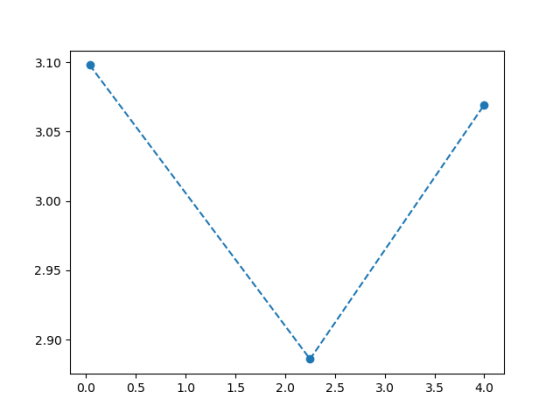
Consider the hydrogen to carbon ratio of the three fuels: carbon (coal), octane (gasoline), methane (natural gas). This is defined as the number of hydrogen atoms divided by the number of carbon atoms in the fuel molecule. For example methane has a ratio of 4. Graph the carbon intensity (kgCO2 / million Btu) for the three fuels as function of the hydrogen to carbon ratio.
Homework Answers
The carbon-hydrogen ration in coal (Anthracite) is 24-29, taking 27 as the mean value. So, the hydrogen-carbon ratio is 1/27 = 0.037. Carbon intensity: 3.098
H:C ratio for octane (C8H18) is 18/8 = 2.25, carbon intensity 2.886
The ration for methane is 4. Carbon intensity 3.0694
here is the plot
Add Answer to:
Consider the hydrogen to carbon ratio of the three fuels: carbon
(coal), octane (gasoline), methane (natural...
2. Hydrocarbons are nonpolar compounds containing carbon and hydrogen atoms. The properties of three hydrocarbons are...
 2. Hydrocarbons are nonpolar compounds containing carbon and hydrogen atoms. The properties of three hydrocarbons are summarized below. Methane CH4 Octane C8H18 Gasoline Liquid, BP: 126°C Eicosane CH3(CH2)18CH3 Lubricant (grease) Solid, MP: 37°C Natural Gas Gas, BP:-161°C a. Describe how the attractive forces between molecules change in the transition from substance changing from a solid to a liquid and then from a liquid to a gas. Solid to liquid: Liquid to gas: b. Based on the properties of the compounds...
Many power plants produce energy by burning carbon-based fuels, which also produces carbon dioxide Carbon dioxide...
 Many power plants produce energy by burning carbon-based fuels, which also produces carbon dioxide Carbon dioxide is a greenhouse gas, so over-production can have negative effects on the environment. Use enthalpy of formation data to calculate the number of moles of CO2(g) produced per megajoule of heat released from the combustion of each fuel under standard conditions (1 atm and 25 °C). (a) coal, C(s, graphite); (b) natural gas, CH4(g): Number Number mol MJ1 mol MJ (c) propane, C3Hs(g); (d)...
Many power plants produce energy by burning carbon-based fuels, which also produces carbon dioxide. Carbon dioxide...
Many power plants produce energy by burning carbon-based fuels, which also produces carbon dioxide. Carbon dioxide is a greenhouse gas, so over-production can have negative effects on the environment. Use enthalpy of formation data to calculate the number of moles of CO2(g) produced per megajoule of heat released from the combustion of each fuel under standard conditions (1 atm and 25 �C). Each must be in mol * MJ^-1 (a) coal, C(s, graphite) (b) natural gas, CH4(g); (c) propane, C3H8(g);...
Many power plants produce energy by burning carbon-based fuels, which also produces carbon dioxide. Carbon dioxide...
 Many power plants produce energy by burning carbon-based fuels, which also produces carbon dioxide. Carbon dioxide is a greenhouse gas, so over production can have negative effects on the environment, Use enthalpy of formation data to calculate the number of moles of CO,(g) produced per megajoule of heat released from the combustion of each fuel under standard conditions (1 atm and 25 °C). coal, C(s, graphite) mol · MJ-1 natural gas, CH,() mol · MJ-' propane, C, H,(8) mol. MJ-...
Burning fossil fuels such as gasoline, coal, and heating oil releases gases containing carbon into the...
Burning fossil fuels such as gasoline, coal, and heating oil releases gases containing carbon into the atmosphere. These “greenhouse” gases are widely believed to contribute to global warming. To reduce this problem and raise tax revenues, many environmentalists and political leaders have proposed levying a carbon tax on the carbon content in fossil fuels. The first broad-based carbon taxes on fuels containing carbon (such as gasoline) were implemented in Finland and Sweden more than twenty years ago. Several European countries...
Compare the mass of carbon dioxide produced per Joule of energy released from combustion of one...
Compare the mass of carbon dioxide produced per Joule of energy released from combustion of one gram of coal (anthracite), one gram of gasoline (assume 100% n-octane), and one gram of natural gas (assume 100% methane) respectively. Clearly show all balanced equations and all work. Use Wikipedia’s Heat of Combustion Table to access heat of combustion (MJ/kg) data. Divide each of your three ratios by the lowest ratio of the three to get relative rankings
DESIGN OF A STEAM POWER PLANT IN THE AGE OF CARBON TAXATION, Due: Aug. 15, 2018...
 DESIGN OF A STEAM POWER PLANT IN THE AGE OF CARBON TAXATION, Due: Aug. 15, 2018 Introduction: As the world continues to spew unprecedented amounts of carbon dioxide into the atmosphere as a result of combustion of fossil fuels, many countries are considering imposing a "carbon tax." A carbon tax is a tax on the carbon emissions, which are currently emitted for "free." The tax would effectively raise the cost of burning fossil fuels in an amount proportional to the...
AP Chemistry Review Questions Integrating Content, Inquiry and Reasoning 1. Hydrocarbons are neapler compounds containing carbon...
 AP Chemistry Review Questions Integrating Content, Inquiry and Reasoning 1. Hydrocarbons are neapler compounds containing carbon and hydrogen atoms. The properties of three hydrocarbons are summarized below. Methane Octane Eicosane CH C H C H(CH). CH Natural gas Gasoline Lubricant (grease) Gas, bp-161 " C L iquid, bp 126 °C Solid, mp 37 °C a. How do the attractive forces between molecules change in the transition from the gas to the liquid to the solid state? Based on its properties,...
I. Carbon atoms are about 25% lighter than oxygen atoms (the ratio of their weights is...
 I. Carbon atoms are about 25% lighter than oxygen atoms (the ratio of their weights is 3 to 4). What is the weight ratio of the carbon and oxygen that go into the formation of carbon monoxide, CO? (a) 4 parts carbon to 3 parts oxygen (b) 1 part carbon to 4 parts oxygen (c) 1 part carbon to 1 part oxygen (d) 4 parts carbon to 1 part oxygen (e) 3 parts carbon to 4 parts oxygen 2. How...
1. Consider three 1-g samples of matter: (a) oxygen-16, (b) oxygen-17, and (c) carbon-12. Rank them...
1. Consider three 1-g samples of matter: (a) oxygen-16, (b) oxygen-17, and (c) carbon-12. Rank them in terms of the number of atoms, from most to least. 2. Consider these atoms: (a) copper, Cu; (b) neon, Ne; (c) hydrogen, H. Rank them, from smallest to largest , in terms of size. 3. The isotope 12-carbon has a mass of 12.000amu, and the isotope 13-carbon has a mass of 13.003amu . Given that 98.93{\rm \\%} of all carbon atoms found in...
 2. Hydrocarbons are nonpolar compounds containing carbon and hydrogen atoms. The properties of three hydrocarbons are summarized below. Methane CH4 Octane C8H18 Gasoline Liquid, BP: 126°C Eicosane CH3(CH2)18CH3 Lubricant (grease) Solid, MP: 37°C Natural Gas Gas, BP:-161°C a. Describe how the attractive forces between molecules change in the transition from substance changing from a solid to a liquid and then from a liquid to a gas. Solid to liquid: Liquid to gas: b. Based on the properties of the compounds...
 Many power plants produce energy by burning carbon-based fuels, which also produces carbon dioxide Carbon dioxide is a greenhouse gas, so over-production can have negative effects on the environment. Use enthalpy of formation data to calculate the number of moles of CO2(g) produced per megajoule of heat released from the combustion of each fuel under standard conditions (1 atm and 25 °C). (a) coal, C(s, graphite); (b) natural gas, CH4(g): Number Number mol MJ1 mol MJ (c) propane, C3Hs(g); (d)...
 Many power plants produce energy by burning carbon-based fuels, which also produces carbon dioxide. Carbon dioxide is a greenhouse gas, so over production can have negative effects on the environment, Use enthalpy of formation data to calculate the number of moles of CO,(g) produced per megajoule of heat released from the combustion of each fuel under standard conditions (1 atm and 25 °C). coal, C(s, graphite) mol · MJ-1 natural gas, CH,() mol · MJ-' propane, C, H,(8) mol. MJ-...
 DESIGN OF A STEAM POWER PLANT IN THE AGE OF CARBON TAXATION, Due: Aug. 15, 2018 Introduction: As the world continues to spew unprecedented amounts of carbon dioxide into the atmosphere as a result of combustion of fossil fuels, many countries are considering imposing a "carbon tax." A carbon tax is a tax on the carbon emissions, which are currently emitted for "free." The tax would effectively raise the cost of burning fossil fuels in an amount proportional to the...
 AP Chemistry Review Questions Integrating Content, Inquiry and Reasoning 1. Hydrocarbons are neapler compounds containing carbon and hydrogen atoms. The properties of three hydrocarbons are summarized below. Methane Octane Eicosane CH C H C H(CH). CH Natural gas Gasoline Lubricant (grease) Gas, bp-161 " C L iquid, bp 126 °C Solid, mp 37 °C a. How do the attractive forces between molecules change in the transition from the gas to the liquid to the solid state? Based on its properties,...
 I. Carbon atoms are about 25% lighter than oxygen atoms (the ratio of their weights is 3 to 4). What is the weight ratio of the carbon and oxygen that go into the formation of carbon monoxide, CO? (a) 4 parts carbon to 3 parts oxygen (b) 1 part carbon to 4 parts oxygen (c) 1 part carbon to 1 part oxygen (d) 4 parts carbon to 1 part oxygen (e) 3 parts carbon to 4 parts oxygen 2. How...
Most questions answered within 3 hours.
-
Where is the error in this code sequence?
String s1 = "Hello";
String s2 = "ello";...
asked 11 months ago -
Financial data for Joel de Paris, Inc., for last year
follow:
Joel de Paris, Inc.
Balance...
asked 11 months ago -
Consider this reaction:
Al2(SO4)3 (aq)+ BaCl3
(aq) Al2Cl6 (aq)- +
3BaSO4(s) . What is the...
asked 11 months ago -
Suppose that Savneet is considering increasing her
recent random sample from 20 car rentals to 40...
asked 11 months ago -
Trucks arrive at an unloading terminal at an average rate of 120
per hour.
Trucks arrive...
asked 11 months ago -
Why are methanol and ethanol completely soluble in water while
octanol is not very little soluble....
asked 11 months ago -
A facilities manager at a university reads in a research report
that the mean amount of...
asked 11 months ago -
When the CuSO4 is rehydrated by adding water to the anhydrous
compound, is this an endothermic...
asked 11 months ago -
A ray of sunlight is passing from diamond into crown glass; the
angle of incidence is...
asked 11 months ago -
A block of mass 0.249 kg is placed on top of a light, vertical
spring of...
asked 11 months ago -
how do the kidneys compensate in the presences of acidosis
a) trigger hyperventilate
b) reserve acid...
asked 11 months ago -
Question 501 pts
The rental rate of capital to the firm increases. Which of the
following...
asked 11 months ago