a. draw a mechanism for the above isomerization from 2- pentyne to 1- oentyne b. explain...
a. draw a mechanism for the above isomerization from
2- pentyne to 1- oentyne
b. explain the driving force
c. why did the E2 reactions not lead to cumulated diene (allene)
?
Homework Answers

Add Answer to:
a. draw a mechanism for the above isomerization from
2- pentyne to 1- oentyne
b. explain...
8. Draw an arrow-pushing mechanism to show the alkene isomerization from to B CH3 cat. H3O* A B A Draw the reaction coo...
 8. Draw an arrow-pushing mechanism to show the alkene isomerization from to B CH3 cat. H3O* A B A Draw the reaction coordinate diagram for the reaction above from A to B. reaction coordinate Regardless of the ratio of A to B at equilibrium, when the above transformation is run dilute in H2O at lower temperature, another product forms as the major product. Draw that product below. Free Enely
8. Draw an arrow-pushing mechanism to show the alkene isomerization from...
8. Draw an arrow-pushing mechanism to show the alkene isomerization from to B CH3 cat. H3O* A B A Draw the reaction coordinate diagram for the reaction above from A to B. reaction coordinate Regardless of the ratio of A to B at equilibrium, when the above transformation is run dilute in H2O at lower temperature, another product forms as the major product. Draw that product below. Free Enely
8. Draw an arrow-pushing mechanism to show the alkene isomerization from...
16. a) (4 points) Propose a mechanism for the following isomerization reaction: OH H3O+ ОН b)...
 16. a) (4 points) Propose a mechanism for the following isomerization reaction: OH H3O+ ОН b) (4 points) Briefly explain why above reaction equilibrium favors compound B.
2 equivalent of I-Cl (iodine and chlorine bonded) are reacting with 1-pentyne. What is the mechanism...
2 equivalent of I-Cl (iodine and chlorine bonded) are reacting with 1-pentyne. What is the mechanism to produce the product? (Draw out mechanism and circle what is produced)
Question 1: draw a mechanism for each of the reactions. Explain why the different amines create...
 Question 1: draw a mechanism for each of the reactions.
Explain why the different amines create different products.
Question 2: Explain the product distribution. primary vs.
secondary or tertiary amines and their corresponding
products.
1. Draw a mechanism for each of the transformations (primary and secondary amines). Explain why the two different amines lead to different molecules. NaOH RNH2 + CHCI 1° amine R-NEC RNH + CHCI- 2º amine HNR2 2. What are some likely reasons that contribute to this...
Question 1: draw a mechanism for each of the reactions.
Explain why the different amines create different products.
Question 2: Explain the product distribution. primary vs.
secondary or tertiary amines and their corresponding
products.
1. Draw a mechanism for each of the transformations (primary and secondary amines). Explain why the two different amines lead to different molecules. NaOH RNH2 + CHCI 1° amine R-NEC RNH + CHCI- 2º amine HNR2 2. What are some likely reasons that contribute to this...
2. Elimination - draw the mechanism arrows that explain the electrons that changed for the formation...
 2. Elimination - draw the mechanism arrows that explain the electrons that changed for the formation of the alkene product E2 - 2 molecules collide Hocas + k'ko bistan woman on ollut 3. List above molecules from best to worst Nu: 4. Best to worst leaving group?
Draw a curved arrow mechanism for the following reaction. OPP OH OPP HO c) The diene...
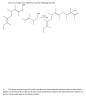 Draw a curved arrow mechanism for the following reaction. OPP OH OPP HO c) The diene product in part A could have done an intramolecular reaction which is often faster. Explain (1 sentence) why in this particular Vulcan biochemical system, the intermolecular reaction to form a triene could lead to the major product.
Identify the mechanism by which each of the reactions above proceeds from among the mechanisms listed....
 Identify the mechanism by which each of the
reactions above proceeds from among the mechanisms listed. Use the
letters a - i for your
answers.
OH2 Br 1. HO HBr 2. g SNl Nucleophilic substitution Proton transfer d Electrophilic addition h SN2 Nucleophilic substitution b Lewis acid/base e El Elimination c = Radical chain substitution f E2 Elimination Identify the mechanism by which each of the reactions above proceeds from among the mechanisms listed. Use the letters a-: i for...
Identify the mechanism by which each of the
reactions above proceeds from among the mechanisms listed. Use the
letters a - i for your
answers.
OH2 Br 1. HO HBr 2. g SNl Nucleophilic substitution Proton transfer d Electrophilic addition h SN2 Nucleophilic substitution b Lewis acid/base e El Elimination c = Radical chain substitution f E2 Elimination Identify the mechanism by which each of the reactions above proceeds from among the mechanisms listed. Use the letters a-: i for...
Identify the mechanism by which each of the reactions above proceeds from among the mechanisms listed....
 Identify the mechanism by which each of the reactions above
proceeds from among the mechanisms listed. Use the letters
a - i for your answers.
+ KOt-Bu KOT-Bu + KCI + HOt-Bu + HON Ph HO myph Ph a = Electrophilic addition b = E2 Elimination c=Syl Nucleophilic subst d = SN2 Nucleophilic subst e=Carbonyl nucleophilic addn f= Nucleophilic subs at carbonyl(acyl Xfer) g=Conjugate (nucleophilic) addn Identify the mechanism by which each of the reactions above proceeds from among the...
Identify the mechanism by which each of the reactions above
proceeds from among the mechanisms listed. Use the letters
a - i for your answers.
+ KOt-Bu KOT-Bu + KCI + HOt-Bu + HON Ph HO myph Ph a = Electrophilic addition b = E2 Elimination c=Syl Nucleophilic subst d = SN2 Nucleophilic subst e=Carbonyl nucleophilic addn f= Nucleophilic subs at carbonyl(acyl Xfer) g=Conjugate (nucleophilic) addn Identify the mechanism by which each of the reactions above proceeds from among the...
Identify the mechanism by which each of the reactions above proceeds from among the mechanisms listed....
 Identify the mechanism by which each of the reactions above
proceeds from among the mechanisms listed. Use the letters
a - i for your answers.
HCI NH2 NH sobe. The ZI a= Proton transfer d=Sn2 Nucleophilic substitution e= Electrophilic aromatic substitution f= Carbonyl nucleophilic addn g= Nucleophilic subs at carbonyl(acyl Xfer) h = Conjugate (nucleophilic) addn b = Lewis acid/base c=E2 elimination Identify the mechanism by which each of the reactions above proceeds from among the mechanisms listed. Use the...
Identify the mechanism by which each of the reactions above
proceeds from among the mechanisms listed. Use the letters
a - i for your answers.
HCI NH2 NH sobe. The ZI a= Proton transfer d=Sn2 Nucleophilic substitution e= Electrophilic aromatic substitution f= Carbonyl nucleophilic addn g= Nucleophilic subs at carbonyl(acyl Xfer) h = Conjugate (nucleophilic) addn b = Lewis acid/base c=E2 elimination Identify the mechanism by which each of the reactions above proceeds from among the mechanisms listed. Use the...
Critical Thinking Questions 1. Draw the structure for the product from the reaction of 1,3-cyclohexadiene and...
 Critical Thinking Questions 1. Draw the structure for the product from the reaction of 1,3-cyclohexadiene and maleic acid (cis-2-butenedioic acid). 2. What is the product expected from the reaction of 1,3-butadiene and 3-sulfolene? Why is this not a major concern as a by-product? Part B, the dimer dicyclopentadiene is a possible contaminant of cyclopentadi- ene. It is also a diene. Can dicyclopentadiene undergo reaction with cyclopentadi- ene? Can dicyclopentadiene act as a diene and undergo reaction with the anhydride 3....
 8. Draw an arrow-pushing mechanism to show the alkene isomerization from to B CH3 cat. H3O* A B A Draw the reaction coordinate diagram for the reaction above from A to B. reaction coordinate Regardless of the ratio of A to B at equilibrium, when the above transformation is run dilute in H2O at lower temperature, another product forms as the major product. Draw that product below. Free Enely
8. Draw an arrow-pushing mechanism to show the alkene isomerization from...
8. Draw an arrow-pushing mechanism to show the alkene isomerization from to B CH3 cat. H3O* A B A Draw the reaction coordinate diagram for the reaction above from A to B. reaction coordinate Regardless of the ratio of A to B at equilibrium, when the above transformation is run dilute in H2O at lower temperature, another product forms as the major product. Draw that product below. Free Enely
8. Draw an arrow-pushing mechanism to show the alkene isomerization from...
 16. a) (4 points) Propose a mechanism for the following isomerization reaction: OH H3O+ ОН b) (4 points) Briefly explain why above reaction equilibrium favors compound B.
 Question 1: draw a mechanism for each of the reactions.
Explain why the different amines create different products.
Question 2: Explain the product distribution. primary vs.
secondary or tertiary amines and their corresponding
products.
1. Draw a mechanism for each of the transformations (primary and secondary amines). Explain why the two different amines lead to different molecules. NaOH RNH2 + CHCI 1° amine R-NEC RNH + CHCI- 2º amine HNR2 2. What are some likely reasons that contribute to this...
Question 1: draw a mechanism for each of the reactions.
Explain why the different amines create different products.
Question 2: Explain the product distribution. primary vs.
secondary or tertiary amines and their corresponding
products.
1. Draw a mechanism for each of the transformations (primary and secondary amines). Explain why the two different amines lead to different molecules. NaOH RNH2 + CHCI 1° amine R-NEC RNH + CHCI- 2º amine HNR2 2. What are some likely reasons that contribute to this...
 2. Elimination - draw the mechanism arrows that explain the electrons that changed for the formation of the alkene product E2 - 2 molecules collide Hocas + k'ko bistan woman on ollut 3. List above molecules from best to worst Nu: 4. Best to worst leaving group?
 Draw a curved arrow mechanism for the following reaction. OPP OH OPP HO c) The diene product in part A could have done an intramolecular reaction which is often faster. Explain (1 sentence) why in this particular Vulcan biochemical system, the intermolecular reaction to form a triene could lead to the major product.
 Identify the mechanism by which each of the
reactions above proceeds from among the mechanisms listed. Use the
letters a - i for your
answers.
OH2 Br 1. HO HBr 2. g SNl Nucleophilic substitution Proton transfer d Electrophilic addition h SN2 Nucleophilic substitution b Lewis acid/base e El Elimination c = Radical chain substitution f E2 Elimination Identify the mechanism by which each of the reactions above proceeds from among the mechanisms listed. Use the letters a-: i for...
Identify the mechanism by which each of the
reactions above proceeds from among the mechanisms listed. Use the
letters a - i for your
answers.
OH2 Br 1. HO HBr 2. g SNl Nucleophilic substitution Proton transfer d Electrophilic addition h SN2 Nucleophilic substitution b Lewis acid/base e El Elimination c = Radical chain substitution f E2 Elimination Identify the mechanism by which each of the reactions above proceeds from among the mechanisms listed. Use the letters a-: i for...
 Identify the mechanism by which each of the reactions above
proceeds from among the mechanisms listed. Use the letters
a - i for your answers.
+ KOt-Bu KOT-Bu + KCI + HOt-Bu + HON Ph HO myph Ph a = Electrophilic addition b = E2 Elimination c=Syl Nucleophilic subst d = SN2 Nucleophilic subst e=Carbonyl nucleophilic addn f= Nucleophilic subs at carbonyl(acyl Xfer) g=Conjugate (nucleophilic) addn Identify the mechanism by which each of the reactions above proceeds from among the...
Identify the mechanism by which each of the reactions above
proceeds from among the mechanisms listed. Use the letters
a - i for your answers.
+ KOt-Bu KOT-Bu + KCI + HOt-Bu + HON Ph HO myph Ph a = Electrophilic addition b = E2 Elimination c=Syl Nucleophilic subst d = SN2 Nucleophilic subst e=Carbonyl nucleophilic addn f= Nucleophilic subs at carbonyl(acyl Xfer) g=Conjugate (nucleophilic) addn Identify the mechanism by which each of the reactions above proceeds from among the...
 Identify the mechanism by which each of the reactions above
proceeds from among the mechanisms listed. Use the letters
a - i for your answers.
HCI NH2 NH sobe. The ZI a= Proton transfer d=Sn2 Nucleophilic substitution e= Electrophilic aromatic substitution f= Carbonyl nucleophilic addn g= Nucleophilic subs at carbonyl(acyl Xfer) h = Conjugate (nucleophilic) addn b = Lewis acid/base c=E2 elimination Identify the mechanism by which each of the reactions above proceeds from among the mechanisms listed. Use the...
Identify the mechanism by which each of the reactions above
proceeds from among the mechanisms listed. Use the letters
a - i for your answers.
HCI NH2 NH sobe. The ZI a= Proton transfer d=Sn2 Nucleophilic substitution e= Electrophilic aromatic substitution f= Carbonyl nucleophilic addn g= Nucleophilic subs at carbonyl(acyl Xfer) h = Conjugate (nucleophilic) addn b = Lewis acid/base c=E2 elimination Identify the mechanism by which each of the reactions above proceeds from among the mechanisms listed. Use the...
 Critical Thinking Questions 1. Draw the structure for the product from the reaction of 1,3-cyclohexadiene and maleic acid (cis-2-butenedioic acid). 2. What is the product expected from the reaction of 1,3-butadiene and 3-sulfolene? Why is this not a major concern as a by-product? Part B, the dimer dicyclopentadiene is a possible contaminant of cyclopentadi- ene. It is also a diene. Can dicyclopentadiene undergo reaction with cyclopentadi- ene? Can dicyclopentadiene act as a diene and undergo reaction with the anhydride 3....
Most questions answered within 3 hours.
-
Where is the error in this code sequence?
String s1 = "Hello";
String s2 = "ello";...
asked 10 months ago -
Financial data for Joel de Paris, Inc., for last year
follow:
Joel de Paris, Inc.
Balance...
asked 10 months ago -
Consider this reaction:
Al2(SO4)3 (aq)+ BaCl3
(aq) Al2Cl6 (aq)- +
3BaSO4(s) . What is the...
asked 10 months ago -
Suppose that Savneet is considering increasing her
recent random sample from 20 car rentals to 40...
asked 10 months ago -
Trucks arrive at an unloading terminal at an average rate of 120
per hour.
Trucks arrive...
asked 10 months ago -
Why are methanol and ethanol completely soluble in water while
octanol is not very little soluble....
asked 10 months ago -
A facilities manager at a university reads in a research report
that the mean amount of...
asked 10 months ago -
When the CuSO4 is rehydrated by adding water to the anhydrous
compound, is this an endothermic...
asked 10 months ago -
A ray of sunlight is passing from diamond into crown glass; the
angle of incidence is...
asked 10 months ago -
A block of mass 0.249 kg is placed on top of a light, vertical
spring of...
asked 10 months ago -
how do the kidneys compensate in the presences of acidosis
a) trigger hyperventilate
b) reserve acid...
asked 10 months ago -
Question 501 pts
The rental rate of capital to the firm increases. Which of the
following...
asked 10 months ago