A model ship is towed in a test basin at a speed of 20 in./s when...
A model ship is towed in a test basin at a speed of 20 in./s when the tow rope is released at time t = 0. Due to hydrodynamic resistance, the ensuing acceleration of the ship is a = -(v^2/10) in./s^2, where v is the speed in in./s. Use numerical integration to determine the time when the speed of the ship is reduced to 10 in./s. Compare the answer to the analytical solution t = 0.5 s.
Homework Answers


Add Answer to:
A model ship is towed in a test basin at a speed of 20 in./s
when...
B1 a Show that the resistance to motion of a ship through water is given by [13] CF f(R, Fr) where the three dimensionless groups (the Force Coefficient, Reynolds number and Froude number)are given b...
 B1 a Show that the resistance to motion of a ship through water is given by [13] CF f(R, Fr) where the three dimensionless groups (the Force Coefficient, Reynolds number and Froude number)are given by LI /Lg pu'L were F is the resistance force, u is the speed of the ship, L is the length of the ship, ρ is the density of water, is the dynamic viscosity of water and g is the acceleration due to gravity b)For a...
Circle Area momentEllipse Area moment of Fig A Ship resistance (KN) versus speed (knots) of inert...
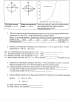 3 Circle Area momentEllipse Area moment of Fig A Ship resistance (KN) versus speed (knots) of inertia rInrtia Iab/4 for a displacement hull, with a mark at a of 1.34 1. [20 pts] In class we showed the floating ship resistance R in bs or KN is approximated by the relationship R- Ro [ v/vo Using this relationship complete Table A Table A 2.5m Kayak resistance Estimate the resistance R over the speed range O v< 2.5 m/s 0.25 0.5...
A mass of 1.25kg stretches a spring 0.05m. The mass is in a medium that exerts a viscous resistance of 192N when the mass has a velocity of 6m/s. The viscous resistance is proportional to the speed of...
A mass of 1.25kg stretches a spring 0.05m. The mass is in a medium that exerts a viscous resistance of 192N when the mass has a velocity of 6m/s. The viscous resistance is proportional to the speed of the object. Suppose the object is displaced an additional 0.06m and released. Find a function u(t) to express the object's displacement from the spring's natural position, in m after t seconds. Let positive displacements indicate a stretched spring, and use 9.8m/s^2 as...
5. In certain circumstances, we can model the velocity of a falling mass subject to air...
 5. In certain circumstances, we can model the velocity of a falling mass subject to air resistance as - dv m7 = mg – kv?, where v (t) is the velocity of the object, m is the mass of the object, g is acceleration due to gravity, and k is a constant of proportionality. Assume the positive direction is downward. (a) Solve this equation subect to the initial condition v (0) = vo. (b) What is the terminal velocity of...
020 10.0 points A bird is flying with a speed of 14.7 m/s over water when...
 020 10.0 points A bird is flying with a speed of 14.7 m/s over water when it accidentally drops a 1.60 kg fish The acceleration of gravity is 9.81 m/s4 If the altitude of the bird is 6.40 m and air resistance is disregarded, what is the speed of the fish when it hits tho water Answer in units of m/s 021 (part 1 of 3) 10.0 points A pulley system lifts a 1493 N weight a dis- tance of...
Differential Equation problem A mass of 0.25kg stretches a spring 0.1m. The mass is in a medium that exerts a viscous resistance of 14N when the mass has a velocity of 4m/s. The viscous resistance is...
Differential Equation problem A mass of 0.25kg stretches a spring 0.1m. The mass is in a medium that exerts a viscous resistance of 14N when the mass has a velocity of 4m/s. The viscous resistance is proportional to the speed of the object. Suppose the object is displaced an additional 0.08m and released. Find a function u(t) to express the object's displacement from the spring's natural position, in m after t seconds. Let positive displacements indicate a stretched spring, and...
2. The block diagram below model a simple DC motor for speed control application. Input V(s)...
 2. The block diagram below model a simple DC motor for speed control application. Input V(s) is the desired speed in voltage, and the output Y(s) is the actual speed. Tachogenerator, H, convert the actual speed to corresponding voltage. Amplifier Motor and gears X() 5 Ls +R Tachogenerator H The following parameters are known about the system: Amplifier gain: A=2; Motor inductance: L=5H Tachogenerator gain: H=0.15; Determine the following: The system transfer function The value of the motor resistance, R,...
The height and speed of a projectile (such as a thrown ball) launched with a speed of
 12. The height and speed of a projectile (such as a thrown ball) launched with a speed of \(v_{0}\) at an angle \(A\) to the horizontal are given by$$ \begin{array}{c} h(t)=v_{0} t \sin A-0.5 g t^{2} \\ v(t)=\sqrt{v_{0}^{2}-2 v_{0} g t \sin A+g^{2} t^{2}} \end{array} $$where \(g\) is the acceleration due to gravity. The projectile will strike the ground when \(h(t)=0\), which gives the time to hit \(t_{\text {hit }}=2\left(v_{0} / g\right) \sin A\). Suppose that \(A=30^{\circ}, v_{0}=40 \mathrm{~m} /...
3. (10 marks) Suppose you measured the speed of a shuttlecock falling, and got the following data points time (s) v...
 3. (10 marks) Suppose you measured the speed of a shuttlecock falling, and got the following data points time (s) velocity (m/s) 0.25 3.3 0.5 0.75 4.8 5.5 5.9 1.25 1.5 1.75 (a) Use a Riemann sum to approximate the total distance travelled by the shuttlecock (b) Use the trapezoidal rule to approximate the total distance travelled by the shuttlecock. (c) Use the central difference formula to approximate the acceleration of the shuttlecock when t =0.75 s. (d) A model...
A wildebeest calf is cruising at its top speed of v = 10 m/s when it passes over a sleeping cheetah
A wildebeest calf is cruising at its top speed of v = 10 m/s when it passes over a sleeping cheetah. By the time the cheetah stands up and begins pursuit, the wildebeest is d = 7.0m ahead of the cheetah. If the cheetah is able to maintain a constant acceleration of a = 9.5 m/s2 until it catches the wilde-beast, then how much time t must pass before the cheetah catches up to the wildebeest? (Hint: you will need...
 B1 a Show that the resistance to motion of a ship through water is given by [13] CF f(R, Fr) where the three dimensionless groups (the Force Coefficient, Reynolds number and Froude number)are given by LI /Lg pu'L were F is the resistance force, u is the speed of the ship, L is the length of the ship, ρ is the density of water, is the dynamic viscosity of water and g is the acceleration due to gravity b)For a...
 3 Circle Area momentEllipse Area moment of Fig A Ship resistance (KN) versus speed (knots) of inertia rInrtia Iab/4 for a displacement hull, with a mark at a of 1.34 1. [20 pts] In class we showed the floating ship resistance R in bs or KN is approximated by the relationship R- Ro [ v/vo Using this relationship complete Table A Table A 2.5m Kayak resistance Estimate the resistance R over the speed range O v< 2.5 m/s 0.25 0.5...
 5. In certain circumstances, we can model the velocity of a falling mass subject to air resistance as - dv m7 = mg – kv?, where v (t) is the velocity of the object, m is the mass of the object, g is acceleration due to gravity, and k is a constant of proportionality. Assume the positive direction is downward. (a) Solve this equation subect to the initial condition v (0) = vo. (b) What is the terminal velocity of...
 020 10.0 points A bird is flying with a speed of 14.7 m/s over water when it accidentally drops a 1.60 kg fish The acceleration of gravity is 9.81 m/s4 If the altitude of the bird is 6.40 m and air resistance is disregarded, what is the speed of the fish when it hits tho water Answer in units of m/s 021 (part 1 of 3) 10.0 points A pulley system lifts a 1493 N weight a dis- tance of...
 2. The block diagram below model a simple DC motor for speed control application. Input V(s) is the desired speed in voltage, and the output Y(s) is the actual speed. Tachogenerator, H, convert the actual speed to corresponding voltage. Amplifier Motor and gears X() 5 Ls +R Tachogenerator H The following parameters are known about the system: Amplifier gain: A=2; Motor inductance: L=5H Tachogenerator gain: H=0.15; Determine the following: The system transfer function The value of the motor resistance, R,...
 12. The height and speed of a projectile (such as a thrown ball) launched with a speed of \(v_{0}\) at an angle \(A\) to the horizontal are given by$$ \begin{array}{c} h(t)=v_{0} t \sin A-0.5 g t^{2} \\ v(t)=\sqrt{v_{0}^{2}-2 v_{0} g t \sin A+g^{2} t^{2}} \end{array} $$where \(g\) is the acceleration due to gravity. The projectile will strike the ground when \(h(t)=0\), which gives the time to hit \(t_{\text {hit }}=2\left(v_{0} / g\right) \sin A\). Suppose that \(A=30^{\circ}, v_{0}=40 \mathrm{~m} /...
 3. (10 marks) Suppose you measured the speed of a shuttlecock falling, and got the following data points time (s) velocity (m/s) 0.25 3.3 0.5 0.75 4.8 5.5 5.9 1.25 1.5 1.75 (a) Use a Riemann sum to approximate the total distance travelled by the shuttlecock (b) Use the trapezoidal rule to approximate the total distance travelled by the shuttlecock. (c) Use the central difference formula to approximate the acceleration of the shuttlecock when t =0.75 s. (d) A model...
Most questions answered within 3 hours.
-
Where is the error in this code sequence?
String s1 = "Hello";
String s2 = "ello";...
asked 10 months ago -
Financial data for Joel de Paris, Inc., for last year
follow:
Joel de Paris, Inc.
Balance...
asked 10 months ago -
Consider this reaction:
Al2(SO4)3 (aq)+ BaCl3
(aq) Al2Cl6 (aq)- +
3BaSO4(s) . What is the...
asked 10 months ago -
Suppose that Savneet is considering increasing her
recent random sample from 20 car rentals to 40...
asked 10 months ago -
Trucks arrive at an unloading terminal at an average rate of 120
per hour.
Trucks arrive...
asked 10 months ago -
Why are methanol and ethanol completely soluble in water while
octanol is not very little soluble....
asked 10 months ago -
A facilities manager at a university reads in a research report
that the mean amount of...
asked 10 months ago -
When the CuSO4 is rehydrated by adding water to the anhydrous
compound, is this an endothermic...
asked 10 months ago -
A ray of sunlight is passing from diamond into crown glass; the
angle of incidence is...
asked 10 months ago -
A block of mass 0.249 kg is placed on top of a light, vertical
spring of...
asked 10 months ago -
how do the kidneys compensate in the presences of acidosis
a) trigger hyperventilate
b) reserve acid...
asked 10 months ago -
Question 501 pts
The rental rate of capital to the firm increases. Which of the
following...
asked 10 months ago