Draw an example of the ClaisenRearrangement showing al of the bond movement
Homework Answers


Add Answer to:
Draw an example of the ClaisenRearrangement showing al of the bond
movement
draw at least 2 resonance structures for this compound. please use arrows showing movement doplon N...
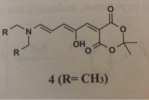 draw at least 2 resonance structures for this compound. please
use arrows showing movement
doplon N OH 4 (R= CH3) R R
draw at least 2 resonance structures for this compound. please
use arrows showing movement
doplon N OH 4 (R= CH3) R R
2. Draw all remaining resonance forms of the molecules below. Include the arrows showing electron movement...
 2. Draw all remaining resonance forms of the molecules below. Include the arrows showing electron movement between structures (6) (a) 3 additional forms (b) 5 additional forms
Draw a diagram showing the movement of chromosomes within the cell during mitosis for a 2n...
Draw a diagram showing the movement of chromosomes within the cell during mitosis for a 2n = 4 organism (i.e., a diploid organism with two chromosomes like the one pictured on the right). Your diagram should include: 1.1) Labels of each phase of the cell cycle. 1.2) Labels indicating where A) DNA replication occurs, B) checkpoints occur, and C) mutations occur. 1.3) For each phase, label the location of the alleles. 1.4) An expanded section for mitosis with the following...
Please draw arrows showing how the electrons/bond and carbocation charge shifted. Draw as many resonance structures...
 Please draw arrows showing how the electrons/bond and
carbocation charge shifted.
Draw as many resonance structures as you can for the following carbocation. L the carbocation structures as 1°, 20 or 3°, and then circle the most stable conformation. Label all of
Please draw arrows showing how the electrons/bond and
carbocation charge shifted.
Draw as many resonance structures as you can for the following carbocation. L the carbocation structures as 1°, 20 or 3°, and then circle the most stable conformation. Label all of
Draw an example of a hydrogen bond formed between a water molecule and a carboxylic acid....
Draw an example of a hydrogen bond formed between a water molecule and a carboxylic acid. On your diagram, label the hydrogen bond donor and the hydrogen bond acceptor.
Example 2: For the high pass filter below calculate the cutoff frequency and draw the Bode plot showing the decibel out...
 Example 2: For the high pass filter below calculate the cutoff frequency and draw the Bode plot showing the decibel output at fe and 0.1f C1 Vout 0.1uF R1 V1 1Vpk 1KHZ 3.3kQ 0°
Example 2: For the high pass filter below calculate the cutoff frequency and draw the Bode plot showing the decibel output at fe and 0.1f C1 Vout 0.1uF R1 V1 1Vpk 1KHZ 3.3kQ 0°
Example 2: For the high pass filter below calculate the cutoff frequency and draw the Bode plot showing the decibel output at fe and 0.1f C1 Vout 0.1uF R1 V1 1Vpk 1KHZ 3.3kQ 0°
Give an example of a microorganism showing pathogenicity and an example of a microorganism showing high...
Give an example of a microorganism showing pathogenicity and an example of a microorganism showing high virulence.
Propose a mechanism for the reaction below, showing the movement of every pair of electrons. ad...
 Propose a mechanism for the reaction below, showing the movement of every pair of electrons. ad pred CH3OH H2SO4 Br
7) Draw the Lewis Dot Structure for NH,OH below, showing VSEPR molecular geometry. a) b) Draw...
 7) Draw the Lewis Dot Structure for NH,OH below, showing VSEPR molecular geometry. a) b) Draw charge vector arrows for any polar covalent bond in the molecule above: Is this molecule polar or non-polar? What is the most important IM force used by this molecule? c) 8) Draw the Lewis Dot Structure for SF, below, showing VSEPR molecular geometry. a) b) Draw charge vector arrows for any polar covalent bond in the molecule above: Is this molecule polar or non-polar?...
On paper draw a dipeptide, clearly showing the peptide bond joining the two amino acids together....
On paper draw a dipeptide, clearly showing the peptide bond joining the two amino acids together. If the two amino acids are valine and threonine, predict the overall charge of the dipeptide at pH 7. Do not forget to consider the amino (N-terminal) and carboxy (C-terminal) of the dipeptide, as well as the R groups. Select one: a. +2 b. -2 c. 0 d. -1 e. +1
 draw at least 2 resonance structures for this compound. please
use arrows showing movement
doplon N OH 4 (R= CH3) R R
draw at least 2 resonance structures for this compound. please
use arrows showing movement
doplon N OH 4 (R= CH3) R R
 2. Draw all remaining resonance forms of the molecules below. Include the arrows showing electron movement between structures (6) (a) 3 additional forms (b) 5 additional forms
 Please draw arrows showing how the electrons/bond and
carbocation charge shifted.
Draw as many resonance structures as you can for the following carbocation. L the carbocation structures as 1°, 20 or 3°, and then circle the most stable conformation. Label all of
Please draw arrows showing how the electrons/bond and
carbocation charge shifted.
Draw as many resonance structures as you can for the following carbocation. L the carbocation structures as 1°, 20 or 3°, and then circle the most stable conformation. Label all of
 Example 2: For the high pass filter below calculate the cutoff frequency and draw the Bode plot showing the decibel output at fe and 0.1f C1 Vout 0.1uF R1 V1 1Vpk 1KHZ 3.3kQ 0°
Example 2: For the high pass filter below calculate the cutoff frequency and draw the Bode plot showing the decibel output at fe and 0.1f C1 Vout 0.1uF R1 V1 1Vpk 1KHZ 3.3kQ 0°
Example 2: For the high pass filter below calculate the cutoff frequency and draw the Bode plot showing the decibel output at fe and 0.1f C1 Vout 0.1uF R1 V1 1Vpk 1KHZ 3.3kQ 0°
 Propose a mechanism for the reaction below, showing the movement of every pair of electrons. ad pred CH3OH H2SO4 Br
 7) Draw the Lewis Dot Structure for NH,OH below, showing VSEPR molecular geometry. a) b) Draw charge vector arrows for any polar covalent bond in the molecule above: Is this molecule polar or non-polar? What is the most important IM force used by this molecule? c) 8) Draw the Lewis Dot Structure for SF, below, showing VSEPR molecular geometry. a) b) Draw charge vector arrows for any polar covalent bond in the molecule above: Is this molecule polar or non-polar?...
Most questions answered within 3 hours.
-
Where is the error in this code sequence?
String s1 = "Hello";
String s2 = "ello";...
asked 11 months ago -
Financial data for Joel de Paris, Inc., for last year
follow:
Joel de Paris, Inc.
Balance...
asked 11 months ago -
Consider this reaction:
Al2(SO4)3 (aq)+ BaCl3
(aq) Al2Cl6 (aq)- +
3BaSO4(s) . What is the...
asked 11 months ago -
Suppose that Savneet is considering increasing her
recent random sample from 20 car rentals to 40...
asked 11 months ago -
Trucks arrive at an unloading terminal at an average rate of 120
per hour.
Trucks arrive...
asked 11 months ago -
Why are methanol and ethanol completely soluble in water while
octanol is not very little soluble....
asked 11 months ago -
A facilities manager at a university reads in a research report
that the mean amount of...
asked 11 months ago -
When the CuSO4 is rehydrated by adding water to the anhydrous
compound, is this an endothermic...
asked 11 months ago -
A ray of sunlight is passing from diamond into crown glass; the
angle of incidence is...
asked 11 months ago -
A block of mass 0.249 kg is placed on top of a light, vertical
spring of...
asked 11 months ago -
how do the kidneys compensate in the presences of acidosis
a) trigger hyperventilate
b) reserve acid...
asked 11 months ago -
Question 501 pts
The rental rate of capital to the firm increases. Which of the
following...
asked 11 months ago