Give balanced equation and classification for the reactions below: a). Mg + HCl b). CuSO4 +...
Give balanced equation and classification for the reactions below:
a). Mg + HCl
b). CuSO4 + NaOH
c). CuSO2 * 5H2O + heat + water
d). CuSO4 + Fe
e). (NH4)2CO3
Homework Answers


Add Answer to:
Give balanced equation and classification for the reactions
below:
a). Mg + HCl
b). CuSO4 +...
Predict the possible products, balance the equation and determine the type of reaction for each (single...
Predict the possible products, balance the equation and determine the type of reaction for each (single displacement, double displacement, combination or decomposition); Mg (aq)+ HCl (aq) → Pb(NO3)2(aq)+ KI (aq) → Fe(s) + S8(s) → CuSO4▪ 5H2O(s) → HCl (aq) + NaOH(aq) → Cu(s) + O2(g) → CuSO4(aq) + Fe(s) → FeCl3(aq) +NaOH(aq) → (NH4)2CO3(s) →
Write complete, balanced equations for each of the following reactions. If no reaction is predicted, enter...
Write complete, balanced equations for each of the following reactions. If no reaction is predicted, enter "no reaction": (a) Mg(OH)2(aq) + H3PO4(aq) → (b) HCl(aq) + NaOH(aq) → (c) H3PO4(aq) + Ca(OH)2(aq) → (d) Fe(s) + CuSO4(aq) → (e) AgNO3(aq) + Cu(s) → (f) C5H12(g) + O2(g) →
Enter a balanced net ionic equation to describe the reactions indicated. Enter NR if no reaction...
Enter a balanced net ionic equation to describe the reactions indicated. Enter NR if no reaction occurred. Suppose you determine a pH of 0 to 1 for an unknown solution. When mixed in equal volumes, which of the following solutions could have generated an unknown solution consistent with this pH measurement? a) NH4Br and AgNO3 b) CuSO4 and BaCl2 c) LiOH and HCl d) HCl and NH4Br e) K2CO3 and Na2S
Write a balanced net ionic equation for the following reactions. If no reaction occurs, write N.R....
Write a balanced net ionic equation for the following reactions. If no reaction occurs, write N.R. A) Mix HNO2 solution with Ca(OH)2 solution B) Mix KOH solution with NaNO3 solution C) Mix KOH solution with FeBr2 solution D) Mix Fe(C2H3O2)3 solution with (NH4)2S solution
Write balanced equation for each Ca(s) + CuSO4 (aq) : Ca(s) + Fe(NO3)2 (aq) : Ca(s) + FeSO4 (aq) Ca(s) + Mg (NO3)2 (aq)...
Write balanced equation for each Ca(s) + CuSO4 (aq) : Ca(s) + Fe(NO3)2 (aq) : Ca(s) + FeSO4 (aq) Ca(s) + Mg (NO3)2 (aq) Ca(s) + SnCl2 (aq) Ca(s) + Zn(NO3)2 (aq) Mg(s) + Fe(NO3)2 (aq) Zn(s) + Fe(NO3)2 (aq) : Sn(s) + FeSO4 (aq) Zn(s) + FeSO4 (aq) : Sn(s) + SnCl2 (aq)
Determine the normality of the solutions described below. a. 86 mg K2SO4 dissolved in 400mls of...
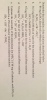 Determine the normality of the solutions described below. a. 86 mg K2SO4 dissolved in 400mls of water (ion charge) b. 36.5 mg HCl in 100 mls of water for the reaction (acid/base reaction) c. 55 mg SO4 per liter of water for the reaction (acid/base reaction) d. 55 mg SO42 per liter of water for the reaction (acid/base reaction) e. Estimate the normality of the ammonium ion (NH4) if 68 mg of hydrazoic acid (HN3)is HCl + NaOH己Na+ + Cl....
1) Write a Total lonic Equation and a Net lonic Equation that matches each balanced chemical...
 1) Write a Total lonic Equation and a Net lonic Equation that matches each balanced chemical equation written below. Rememer to show charges on any dissociated ions. 2 Na co + Pb(OH), + Pb(CO) + NaOH (10) a) Total lonic EON: Net lonic EQN b) 3 Mg + 2 Fe(C,H,O:)) - 3 Mg(C,H,O,2 – 2 Fe Total lonic EQN: Net lonic EQN: 2) Complete each statement by filling in the correct value or term in the blank provided. (5) a)...
Report Sheet Experiment 8 Simple Chemical Reactions and Balancing Chemical Equations Observe and record original state...
 Report Sheet Experiment 8 Simple Chemical Reactions and Balancing Chemical Equations Observe and record original state of all reactants in each reaction, i.e. liquid, solid crystal gaseous, aqueous, color, odor, etc. Reaction 1: CUCO3(s): CUCO3(s) Balanced Equation: Observations: Type of Reaction: Reaction 2: Fe(s) : CuSO4 (aq): Balanced Equation: Fe (s) + CuSO.(aq) Observations: Type of Reaction: Reaction 3: Mg(s); Balanced Equation: Mg(s) + O2(g) Observations: Type of Reaction: Reaction 4: BaCl(aq): Na SO.(aq): Balanced Equation: BaCl(aq) + Na2SO4(aq) Observations:...
Name Date Lab Instructor Report Sheet Experiment 7 Simple Chemical Reactions and Balancing Chemical Equation...
 Name Date Lab Instructor Report Sheet Experiment 7 Simple Chemical Reactions and Balancing Chemical Equations and record the original state of all reactants in each reaction liquid, solid, crystal, gaseous, aqueous, color, odor, and so on. Reaction 1 CuCO,(s): Balance Equation: Observations: Cuco,(s) → Type of Reaction: Reaction 2 Fe(nail): CuSO4(aq): Balance Equation: Observations: Fe (s) + CuSO4(aq) → Type of Reaction: Reaction 3 Mg(strips): Balance Equation: Observations: Mg(s) + O2(g) → Type of Reaction: Na so.(aq) → Reaction 4...
a) Balanced the following molecular equations for these reactions. b) Write the ionic equation for the...
 a) Balanced the following molecular equations for these reactions. b) Write the ionic equation for the reactions. c) Write the net ionic equation for the reactions. 2) KOH (aq) KMno4(aq)K2MnOs (aq)+O2(g) + H20 AICI (aq) + NaOH(aq) NaAI(OH)4(aq) + NaCI (aq)
 Determine the normality of the solutions described below. a. 86 mg K2SO4 dissolved in 400mls of water (ion charge) b. 36.5 mg HCl in 100 mls of water for the reaction (acid/base reaction) c. 55 mg SO4 per liter of water for the reaction (acid/base reaction) d. 55 mg SO42 per liter of water for the reaction (acid/base reaction) e. Estimate the normality of the ammonium ion (NH4) if 68 mg of hydrazoic acid (HN3)is HCl + NaOH己Na+ + Cl....
 1) Write a Total lonic Equation and a Net lonic Equation that matches each balanced chemical equation written below. Rememer to show charges on any dissociated ions. 2 Na co + Pb(OH), + Pb(CO) + NaOH (10) a) Total lonic EON: Net lonic EQN b) 3 Mg + 2 Fe(C,H,O:)) - 3 Mg(C,H,O,2 – 2 Fe Total lonic EQN: Net lonic EQN: 2) Complete each statement by filling in the correct value or term in the blank provided. (5) a)...
 Report Sheet Experiment 8 Simple Chemical Reactions and Balancing Chemical Equations Observe and record original state of all reactants in each reaction, i.e. liquid, solid crystal gaseous, aqueous, color, odor, etc. Reaction 1: CUCO3(s): CUCO3(s) Balanced Equation: Observations: Type of Reaction: Reaction 2: Fe(s) : CuSO4 (aq): Balanced Equation: Fe (s) + CuSO.(aq) Observations: Type of Reaction: Reaction 3: Mg(s); Balanced Equation: Mg(s) + O2(g) Observations: Type of Reaction: Reaction 4: BaCl(aq): Na SO.(aq): Balanced Equation: BaCl(aq) + Na2SO4(aq) Observations:...
 Name Date Lab Instructor Report Sheet Experiment 7 Simple Chemical Reactions and Balancing Chemical Equations and record the original state of all reactants in each reaction liquid, solid, crystal, gaseous, aqueous, color, odor, and so on. Reaction 1 CuCO,(s): Balance Equation: Observations: Cuco,(s) → Type of Reaction: Reaction 2 Fe(nail): CuSO4(aq): Balance Equation: Observations: Fe (s) + CuSO4(aq) → Type of Reaction: Reaction 3 Mg(strips): Balance Equation: Observations: Mg(s) + O2(g) → Type of Reaction: Na so.(aq) → Reaction 4...
 a) Balanced the following molecular equations for these reactions. b) Write the ionic equation for the reactions. c) Write the net ionic equation for the reactions. 2) KOH (aq) KMno4(aq)K2MnOs (aq)+O2(g) + H20 AICI (aq) + NaOH(aq) NaAI(OH)4(aq) + NaCI (aq)
Most questions answered within 3 hours.
-
Where is the error in this code sequence?
String s1 = "Hello";
String s2 = "ello";...
asked 10 months ago -
Financial data for Joel de Paris, Inc., for last year
follow:
Joel de Paris, Inc.
Balance...
asked 10 months ago -
Consider this reaction:
Al2(SO4)3 (aq)+ BaCl3
(aq) Al2Cl6 (aq)- +
3BaSO4(s) . What is the...
asked 10 months ago -
Suppose that Savneet is considering increasing her
recent random sample from 20 car rentals to 40...
asked 10 months ago -
Trucks arrive at an unloading terminal at an average rate of 120
per hour.
Trucks arrive...
asked 10 months ago -
Why are methanol and ethanol completely soluble in water while
octanol is not very little soluble....
asked 10 months ago -
A facilities manager at a university reads in a research report
that the mean amount of...
asked 10 months ago -
When the CuSO4 is rehydrated by adding water to the anhydrous
compound, is this an endothermic...
asked 10 months ago -
A ray of sunlight is passing from diamond into crown glass; the
angle of incidence is...
asked 10 months ago -
A block of mass 0.249 kg is placed on top of a light, vertical
spring of...
asked 10 months ago -
how do the kidneys compensate in the presences of acidosis
a) trigger hyperventilate
b) reserve acid...
asked 10 months ago -
Question 501 pts
The rental rate of capital to the firm increases. Which of the
following...
asked 10 months ago