4. Carl and Simon are two rival pumpkin growers who sell their pumpkins at the Farmers’...
4. Carl and Simon are two rival pumpkin growers who sell their pumpkins at the Farmers’ Market in Lake Witchisit, Minnesota. They are the only sellers of pumpkins at the market, where the demand function for pumpkins is q = 3, 200 − 1, 600p. The total number of pumpkins sold at the market is q = qC + qS, where qC is the number that Carl sells, and qS is the number that Simon sells. The cost of producing pumpkins for either farmer is $.50 per pumpkin no matter how many pumpkins he produces.
(a) What is the inverse demand function for pumpkins at the Farmers’ Market? What is the marginal cost of producing a pumpkin for either farmer?
(b) Every spring, each of the farmers decides how many pumpkins to grow. They both know the local demand function and they each know how many pumpkins were sold by the other farmer last year. In fact, each farmer assumes that the other farmer will sell the same number this year as he sold last year. So, for example, if Simon sold 400 pumpkins last year, Carl believes that Simon will sell 400 pumpkins again this year. If Simon sold 400 pumpkins last year, what does Carl think the price of pumpkins will be if Carl sells 1,200 pumpkins this year?
Homework Answers


Add Answer to:
4. Carl and Simon are two rival pumpkin growers who sell their
pumpkins at the Farmers’...
arl and Simon are two rival pumpkin growers who sell their 27.1 (0) C pumpkins at...
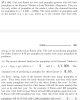 arl and Simon are two rival pumpkin growers who sell their 27.1 (0) C pumpkins at the Farmers' Market in Lake Witchisit, Minnesota. They are the only sellers of pumpkins at the market, where the demand function for pumpkins is q 3.200-1.600p. The total number of pumpkins sold at the market is q qs, where qc is the number that Carl sells 323 NAME mber that Simon sells. The cost of producing pu mpkins for either farmer is $.50 per...
Suppose that the duopolists Carl and Simon face a demand function for pumpkins of Q =...
Suppose that the duopolists Carl and Simon face a demand function for pumpkins of Q = 16,800 − 800P, where Q is the total number of pumpkins that reach the market and P is the price of pumpkins. Suppose further that each farmer has a constant marginal cost of $1 for each pumpkin produced. If Carl believes that Simon is going to produce Qs pumpkins this year, then the reaction function tells us how many pumpkins Carl should produce in...
The daily market demand for paper clips in the United States is QD = 10 –...
The daily market demand for paper clips in the United States is QD = 10 – 2P. The daily market supply for paper clips is QS = 5 + 3P, where P is the price of a box of paper clips and QD and QS are thousands of boxes of paper clips. There are many producers and buyers of paper clips, selling them in boxes containing 200 paper clips. a. Adam Smith Pins produces and sells paper clips. Adam Smith...
Benton Corporation produces two grades of non-alcoholic wine from grapes that it buys from California growers....
 Benton Corporation produces two grades of non-alcoholic wine
from grapes that it buys from California growers. It produces and
sells roughly 3,000,000 liters per year of a low-cost, high-volume
product called CoolDay. It sells this in 600,000 5-liter jugs.
Benton also produces and sells roughly 300,000 liters per year of a
low-volume, high-cost product called LiteMist. LiteMist is sold in
1-liter bottles. Based on recent data, the CoolDay product has not
been as profitable as LiteMist. Management is considering dropping...
Benton Corporation produces two grades of non-alcoholic wine
from grapes that it buys from California growers. It produces and
sells roughly 3,000,000 liters per year of a low-cost, high-volume
product called CoolDay. It sells this in 600,000 5-liter jugs.
Benton also produces and sells roughly 300,000 liters per year of a
low-volume, high-cost product called LiteMist. LiteMist is sold in
1-liter bottles. Based on recent data, the CoolDay product has not
been as profitable as LiteMist. Management is considering dropping...
Farming with AgriPro (Case Study) AgriPro is a firm based in Colorado, USA, which does research...
Farming with AgriPro (Case Study) AgriPro is a firm based in Colorado, USA, which does research on and produces genetically modified wheat seed. Every year AgriPro conducts thousands of experiments on different varieties of wheat seeds in different locations of the USA. In these experiments, the agricultural and economic characteristics, regional adaptation, and yield potential of different varieties of wheat seeds are investigated. In addition, the benefits of the wheat produced, including the milling and baking quality, are examined. If...
Benton Corporation produces two grades of non-alcoholic wine from grapes that it buys from California growers....
 Benton Corporation produces two grades of non-alcoholic wine from grapes that it buys from California growers. It produces and sells roughly 3,000,000 liters per year of a low-cost, high-volume product called CoolDay. It sells this in 600,000 5-liter jugs. Benton also produces and sells roughly 300,000 liters per year of a low-volume, high-cost product called Lite Mist. Lite Mist is sold in 1-liter bottles. Based on recent data, the CoolDay product has not been as profitable as LiteMist. Management is...
Waterway Corporation produces two grades of non-alcoholic wine from grapes that it buys from California growers....
 Waterway Corporation produces two grades of non-alcoholic wine from grapes that it buys from California growers. It produces and sells roughly 3,000,000 liters per year of a low- cost, high-volume product called CoolDay. It sells this in 600,000 5-liter jugs, Waterway also produces and sells roughly 300,000 liters per year of a low-volume, high-cost product called Lite Mist. Lite Mist is sold in 1-liter bottles. Based on recent data, the CoolDay product has not been as profitable as Lite Mist...
Benton Corporation produces two grades of non-alcoholic wine from grapes that it buys from California growers....
Benton Corporation produces two grades of non-alcoholic wine from grapes that it buys from California growers. It produces and sells roughly 3,000,000 liters per year of a low-cost, high-volume product called CoolDay. It sells this in 600,000 5-liter jugs. Benton also produces and sells roughly 300,000 liters per year of a low-volume, high-cost product called LiteMist. LiteMist is sold in 1-liter bottles. Based on recent data, the CoolDay product has not been as profitable as LiteMist. Management is considering dropping...
Benton Corporation produces two grades of non-alcoholic wine from grapes that it buys from California growers....
 Benton Corporation produces two grades of non-alcoholic wine from grapes that it buys from California growers. It produces and sells roughly 3,000,000 liters per year of a low-cost, high-volume product called CoolDay. It sells this in 600,000 5-liter jugs. Benton also produces and sells roughly 300,000 liters per year of a low-volume, high-cost product called Lite Mist. Lite Mist is sold in 1-liter bottles. Based on recent data, the CoolDay product has not been as profitable as Lite Mist. Management...
Benton Corporation produces two grades of non-alcoholic wine from grapes that it buys from California growers....
 Benton Corporation produces two grades of non-alcoholic wine from grapes that it buys from California growers. It produces and sells roughly 3,000,000 liters per year of a low-cost, high-volume product called CoolDay. It sells this in 600,000 5-liter jugs. Benton also produces and sells roughly 300,000 liters per year of a low-volume, high-cost product called Lite Mist. Lite Mist is sold in 1-liter bottles. Based on recent data, the CoolDay product has not been as profitable as Lite Mist. Management...
 arl and Simon are two rival pumpkin growers who sell their 27.1 (0) C pumpkins at the Farmers' Market in Lake Witchisit, Minnesota. They are the only sellers of pumpkins at the market, where the demand function for pumpkins is q 3.200-1.600p. The total number of pumpkins sold at the market is q qs, where qc is the number that Carl sells 323 NAME mber that Simon sells. The cost of producing pu mpkins for either farmer is $.50 per...
 Benton Corporation produces two grades of non-alcoholic wine
from grapes that it buys from California growers. It produces and
sells roughly 3,000,000 liters per year of a low-cost, high-volume
product called CoolDay. It sells this in 600,000 5-liter jugs.
Benton also produces and sells roughly 300,000 liters per year of a
low-volume, high-cost product called LiteMist. LiteMist is sold in
1-liter bottles. Based on recent data, the CoolDay product has not
been as profitable as LiteMist. Management is considering dropping...
Benton Corporation produces two grades of non-alcoholic wine
from grapes that it buys from California growers. It produces and
sells roughly 3,000,000 liters per year of a low-cost, high-volume
product called CoolDay. It sells this in 600,000 5-liter jugs.
Benton also produces and sells roughly 300,000 liters per year of a
low-volume, high-cost product called LiteMist. LiteMist is sold in
1-liter bottles. Based on recent data, the CoolDay product has not
been as profitable as LiteMist. Management is considering dropping...
 Benton Corporation produces two grades of non-alcoholic wine from grapes that it buys from California growers. It produces and sells roughly 3,000,000 liters per year of a low-cost, high-volume product called CoolDay. It sells this in 600,000 5-liter jugs. Benton also produces and sells roughly 300,000 liters per year of a low-volume, high-cost product called Lite Mist. Lite Mist is sold in 1-liter bottles. Based on recent data, the CoolDay product has not been as profitable as LiteMist. Management is...
 Waterway Corporation produces two grades of non-alcoholic wine from grapes that it buys from California growers. It produces and sells roughly 3,000,000 liters per year of a low- cost, high-volume product called CoolDay. It sells this in 600,000 5-liter jugs, Waterway also produces and sells roughly 300,000 liters per year of a low-volume, high-cost product called Lite Mist. Lite Mist is sold in 1-liter bottles. Based on recent data, the CoolDay product has not been as profitable as Lite Mist...
 Benton Corporation produces two grades of non-alcoholic wine from grapes that it buys from California growers. It produces and sells roughly 3,000,000 liters per year of a low-cost, high-volume product called CoolDay. It sells this in 600,000 5-liter jugs. Benton also produces and sells roughly 300,000 liters per year of a low-volume, high-cost product called Lite Mist. Lite Mist is sold in 1-liter bottles. Based on recent data, the CoolDay product has not been as profitable as Lite Mist. Management...
 Benton Corporation produces two grades of non-alcoholic wine from grapes that it buys from California growers. It produces and sells roughly 3,000,000 liters per year of a low-cost, high-volume product called CoolDay. It sells this in 600,000 5-liter jugs. Benton also produces and sells roughly 300,000 liters per year of a low-volume, high-cost product called Lite Mist. Lite Mist is sold in 1-liter bottles. Based on recent data, the CoolDay product has not been as profitable as Lite Mist. Management...
Most questions answered within 3 hours.
-
Where is the error in this code sequence?
String s1 = "Hello";
String s2 = "ello";...
asked 10 months ago -
Financial data for Joel de Paris, Inc., for last year
follow:
Joel de Paris, Inc.
Balance...
asked 10 months ago -
Consider this reaction:
Al2(SO4)3 (aq)+ BaCl3
(aq) Al2Cl6 (aq)- +
3BaSO4(s) . What is the...
asked 10 months ago -
Suppose that Savneet is considering increasing her
recent random sample from 20 car rentals to 40...
asked 10 months ago -
Trucks arrive at an unloading terminal at an average rate of 120
per hour.
Trucks arrive...
asked 10 months ago -
Why are methanol and ethanol completely soluble in water while
octanol is not very little soluble....
asked 10 months ago -
A facilities manager at a university reads in a research report
that the mean amount of...
asked 10 months ago -
When the CuSO4 is rehydrated by adding water to the anhydrous
compound, is this an endothermic...
asked 10 months ago -
A ray of sunlight is passing from diamond into crown glass; the
angle of incidence is...
asked 10 months ago -
A block of mass 0.249 kg is placed on top of a light, vertical
spring of...
asked 10 months ago -
how do the kidneys compensate in the presences of acidosis
a) trigger hyperventilate
b) reserve acid...
asked 10 months ago -
Question 501 pts
The rental rate of capital to the firm increases. Which of the
following...
asked 10 months ago