Assume it is given that T1(n) = O(g1(n)) and T2(n) = O(g2(n)). Prove or disprove each...
Assume it is given that T1(n) = O(g1(n)) and T2(n) = O(g2(n)). Prove or disprove each one of the following claims
T1(n)/T2(n) = O(g1(n)/g2(n))
Homework Answers
f(n) = O(g(n)) if there exists a positive integer n0 and a positive constant c, such that f(n) <= c.g(n) ∀ n >= n0
Since T1(n) = O(g1(n)) and T2(n) = O(g2(n)), this means
0 <= T1(n) <= c1 * g1(n) -----------> (1)
0 <= T2(n) <= c2 * g2(n) ------------> (2)
a)
Dividing 1 by 2, we have
0 <= T1(n) / T2(n) <= (c1 / c2) * (g1(n) / g2(n))
0 <= T1(n) / T2(n) <= c3 * (g1(n) / g2(n)) where c3 = c1 / c2
Hence, T1(n) / T2(n) = O(g1(n) / g2(n))
Add Answer to:
Assume it is given that T1(n) = O(g1(n)) and T2(n) = O(g2(n)).
Prove or disprove each...
2. Let G1, G2, and G3 be groups. Prove the following: a) If G1 = G2,...
 2. Let G1, G2, and G3 be groups. Prove the following: a) If G1 = G2, then G2 = 61. b) If G = G2 and G2 = G3, then G =G3.
Q6: For the system shown in Figure below. Calculate the short circuit curTent for a symmetrical phase fault at point F: use a 100MVA base. T1 115 kV TL 50 km 0.4 Ω/km Reactor T2 Power Sys G2 G1&G...
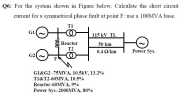 Q6: For the system shown in Figure below. Calculate the short circuit curTent for a symmetrical phase fault at point F: use a 100MVA base. T1 115 kV TL 50 km 0.4 Ω/km Reactor T2 Power Sys G2 G1&G2-75MVA, 10.5kV, 13.2% T1&T2-60MVA, 10.5% Reactor-60MVA, 9% Power Sys-2000MVA, 8000
Q6: For the system shown in Figure below. Calculate the short circuit curTent for a symmetrical phase fault at point F: use a 100MVA base. T1 115 kV TL 50 km 0.4...
Q6: For the system shown in Figure below. Calculate the short circuit curTent for a symmetrical phase fault at point F: use a 100MVA base. T1 115 kV TL 50 km 0.4 Ω/km Reactor T2 Power Sys G2 G1&G2-75MVA, 10.5kV, 13.2% T1&T2-60MVA, 10.5% Reactor-60MVA, 9% Power Sys-2000MVA, 8000
Q6: For the system shown in Figure below. Calculate the short circuit curTent for a symmetrical phase fault at point F: use a 100MVA base. T1 115 kV TL 50 km 0.4...
Prove or disprove the following: If f(n) =O(g(n)) then nf(n) = O(ng(n))
Prove or disprove the following: If f(n) =O(g(n)) then nf(n) = O(ng(n))
Prove (using the definition of O) or disprove (via counter-example): If f(n) = O(n)), and g(n)...
 Prove (using the definition of O) or disprove (via counter-example): If f(n) = O(n)), and g(n) = O(n2), then f(n) + g(n) = O(n5). Prove (using the definition of O) or disprove (via counter-example): If f(n) = O(n), and g(n) = O(n2), then fin)/g(n) = O(n).
Prove or Disprove #3 (d) For each of the following, prove or disprove: iii) There is an element of X × Y with the form (a, 3a) (d) For each of the following, prove or disprove: iii) There is an...
 Prove or Disprove #3
(d) For each of the following, prove or disprove: iii) There is an element of X × Y with the form (a, 3a)
(d) For each of the following, prove or disprove: iii) There is an element of X × Y with the form (a, 3a)
Prove or Disprove #3
(d) For each of the following, prove or disprove: iii) There is an element of X × Y with the form (a, 3a)
(d) For each of the following, prove or disprove: iii) There is an element of X × Y with the form (a, 3a)
No calculations needed, just use written labels given. BUS 1 BUS 2 LINE 1 T1 L1 T2. G1 G2 R= 0.6 pu LINE 2 L2 T3 G3 BUS...
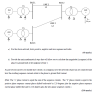 No calculations needed, just use written labels given.
BUS 1 BUS 2 LINE 1 T1 L1 T2. G1 G2 R= 0.6 pu LINE 2 L2 T3 G3 BUS 3 a) For the above network, draw positive, negative and zero sequence networks (40 marks) b) Provide the main mathematical steps that will allow you to calculate the magnitude (in ampere) of the phase to ground fault at the midpoint of line 1 As part of your answer you should show clearly,...
No calculations needed, just use written labels given.
BUS 1 BUS 2 LINE 1 T1 L1 T2. G1 G2 R= 0.6 pu LINE 2 L2 T3 G3 BUS 3 a) For the above network, draw positive, negative and zero sequence networks (40 marks) b) Provide the main mathematical steps that will allow you to calculate the magnitude (in ampere) of the phase to ground fault at the midpoint of line 1 As part of your answer you should show clearly,...
Let f(n) and g(n) be asymptotically positive functions. Prove or disprove each of the following conjectures....
Let f(n) and g(n) be asymptotically positive functions. Prove or disprove each of the following conjectures. f(n) = O(g(n)) implies g(n) = Ω(f(n)) . f(n) = O(g(n)) implies g(n) = O(f(n)). f(n) + g(n) = Θ(min(f(n),g(n))).
Let f1 and f2 be asymptotically positive non-decreasing functions. Prove or disprove each of the following...
Let f1 and f2 be asymptotically positive non-decreasing functions. Prove or disprove each of the following conjectures. To disprove give a counter example. If f1(n) = O(g(n)) and f2(n) = O(g(n)) then f1(n)= Θ (f2(n) ).
BUS 1 BUS 2 LINE 1 T1 L1 T2 G1 G2 R = 0,6 pu LINE 2 L2 T3 G3 BUS 3 a) For the above network, draw positive, negative an...
 BUS 1 BUS 2 LINE 1 T1 L1 T2 G1 G2 R = 0,6 pu LINE 2 L2 T3 G3 BUS 3 a) For the above network, draw positive, negative and zero sequence networks (60 marks) b) Provide the main mathematical steps that will allow you to calculate the magnitude (in ampere) of the phase to phase fault current at BUS 1. As part of your answer you should show clearly, on a diagram, how the networks of part (a)...
disprove that the given lan 4. [20 Points For each of the following languages, prove or guage is regular (a) L1www e {a...
 disprove that the given lan 4. [20 Points For each of the following languages, prove or guage is regular (a) L1www e {a,b}*} {w w E {a, b}* and no two b's in w have odd number of a's in between}. (b) L2 (c) L3 a" (d) L4 vw n = 3k, for k > 0}. a, b}*}
disprove that the given lan 4. [20 Points For each of the following languages, prove or guage is regular (a) L1www e...
disprove that the given lan 4. [20 Points For each of the following languages, prove or guage is regular (a) L1www e {a,b}*} {w w E {a, b}* and no two b's in w have odd number of a's in between}. (b) L2 (c) L3 a" (d) L4 vw n = 3k, for k > 0}. a, b}*}
disprove that the given lan 4. [20 Points For each of the following languages, prove or guage is regular (a) L1www e...
 2. Let G1, G2, and G3 be groups. Prove the following: a) If G1 = G2, then G2 = 61. b) If G = G2 and G2 = G3, then G =G3.
 Q6: For the system shown in Figure below. Calculate the short circuit curTent for a symmetrical phase fault at point F: use a 100MVA base. T1 115 kV TL 50 km 0.4 Ω/km Reactor T2 Power Sys G2 G1&G2-75MVA, 10.5kV, 13.2% T1&T2-60MVA, 10.5% Reactor-60MVA, 9% Power Sys-2000MVA, 8000
Q6: For the system shown in Figure below. Calculate the short circuit curTent for a symmetrical phase fault at point F: use a 100MVA base. T1 115 kV TL 50 km 0.4...
Q6: For the system shown in Figure below. Calculate the short circuit curTent for a symmetrical phase fault at point F: use a 100MVA base. T1 115 kV TL 50 km 0.4 Ω/km Reactor T2 Power Sys G2 G1&G2-75MVA, 10.5kV, 13.2% T1&T2-60MVA, 10.5% Reactor-60MVA, 9% Power Sys-2000MVA, 8000
Q6: For the system shown in Figure below. Calculate the short circuit curTent for a symmetrical phase fault at point F: use a 100MVA base. T1 115 kV TL 50 km 0.4...
 Prove (using the definition of O) or disprove (via counter-example): If f(n) = O(n)), and g(n) = O(n2), then f(n) + g(n) = O(n5). Prove (using the definition of O) or disprove (via counter-example): If f(n) = O(n), and g(n) = O(n2), then fin)/g(n) = O(n).
 Prove or Disprove #3
(d) For each of the following, prove or disprove: iii) There is an element of X × Y with the form (a, 3a)
(d) For each of the following, prove or disprove: iii) There is an element of X × Y with the form (a, 3a)
Prove or Disprove #3
(d) For each of the following, prove or disprove: iii) There is an element of X × Y with the form (a, 3a)
(d) For each of the following, prove or disprove: iii) There is an element of X × Y with the form (a, 3a)
 No calculations needed, just use written labels given.
BUS 1 BUS 2 LINE 1 T1 L1 T2. G1 G2 R= 0.6 pu LINE 2 L2 T3 G3 BUS 3 a) For the above network, draw positive, negative and zero sequence networks (40 marks) b) Provide the main mathematical steps that will allow you to calculate the magnitude (in ampere) of the phase to ground fault at the midpoint of line 1 As part of your answer you should show clearly,...
No calculations needed, just use written labels given.
BUS 1 BUS 2 LINE 1 T1 L1 T2. G1 G2 R= 0.6 pu LINE 2 L2 T3 G3 BUS 3 a) For the above network, draw positive, negative and zero sequence networks (40 marks) b) Provide the main mathematical steps that will allow you to calculate the magnitude (in ampere) of the phase to ground fault at the midpoint of line 1 As part of your answer you should show clearly,...
 BUS 1 BUS 2 LINE 1 T1 L1 T2 G1 G2 R = 0,6 pu LINE 2 L2 T3 G3 BUS 3 a) For the above network, draw positive, negative and zero sequence networks (60 marks) b) Provide the main mathematical steps that will allow you to calculate the magnitude (in ampere) of the phase to phase fault current at BUS 1. As part of your answer you should show clearly, on a diagram, how the networks of part (a)...
 disprove that the given lan 4. [20 Points For each of the following languages, prove or guage is regular (a) L1www e {a,b}*} {w w E {a, b}* and no two b's in w have odd number of a's in between}. (b) L2 (c) L3 a" (d) L4 vw n = 3k, for k > 0}. a, b}*}
disprove that the given lan 4. [20 Points For each of the following languages, prove or guage is regular (a) L1www e...
disprove that the given lan 4. [20 Points For each of the following languages, prove or guage is regular (a) L1www e {a,b}*} {w w E {a, b}* and no two b's in w have odd number of a's in between}. (b) L2 (c) L3 a" (d) L4 vw n = 3k, for k > 0}. a, b}*}
disprove that the given lan 4. [20 Points For each of the following languages, prove or guage is regular (a) L1www e...
Most questions answered within 3 hours.
-
Where is the error in this code sequence?
String s1 = "Hello";
String s2 = "ello";...
asked 11 months ago -
Financial data for Joel de Paris, Inc., for last year
follow:
Joel de Paris, Inc.
Balance...
asked 11 months ago -
Consider this reaction:
Al2(SO4)3 (aq)+ BaCl3
(aq) Al2Cl6 (aq)- +
3BaSO4(s) . What is the...
asked 11 months ago -
Suppose that Savneet is considering increasing her
recent random sample from 20 car rentals to 40...
asked 11 months ago -
Trucks arrive at an unloading terminal at an average rate of 120
per hour.
Trucks arrive...
asked 11 months ago -
Why are methanol and ethanol completely soluble in water while
octanol is not very little soluble....
asked 11 months ago -
A facilities manager at a university reads in a research report
that the mean amount of...
asked 11 months ago -
When the CuSO4 is rehydrated by adding water to the anhydrous
compound, is this an endothermic...
asked 11 months ago -
A ray of sunlight is passing from diamond into crown glass; the
angle of incidence is...
asked 11 months ago -
A block of mass 0.249 kg is placed on top of a light, vertical
spring of...
asked 11 months ago -
how do the kidneys compensate in the presences of acidosis
a) trigger hyperventilate
b) reserve acid...
asked 11 months ago -
Question 501 pts
The rental rate of capital to the firm increases. Which of the
following...
asked 11 months ago