Energy that is not utilized for work or heat transfer is converted to the chemical energy...
Energy that is not utilized for work or heat transfer is converted to the chemical energy of body fat containing about 39kJ/g. How many grams of fat will you gain if you eat 10,000kJ (about 2500kcal) one day and do nothing but sit relaxed for 16.0hand sleep for the other 8.00h?
Sleeping uses 83Wand sitting requires 120W
Homework Answers

Add Answer to:
Energy that is not utilized for work or heat transfer is
converted to the chemical energy...
1.A pound of body fat stores an amount of chemical energy equivalent to 3,500 Cal. When...
1.A pound of body fat stores an amount of chemical energy equivalent to 3,500 Cal. When sleeping, the average adult burns or expends about 0.40 Cal/h for every pound of body weight. How long would the person have to sleep continuously to lose 1 lb of body fat? (Assume the person weighs 145 lb.) h 2.On a brisk walk, a person burns about 365 Cal/h. At this rate, how many hours of brisk walking would it take to lose 1...
How many kilocalories of heat does an expenditure of 703 kJ produce? _____ kcal A pound...
How many kilocalories of heat does an expenditure of 703 kJ produce? _____ kcal A pound of body fat stores an amount of chemical energy equivalent to 3500 Cal. When sleeping, the average adult burns or expends about 0.45 Cal/h for every pound of body weight. How many Calories would a 151 lb person burn during 7 hours of sleep? (Note that 1 Cal = 1 kcal.)______Cal How much heat in kcal must be added to 0.41 kg of water...
The human body converts internal chemical energy into work and heat at rates of 60 to...
The human body converts internal chemical energy into work and heat at rates of 60 to 125 W (called the basal metabolic rate). This energy comes from food and is usually measured in kilocalories [1 kcal = 4.186 kJ]. (Note that the nutritional `Calorie' listed on packaged food actually equals 1 kilocalorie). How many kilocalories of food energy does a person with a metoblic rate of 109.0 W require per day? (Assume 100 percent efficiency.)
Thermal question A 60-kg hiker plans to climb Mt Kosciuszko (2228 m) starting from Thredbo (1365m). Assume that she is 25% efficient at converting chemical energy from food into mechanical work,...
 Thermal question
A 60-kg hiker plans to climb Mt Kosciuszko (2228 m) starting from Thredbo (1365m). Assume that she is 25% efficient at converting chemical energy from food into mechanical work, and that essentially all the work goes into the vertical climb. (a) (3 marks) With reference to the data above, how many servings of Nutrigrain should she eat to provide enough energy for the climb? (b) (6 marks) Climbing a mountain warms you up, and makes you sweat one...
Thermal question
A 60-kg hiker plans to climb Mt Kosciuszko (2228 m) starting from Thredbo (1365m). Assume that she is 25% efficient at converting chemical energy from food into mechanical work, and that essentially all the work goes into the vertical climb. (a) (3 marks) With reference to the data above, how many servings of Nutrigrain should she eat to provide enough energy for the climb? (b) (6 marks) Climbing a mountain warms you up, and makes you sweat one...
4. You have been hired by "The Dr. Oz Show" to compare the rate of heat loss from a human body by free convection heat transfer with the typical energy intake from the consumption of food...
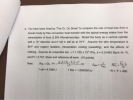 4. You have been hired by "The Dr. Oz Show" to compare the rate of heat loss from a human body by free convection heat transfer with the typical energy intake from the consumption of food (2,500 Kilocalories/day). Model the body as a vertical cylinder with a 12" diameter and 6' tall in still air at 75°F. Assume the skin temperature is 95°F and neglect radiation, transpiration cooling (sweating), and the effects of clothing. Assume air properties are: v= 1.725...
Examine the curve below which is a measurement of energy cost of flight in a 15...
Examine the curve below which is a measurement of energy cost of flight in a 15 gram bird. 1) What is the minimum cost of transport in this bird? (make sure you include appropriate units in your answer) 2) If this bird has fat reserves of 2 grams, how many miles can it fly using only its fat reserves? 3) How many joules of heat (minimum) will it produce? 4) If the fat is triglycerides, then a reasonable chemical formula...
Polymerization of amino acids into a polypeptide requires energy. In terms of chemical thermodynamics, the chemical...
 Polymerization of amino acids into a polypeptide requires energy. In terms of chemical thermodynamics, the chemical energy for peptide bond formation in translation technically comes from: hydrolysis of GTP hydrolysis of ATP translocation of the ribosome as it moves along the mRNA ribosomal RNA (rRNA) secondary structure transcription of the mRNA that is being translated Transfer RNA (tRNA) is a ribonucleic acid about 50-60 nucleotides long. When a tRNA gets "charged" by covalent addition of its cognate amino acid, to...
Sally is a 43-year-old mother of two who has gained 50 pounds over the past 5...
Sally is a 43-year-old mother of two who has gained 50 pounds over the past 5 years. She is 64 inches tall and weighs 180 pounds with a BMI of 31. Her waist circumference is 37 inches. She acknowledges that she is not as physically active as she would like to be. She also notes how recent stresses in her life have affected her sleep and seem to have triggered her appetite for sweets and comfort foods. Sally’s father recently...
About _____ of the body's energy needs at rest is supplied by fat. a. 10 percent...
About _____ of the body's energy needs at rest is supplied by fat. a. 10 percent b. 25 percent c. 35 percent d. 60 percent e. 75 percent What advice about fat would you give someone who wants to lose weight? a. Fat has many uses in the body and should not be cut back. b. Cut out all fats in your diet so energy comes from muscle stores. c. Continue to incorporate fats into your diet but choose healthy...
(33%) Problem 3: Warm blooded animals are homeothermic that is, they maintain an approximately constant body...
 (33%) Problem 3: Warm blooded animals are homeothermic that is, they maintain an approximately constant body temperature. (For humans it's about 37°C.) When they are in an environment that is below their optimum temperature, they use energy derived from chemical reactions within their bodies to warm them up. One of the ways that animals lose energy to their environment is through radiation. Every object emits electromagnetic radiation that depends on its temperature. For very hot objects like the sun, that...
 Thermal question
A 60-kg hiker plans to climb Mt Kosciuszko (2228 m) starting from Thredbo (1365m). Assume that she is 25% efficient at converting chemical energy from food into mechanical work, and that essentially all the work goes into the vertical climb. (a) (3 marks) With reference to the data above, how many servings of Nutrigrain should she eat to provide enough energy for the climb? (b) (6 marks) Climbing a mountain warms you up, and makes you sweat one...
Thermal question
A 60-kg hiker plans to climb Mt Kosciuszko (2228 m) starting from Thredbo (1365m). Assume that she is 25% efficient at converting chemical energy from food into mechanical work, and that essentially all the work goes into the vertical climb. (a) (3 marks) With reference to the data above, how many servings of Nutrigrain should she eat to provide enough energy for the climb? (b) (6 marks) Climbing a mountain warms you up, and makes you sweat one...
 4. You have been hired by "The Dr. Oz Show" to compare the rate of heat loss from a human body by free convection heat transfer with the typical energy intake from the consumption of food (2,500 Kilocalories/day). Model the body as a vertical cylinder with a 12" diameter and 6' tall in still air at 75°F. Assume the skin temperature is 95°F and neglect radiation, transpiration cooling (sweating), and the effects of clothing. Assume air properties are: v= 1.725...
 Polymerization of amino acids into a polypeptide requires energy. In terms of chemical thermodynamics, the chemical energy for peptide bond formation in translation technically comes from: hydrolysis of GTP hydrolysis of ATP translocation of the ribosome as it moves along the mRNA ribosomal RNA (rRNA) secondary structure transcription of the mRNA that is being translated Transfer RNA (tRNA) is a ribonucleic acid about 50-60 nucleotides long. When a tRNA gets "charged" by covalent addition of its cognate amino acid, to...
 (33%) Problem 3: Warm blooded animals are homeothermic that is, they maintain an approximately constant body temperature. (For humans it's about 37°C.) When they are in an environment that is below their optimum temperature, they use energy derived from chemical reactions within their bodies to warm them up. One of the ways that animals lose energy to their environment is through radiation. Every object emits electromagnetic radiation that depends on its temperature. For very hot objects like the sun, that...
Most questions answered within 3 hours.
-
Where is the error in this code sequence?
String s1 = "Hello";
String s2 = "ello";...
asked 10 months ago -
Financial data for Joel de Paris, Inc., for last year
follow:
Joel de Paris, Inc.
Balance...
asked 10 months ago -
Consider this reaction:
Al2(SO4)3 (aq)+ BaCl3
(aq) Al2Cl6 (aq)- +
3BaSO4(s) . What is the...
asked 10 months ago -
Suppose that Savneet is considering increasing her
recent random sample from 20 car rentals to 40...
asked 10 months ago -
Trucks arrive at an unloading terminal at an average rate of 120
per hour.
Trucks arrive...
asked 10 months ago -
Why are methanol and ethanol completely soluble in water while
octanol is not very little soluble....
asked 10 months ago -
A facilities manager at a university reads in a research report
that the mean amount of...
asked 10 months ago -
When the CuSO4 is rehydrated by adding water to the anhydrous
compound, is this an endothermic...
asked 10 months ago -
A ray of sunlight is passing from diamond into crown glass; the
angle of incidence is...
asked 10 months ago -
A block of mass 0.249 kg is placed on top of a light, vertical
spring of...
asked 10 months ago -
how do the kidneys compensate in the presences of acidosis
a) trigger hyperventilate
b) reserve acid...
asked 10 months ago -
Question 501 pts
The rental rate of capital to the firm increases. Which of the
following...
asked 10 months ago