Olive sign is a sonographic sign of: a) Diverticulosis b) Appendicitis c) Intussusception d) Pyloric Stenosis
Homework Answers
olive sign is a sonographic sign of pyloric stenosis.
- It leads to serious progressive gastric outlet obstruction.
- mainly seen in between 6-12 weeks of age.
- non-bilious projectile vomiting is the main clinical presentation.
- The olive sized mass is seen in the upper quadrant.
- Persistant vomiting leads to decreased amount of gastric contents this causes an eletrolyte imbalance and thus the body is weakened.
- Due to decreased HCL levels hypochloremic metabolic alkalosis is also induced.
- Its pathogenesis is not generally understood , it many be due to any genetic abnormalities or any infections.
- Treatment is done surgical by pyloromyotomy.
Add Answer to:
Olive sign is a sonographic sign of:
a) Diverticulosis
b) Appendicitis
c) Intussusception
d) Pyloric Stenosis
Add the rationale for the selection. 3. A nurse admits an infant with pyloric stenosis. Which...
 Add the rationale for the selection.
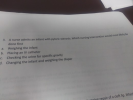
3. A nurse admits an infant with pyloric stenosis. Which nursing intervention wou done first a. Weighing the infant b. Placing an IV catheter c. Checking the urine for specific gravity Changing the infant and weighing the diaper mine repair of a cleftlip. Which
Add the rationale for the selection.
3. A nurse admits an infant with pyloric stenosis. Which nursing intervention wou done first a. Weighing the infant b. Placing an IV catheter c. Checking the urine for specific gravity Changing the infant and weighing the diaper mine repair of a cleftlip. Which
18. ___________ is a pulsatile blowing sound that occurs with stenosis or occlusion of an artery. a. venous hum b. Perit...
18. ___________ is a pulsatile blowing sound that occurs with stenosis or occlusion of an artery. a. venous hum b. Peritoneal friction rub c. systolic bruit d. boborygmus 20. A patient presents to the ED with worsening LLQ pain. A question the nurse might ask is : a."Have you ever had your appendix removied. b. "Do you have any history of gallbladder issues?"c. "when was your last bowel movement?"d. "How much alcohol do you drink?" 4. A patient presents with...
DSAE 2404 MITRAL STENOSIS Q1) Secondary findings in severe mitral stenosis include all of the following...
DSAE 2404 MITRAL STENOSIS Q1) Secondary findings in severe mitral stenosis include all of the following EXCEPT: A. Pulmonary hypertension B. LAE C. MAC D. LA thrombus
11. Murphy's signs is A An indicator of cholecystitis B. An indicator of appendicitis C. An...
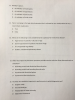 11. Murphy's signs is A An indicator of cholecystitis B. An indicator of appendicitis C. An indicator of pancreatitis D- An indicator of renal calculi 12. Pain or cramping in the legs durind extension that is relieved by rest, usually within 10 min, is intermittent claudication. A- True B- False 13. Which of the following is not considered to be suspicious for renal artery disease? A- Hypertension in patients < 30 years of age B- Severe hypertension in patients >55...
C. Skin pallor D. Numbness 18. Which is a sign of thrombocytopenia? A. The appearance of...
 C. Skin pallor D. Numbness 18. Which is a sign of thrombocytopenia? A. The appearance of petechiae B. Aplastic anemia C. The appearance of thrombophlebitis D. Elevated platelets 19. You are caring for a client who has just had a thoracentesis. Which complication should you be aware of during the immediate post-operative period of time? A. Infection B. Pneumothorax C. Aspiration D. Dyspnea 20. Your client has superior vena cava syndrome. The client's wife asks you what this is. How...
A layer of olive oil (n = 1.45) floats on top of the surface of some...
A layer of olive oil (n = 1.45) floats on top of the surface of some water (n = 1.33). Part A: What is the speed of light in the olive oil? Part B: What is the speed of light in the water? Part C: A ray of light hits the olive oil from air with an angle of incidence of 30 degrees. At what angle does the light emerge into the olive oil? Part D: A ray of light...
#34-46 please answer 34. Congential defect in the vertebral column caused by caused by the failure...
 #34-46 please answer
34. Congential defect in the vertebral column caused by caused by the failure of the vertebral arch to fuse a, spina bifida e, erythroblastosis fetalis b. Down's syndrome c. hyaline membra ne disease 35. Period from delivery until the reproductive organs return to norm a. lochia d. 36. Vaginal discharge following childbirth b. lochia d. a meconium 37. Omphalitis a. fetus with a 'very small head e. narrowing of the pyloric sphincter b. inflammation of the umbilicus...
#34-46 please answer
34. Congential defect in the vertebral column caused by caused by the failure of the vertebral arch to fuse a, spina bifida e, erythroblastosis fetalis b. Down's syndrome c. hyaline membra ne disease 35. Period from delivery until the reproductive organs return to norm a. lochia d. 36. Vaginal discharge following childbirth b. lochia d. a meconium 37. Omphalitis a. fetus with a 'very small head e. narrowing of the pyloric sphincter b. inflammation of the umbilicus...
18. A nurse is admitting a client who has suspected appendicitis. Which of the following findings...
18. A nurse is admitting a client who has suspected appendicitis. Which of the following findings should the nurse report to the provider immediately? A. Distended board like abdomen. B. WBC 15,000/mm3 C. Rebound tenderness over McBurney’s point. D. Temperature of 37.3 Celsius (99.1@F) I am torn between B and C
What is a sign of overhydration? a. Tenting, b. Dry tongue, c. pitting edema, d. decreased...
What is a sign of overhydration? a. Tenting, b. Dry tongue, c. pitting edema, d. decreased blood pressure Who is more likely to get MRSA? a. Someone who works in a factory b. An active IV drug user c. an active smoker who smokes a pack per day d. active marathon runner
B A common problem in food adulteration is the dilution of olive oil with cheaper oils....
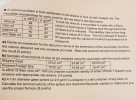 B A common problem in food adulteration is the dilution of olive oil with cheaper oils. The viscosities and densities for some common oils are listed in the table below. n mPa*s p g/cm3 To test the olive oil, a viscometer is made with a 20 olive oil corn oil peanut oil 84 30 40 1column of 92 92 column of liquid above a capillary tube through which the oil flows and is collected. The capillary tube is 6cm long...
 Add the rationale for the selection.
3. A nurse admits an infant with pyloric stenosis. Which nursing intervention wou done first a. Weighing the infant b. Placing an IV catheter c. Checking the urine for specific gravity Changing the infant and weighing the diaper mine repair of a cleftlip. Which
Add the rationale for the selection.
3. A nurse admits an infant with pyloric stenosis. Which nursing intervention wou done first a. Weighing the infant b. Placing an IV catheter c. Checking the urine for specific gravity Changing the infant and weighing the diaper mine repair of a cleftlip. Which
 11. Murphy's signs is A An indicator of cholecystitis B. An indicator of appendicitis C. An indicator of pancreatitis D- An indicator of renal calculi 12. Pain or cramping in the legs durind extension that is relieved by rest, usually within 10 min, is intermittent claudication. A- True B- False 13. Which of the following is not considered to be suspicious for renal artery disease? A- Hypertension in patients < 30 years of age B- Severe hypertension in patients >55...
 C. Skin pallor D. Numbness 18. Which is a sign of thrombocytopenia? A. The appearance of petechiae B. Aplastic anemia C. The appearance of thrombophlebitis D. Elevated platelets 19. You are caring for a client who has just had a thoracentesis. Which complication should you be aware of during the immediate post-operative period of time? A. Infection B. Pneumothorax C. Aspiration D. Dyspnea 20. Your client has superior vena cava syndrome. The client's wife asks you what this is. How...
 #34-46 please answer
34. Congential defect in the vertebral column caused by caused by the failure of the vertebral arch to fuse a, spina bifida e, erythroblastosis fetalis b. Down's syndrome c. hyaline membra ne disease 35. Period from delivery until the reproductive organs return to norm a. lochia d. 36. Vaginal discharge following childbirth b. lochia d. a meconium 37. Omphalitis a. fetus with a 'very small head e. narrowing of the pyloric sphincter b. inflammation of the umbilicus...
#34-46 please answer
34. Congential defect in the vertebral column caused by caused by the failure of the vertebral arch to fuse a, spina bifida e, erythroblastosis fetalis b. Down's syndrome c. hyaline membra ne disease 35. Period from delivery until the reproductive organs return to norm a. lochia d. 36. Vaginal discharge following childbirth b. lochia d. a meconium 37. Omphalitis a. fetus with a 'very small head e. narrowing of the pyloric sphincter b. inflammation of the umbilicus...
 B A common problem in food adulteration is the dilution of olive oil with cheaper oils. The viscosities and densities for some common oils are listed in the table below. n mPa*s p g/cm3 To test the olive oil, a viscometer is made with a 20 olive oil corn oil peanut oil 84 30 40 1column of 92 92 column of liquid above a capillary tube through which the oil flows and is collected. The capillary tube is 6cm long...
Most questions answered within 3 hours.
-
Where is the error in this code sequence?
String s1 = "Hello";
String s2 = "ello";...
asked 11 months ago -
Financial data for Joel de Paris, Inc., for last year
follow:
Joel de Paris, Inc.
Balance...
asked 11 months ago -
Consider this reaction:
Al2(SO4)3 (aq)+ BaCl3
(aq) Al2Cl6 (aq)- +
3BaSO4(s) . What is the...
asked 11 months ago -
Suppose that Savneet is considering increasing her
recent random sample from 20 car rentals to 40...
asked 11 months ago -
Trucks arrive at an unloading terminal at an average rate of 120
per hour.
Trucks arrive...
asked 11 months ago -
Why are methanol and ethanol completely soluble in water while
octanol is not very little soluble....
asked 11 months ago -
A facilities manager at a university reads in a research report
that the mean amount of...
asked 11 months ago -
When the CuSO4 is rehydrated by adding water to the anhydrous
compound, is this an endothermic...
asked 11 months ago -
A ray of sunlight is passing from diamond into crown glass; the
angle of incidence is...
asked 11 months ago -
A block of mass 0.249 kg is placed on top of a light, vertical
spring of...
asked 11 months ago -
how do the kidneys compensate in the presences of acidosis
a) trigger hyperventilate
b) reserve acid...
asked 11 months ago -
Question 501 pts
The rental rate of capital to the firm increases. Which of the
following...
asked 11 months ago