first = 4 second = −5 if first > 0 and second >= 0: result...
first = 4
second = −5
if first > 0 and second >= 0:
result = second//first
elseif first == second or first < second:
result = first∗second
else :
result = second∗2
print ( result )
since while first>0 succeeds, second >=0 fails, and both first==second and first
translate the above code to a properly commented MIPS program
Homework Answers
Please upvote ,comment if any query . Thanks .
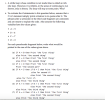
Note : check attached image for output and code . Code compiled and tested in MARS Simulator MIPS.
Program :
.data
result: .asciiz "result is: "
.text
addi $s0,$zero ,4 #first =4
addi $s1,$zero ,-5 #second =-5
addi $s2,$zero ,0 #result=0
sgt $t0,$s0,0 #if first>0 set $t0=1
sge $t1,$s1,0 #if second>=0 set $t1=1
beq $t0,0,elseif #if t0 equal to 0 go to
elseif
beq $t1,0,elseif #if t1 equal to 0 go to elseif
#if above both not true calculate result
div $s2,$s0,$s1 #result = first//second // operator
return integer value of divide
j Result #go to result label
elseif: #else if
seq $t2,$s0,$s1 #first==second $t2=1
slt $t3,$s0,$s1 #first<second $t3=1
beq $t2,1,calculateResult #if t2 equal to 1 go
to calculateResult
beq $t3,0,else #if t3 equal to 0 go to
else
#elseif condition both are zero
calculateResult:
#result = first*second
mul $s2,$s0,$s1
jal Result
else : #else
#result = second*2
mulo $s2,$s1,2
j Result
Result: #pprint result
#print result is string
li $v0,4
la $a0,result
syscall
#print result variable
li $v0,1 #print result
addi $a0,$s2,0
syscall
#terminate the program
li $v0,10 #exit
syscall
Output : when first=4 result =5 will go to if

Output : when first=-4 result =-4 will go to
else if

Output : when first= 4 result =-5 will go
to else

Practice Problem [no points]: You should read and understand Fibonacci algorithm, write a code in a...
 Practice Problem [no points]: You should read and understand Fibonacci algorithm, write a code in a high level language of your choice and in Assembly to find a Fibonacci number and check your result. At the end of this assignment a possible solution to this problem is given both in Python and MIPS assembler. Note that it would have been possible to write the Python differently to achieve the same function. . [20 points] Write and debug a MIPS program...
Control Structures and Subroutines I. A while loop whose condition is not made false is called...
 Control Structures and Subroutines
I. A while loop whose condition is not made false is called an infi nite loop. However, it is infinite, in the sense of continuing to run forever, only in theory. The loop will stop at some point. Why? 2. To evaluate the if statements in this question below, assume that a Print statement simply prints whatever is in quotes after it. The phrases after a semicolon in the third code fragment are comments and are...
Control Structures and Subroutines
I. A while loop whose condition is not made false is called an infi nite loop. However, it is infinite, in the sense of continuing to run forever, only in theory. The loop will stop at some point. Why? 2. To evaluate the if statements in this question below, assume that a Print statement simply prints whatever is in quotes after it. The phrases after a semicolon in the third code fragment are comments and are...
Given the following pseudo code: int result; (result is 1 byte) int count; (count is 1...
Given the following pseudo code: int result; (result is 1 byte) int count; (count is 1 byte) for (result= 10, count= -10; count < result ; count++) { if(count > 2) result--; else result ++; } 1) write an assembly language program that will implement this pseudo code using a while construct. 2) write an assembly language program that will implement this pseudo code using a do-until construct Note: For both 1) and 2), do not forget to include the...
Complete this task4.s ARM assembly code to produce an assembly program that: • Waits for the...
 Complete this task4.s ARM assembly code to produce an assembly
program that: • Waits for the user to enter two integers (this part
is already coded in). • Places the first integer at r5, and the
second integer at r6 (this part is already coded in). • (This is
what you need to code in) Adds the two integers together. If the
result is between 0 and 9 (including 0 and 9) the program should
print the result. If not,...
Complete this task4.s ARM assembly code to produce an assembly
program that: • Waits for the user to enter two integers (this part
is already coded in). • Places the first integer at r5, and the
second integer at r6 (this part is already coded in). • (This is
what you need to code in) Adds the two integers together. If the
result is between 0 and 9 (including 0 and 9) the program should
print the result. If not,...
Please write a MIPS program to print the first thirty numbers in the Fibonacci sequence in which each number is the sum of the two preceding ones, starting from 0 and 1. Note that each number in the Fibonacci sequence should be calculated using MIPS instr
Please write a MIPS program to print the first thirty numbers in the Fibonacci sequence in which each number is the sum of the two preceding ones, starting from 0 and 1. Note that each number in the Fibonacci sequence should be calculated using MIPS instructions. After that please run your MIPS program using SPIM software to display the result in the output (console) window. Save your execution result in a log file of SPIM.What to submit: 1. Your MIPS...
Question 5 (1 point) userGuess ← 0, secretNumber ← 5 PRINT “Enter a number between 1...
Question 5 (1 point) userGuess ← 0, secretNumber ← 5 PRINT “Enter a number between 1 and 10” READ userGuess WHILE (userGuess < 1 OR userGuess > 10) PRINTLINE “That is not between 1 and 10. Try again.” READ userGuess ENDWHILE IF (userGuess == secretNum) THEN PRINTLINE “That’s right! ”, userGuess, “ is the secret!” ELSE PRINTLINE userGuess, “ is not the secret!” ENDIF What is the first WHILE loop being used for? Question 5 options: Input validation Random number...
C Programming, part B: (1 point) Write a second program (Program B) that builds a contiguous...
 C Programming, part B:
(1 point) Write a second program (Program B) that builds a contiguous list (i.e., array- based), also of 100 elements (cells), each containing a random integer between 0 and 99. You encouraged to re-use as much code from Program A as you wish (this is called code re- sue and it is a good thing). This program must: 1) Build the contiguous list (i.e., the properly populated array) 2) Print out the contents of the list....
C Programming, part B:
(1 point) Write a second program (Program B) that builds a contiguous list (i.e., array- based), also of 100 elements (cells), each containing a random integer between 0 and 99. You encouraged to re-use as much code from Program A as you wish (this is called code re- sue and it is a good thing). This program must: 1) Build the contiguous list (i.e., the properly populated array) 2) Print out the contents of the list....
long fib(int n) { long result; if (n==0) result = 0; else if (n==1 ||...
long fib(int n) { long result; if (n==0) result = 0; else if (n==1 || n==2) result = 1; else result = fib(n-1) + fib(n-2); return result; } [C language] Question : Why is this code is so slow? Explain ex2) Make the program from exercise 1 faster by trading space for time. Create an array of int that can be used as a cache. Each index in the array should correspond to a value that you can...
2. Translate the following code into MIPS code. B [0] = 5; for (i =...
2. Translate the following code into MIPS code. B [0] = 5; for (i = 1 ; i < 50 ; i = i + 2) { B[i] =i + B[i-1]; } Assume the compiler associates the variable i to the register $t0. Also, assume B is an array of integers and its address is stored at register $s1.
 Practice Problem [no points]: You should read and understand Fibonacci algorithm, write a code in a high level language of your choice and in Assembly to find a Fibonacci number and check your result. At the end of this assignment a possible solution to this problem is given both in Python and MIPS assembler. Note that it would have been possible to write the Python differently to achieve the same function. . [20 points] Write and debug a MIPS program...
 Control Structures and Subroutines
I. A while loop whose condition is not made false is called an infi nite loop. However, it is infinite, in the sense of continuing to run forever, only in theory. The loop will stop at some point. Why? 2. To evaluate the if statements in this question below, assume that a Print statement simply prints whatever is in quotes after it. The phrases after a semicolon in the third code fragment are comments and are...
Control Structures and Subroutines
I. A while loop whose condition is not made false is called an infi nite loop. However, it is infinite, in the sense of continuing to run forever, only in theory. The loop will stop at some point. Why? 2. To evaluate the if statements in this question below, assume that a Print statement simply prints whatever is in quotes after it. The phrases after a semicolon in the third code fragment are comments and are...
 Complete this task4.s ARM assembly code to produce an assembly
program that: • Waits for the user to enter two integers (this part
is already coded in). • Places the first integer at r5, and the
second integer at r6 (this part is already coded in). • (This is
what you need to code in) Adds the two integers together. If the
result is between 0 and 9 (including 0 and 9) the program should
print the result. If not,...
Complete this task4.s ARM assembly code to produce an assembly
program that: • Waits for the user to enter two integers (this part
is already coded in). • Places the first integer at r5, and the
second integer at r6 (this part is already coded in). • (This is
what you need to code in) Adds the two integers together. If the
result is between 0 and 9 (including 0 and 9) the program should
print the result. If not,...
 C Programming, part B:
(1 point) Write a second program (Program B) that builds a contiguous list (i.e., array- based), also of 100 elements (cells), each containing a random integer between 0 and 99. You encouraged to re-use as much code from Program A as you wish (this is called code re- sue and it is a good thing). This program must: 1) Build the contiguous list (i.e., the properly populated array) 2) Print out the contents of the list....
C Programming, part B:
(1 point) Write a second program (Program B) that builds a contiguous list (i.e., array- based), also of 100 elements (cells), each containing a random integer between 0 and 99. You encouraged to re-use as much code from Program A as you wish (this is called code re- sue and it is a good thing). This program must: 1) Build the contiguous list (i.e., the properly populated array) 2) Print out the contents of the list....
Most questions answered within 3 hours.
-
Where is the error in this code sequence?
String s1 = "Hello";
String s2 = "ello";...
asked 10 months ago -
Financial data for Joel de Paris, Inc., for last year
follow:
Joel de Paris, Inc.
Balance...
asked 10 months ago -
Consider this reaction:
Al2(SO4)3 (aq)+ BaCl3
(aq) Al2Cl6 (aq)- +
3BaSO4(s) . What is the...
asked 10 months ago -
Suppose that Savneet is considering increasing her
recent random sample from 20 car rentals to 40...
asked 10 months ago -
Trucks arrive at an unloading terminal at an average rate of 120
per hour.
Trucks arrive...
asked 10 months ago -
Why are methanol and ethanol completely soluble in water while
octanol is not very little soluble....
asked 10 months ago -
A facilities manager at a university reads in a research report
that the mean amount of...
asked 10 months ago -
When the CuSO4 is rehydrated by adding water to the anhydrous
compound, is this an endothermic...
asked 10 months ago -
A ray of sunlight is passing from diamond into crown glass; the
angle of incidence is...
asked 10 months ago -
A block of mass 0.249 kg is placed on top of a light, vertical
spring of...
asked 10 months ago -
how do the kidneys compensate in the presences of acidosis
a) trigger hyperventilate
b) reserve acid...
asked 10 months ago -
Question 501 pts
The rental rate of capital to the firm increases. Which of the
following...
asked 10 months ago