which of the following is/are found in cell membranes? a. protein b. phospholipids c. waxes d....
which of the following is/are found in cell membranes?
a. protein
b. phospholipids
c. waxes
d. steroids
Homework Answers
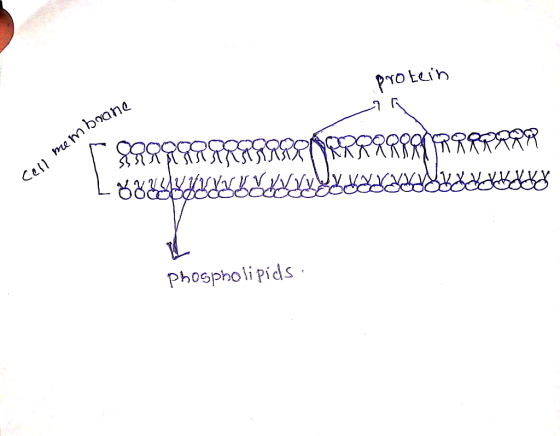
Cell membrane is made up of the phospholipids and cell membrane also contain protein. The detail picture is given below
Add Answer to:
which of the following is/are found in cell
membranes?
a. protein
b. phospholipids
c. waxes
d....
Which of the following is/are found in cell membranes? A)Steroids B) proteins C) Waxes D) Phospholipids....
Which of the following is/are found in cell membranes? A)Steroids B) proteins C) Waxes D) Phospholipids. I know that cell membranes have a phospholipid bilayer. I am pretty sure it also has proteins in it, but past that I am lost.
Question 4 Waxes are high molar mass: A)Fatty acids B) Esters C)Alcohols D) Amides B Question...
 Question 4 Waxes are high molar mass: A)Fatty acids B) Esters C)Alcohols D) Amides B Question 5 Provide the reagent(s) necessary to carry out the following conversion. COCHE OH A) 1) one equivalent CH3MgBr/ether 2) H2O B) excess CH3MgBr/ether/H2O C) 1) excess CH3MgBr/ether 2) H2O D) all the above A В C Question 6 Which one is not a complex lipid? AyWaxes B) steroids Phospholipids D) Triglycerides A B С D
Which statement is not true? A) Lipids are found in cell membranes. B) Lipids are soluble...
 Which statement is not true? A) Lipids are found in cell membranes. B) Lipids are soluble in organic solvents. C) There are many different types of lipids. D) All lipids contain fatty acids. E) Some hormones are lipids. The overall three-dimensional shape of a protein is determined by its ___and is known as the _ structure of a protein. 1. a) amino acid residues/primary 2.b) amino acid residues/tertiary 3.c) isoelectric point/secondary 4. d) hydrogen bonding/secondary Which is a means that...
estion 6 of 15 Mapa Phospholipids are present in cell membranes. Phosphatidylserine is found in bacteria,...
 estion 6 of 15 Mapa Phospholipids are present in cell membranes. Phosphatidylserine is found in bacteria, yeast, and more complex eukaryotes. In mammals, phosphatidylserine of membranes, and is concentrated in myelin from brain tissue. is located primarily in the inner leaflet Modify the molecule below by replacing the "X" to show a phosphatidylserine You may need to add or remove atoms or bonds. If you make a mistake, you can reset the molecule by clicking on the two red arrows...
D Question Cell membranes are mostly made of carbohydrates, including cellulose phospholipids proteins 2 pts D...
 D Question Cell membranes are mostly made of carbohydrates, including cellulose phospholipids proteins 2 pts D Question 27 Which of the following applies to a bacterial cell? Bacterial cells are generally larger than plant or animal cells. Most bacterial cells cause some form of disease. Bacterial cellslack some form of cell wall. Bacterial cells lackmembrane-bound organelles such as mitochondria D Question 28 2 pts Which of the following least applies to the cell cytoskeleton? tied to change the overall shape...
Can someone please please help me with these two questions. Which of the following could be...
Can someone please please help me with these two questions. Which of the following could be explained by sandwich model of cell membranes? A. Membrane width B. Digestion by Phospholipases C. Difficulty of membrane protein isolation D. Lower surface tension of cell membranes E. Variability of protein to lipid ration of membranes from different cells Which of the following will have lowest Tm? A. Membranes made up of pure phospholipids comprising 16C long unsaturated Fatty acids B. Membranes made up...
17) All of the following are characteristics of saturated fats EXCEPT: A) they are usually solid...
17) All of the following are characteristics of saturated fats EXCEPT: A) they are usually solid at room temperature. B) they contain at least one double bond. C) they are found in animals. D) their fatty acids pack tightly together. E) they are used to store energy. 18) All of the following are characteristics of phospholipids EXCEPT: A) they are found in cellular membranes. B) they can form micelles and bilayers. C) they contain fatty acids which associate with water. D) they contain a hydrophilic phosphate "head." E) they contain two...
Steroids are considered to be lipids because they: a) are essential components of cell membranes b)...
Steroids are considered to be lipids because they: a) are essential components of cell membranes b) are not soluble in water c) are made of fatty acids d) are hydrophilic compounds e) contribute to atherosclerosis
What property of membranes makes the transverse diffusion of phospholipids across the membrane energetically unfavorable? a....
 What property of membranes makes the transverse diffusion of phospholipids across the membrane energetically unfavorable? a. lateral diffusion Ob protein immobilization O c. hydrophobic interior of the membrane d. membrane fluidity
SIC Which of these statements about the composition of biological membranes is TRUE? A. In a...
 SIC Which of these statements about the composition of biological membranes is TRUE? A. In a given eukaryotic cell type (for example, a hepatocyte), all intracellular membranes have essentially the same complement of lipids and proteins. B. The carbohydrate found in membranes is virtually all in glycolipids. C. The plasma membranes of the cells of vertebrate animals contain more cholesterol than the mitochondrial membranes. D. The ratio of lipid to protein are the same among cell types in a single...
 Question 4 Waxes are high molar mass: A)Fatty acids B) Esters C)Alcohols D) Amides B Question 5 Provide the reagent(s) necessary to carry out the following conversion. COCHE OH A) 1) one equivalent CH3MgBr/ether 2) H2O B) excess CH3MgBr/ether/H2O C) 1) excess CH3MgBr/ether 2) H2O D) all the above A В C Question 6 Which one is not a complex lipid? AyWaxes B) steroids Phospholipids D) Triglycerides A B С D
 Which statement is not true? A) Lipids are found in cell membranes. B) Lipids are soluble in organic solvents. C) There are many different types of lipids. D) All lipids contain fatty acids. E) Some hormones are lipids. The overall three-dimensional shape of a protein is determined by its ___and is known as the _ structure of a protein. 1. a) amino acid residues/primary 2.b) amino acid residues/tertiary 3.c) isoelectric point/secondary 4. d) hydrogen bonding/secondary Which is a means that...
 estion 6 of 15 Mapa Phospholipids are present in cell membranes. Phosphatidylserine is found in bacteria, yeast, and more complex eukaryotes. In mammals, phosphatidylserine of membranes, and is concentrated in myelin from brain tissue. is located primarily in the inner leaflet Modify the molecule below by replacing the "X" to show a phosphatidylserine You may need to add or remove atoms or bonds. If you make a mistake, you can reset the molecule by clicking on the two red arrows...
 D Question Cell membranes are mostly made of carbohydrates, including cellulose phospholipids proteins 2 pts D Question 27 Which of the following applies to a bacterial cell? Bacterial cells are generally larger than plant or animal cells. Most bacterial cells cause some form of disease. Bacterial cellslack some form of cell wall. Bacterial cells lackmembrane-bound organelles such as mitochondria D Question 28 2 pts Which of the following least applies to the cell cytoskeleton? tied to change the overall shape...
 What property of membranes makes the transverse diffusion of phospholipids across the membrane energetically unfavorable? a. lateral diffusion Ob protein immobilization O c. hydrophobic interior of the membrane d. membrane fluidity
 SIC Which of these statements about the composition of biological membranes is TRUE? A. In a given eukaryotic cell type (for example, a hepatocyte), all intracellular membranes have essentially the same complement of lipids and proteins. B. The carbohydrate found in membranes is virtually all in glycolipids. C. The plasma membranes of the cells of vertebrate animals contain more cholesterol than the mitochondrial membranes. D. The ratio of lipid to protein are the same among cell types in a single...
Most questions answered within 3 hours.
-
Where is the error in this code sequence?
String s1 = "Hello";
String s2 = "ello";...
asked 11 months ago -
Financial data for Joel de Paris, Inc., for last year
follow:
Joel de Paris, Inc.
Balance...
asked 11 months ago -
Consider this reaction:
Al2(SO4)3 (aq)+ BaCl3
(aq) Al2Cl6 (aq)- +
3BaSO4(s) . What is the...
asked 11 months ago -
Suppose that Savneet is considering increasing her
recent random sample from 20 car rentals to 40...
asked 11 months ago -
Trucks arrive at an unloading terminal at an average rate of 120
per hour.
Trucks arrive...
asked 11 months ago -
Why are methanol and ethanol completely soluble in water while
octanol is not very little soluble....
asked 11 months ago -
A facilities manager at a university reads in a research report
that the mean amount of...
asked 11 months ago -
When the CuSO4 is rehydrated by adding water to the anhydrous
compound, is this an endothermic...
asked 11 months ago -
A ray of sunlight is passing from diamond into crown glass; the
angle of incidence is...
asked 11 months ago -
A block of mass 0.249 kg is placed on top of a light, vertical
spring of...
asked 11 months ago -
how do the kidneys compensate in the presences of acidosis
a) trigger hyperventilate
b) reserve acid...
asked 11 months ago -
Question 501 pts
The rental rate of capital to the firm increases. Which of the
following...
asked 11 months ago