Write a paper (3000-6000 words) on the topic " Revolutionizing Healthcare through Artificial Intelligence, Machine Learning...
Write a paper (3000-6000 words) on the topic " Revolutionizing
Healthcare through Artificial Intelligence, Machine Learning and
Big Data".
Give an abstract, introduction and definitions.
List and Explain the Different Types of Artificial Intelligence,
Machine Learning, and Big Data.
Give the Modern Trends Advancements, Advantages, Disadvantages,
Open Issues and Challenges.
Give an overlook of the future of Artificial Intelligence, Machine
Learning, and Big Data.
Homework Answers
Answer:-
The increase in machine learning use cases in healthcare worldwide is evidence enough that AI and deep machine learning are no longer the future of healthcare; they are the drivers of the modern day healthcare industry. The technology has seeped through most spheres of the healthcare ecosystem and other industries with ties to the medical world and plays a very crucial role. Amid concerns of whether it’s ethical or not, healthcare AI has flourished so much in the last five years, that the big boys of tech are scrambling to get a piece of the AI pie by investing billions of dollars.

Artificial intelligence and machine learning, in particular - is revolutionizing the modern day healthcare ecosystem by injecting transformative automation, accurate research, efficiency and acceleration of service delivery in the healthcare space. So, what exactly is this artificial intelligence and why is it so significant in the healthcare industry? What are some of the machine learning use cases in healthcare today?
Artificial intelligence is a simulation of human thinking and intelligence by a set of computer systems. For the systems to mimic human thinking, computer systems need to be ‘trained’ over a period of time through huge chunks of data and special algorithms. Deep machine learning is an application of AI which combines complex algorithms, the human neural network architecture and very large chunks of data fed to the systems to help them deliver consistently powerful results.
In healthcare, AI and machine learning to have found a home. The medical industry is very data-reliant and the ability of computer systems to quickly process the available medical data, provide accurate deductions and even predict trends from the provided data, could not come at a better time in the healthcare industry.
AI and deep machine learning are no longer the future of
healthcare; they are the drivers of the modern day healthcare
industry; numerous companies, research facilities, and even
healthcare facilities have already incorporated AI and machine
learning into their daily activities. Here are highlights of
machine learning uses in healthcare.
Healthcare Machine Learning Use Cases
- Drug Manufacturing and Development

The drug manufacturing and development stage includes a rigorous testing phase to determine the success rate of that particular drug depending on several factors. This painstaking exercise requires a lot of time and takes up a lot of resources.
To cut on the testing period and the budget required to develop new drugs for diabetes, The Clinical Machine Learning Group uses AI and deep machine algorithms. Project Hanover from Microsoft in conjunction with the Knight Cancer Institute are also using AI to create stronger and better cancer treatment options for patients. Cyclica gives useful insights into the use of several different pharmaceutical agents with an ability to curb multiple disease targets and pathways to develop drugs with no side effects to patients. These are just some of the hundreds of startups which are using AI and Machine Learning to create better drugs. - Clinical Trial of Developed Drugs
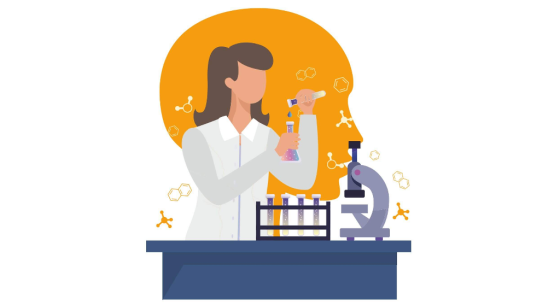
Once developed, drugs need to be tested through clinical trial research. The clinical trial research entails picking of the best possible candidates who have the ‘optimal’ properties for a potential target. The candidates are then put under the drug to test its effectiveness and any side effects. The picking of the ‘perfect’ candidate for this exercise requires a lot of time researching, and AI is helping make this process quicker and more effective.
A2A Pharmaceutical is helping drug researchers to pick the best candidates for clinical trial research for the treatment of numerous diseases. The startup focuses mainly on cancer and bacterial infections and uses AI to collect genetic data of the subjects, their response to the new drug and any biological signs of side effects of the drugs. Antiverse is equally involved with drug testing and helps researchers to pick the best candidates for antibodies in less than 24 hours. - Smart Management of Medical Records and Other Important
Data
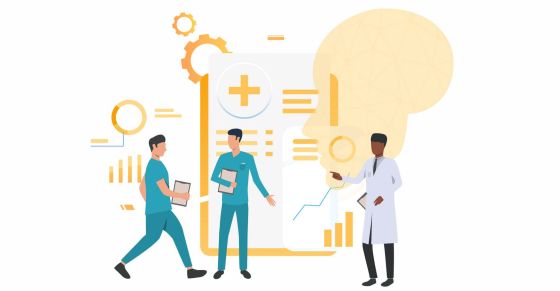
Both AI and the medical industry, rely heavily on data and available records. Doctors and nurses need previous health records of patients, the history of diseases within one’s family, and other important information to be able to treat the patients. AI helps to process available health records and suggest the best possible treatments for patients with different diseases.
Prognos, a startup in the US, has access to more than 5 billion medical records drawn from close to 100 million patients across the country and their data is used by healthcare facilities to improve decisions on administering drugs to patients. Google’s Cloud Vision API is also helping hospitals and other facilities to collect and digitize data through OCR and store the information for future reference. - Personalized Affordable Healthcare
Machine learning is also helping make healthcare affordable to everyone, and one startup from the UK called Babylon is actualizing this universal dream.
The company is looking for fresh funding to further expand its services which combine the computing power of computer systems with the best medical knowledge to personalize health services to people and make the services as affordable as possible.
Sense.ly is also customizing patients’ experiences through their assistant called Molly that follows up patients’ treatments and monitors their conditions as well. National Institute of Health’s AiCure App is designed to monitor patients and ensure that they truly are taking their medication as prescribed through a webcam. - 5. Prediction of Disease Occurrences

Machine learning can be used within the healthcare industry to predict the occurrence of certain diseases and health epidemics.
By processing large amounts of data real-time data from social media and other sources, these systems can predict epidemics before they hit. AIME is a startup that uses artificial intelligence to analyze data and determine the location of potential outbreaks of diseases such as Dengue fever.
In conclusion, AI and Machine Learning are already heavily influencing the healthcare industry, and so far, we have only scratched the surface. Machine learning healthcare promises better, efficient and affordable universal services and its uptake will take the world by storm.
When many of us hear the term "artificial intelligence" (AI), we imagine robots doing our jobs, rendering people obsolete. And, since AI-driven computers are programmed to make decisions with little human intervention, some wonder if machines will soon make the difficult decisions we now entrust to our doctors.
According to David B. Agus, MD, a professor of medicine and engineering at the University of Southern California Keck School of Medicine and Viterbi School of Engineering, it's important to separate fact from science fiction, because AI is already here -- and it's fundamentally changing medicine.
Rather than robotics, AI in health care mainly refers to doctors and hospitals accessing vast data sets of potentially life-saving information. This includes treatment methods and their outcomes, survival rates, and speed of care gathered across millions of patients, geographical locations, and innumerable and sometimes interconnected health conditions. New computing power can detect and analyze large and small trends from the data and even make predictions through machine learning that's designed to identify potential health outcomes.
Complications of Beta Thalassemia
Beta thalassemia can affect many of your organs, from your heart to your liver. Learn the most common complications and how to avoid them.
Machine learning uses statistical techniques to give computer systems the ability to "learn" with incoming data and to identify patterns and make decisions with minimal human direction.
Armed with such targeted analytics, doctors may be better able to assess risk, make correct diagnoses, and offer patients more effective treatments, says Agus, the author of The Lucky Years: How to Thrive in the Brave New World of Health and The End of Illness. He believes AI's potential to improve health care is "staggering."
"We have lots of data that we've been collecting over decades," he says. "For the first time, computing power allows us to use the data in a way to benefit patients."
The challenge, he says, is that "an individual has hundreds of thousands of health care data points, if not millions. So when you have data sets of hundreds of thousands of patients, and each patient has a million data points, the data need to be collected appropriately and correctly for the power of machine learning" to bear fruit.
He offers an example. "A study came out recently that showed that if you have ovarian cancer, and you happen to also be on a beta-blocker -- a drug that [can be] used for blood pressure -- you lived four-and-a-half years longer," he says. "This is an observation we would never have come up with through biology. Big data shows us. Now [this finding] needs to go to a big trial to see if it's real."
Add Answer to:
Write a paper (3000-6000 words) on the topic " Revolutionizing
Healthcare through Artificial Intelligence, Machine Learning...
Write an essay (3000-6000 words) on the tittle A Survey on "Artificial Intelligence in Healthcare" Give...
Write an essay (3000-6000 words) on the tittle A Survey on "Artificial Intelligence in Healthcare" Give an abstract, introduction and definitions Give the Modern Trends Advancements, Advantages, Disadvantages, Open Issues, and Challenges. Give an overlook on the future of Artificial Intelligence in Healthcare
Write a paper (3,000-6,000 words) on the topic " Revolutionizing Healthcare and Medicine through Artificial Intelligence"...
Write a paper (3,000-6,000 words) on the topic " Revolutionizing Healthcare and Medicine through Artificial Intelligence" Give an abstract, introduction and definitions The Impact of Artificial Intelligence on Healthcare and Medicine List and Explain the regulations and laws of Artificial Intelligence on Healthcare and Medicine List and Explain the Different Types of Artificial Intelligence Give Modern Trends, Advancements, Advantages, Disadvantages, Open Issues and Challenges Future of Artificial Intelligence, Recommendations and Conclusion Would be good if you include several pictures and...
Write a paper (8,000-10,000 words) on Artificial intelligence, Internet of Things and Cloud Computing in healthcare...
Write a paper (8,000-10,000 words) on Artificial intelligence, Internet of Things and Cloud Computing in healthcare The Paper should include the following informaiton: Give on abstract of the paper give on introduction on the paper and definition Should also give (in details) reasons why we need to build Smart Hosptials and Definition, Advancements, Advantages and Disadvantages Advancements in Artificial intelligence, Internet of Things and Cloud Computing in healthcare Artificial intelligence, Internet of Things and Cloud Computing in healthcare trends for...
Write a paper (should have 5000-7000 words) with the following topic "Internet of Things and Cloud...
Write a paper (should have 5000-7000 words) with the following topic "Internet of Things and Cloud Computing for Healthcare" Write an abstract of the whole paper. Give an introduction to Internet of Things and Computing for Healthcare. IoT Framework for Healthcare Explain the IoThEF Structure List the Advancements in IT in healthcare. Explain Internet of Things and Computing for Healthcare can impact the following: Community-Based Healthcare Blockchain ECG Monitoring IoT in Healthcare Applications Temperature Monitoring PB Monitoring BG Monitoring Asthma...
First, read the article on "The Delphi Method for Graduate Research." ------ Article is posted below...
First, read the article on "The Delphi Method for Graduate Research." ------ Article is posted below Include each of the following in your answer (if applicable – explain in a paragraph) Research problem: what do you want to solve using Delphi? Sample: who will participate and why? (answer in 5 -10 sentences) Round one questionnaire: include 5 hypothetical questions you would like to ask Discuss: what are possible outcomes of the findings from your study? Hint: this is the conclusion....
Most questions answered within 3 hours.
-
Where is the error in this code sequence?
String s1 = "Hello";
String s2 = "ello";...
asked 10 months ago -
Financial data for Joel de Paris, Inc., for last year
follow:
Joel de Paris, Inc.
Balance...
asked 10 months ago -
Consider this reaction:
Al2(SO4)3 (aq)+ BaCl3
(aq) Al2Cl6 (aq)- +
3BaSO4(s) . What is the...
asked 10 months ago -
Suppose that Savneet is considering increasing her
recent random sample from 20 car rentals to 40...
asked 10 months ago -
Trucks arrive at an unloading terminal at an average rate of 120
per hour.
Trucks arrive...
asked 10 months ago -
Why are methanol and ethanol completely soluble in water while
octanol is not very little soluble....
asked 10 months ago -
A facilities manager at a university reads in a research report
that the mean amount of...
asked 10 months ago -
When the CuSO4 is rehydrated by adding water to the anhydrous
compound, is this an endothermic...
asked 10 months ago -
A ray of sunlight is passing from diamond into crown glass; the
angle of incidence is...
asked 10 months ago -
A block of mass 0.249 kg is placed on top of a light, vertical
spring of...
asked 10 months ago -
how do the kidneys compensate in the presences of acidosis
a) trigger hyperventilate
b) reserve acid...
asked 10 months ago -
Question 501 pts
The rental rate of capital to the firm increases. Which of the
following...
asked 10 months ago