Discuss the nature and treatment of: - Attention deficit/hyperactivity disorder - Learning disabilities - Autism. Which...
Discuss the nature and treatment of:
- Attention deficit/hyperactivity disorder
- Learning disabilities
- Autism.
Which treatment do you think is best and why?
Discuss some educational techniques that are helpful for children
with special needs.
Homework Answers
ATTENTION DEFICIT / HYPERACTIVITY DISORDER is a chldhood disorder. It affects children and teens but continue to the adulthood. ADHD is more common in boys than in girls. In ADHD the child have difficulty in paying attention to the present stimuli. In adults ADHD may leads to the problem in managing time, setting goals or holding a job.
The symptoms of ADHD can be grouped into three categories :
- Inattention: Child fet easily distracted, forget daily activities, have problem in organize things, etc.
- Hyperactivity: Child doesn't stay seated. He seems to move about constantly, including in situations in which it is not appropriate.
- Impulsivity: Chid makes hasty actions that occur in the moment without thinking. he may be socially intrusive and excessively intrupt others. They make long term dicisions without thinking about its concequences.
TREATEMENT OF ADHD:
- Medication = ADHD medication reduce hyperactivity and impulsivity and helps the person to focus. Talk with doctor if are going to take medication.
- Behavior therapy = It is a psychotherapy that aims to help person to change his behavior. Behavior therapy helps a person in monitor his own behavior and give oneself praise for acting in a desired way.
- Social skill training = It teaches behaviors such as taking turns and sharing.
- Special education = It helps a child to learn at school. These chidren should have special routine and structure of studying in schools.
LEARNING DISABILITIES is group of disorders. These are disorders that affects one's abilities of spoken or written language, methematical reasoning, attention and coordination of movement. According to DSM-5, learning disability is characterized by one or more difficulty in learning and using academis skills.Some of the learning disabilities are:
- Auditory processing disorder
- Dyscalculia
- Dyslexia
- Language processing disorder
- Non verbal learning disabilities
- Dysgraphia
TREATMENT OF LEARNING DISABILITY:
As there is no cure of the learning disdability but the conditions can be improved by developing special skills for reading and writing. Teaching mnemonics and repeatition can help in this way. COGNITIVE BEHAVIOR THERAPY may also work in treating the emotional and behavioral problems.
AUTISM is defined by difficulty in communicating, reading body landuage, making friends and making eye contact. These people have :
- Abnormal body posture
- Abnormal tone of voice
- Behavioral disturbance
- Deficit in language comprehension
- Delay in learning to speak
- Inappropriate social interaction
TREATMENT OF AUTISM:
There is no medication as such for the treatment of autism. There are many typs of treatment available for autism.
- Behavior and communication approaches : These helps children with autism by providing stucture, direction, and organization for the child in addition to the family. Therapies like, sensory integration therapy, speech therapy, occupational therapy, etc. are helpful in treating autism.
- Dietary approaches : Some dietary treatments have been developed by therapists. Removing certain type of foods from children's diet and increasing vitamine and mineral supplements in their diets.
As we have seen that medication could never a best option. If some is diagnosed with any metal disorder, the best way to treat him or her by psychotherapies. These have no side effects in order to treat. The person sold have good family support. Family support can heal most of the part of the disorder. Othr than family therapy, cognitive behavioral therapy may be a good option. Before going for medication please consult to a doctor.
Add Answer to:
Discuss the nature and treatment of:
- Attention deficit/hyperactivity disorder
- Learning disabilities
- Autism.
Which...
Discuss the nature and treatment of: - Attention deficit/hyperactivity disorder - Learning disabilities - Autism. Which...
Discuss the nature and treatment of: - Attention deficit/hyperactivity disorder - Learning disabilities - Autism. Which treatment do you think is best and why? Discuss some educational techniques that are helpful for children with special needs.
1. Discuss the characteristics, risk factors, and family dynamics of attention deficit hyperactivity disorder (ADHD) and...
 1. Discuss the characteristics, risk factors, and family dynamics of attention deficit hyperactivity disorder (ADHD) and autism spectrum disorder (ASD). 2. Apply the nursing process to the care of children and adolescents with ADHD and ASD and their families. 3. Provide education to clients, families, teachers, caregivers, and community members for young clients with ADHD and ASD. 4. Discuss the nurse's role as an advocate for children and adolescents. 5. Evaluate your feelings, beliefs, and attitudes about clients with ADHD...
Atomoxetine and methylphenidate are used In the treatment of attention deficit hyperactivity disorder Suggest possible metabolites...
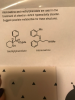 Atomoxetine and methylphenidate are used In the treatment of attention deficit hyperactivity disorder Suggest possible metabolites for these structures Me CO Me NHMe Methylphenidate Atomoxetine
1. Finn has been diagnosed with attention-deficit/hyperactivity disorder. Which of the following problems might he NOT...
 1. Finn has been diagnosed with attention-deficit/hyperactivity disorder. Which of the following problems might he NOT be exhibiting? O depression O impulsiveness O distractibility O fidgetiness
. In which disorder does a child have deficiencies in communication and social interaction, and rigidly...
. In which disorder does a child have deficiencies in communication and social interaction, and rigidly fixated interests and repetitive behaviors? A. Attention-deficit/hyperactivity disorder (ADHD) B. Childhood schizophrenia C. No disorder; some children have slower developmental patterns in these skills D. Autism spectrum disorder (ASD)
ST 350 NCSU 4. /1 points Attention deficit hyperactivity disorder (ADHD) in young children presents significant...
 ST 350 NCSU
4. /1 points Attention deficit hyperactivity disorder (ADHD) in young children presents significant challenges to the children, their parents, and their classroom teachers. Stimulant medication can effectively treat 60% to 70% of youth with ADHD. Yet many parents seek alternative therapies, and Hypericum perforatum (St John's wort) is 1 of the top 3 alternative therapies used My Notes In a recent study in the Journal of the American Medical Association, Hypericum perforatum (St John's Wort) for Attention-...
ST 350 NCSU
4. /1 points Attention deficit hyperactivity disorder (ADHD) in young children presents significant challenges to the children, their parents, and their classroom teachers. Stimulant medication can effectively treat 60% to 70% of youth with ADHD. Yet many parents seek alternative therapies, and Hypericum perforatum (St John's wort) is 1 of the top 3 alternative therapies used My Notes In a recent study in the Journal of the American Medical Association, Hypericum perforatum (St John's Wort) for Attention-...
A study examined the effects of Ritalin (for attention deficit hyperactivity disorder) and age of participants...
 A study examined the effects of
Ritalin (for attention deficit hyperactivity disorder) and age of
participants on a simple memory task. Carry out the correct
hypothesis test with α = .05. Do include a summary table. Provide a
conclusion for each effect found. If there is a significant effect:
1) How much variance is explained for that effect? 2) You may skip
the post hoc tests.
N = 30
Σ X T o t a l 2 = 1 ,...
A study examined the effects of
Ritalin (for attention deficit hyperactivity disorder) and age of
participants on a simple memory task. Carry out the correct
hypothesis test with α = .05. Do include a summary table. Provide a
conclusion for each effect found. If there is a significant effect:
1) How much variance is explained for that effect? 2) You may skip
the post hoc tests.
N = 30
Σ X T o t a l 2 = 1 ,...
CASE STUDY 46 ATTENTION DEFICIT/HYPERACTIVITY DISORDER For the Di S CD-ROM mary for this study PATIENT...
 CASE STUDY 46 ATTENTION DEFICIT/HYPERACTIVITY DISORDER For the Di S CD-ROM mary for this study PATIENT CASE Mother's Chief Complaints "Tm at the end of my rope and I don't know what to do anymore. My son won't behave orlis ten at school and he most certainly will not listen to me at home He always seems to be in motion and can't sit still for even 5 minutes. He likes watching cartoons on TV but gets bored with them...
Problem #1 A study is conducted to estimate the association between exposure to lead paint in childhood and attention-deficit hyperactivity disorder (ADHD). Data on n = 400 children are collected, an...
Problem #1 A study is conducted to estimate the association between exposure to lead paint in childhood and attention-deficit hyperactivity disorder (ADHD). Data on n = 400 children are collected, and data on exposure and ADHD diagnosis are shown in Table 9–26. TABLE 9–26 Exposure to Lead Paint and ADHD Exposure to Lead Paint ADHD No ADHD Total Yes 34 71 105 No 29 266 295 The information from Problem #1 is needed to answer Question 2. TABLE 9–27 Exposure...
29. Which statement is true of autism spectrum disorder (ASD)? a. It is more common in girls than boys. b. It is no...
 29. Which statement is true of autism spectrum disorder (ASD)? a. It is more common in girls than boys. b. It is not heritable. c. It can be completely cured through medical treatment d. It is characterized by restricted, repetitive patterns of behavior, interests, or activities. 30. Which statement BEST expresses the relationship between hardiness and optimism a. Hardiness and optimism are only distantly related. b. Hardiness and optimism are closely related c. Hardiness and optimism are unrelated. d. Hardiness...
 1. Discuss the characteristics, risk factors, and family dynamics of attention deficit hyperactivity disorder (ADHD) and autism spectrum disorder (ASD). 2. Apply the nursing process to the care of children and adolescents with ADHD and ASD and their families. 3. Provide education to clients, families, teachers, caregivers, and community members for young clients with ADHD and ASD. 4. Discuss the nurse's role as an advocate for children and adolescents. 5. Evaluate your feelings, beliefs, and attitudes about clients with ADHD...
 Atomoxetine and methylphenidate are used In the treatment of attention deficit hyperactivity disorder Suggest possible metabolites for these structures Me CO Me NHMe Methylphenidate Atomoxetine
 1. Finn has been diagnosed with attention-deficit/hyperactivity disorder. Which of the following problems might he NOT be exhibiting? O depression O impulsiveness O distractibility O fidgetiness
 ST 350 NCSU
4. /1 points Attention deficit hyperactivity disorder (ADHD) in young children presents significant challenges to the children, their parents, and their classroom teachers. Stimulant medication can effectively treat 60% to 70% of youth with ADHD. Yet many parents seek alternative therapies, and Hypericum perforatum (St John's wort) is 1 of the top 3 alternative therapies used My Notes In a recent study in the Journal of the American Medical Association, Hypericum perforatum (St John's Wort) for Attention-...
ST 350 NCSU
4. /1 points Attention deficit hyperactivity disorder (ADHD) in young children presents significant challenges to the children, their parents, and their classroom teachers. Stimulant medication can effectively treat 60% to 70% of youth with ADHD. Yet many parents seek alternative therapies, and Hypericum perforatum (St John's wort) is 1 of the top 3 alternative therapies used My Notes In a recent study in the Journal of the American Medical Association, Hypericum perforatum (St John's Wort) for Attention-...
 A study examined the effects of
Ritalin (for attention deficit hyperactivity disorder) and age of
participants on a simple memory task. Carry out the correct
hypothesis test with α = .05. Do include a summary table. Provide a
conclusion for each effect found. If there is a significant effect:
1) How much variance is explained for that effect? 2) You may skip
the post hoc tests.
N = 30
Σ X T o t a l 2 = 1 ,...
A study examined the effects of
Ritalin (for attention deficit hyperactivity disorder) and age of
participants on a simple memory task. Carry out the correct
hypothesis test with α = .05. Do include a summary table. Provide a
conclusion for each effect found. If there is a significant effect:
1) How much variance is explained for that effect? 2) You may skip
the post hoc tests.
N = 30
Σ X T o t a l 2 = 1 ,...
 CASE STUDY 46 ATTENTION DEFICIT/HYPERACTIVITY DISORDER For the Di S CD-ROM mary for this study PATIENT CASE Mother's Chief Complaints "Tm at the end of my rope and I don't know what to do anymore. My son won't behave orlis ten at school and he most certainly will not listen to me at home He always seems to be in motion and can't sit still for even 5 minutes. He likes watching cartoons on TV but gets bored with them...
 29. Which statement is true of autism spectrum disorder (ASD)? a. It is more common in girls than boys. b. It is not heritable. c. It can be completely cured through medical treatment d. It is characterized by restricted, repetitive patterns of behavior, interests, or activities. 30. Which statement BEST expresses the relationship between hardiness and optimism a. Hardiness and optimism are only distantly related. b. Hardiness and optimism are closely related c. Hardiness and optimism are unrelated. d. Hardiness...
Most questions answered within 3 hours.
-
Where is the error in this code sequence?
String s1 = "Hello";
String s2 = "ello";...
asked 11 months ago -
Financial data for Joel de Paris, Inc., for last year
follow:
Joel de Paris, Inc.
Balance...
asked 11 months ago -
Consider this reaction:
Al2(SO4)3 (aq)+ BaCl3
(aq) Al2Cl6 (aq)- +
3BaSO4(s) . What is the...
asked 11 months ago -
Suppose that Savneet is considering increasing her
recent random sample from 20 car rentals to 40...
asked 11 months ago -
Trucks arrive at an unloading terminal at an average rate of 120
per hour.
Trucks arrive...
asked 11 months ago -
Why are methanol and ethanol completely soluble in water while
octanol is not very little soluble....
asked 11 months ago -
A facilities manager at a university reads in a research report
that the mean amount of...
asked 11 months ago -
When the CuSO4 is rehydrated by adding water to the anhydrous
compound, is this an endothermic...
asked 11 months ago -
A ray of sunlight is passing from diamond into crown glass; the
angle of incidence is...
asked 11 months ago -
A block of mass 0.249 kg is placed on top of a light, vertical
spring of...
asked 11 months ago -
how do the kidneys compensate in the presences of acidosis
a) trigger hyperventilate
b) reserve acid...
asked 11 months ago -
Question 501 pts
The rental rate of capital to the firm increases. Which of the
following...
asked 11 months ago