Consider a two-stage cascade refrigeration system operating between the pressure limits of 1 MPa and 180...
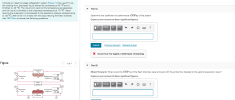
Consider a two-stage cascade refrigeration system operating between the pressure limits of 1 MPa and 180 kPa with refrigerant-134a as the working fluid. The refrigerant leaves the condenser as a saturated liquid and is throttled to a flash chamber operating at 0.4 MPa. Part of the refrigerant evaporates during this flashing process, and this vapor is mixed with the refrigerant leaving the low-pressure compressor.
The mixture is then compressed to the condenser pressure by the high-pressure compressor. The liquid in the flash chamber is throttled to the evaporator pressure and cools the refrigerated space as it vaporizes in the evaporator. The mass flow rate of the refrigerant through the low pressure compressor is 0.2 kg/s.
Assuming the refrigerant leaves the evaporator as a saturated vapor and the isentropic efficiency is 78 percent for both compressors, determine (a) the mass flow rate of the refrigerant through the high-pressure compressor, (b) the rate of heat removal from the refrigerated space, and the COP of this refrigerator.
Also, determine (d) the rate of heat removal and the COP if this refrigerator operated on a single-stage cycle between the same pressure limits with the same compressor efficiency and the same flow rate as in the previous part.
Homework Answers


Add Answer to:
Consider a two-stage cascade refrigeration system operating
between the pressure limits of 1 MPa and 180...
A two-stage cascade refrigeration system operates between the pressure limits of 1.4MPa and 200 kPa with...
 A two-stage cascade refrigeration system operates between the pressure limits of 1.4MPa and 200 kPa with refrigerant-134a. The fluid leaves the condenser as a saturated liquid and is throttled to a flash chamber operating at 0.50 MPa. Part of the refrigerant evaporates in the flashing process, and this vapor is mixed with the refrigerant leaving the low-pressurin compressor. The liguid in the flash chamber iS throttled to the evaporator pressure and cools the refrigerated space. The mass flow rate of...
Problem 2 (30 pts): Consider a two-stage vapor-compression refrigeration system operating between the pressure limits of...
 Problem 2 (30 pts): Consider a two-stage vapor-compression refrigeration system operating between the pressure limits of 1.5 MPa and 150 kPa with refrigerant-134a as the working fluid. The refrigerant leaves the condenser as a saturated liquid and is throttled to a flash chamber operating at 0.45 MPa. The mass flow rate of the refrigerant through the low pressure compressor is 0.15 kg/s. Assuming the refrigerant leaves the evaporator as a saturated vapor, determine (a) the mass flow rate of the...
A refrigeration system with a flash chamber operates with R134a between the pressure limits of 1.0 and 0.1 MPa. Th...
 A refrigeration system with a flash chamber operates with R134a between the pressure limits of 1.0 and 0.1 MPa. The refrigerant leaves the condenser as saturated liquid and is throttled to a flash chamber operating at 0.5 MPa. The refrigerant leaving the low-pressure compressor at 0.5 MPa is also routed to the flash chamber. The vapor in the flash chamber is then compressed to the condenser pressure by the high-pressure compressor, and the liquidis throttled to the evaporator pressure. Assume...
Pressure limits in a two-stage cooling system are 0.9 MPa and 250kPa. Refrigerant condenser comes out...
 Pressure limits in a two-stage cooling system are 0.9 MPa and
250kPa. Refrigerant condenser
comes out as saturated liquid and works at 700kPa pressure
reduced to the pressure of the evaporation chamber. Meanwhile, some
of the refrigerant evaporates and is mixed with the fluid from the
low pressure compressor. The mixture is then
It is compressed to condenser pressure with high pressure
compressor. The liquid in the evaporation chamber is reduced to
evaporator pressure and draws heat from the cooled...
Pressure limits in a two-stage cooling system are 0.9 MPa and
250kPa. Refrigerant condenser
comes out as saturated liquid and works at 700kPa pressure
reduced to the pressure of the evaporation chamber. Meanwhile, some
of the refrigerant evaporates and is mixed with the fluid from the
low pressure compressor. The mixture is then
It is compressed to condenser pressure with high pressure
compressor. The liquid in the evaporation chamber is reduced to
evaporator pressure and draws heat from the cooled...
The coefficient of performance-of vapor-compression refrigeration cycles
 a) The coefficient of performance-of vapor-compression refrigeration cycles improves when the refrigerant is subcooled before it enters the throttling valve Can the refrigerant be subcooled indefinitely to maximize this effect, or is there a lower limit? Explain brieflyb) A two-stage compression refrigeration system with a flash chamber is used to produce chilled water for a commercial building The refrigeration system operates between a pressure limits of 1 2 MPa and 200 kPa with refrigerant-134a as the working fluid. The refrigerant leaves...
-Week 12 6 Help S Required information NOTE: This is a multi-part question. Once an answer is sub...
 -Week 12 6 Help S Required information NOTE: This is a multi-part question. Once an answer is submitted. you wiw be unable to retuwn to this part A two-stage compression refrigeration system operates with refrigerant-134a between the pressure limits of 1.4 MPa and 010 MPa. The refrigerant leaves the condenser as a saturated liquid and is throttled to a flash chamber operating at 0.6 MPa. he flash chamber is maintained at the same pressure as the low pressure discharge which...
Pressure limits in a two-stage cooling system are 0.9 MPa and 250kPa. Refrigerant condenser comes out...
 Pressure limits in a two-stage cooling system are 0.9 MPa and
250kPa. Refrigerant condenser
comes out as saturated liquid and works at 700kPa pressure
reduced to the pressure of the evaporation chamber. Meanwhile, some
of the refrigerant evaporates and is mixed with the fluid from the
low pressure compressor. The mixture is then
It is compressed to condenser pressure with high pressure
compressor. The liquid in the evaporation chamber is reduced to
evaporator pressure and draws heat from the cooled...
Pressure limits in a two-stage cooling system are 0.9 MPa and
250kPa. Refrigerant condenser
comes out as saturated liquid and works at 700kPa pressure
reduced to the pressure of the evaporation chamber. Meanwhile, some
of the refrigerant evaporates and is mixed with the fluid from the
low pressure compressor. The mixture is then
It is compressed to condenser pressure with high pressure
compressor. The liquid in the evaporation chamber is reduced to
evaporator pressure and draws heat from the cooled...
please answer all parts and show all work. Please include P-h chart work as welll Problem...
 please answer all parts and show all work. Please
include P-h chart work as welll
Problem 2 (30 pts): Consider a two-stage vapor-compression refrigeration system operating between the pressure limits of 1.5 MPa and 150 kPa with refrigerant-134a as the working fluid. The refrigerant leaves the condenser as a saturated liquid and is throttled to a flash chamber operating at 0.45 MPa. The mass flow rate of the refrigerant through the low pressure compressor is 0.15 kg/s. Assuming the refrigerant...
please answer all parts and show all work. Please
include P-h chart work as welll
Problem 2 (30 pts): Consider a two-stage vapor-compression refrigeration system operating between the pressure limits of 1.5 MPa and 150 kPa with refrigerant-134a as the working fluid. The refrigerant leaves the condenser as a saturated liquid and is throttled to a flash chamber operating at 0.45 MPa. The mass flow rate of the refrigerant through the low pressure compressor is 0.15 kg/s. Assuming the refrigerant...
(100 points) Figure below shows the schematic diagram of a two-stage cascade refrigeration system (also called...
 (100 points) Figure below shows the schematic diagram of a two-stage cascade refrigeration system (also called the Economizer 2-Stage Refrigeration Cycle). Comparing to the cascade two-stage refrigeration system discussed in In-class Activity #10a, in this case, the flash chamber (now called Flash Intercooler) is still used but the mixing chamber is removed. The superheated vapor (2) out of the low-pressure compressor (1) is routed into the flash chamber, and the saturated vapor (3) out of the flash chamber enters directly...
Part A Consider an ideal two-stage refrigeration system (Figure 1) that uses R-12 as the working...
 Part A Consider an ideal two-stage refrigeration system (Figure 1) that uses R-12 as the working fluid. Saturated liquid leaves the condenser at 40 °C and is throttled to -20 °C. The liquid and vapor at this temperature are separated, and the liquid is throttled to the evaporator temperature at -70 °C. Vapor leaving the evaporator is compressed to the saturation pressure corresponding to -20 °C, after which it is mixed with the vapor leaving the flash chamber. Use TESTCalc...
 A two-stage cascade refrigeration system operates between the pressure limits of 1.4MPa and 200 kPa with refrigerant-134a. The fluid leaves the condenser as a saturated liquid and is throttled to a flash chamber operating at 0.50 MPa. Part of the refrigerant evaporates in the flashing process, and this vapor is mixed with the refrigerant leaving the low-pressurin compressor. The liguid in the flash chamber iS throttled to the evaporator pressure and cools the refrigerated space. The mass flow rate of...
 Problem 2 (30 pts): Consider a two-stage vapor-compression refrigeration system operating between the pressure limits of 1.5 MPa and 150 kPa with refrigerant-134a as the working fluid. The refrigerant leaves the condenser as a saturated liquid and is throttled to a flash chamber operating at 0.45 MPa. The mass flow rate of the refrigerant through the low pressure compressor is 0.15 kg/s. Assuming the refrigerant leaves the evaporator as a saturated vapor, determine (a) the mass flow rate of the...
 A refrigeration system with a flash chamber operates with R134a between the pressure limits of 1.0 and 0.1 MPa. The refrigerant leaves the condenser as saturated liquid and is throttled to a flash chamber operating at 0.5 MPa. The refrigerant leaving the low-pressure compressor at 0.5 MPa is also routed to the flash chamber. The vapor in the flash chamber is then compressed to the condenser pressure by the high-pressure compressor, and the liquidis throttled to the evaporator pressure. Assume...
 Pressure limits in a two-stage cooling system are 0.9 MPa and
250kPa. Refrigerant condenser
comes out as saturated liquid and works at 700kPa pressure
reduced to the pressure of the evaporation chamber. Meanwhile, some
of the refrigerant evaporates and is mixed with the fluid from the
low pressure compressor. The mixture is then
It is compressed to condenser pressure with high pressure
compressor. The liquid in the evaporation chamber is reduced to
evaporator pressure and draws heat from the cooled...
Pressure limits in a two-stage cooling system are 0.9 MPa and
250kPa. Refrigerant condenser
comes out as saturated liquid and works at 700kPa pressure
reduced to the pressure of the evaporation chamber. Meanwhile, some
of the refrigerant evaporates and is mixed with the fluid from the
low pressure compressor. The mixture is then
It is compressed to condenser pressure with high pressure
compressor. The liquid in the evaporation chamber is reduced to
evaporator pressure and draws heat from the cooled...
 -Week 12 6 Help S Required information NOTE: This is a multi-part question. Once an answer is submitted. you wiw be unable to retuwn to this part A two-stage compression refrigeration system operates with refrigerant-134a between the pressure limits of 1.4 MPa and 010 MPa. The refrigerant leaves the condenser as a saturated liquid and is throttled to a flash chamber operating at 0.6 MPa. he flash chamber is maintained at the same pressure as the low pressure discharge which...
 Pressure limits in a two-stage cooling system are 0.9 MPa and
250kPa. Refrigerant condenser
comes out as saturated liquid and works at 700kPa pressure
reduced to the pressure of the evaporation chamber. Meanwhile, some
of the refrigerant evaporates and is mixed with the fluid from the
low pressure compressor. The mixture is then
It is compressed to condenser pressure with high pressure
compressor. The liquid in the evaporation chamber is reduced to
evaporator pressure and draws heat from the cooled...
Pressure limits in a two-stage cooling system are 0.9 MPa and
250kPa. Refrigerant condenser
comes out as saturated liquid and works at 700kPa pressure
reduced to the pressure of the evaporation chamber. Meanwhile, some
of the refrigerant evaporates and is mixed with the fluid from the
low pressure compressor. The mixture is then
It is compressed to condenser pressure with high pressure
compressor. The liquid in the evaporation chamber is reduced to
evaporator pressure and draws heat from the cooled...
 please answer all parts and show all work. Please
include P-h chart work as welll
Problem 2 (30 pts): Consider a two-stage vapor-compression refrigeration system operating between the pressure limits of 1.5 MPa and 150 kPa with refrigerant-134a as the working fluid. The refrigerant leaves the condenser as a saturated liquid and is throttled to a flash chamber operating at 0.45 MPa. The mass flow rate of the refrigerant through the low pressure compressor is 0.15 kg/s. Assuming the refrigerant...
please answer all parts and show all work. Please
include P-h chart work as welll
Problem 2 (30 pts): Consider a two-stage vapor-compression refrigeration system operating between the pressure limits of 1.5 MPa and 150 kPa with refrigerant-134a as the working fluid. The refrigerant leaves the condenser as a saturated liquid and is throttled to a flash chamber operating at 0.45 MPa. The mass flow rate of the refrigerant through the low pressure compressor is 0.15 kg/s. Assuming the refrigerant...
 (100 points) Figure below shows the schematic diagram of a two-stage cascade refrigeration system (also called the Economizer 2-Stage Refrigeration Cycle). Comparing to the cascade two-stage refrigeration system discussed in In-class Activity #10a, in this case, the flash chamber (now called Flash Intercooler) is still used but the mixing chamber is removed. The superheated vapor (2) out of the low-pressure compressor (1) is routed into the flash chamber, and the saturated vapor (3) out of the flash chamber enters directly...
 Part A Consider an ideal two-stage refrigeration system (Figure 1) that uses R-12 as the working fluid. Saturated liquid leaves the condenser at 40 °C and is throttled to -20 °C. The liquid and vapor at this temperature are separated, and the liquid is throttled to the evaporator temperature at -70 °C. Vapor leaving the evaporator is compressed to the saturation pressure corresponding to -20 °C, after which it is mixed with the vapor leaving the flash chamber. Use TESTCalc...
Most questions answered within 3 hours.
-
Where is the error in this code sequence?
String s1 = "Hello";
String s2 = "ello";...
asked 11 months ago -
Financial data for Joel de Paris, Inc., for last year
follow:
Joel de Paris, Inc.
Balance...
asked 11 months ago -
Consider this reaction:
Al2(SO4)3 (aq)+ BaCl3
(aq) Al2Cl6 (aq)- +
3BaSO4(s) . What is the...
asked 11 months ago -
Suppose that Savneet is considering increasing her
recent random sample from 20 car rentals to 40...
asked 11 months ago -
Trucks arrive at an unloading terminal at an average rate of 120
per hour.
Trucks arrive...
asked 11 months ago -
Why are methanol and ethanol completely soluble in water while
octanol is not very little soluble....
asked 11 months ago -
A facilities manager at a university reads in a research report
that the mean amount of...
asked 11 months ago -
When the CuSO4 is rehydrated by adding water to the anhydrous
compound, is this an endothermic...
asked 11 months ago -
A ray of sunlight is passing from diamond into crown glass; the
angle of incidence is...
asked 11 months ago -
A block of mass 0.249 kg is placed on top of a light, vertical
spring of...
asked 11 months ago -
how do the kidneys compensate in the presences of acidosis
a) trigger hyperventilate
b) reserve acid...
asked 11 months ago -
Question 501 pts
The rental rate of capital to the firm increases. Which of the
following...
asked 11 months ago