predict the proton NMR of 2-methyl-2-butanol. indicate peaks observed, the relative areas, and the approximate chemical...
Homework Answers

Add Answer to:
predict the proton NMR of 2-methyl-2-butanol. indicate peaks
observed, the relative areas, and the approximate chemical...
Predict 1H NMR and 13C NMR chemical shifts and splitting patterns for 6-chloro-3-methyl-1-heptene. (hint: Draw the...
Predict 1H NMR and 13C NMR chemical shifts and splitting patterns for 6-chloro-3-methyl-1-heptene. (hint: Draw the structure, find distinct group of Hs/Cs and provide approximate chemical shifts with splitting patterns).
A CH100 molecule shows IR peaks at 3060. 1710 and 1601cm. It's proton NMR spectrum has...
 A CH100 molecule shows IR peaks at 3060. 1710 and 1601cm. It's proton NMR spectrum has 6 signals. The ratio of carbon bonded hydrogens in its 'HR 3:3:2:1:1, with a corresponding signal multiplicity of d, t, q, d, &d of q. The corte chemical shifts are 2.05, 1.11, 2.98, 6.08, and 6.82. Predict the structure and mate multiplicity of each nonequivalent set of hydrogens. . It's proton decoupled 13C- ed hydrogens in its 'H-NMR spectrum is, 1.9, d, & d...
3. Predict the 1H NMR spectrum of the molecule shown to the left. Be sure to include the x-axis for the 'H NMR spectrum...
 3. Predict the 1H NMR spectrum of the molecule shown to the left. Be sure to include the x-axis for the 'H NMR spectrum labelled with units, peaks for each of the non-equivalent protons clearly showing the expected splitting patterns, approximate chemical shifts, and integration
Exercise Indicate how many non-equivalent peaks can be observed in the 13C NMR spectrum of each compound in the following set: 0 Exercise Indicate how many non-equivalent peaks can be observed i...
 Exercise Indicate how many non-equivalent peaks can be observed in the 13C NMR spectrum of each compound in the following set: 0
Exercise Indicate how many non-equivalent peaks can be observed in the 13C NMR spectrum of each compound in the following set: 0
Exercise Indicate how many non-equivalent peaks can be observed in the 13C NMR spectrum of each compound in the following set: 0
Q2 - Predict the chemical shifts for the circled protons in the 'H NMR spectrum of...
 Q2 - Predict the chemical shifts for the circled protons in the 'H NMR spectrum of each of the following compounds. Write a numerical value or approximate range in ppm.
Given the HETCOR NMR spectrum, assign the peaks in the spectrum of 4-methyl-2-pentanol and explain the...
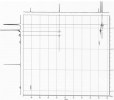 Given the HETCOR NMR spectrum, assign the peaks in the spectrum
of 4-methyl-2-pentanol and explain the splitting and coupling
observed.
Consider diastereotopic carbons and diastereotopic
hydrogens.
Thank You
LE
Given the HETCOR NMR spectrum, assign the peaks in the spectrum
of 4-methyl-2-pentanol and explain the splitting and coupling
observed.
Consider diastereotopic carbons and diastereotopic
hydrogens.
Thank You
LE
1. Sketch the proton NMR spectrum of Et2O showing splitting patterns, chemical shifts and integrals (1H,...
1. Sketch the proton NMR spectrum of Et2O showing splitting patterns, chemical shifts and integrals (1H, 2H, etc). Chemical shifts range from 0 to 12 ppm. _______________________________________________________________ 12 10 8 6 4 2 0 2. Sketch the proton NMR spectrum of (CH3)2C=O showing splitting patterns, chemical shifts and integrals (1H, 2H, etc). Chemical shifts range from 0 to 12 ppm. _______________________________________________________________ 12 10 8 6 4 2 0 3. Sketch the proton NMR spectrum of CH3OH showing splitting patterns, chemical...
Predict the approximate chemical shift position for each of the different hydrogens in the ^1H- NMR...
 Predict the approximate chemical shift position for each of the different hydrogens in the ^1H- NMR spectrum of this compound and simulate an NMR spectrum for the compound.
33. A C6H100 molecule shows IR peaks at 3060. 1710 and 1601cm. It's proton decoupled "C....
 33. A C6H100 molecule shows IR peaks at 3060. 1710 and 1601cm. It's proton decoupled "C. NMR spectrum has 6 signals. The ratio of carbon-bonded hydrogens in its 'H-NMR spectrum is, 3:3:2:1:1, with a corresponding signal multiplicity of s, d, d, d oft, &d of q. The corresponding chemical shifts are 2.25, 2.05, 3.12, 5.72, and 5.62. Predict the structure and match the multiplicity of each nonequivalent set of hydrogens.
Predict the proton nmr spectra for each of the following structures. Number of signals: Relative area:...
 Predict the proton nmr spectra for each of the following
structures.
Number of signals:
Relative area:
Splitting pattern (S,T,Q etc)
4 5 6
Predict the proton nmr spectra for each of the following
structures.
Number of signals:
Relative area:
Splitting pattern (S,T,Q etc)
4 5 6
 A CH100 molecule shows IR peaks at 3060. 1710 and 1601cm. It's proton NMR spectrum has 6 signals. The ratio of carbon bonded hydrogens in its 'HR 3:3:2:1:1, with a corresponding signal multiplicity of d, t, q, d, &d of q. The corte chemical shifts are 2.05, 1.11, 2.98, 6.08, and 6.82. Predict the structure and mate multiplicity of each nonequivalent set of hydrogens. . It's proton decoupled 13C- ed hydrogens in its 'H-NMR spectrum is, 1.9, d, & d...
 3. Predict the 1H NMR spectrum of the molecule shown to the left. Be sure to include the x-axis for the 'H NMR spectrum labelled with units, peaks for each of the non-equivalent protons clearly showing the expected splitting patterns, approximate chemical shifts, and integration
 Exercise Indicate how many non-equivalent peaks can be observed in the 13C NMR spectrum of each compound in the following set: 0
Exercise Indicate how many non-equivalent peaks can be observed in the 13C NMR spectrum of each compound in the following set: 0
Exercise Indicate how many non-equivalent peaks can be observed in the 13C NMR spectrum of each compound in the following set: 0
 Q2 - Predict the chemical shifts for the circled protons in the 'H NMR spectrum of each of the following compounds. Write a numerical value or approximate range in ppm.
 Given the HETCOR NMR spectrum, assign the peaks in the spectrum
of 4-methyl-2-pentanol and explain the splitting and coupling
observed.
Consider diastereotopic carbons and diastereotopic
hydrogens.
Thank You
LE
Given the HETCOR NMR spectrum, assign the peaks in the spectrum
of 4-methyl-2-pentanol and explain the splitting and coupling
observed.
Consider diastereotopic carbons and diastereotopic
hydrogens.
Thank You
LE
 Predict the approximate chemical shift position for each of the different hydrogens in the ^1H- NMR spectrum of this compound and simulate an NMR spectrum for the compound.
 33. A C6H100 molecule shows IR peaks at 3060. 1710 and 1601cm. It's proton decoupled "C. NMR spectrum has 6 signals. The ratio of carbon-bonded hydrogens in its 'H-NMR spectrum is, 3:3:2:1:1, with a corresponding signal multiplicity of s, d, d, d oft, &d of q. The corresponding chemical shifts are 2.25, 2.05, 3.12, 5.72, and 5.62. Predict the structure and match the multiplicity of each nonequivalent set of hydrogens.
 Predict the proton nmr spectra for each of the following
structures.
Number of signals:
Relative area:
Splitting pattern (S,T,Q etc)
4 5 6
Predict the proton nmr spectra for each of the following
structures.
Number of signals:
Relative area:
Splitting pattern (S,T,Q etc)
4 5 6
Most questions answered within 3 hours.
-
Where is the error in this code sequence?
String s1 = "Hello";
String s2 = "ello";...
asked 11 months ago -
Financial data for Joel de Paris, Inc., for last year
follow:
Joel de Paris, Inc.
Balance...
asked 11 months ago -
Consider this reaction:
Al2(SO4)3 (aq)+ BaCl3
(aq) Al2Cl6 (aq)- +
3BaSO4(s) . What is the...
asked 11 months ago -
Suppose that Savneet is considering increasing her
recent random sample from 20 car rentals to 40...
asked 11 months ago -
Trucks arrive at an unloading terminal at an average rate of 120
per hour.
Trucks arrive...
asked 11 months ago -
Why are methanol and ethanol completely soluble in water while
octanol is not very little soluble....
asked 11 months ago -
A facilities manager at a university reads in a research report
that the mean amount of...
asked 11 months ago -
When the CuSO4 is rehydrated by adding water to the anhydrous
compound, is this an endothermic...
asked 11 months ago -
A ray of sunlight is passing from diamond into crown glass; the
angle of incidence is...
asked 11 months ago -
A block of mass 0.249 kg is placed on top of a light, vertical
spring of...
asked 11 months ago -
how do the kidneys compensate in the presences of acidosis
a) trigger hyperventilate
b) reserve acid...
asked 11 months ago -
Question 501 pts
The rental rate of capital to the firm increases. Which of the
following...
asked 11 months ago