1. The cost of a coronavirus test, if administered by the private sector, seems to be...
1. The cost of a coronavirus test, if administered by the private sector, seems to be around $50 in the US. This is going to discourage a lot of people from taking the test. But every person that avoids the test can cause further infections. The contagiousness of the virus means that if you get yourself tested, you create positive externalities.
Suppose that the supply curve is perfectly elastic (flat) at $50 per test.
The private demand curve is
q = 200 – P (where the measurement is in millions of people)
But every test brings $20 of external benefit!
a. If there is no government intervention, how many people will get the test done?
b. Taking the external benefit into account, how many people should get tested?
c. The government subsidizes the test takers at a rate of $20 per person. How many people will now get tested?
d. How much consumer surplus is created through this subsidy. Compare this to the cost of the subsidy. Is the subsidy a good idea?
Homework Answers
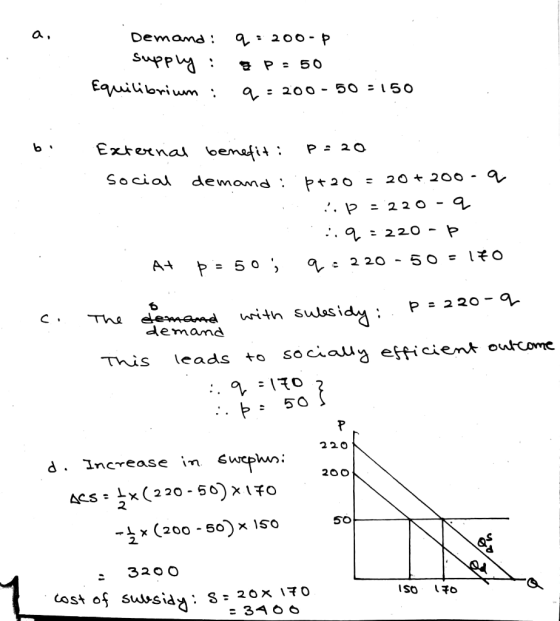
The cost of the subsidy is higher than the rise in the surplus. Thus subsidy creates a social loss. The subsidy is not a good idea.
Add Answer to:
1. The cost of a coronavirus test, if administered by the
private sector, seems to be...
What is the answer for c ? 4. The marginal cost of educating a college student...
 What is the answer for c ?
4. The marginal cost of educating a college student is $5,000 per year. The table below shows the private marginal benefit from a college education. The marginal external benefit of a college education is $2,000 per student per year. [Use a graph to help you answer the questions Students Private Private Marginal Benefit External Social Marginal Benefit (millions per year) Marginal (Sper student per year) Marginal Benefit S per student per year) Cost...
What is the answer for c ?
4. The marginal cost of educating a college student is $5,000 per year. The table below shows the private marginal benefit from a college education. The marginal external benefit of a college education is $2,000 per student per year. [Use a graph to help you answer the questions Students Private Private Marginal Benefit External Social Marginal Benefit (millions per year) Marginal (Sper student per year) Marginal Benefit S per student per year) Cost...
1.) Consider the hypothetical market for taking the TB test shown below for Parry County, Alabama....
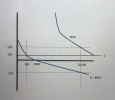 1.) Consider the hypothetical market for taking the TB test
shown below for Parry County, Alabama. Answer based on the graph
provided.
A.)How many people with get the test if it is not subsidized
(marginal cost is $20)?
B.)Is this free-market outcome optimal? Why (not)?
C.)How many people will get the test if the government makes it
free? What would that cost the government?
D.)How many people will get the test if they get paid $20? How
much does the...
1.) Consider the hypothetical market for taking the TB test
shown below for Parry County, Alabama. Answer based on the graph
provided.
A.)How many people with get the test if it is not subsidized
(marginal cost is $20)?
B.)Is this free-market outcome optimal? Why (not)?
C.)How many people will get the test if the government makes it
free? What would that cost the government?
D.)How many people will get the test if they get paid $20? How
much does the...
Problem 1: Externalities (20 points) Figure 1 shows the marginal private benefit from college education at...
 Problem 1: Externalities (20 points) Figure 1 shows the marginal private benefit from college education at an imaginary college. The marginal cost of a college education in this example is a constant $6,000 per year. The marginal external benefit from a college education is $4,000 per student per year. FIGURE 1 $10,000 $9,000 $8,000 $7,000 PRICE OF TUITION $6,000 $5,000 $4,000 $3,000 $2,000 1,000 1,500 2,000 4,000 4,500 5,000 2,500 3,000 3,500 STUDENTS PER YEAR a) If colleges were private...
Problem 1: Externalities (20 points) Figure 1 shows the marginal private benefit from college education at...
 Problem 1: Externalities (20 points) Figure 1 shows the marginal private benefit from college education at an imaginary college. The marginal cost of a college education in this example is a constant $6,000 per year. The marginal external benefit from a college education is $4,000 per student per year. FIGURE 1 $10,000 59,000 58,000 57,000 PRICE OF TUITION 56,000 5,000 54000 $3,000 $2,000 1,000 1,500 2,000 4,000 4.500 2.500 3.000 3,500 STUDENTS PER YEAR 5.000 a) If colleges were private...
Problem 1: Externalities (20 points) Figure 1 shows the marginal private benefit from college education at...
 Problem 1: Externalities (20 points) Figure 1 shows the marginal private benefit from college education at an imaginary college. The marginal cost of a college education in this example is a constant $6,000 per year. The marginal external benefit from a college education is $4,000 per student per year. FIGURE 1 $10.000 59.000 58.000 I 57.000 PRICE OF TUITION 56 000 55.000 54.000 53.000 $2.000 1.000 1.500 2,000 4,000 4,500 5.000 2,500 3.000 3,500 STUDENTS PER YEAR a) If colleges...
Figure 1 shows the marginal private benefit from college education at an Imaginary college. The marginal...
 Figure 1 shows the marginal private benefit from college education at an Imaginary college. The marginal cost of a college education in this example is a constant $6,000 per year. The marginal external benefit from a college education is $4,000 per student per year. FIGURE 1 $10,000 $9,000 SHOP $7,000 PRICE OF TUMON 56,000 $5,000 $4.000 $3.000 52,000 1.000 1.500 4,000 4,500 2,500 3.500 STUDENTS PER YEAR 5.000 a) If colleges were private and government had no involvement in college...
Figure 1 shows the marginal private benefit from college education at an imaginary college. The marginal...
 Figure 1 shows the marginal private benefit from college education at an imaginary college. The marginal cost of a college education in this example is a constant $6,000 per year. The marginal external benefit from a college education is $4,000 per student per year. FIGURE 1 $10,000 $9,000 $8,000 57,000 PRICE OF TUITION $6,000 $5,000 $4,000 $3,000 $2.000 1.000 1,500 2.000 2.500 3.000 3,500 STUDENTS PER YEAR 4,000 4,500 5.000 a) If colleges were private and government had no involvement...
toyO Question Completion Status: QUESTION 8 1 In the case of an external cost, marginal private...
 toyO Question Completion Status: QUESTION 8 1 In the case of an external cost, marginal private cost: A. and marginal social cost cannot be compared at any quantity. B. is less than marginal social cost for all quantity levels. C. is equal to marginal social cost for all quantity levels. D. is greater than marginal social cost for all quantity levels. QUESTION 9 Edgar's expected private benefit from the flu shot is $15, and it would cost him $20 to...
This Question: 1 pt 41 of 60 (39 complete) This Test: 60 pts possib The graph...
 This Question: 1 pt 41 of 60 (39 complete) This Test: 60 pts possib The graph shows the demand for nursing education The marginal cost of nursing education is $8,000 a year and the marginal external benefit is $4,000 per student per year. Suppose the government provides a subsidy that achieves the efficient number of students in private nursing schools. What is the subsidy that will achieve the efficient number of students enrolled? The subsidy that achieves the efficient number...
International business in the Aftermath of Corona Virus. based on the article from Italy coronavirus deaths...
 International business in the Aftermath of Corona Virus. based
on the article from Italy coronavirus deaths at 5,476 after 651
rise: Live updates.
please and the question below thanks.
1. With all the deaths happening in Italy, China, and all around the world, what do you think the impact will be upon international business? Will it stop? Will it slow down? 2. Secondly, as students of international business I have to assume that you are interested in doing business abroad....
International business in the Aftermath of Corona Virus. based
on the article from Italy coronavirus deaths at 5,476 after 651
rise: Live updates.
please and the question below thanks.
1. With all the deaths happening in Italy, China, and all around the world, what do you think the impact will be upon international business? Will it stop? Will it slow down? 2. Secondly, as students of international business I have to assume that you are interested in doing business abroad....
 What is the answer for c ?
4. The marginal cost of educating a college student is $5,000 per year. The table below shows the private marginal benefit from a college education. The marginal external benefit of a college education is $2,000 per student per year. [Use a graph to help you answer the questions Students Private Private Marginal Benefit External Social Marginal Benefit (millions per year) Marginal (Sper student per year) Marginal Benefit S per student per year) Cost...
What is the answer for c ?
4. The marginal cost of educating a college student is $5,000 per year. The table below shows the private marginal benefit from a college education. The marginal external benefit of a college education is $2,000 per student per year. [Use a graph to help you answer the questions Students Private Private Marginal Benefit External Social Marginal Benefit (millions per year) Marginal (Sper student per year) Marginal Benefit S per student per year) Cost...
 1.) Consider the hypothetical market for taking the TB test
shown below for Parry County, Alabama. Answer based on the graph
provided.
A.)How many people with get the test if it is not subsidized
(marginal cost is $20)?
B.)Is this free-market outcome optimal? Why (not)?
C.)How many people will get the test if the government makes it
free? What would that cost the government?
D.)How many people will get the test if they get paid $20? How
much does the...
1.) Consider the hypothetical market for taking the TB test
shown below for Parry County, Alabama. Answer based on the graph
provided.
A.)How many people with get the test if it is not subsidized
(marginal cost is $20)?
B.)Is this free-market outcome optimal? Why (not)?
C.)How many people will get the test if the government makes it
free? What would that cost the government?
D.)How many people will get the test if they get paid $20? How
much does the...
 Problem 1: Externalities (20 points) Figure 1 shows the marginal private benefit from college education at an imaginary college. The marginal cost of a college education in this example is a constant $6,000 per year. The marginal external benefit from a college education is $4,000 per student per year. FIGURE 1 $10,000 $9,000 $8,000 $7,000 PRICE OF TUITION $6,000 $5,000 $4,000 $3,000 $2,000 1,000 1,500 2,000 4,000 4,500 5,000 2,500 3,000 3,500 STUDENTS PER YEAR a) If colleges were private...
 Problem 1: Externalities (20 points) Figure 1 shows the marginal private benefit from college education at an imaginary college. The marginal cost of a college education in this example is a constant $6,000 per year. The marginal external benefit from a college education is $4,000 per student per year. FIGURE 1 $10,000 59,000 58,000 57,000 PRICE OF TUITION 56,000 5,000 54000 $3,000 $2,000 1,000 1,500 2,000 4,000 4.500 2.500 3.000 3,500 STUDENTS PER YEAR 5.000 a) If colleges were private...
 Problem 1: Externalities (20 points) Figure 1 shows the marginal private benefit from college education at an imaginary college. The marginal cost of a college education in this example is a constant $6,000 per year. The marginal external benefit from a college education is $4,000 per student per year. FIGURE 1 $10.000 59.000 58.000 I 57.000 PRICE OF TUITION 56 000 55.000 54.000 53.000 $2.000 1.000 1.500 2,000 4,000 4,500 5.000 2,500 3.000 3,500 STUDENTS PER YEAR a) If colleges...
 Figure 1 shows the marginal private benefit from college education at an Imaginary college. The marginal cost of a college education in this example is a constant $6,000 per year. The marginal external benefit from a college education is $4,000 per student per year. FIGURE 1 $10,000 $9,000 SHOP $7,000 PRICE OF TUMON 56,000 $5,000 $4.000 $3.000 52,000 1.000 1.500 4,000 4,500 2,500 3.500 STUDENTS PER YEAR 5.000 a) If colleges were private and government had no involvement in college...
 Figure 1 shows the marginal private benefit from college education at an imaginary college. The marginal cost of a college education in this example is a constant $6,000 per year. The marginal external benefit from a college education is $4,000 per student per year. FIGURE 1 $10,000 $9,000 $8,000 57,000 PRICE OF TUITION $6,000 $5,000 $4,000 $3,000 $2.000 1.000 1,500 2.000 2.500 3.000 3,500 STUDENTS PER YEAR 4,000 4,500 5.000 a) If colleges were private and government had no involvement...
 toyO Question Completion Status: QUESTION 8 1 In the case of an external cost, marginal private cost: A. and marginal social cost cannot be compared at any quantity. B. is less than marginal social cost for all quantity levels. C. is equal to marginal social cost for all quantity levels. D. is greater than marginal social cost for all quantity levels. QUESTION 9 Edgar's expected private benefit from the flu shot is $15, and it would cost him $20 to...
 This Question: 1 pt 41 of 60 (39 complete) This Test: 60 pts possib The graph shows the demand for nursing education The marginal cost of nursing education is $8,000 a year and the marginal external benefit is $4,000 per student per year. Suppose the government provides a subsidy that achieves the efficient number of students in private nursing schools. What is the subsidy that will achieve the efficient number of students enrolled? The subsidy that achieves the efficient number...
 International business in the Aftermath of Corona Virus. based
on the article from Italy coronavirus deaths at 5,476 after 651
rise: Live updates.
please and the question below thanks.
1. With all the deaths happening in Italy, China, and all around the world, what do you think the impact will be upon international business? Will it stop? Will it slow down? 2. Secondly, as students of international business I have to assume that you are interested in doing business abroad....
International business in the Aftermath of Corona Virus. based
on the article from Italy coronavirus deaths at 5,476 after 651
rise: Live updates.
please and the question below thanks.
1. With all the deaths happening in Italy, China, and all around the world, what do you think the impact will be upon international business? Will it stop? Will it slow down? 2. Secondly, as students of international business I have to assume that you are interested in doing business abroad....
Most questions answered within 3 hours.
-
Where is the error in this code sequence?
String s1 = "Hello";
String s2 = "ello";...
asked 11 months ago -
Financial data for Joel de Paris, Inc., for last year
follow:
Joel de Paris, Inc.
Balance...
asked 11 months ago -
Consider this reaction:
Al2(SO4)3 (aq)+ BaCl3
(aq) Al2Cl6 (aq)- +
3BaSO4(s) . What is the...
asked 11 months ago -
Suppose that Savneet is considering increasing her
recent random sample from 20 car rentals to 40...
asked 11 months ago -
Trucks arrive at an unloading terminal at an average rate of 120
per hour.
Trucks arrive...
asked 11 months ago -
Why are methanol and ethanol completely soluble in water while
octanol is not very little soluble....
asked 11 months ago -
A facilities manager at a university reads in a research report
that the mean amount of...
asked 11 months ago -
When the CuSO4 is rehydrated by adding water to the anhydrous
compound, is this an endothermic...
asked 11 months ago -
A ray of sunlight is passing from diamond into crown glass; the
angle of incidence is...
asked 11 months ago -
A block of mass 0.249 kg is placed on top of a light, vertical
spring of...
asked 11 months ago -
how do the kidneys compensate in the presences of acidosis
a) trigger hyperventilate
b) reserve acid...
asked 11 months ago -
Question 501 pts
The rental rate of capital to the firm increases. Which of the
following...
asked 11 months ago