Assume the United States and Australia have the same amount of resources. In a given time...
Assume the United States and Australia have the same amount of resources. In a given time period, the U.S. can produce 2 tons of beef or 200,000 cars. Australia can produce 1 tons of beef or 100,000 cars. This means that: a. The United States has the comparative advantage in beef. b. Australia has an absolute advantage in both beef and cars. c. The United States has an absolute advantage in both beef and cars. d. Australia has the comparative advantage in cars.
Homework Answers
As US can produce more of both goods than Australia with the same amount of resources so it has an absolute advantage in both goods
option(C)
Add Answer to:
Assume the United States and Australia have the same amount of
resources. In a given time...
Using the same amount of resources, the United States and Canada can both produce lumberjack shirts...
 Using the same amount of resources, the United States and Canada can both produce lumberjack shirts and lumberjack boots, as shown in the production possibilities frontiers in the figure to the right Canada has a comparsative advantage in producing lumberjack boots. The United States has a comparative advantage in producing lumberjack shirts 26 44PPF.s Does either country have an absolute advantage in producing both goods? A Neither country has an absolute advantage in both goods because Canada can produce more...
T or F: If both Brazil and the United States have straight-line production-possibilities curves, the U.S....
T or F: If both Brazil and the United States have straight-line production-possibilities curves, the U.S. can use all its resources to produce either 10 tons of coffee or 10 tons of wheat per year, and Brazil can use all of its resources to produce either 4 tons of coffee or 2 tons of wheat per year, Brazil has a comparative advantage in coffee production.
Suppose initially that the United States is consuming 2 boots and 18 shirts and Canada is...
 Suppose initially that the United States is consuming 2 boots
and 18 shirts and Canada is consuming 12 boots and 2 shirts, as
indicated in the figure. Then, suppose the United States and
Canada specialize by each only producing the good for which they
have a comparative advantage and then trade. In particular,
suppose the United States trades Canada half of its production for
half of what Canada produces.?
Using the same amount of resources, the United States and...
Suppose initially that the United States is consuming 2 boots
and 18 shirts and Canada is consuming 12 boots and 2 shirts, as
indicated in the figure. Then, suppose the United States and
Canada specialize by each only producing the good for which they
have a comparative advantage and then trade. In particular,
suppose the United States trades Canada half of its production for
half of what Canada produces.?
Using the same amount of resources, the United States and...
The United States will have 0 additional shirt(s) after the trade (enter a numeric response using...
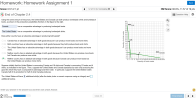 The United States will have 0 additional
shirt(s) after the trade (enter a numeric response using an
integer) and __ additional boot(s).
At the same time, Canada will be able to consume ___ additional
shirt(s) as a result of the trade and ___ additional boot(s).
Homework: Homework Assignment 1 Save Score: 0.57 of 1 pt 12 of 19 (12 complete) HW Score: 60.9%, 11.57 of 19 pts % End of Chapter 2.4 :3Question Help • Using the same amount of...
The United States will have 0 additional
shirt(s) after the trade (enter a numeric response using an
integer) and __ additional boot(s).
At the same time, Canada will be able to consume ___ additional
shirt(s) as a result of the trade and ___ additional boot(s).
Homework: Homework Assignment 1 Save Score: 0.57 of 1 pt 12 of 19 (12 complete) HW Score: 60.9%, 11.57 of 19 pts % End of Chapter 2.4 :3Question Help • Using the same amount of...
2. Assume that both the United States and Germany produce beef and computers. The U.S. can...
2. Assume that both the United States and Germany produce beef and computers. The U.S. can produce 200 computers or 1,000 pounds of beef per day. Germany can produce 500 computers or 250 pounds of beef per day. (a) What is the opportunity cost of beef and computer chips in each country? In which good does each country have a comparative advantage? What is the range for mutually beneficial trade in computers? (b) Graph the PPCs for each country, putting...
An American worker can produce either 5 cars or 8 tons of grain a year. A...
 An American worker can produce either 5 cars or 8 tons of grain a year. A lapanese worker can produce either 4 cars or 9 tons of grain a year. To keep things simple, assume that each country has 100 million workers Complete the foflowing table with the number of workers needed to make one car or 1 ton of grain in the United States and Japan. Workers Needed to Make 1 Car 1 Ton of Grain United StatesY Japan...
2. Problems and Applications Q2 An American worker can produce either 5 cars or 9 tons...
 2. Problems and Applications Q2 An American worker can produce either 5 cars or 9 tons of grain a year. A Japanese worker can produce either 3 cars or 9 tons of grain a year. To keep things simple, assume that each country has 100 million workers. Complete the following table with the number of workers needed to make one car or 1 ton of grain in the United States and Japan. Workers Needed to Make 1 Car1 Ton of...
2. Problems and Applications Q2 An American worker can produce either 5 cars or 9 tons...
 2. Problems and Applications Q2 An American worker can produce either 5 cars or 9 tons of grain a year. A Japanese worker can produce either 3 cars or 9 tons of grain a year. To keep things simple, assume that each country has 100 million workers. Complete the following table with the number of workers needed to make one car or 1 ton of grain in the United States and Japan. Workers Needed to Make 1 Car 1 Ton...
Suppose the United States and Mexico both produce hamburgers and tacos. The combinations of the two...
 Suppose the United States and Mexico both produce hamburgers and tacos. The combinations of the two goods that each country can produce in one day are presented in the table below Mexico Hamburgers in tons) Hamburgers in tons) Tacos (in tons) .888 Which country has an absolute advantage in producing tacos? Which country has a comparative advantage in producing tacos? Suppose the United States is currently producing 120 tons of hamburgers and 30 tons of tacos and Mexico is currently...
Suppose that the United States and Canada can each produce two products: lumber and beef. Create...
Suppose that the United States and Canada can each produce two products: lumber and beef. Create a table like the one below, showing labor requirements per unit of output for each country. (Hint: Choose numbers for each country that are easily divisible by one another.) Labor Requirements per Unit of Output United States Canada Lumber Beef What does absolute advantage mean? How do you calculate absolute advantage? In what output(s) does the U.S. have an absolute advantage? Explain using the...
 Using the same amount of resources, the United States and Canada can both produce lumberjack shirts and lumberjack boots, as shown in the production possibilities frontiers in the figure to the right Canada has a comparsative advantage in producing lumberjack boots. The United States has a comparative advantage in producing lumberjack shirts 26 44PPF.s Does either country have an absolute advantage in producing both goods? A Neither country has an absolute advantage in both goods because Canada can produce more...
 Suppose initially that the United States is consuming 2 boots
and 18 shirts and Canada is consuming 12 boots and 2 shirts, as
indicated in the figure. Then, suppose the United States and
Canada specialize by each only producing the good for which they
have a comparative advantage and then trade. In particular,
suppose the United States trades Canada half of its production for
half of what Canada produces.?
Using the same amount of resources, the United States and...
Suppose initially that the United States is consuming 2 boots
and 18 shirts and Canada is consuming 12 boots and 2 shirts, as
indicated in the figure. Then, suppose the United States and
Canada specialize by each only producing the good for which they
have a comparative advantage and then trade. In particular,
suppose the United States trades Canada half of its production for
half of what Canada produces.?
Using the same amount of resources, the United States and...
 The United States will have 0 additional
shirt(s) after the trade (enter a numeric response using an
integer) and __ additional boot(s).
At the same time, Canada will be able to consume ___ additional
shirt(s) as a result of the trade and ___ additional boot(s).
Homework: Homework Assignment 1 Save Score: 0.57 of 1 pt 12 of 19 (12 complete) HW Score: 60.9%, 11.57 of 19 pts % End of Chapter 2.4 :3Question Help • Using the same amount of...
The United States will have 0 additional
shirt(s) after the trade (enter a numeric response using an
integer) and __ additional boot(s).
At the same time, Canada will be able to consume ___ additional
shirt(s) as a result of the trade and ___ additional boot(s).
Homework: Homework Assignment 1 Save Score: 0.57 of 1 pt 12 of 19 (12 complete) HW Score: 60.9%, 11.57 of 19 pts % End of Chapter 2.4 :3Question Help • Using the same amount of...
 An American worker can produce either 5 cars or 8 tons of grain a year. A lapanese worker can produce either 4 cars or 9 tons of grain a year. To keep things simple, assume that each country has 100 million workers Complete the foflowing table with the number of workers needed to make one car or 1 ton of grain in the United States and Japan. Workers Needed to Make 1 Car 1 Ton of Grain United StatesY Japan...
 2. Problems and Applications Q2 An American worker can produce either 5 cars or 9 tons of grain a year. A Japanese worker can produce either 3 cars or 9 tons of grain a year. To keep things simple, assume that each country has 100 million workers. Complete the following table with the number of workers needed to make one car or 1 ton of grain in the United States and Japan. Workers Needed to Make 1 Car1 Ton of...
 2. Problems and Applications Q2 An American worker can produce either 5 cars or 9 tons of grain a year. A Japanese worker can produce either 3 cars or 9 tons of grain a year. To keep things simple, assume that each country has 100 million workers. Complete the following table with the number of workers needed to make one car or 1 ton of grain in the United States and Japan. Workers Needed to Make 1 Car 1 Ton...
 Suppose the United States and Mexico both produce hamburgers and tacos. The combinations of the two goods that each country can produce in one day are presented in the table below Mexico Hamburgers in tons) Hamburgers in tons) Tacos (in tons) .888 Which country has an absolute advantage in producing tacos? Which country has a comparative advantage in producing tacos? Suppose the United States is currently producing 120 tons of hamburgers and 30 tons of tacos and Mexico is currently...
Most questions answered within 3 hours.
-
Where is the error in this code sequence?
String s1 = "Hello";
String s2 = "ello";...
asked 11 months ago -
Financial data for Joel de Paris, Inc., for last year
follow:
Joel de Paris, Inc.
Balance...
asked 11 months ago -
Consider this reaction:
Al2(SO4)3 (aq)+ BaCl3
(aq) Al2Cl6 (aq)- +
3BaSO4(s) . What is the...
asked 11 months ago -
Suppose that Savneet is considering increasing her
recent random sample from 20 car rentals to 40...
asked 11 months ago -
Trucks arrive at an unloading terminal at an average rate of 120
per hour.
Trucks arrive...
asked 11 months ago -
Why are methanol and ethanol completely soluble in water while
octanol is not very little soluble....
asked 11 months ago -
A facilities manager at a university reads in a research report
that the mean amount of...
asked 11 months ago -
When the CuSO4 is rehydrated by adding water to the anhydrous
compound, is this an endothermic...
asked 11 months ago -
A ray of sunlight is passing from diamond into crown glass; the
angle of incidence is...
asked 11 months ago -
A block of mass 0.249 kg is placed on top of a light, vertical
spring of...
asked 11 months ago -
how do the kidneys compensate in the presences of acidosis
a) trigger hyperventilate
b) reserve acid...
asked 11 months ago -
Question 501 pts
The rental rate of capital to the firm increases. Which of the
following...
asked 11 months ago