VCXBCXBFXBHFSFHF
MGRJHGDISHGIEWHGVDMORJKGHJDKEDOXUHDGETXTRCHHGHDFFXMMDHGR E
Homework Answers
E. quaesita Left-handed _E. aomoriensis Right-handed E. qua E. qua E. qua E. aom E. aom...
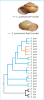 E. quaesita Left-handed _E. aomoriensis Right-handed E. qua E. qua E. qua E. aom E. aom E. aom E. aom E. qua E. qua E. qua E. qua E. aom E. qua E. qua E. aom E. qua E. qua E. qua E. qua E. sca E. sca E. sca E. sca
The intersection graph of a collection of sets A1, A2,...,An is the graph that has a vertex for e...
The intersection graph of a collection of sets A1, A2,...,An is the graph that has a vertex for each of these sets and has an edge connecting the vertices representing two sets if these sets have a nonempty intersection. If A={ ...,−4,−2,0 }, B={ ...,−2,−1,0,1,2,... }, C={ ...,−6,−4,−2,0,2,4,6,... }, D={ ...,−5,−3,−1,1,3,5,... }, and E={ ...,−6,−3,0,3,6,... }, then which of the given sets below represents the set of all edges E for the intersection graph concerning the given sets A, B,...
A = ∅, B = {∅, ∅}, C = {{∅}}, D = {{∅}, ∅}, E = {∅, {∅}, {∅, {∅}}, {∅, {∅}, {∅, {∅}}}}. (a) Deter...
A = ∅, B = {∅, ∅}, C = {{∅}}, D = {{∅}, ∅}, E = {∅, {∅}, {∅, {∅}}, {∅, {∅}, {∅, {∅}}}}. (a) Determine the cardinality of each of the sets above. (b) Write out the power set of each of the sets above. (c) What are A ∩ B, A ∪ B, C ∩ D, C ∪ D, E − D, D − E, (D ∩ C) ∪ B (d) What are A × B, B ×...
A = ∅, B = {∅, ∅}, C = {{∅}}, D = {{∅}, ∅}, E =...
A = ∅, B = {∅, ∅}, C = {{∅}}, D = {{∅}, ∅}, E = {∅, {∅}, {∅, {∅}}, {∅, {∅}, {∅, {∅}}}}. (a) Determine the cardinality of each of the sets above. (b) Write out the power set of each of the sets above. (c) What are A ∩ B, A ∪ B, C ∩ D, C ∪ D, E − D, D − E, (D ∩ C) ∪ B (d) What are A × B, B ×...
(I) A square matrix E E M,xn(R) is idempotent if E-E. It is symmetric if E-E RR -[projyl& of projy relative to the standard basis (a) Let V C R be a subspace of R", and consider thé ortho...
 (I) A square matrix E E M,xn(R) is idempotent if E-E. It is symmetric if E-E RR -[projyl& of projy relative to the standard basis (a) Let V C R be a subspace of R", and consider thé orthogonal projection projy onto V. Show that the representing matrix E & of IRn is both idempotent and symmetric. (b) Let E E Mnxn(R) be a matrix that is both idempotent and symmetric. Show that there is a subspace VCR" such that...
In two-factor mixed-effects ANOVA (A is the fixed-effects factor and B is the random-effects factor), which...
In two-factor mixed-effects ANOVA (A is the fixed-effects factor and B is the random-effects factor), which of the following statements is not always true? a. E(MSa) ≥ E(MSab) b. E(MSb) ≥ E(MSab) c. E(MSa) ≥ E(MSwith) d. E(MSb) ≥ E(MSwith) e. E(MSab) ≥ E(MSwith)
As described in the function prototype comment, this function takes two arguments, a single-dimension character array...
As described in the function prototype comment, this function takes two arguments, a single-dimension character array of scores (E/M/R/N) and an integer designating the size of the array, and returns an integer indicating the next homework number (zero-based) the student should submit. If any score is 'R' or 'N', then the index of the first such score is returned. Next, if any score is an 'M', then the index of the first such score is returned. Finally, if all the...
gunel hese In a certain region of space, the electric potential is V(1, y, z) =...
 gunel hese In a certain region of space, the electric potential is V(1, y, z) = 3C21 – Ax? + B2 where A, B and C are positive constants. Calculate the r, y and z components of the electric field. 5.0, ,--B:+203, 2-3-4 Ex = 0, E, E-Bz +20y, E. =-By - A E, = -3C2 + 2A2, E= 0), E. =-3Ct-B E, = -Az +2Br, E, = 0, E: = -A-C E, = -Ay +2BC, E, = -Ar-C, E....
Let (E,E, u) be a measure space. Let De E (a) Define (A) = u(AnD), A...
 Let (E,E, u) be a measure space. Let De E (a) Define (A) = u(AnD), A E E. Show that v is a measure on (E,E); it is called the trace of u on D. (b) Let D be the trace of E on D (see last homework). Define v(A) is a measure on (D, D); it is called the restriction of u to D (A) for A e D. Show that v
Let (E,E, u) be a measure space....
Let (E,E, u) be a measure space. Let De E (a) Define (A) = u(AnD), A E E. Show that v is a measure on (E,E); it is called the trace of u on D. (b) Let D be the trace of E on D (see last homework). Define v(A) is a measure on (D, D); it is called the restriction of u to D (A) for A e D. Show that v
Let (E,E, u) be a measure space....
Complete each probability rule. If E and F are mutually exclusive events then P(E UF)- P(E)+PF)...
 Complete each probability rule. If E and F are mutually exclusive events then P(E UF)- P(E)+PF) P(E) P(E I F) PE) + P(F) # 1 P(E)- 1- P(E) 1-P(E) If E and F are mutually exclusive events then P(E)+ P(F) If E and F are independent events, then P(E IF) number of outcomes in E number of outcomes in sample spaceE)PF
 E. quaesita Left-handed _E. aomoriensis Right-handed E. qua E. qua E. qua E. aom E. aom E. aom E. aom E. qua E. qua E. qua E. qua E. aom E. qua E. qua E. aom E. qua E. qua E. qua E. qua E. sca E. sca E. sca E. sca
 (I) A square matrix E E M,xn(R) is idempotent if E-E. It is symmetric if E-E RR -[projyl& of projy relative to the standard basis (a) Let V C R be a subspace of R", and consider thé orthogonal projection projy onto V. Show that the representing matrix E & of IRn is both idempotent and symmetric. (b) Let E E Mnxn(R) be a matrix that is both idempotent and symmetric. Show that there is a subspace VCR" such that...
 gunel hese In a certain region of space, the electric potential is V(1, y, z) = 3C21 – Ax? + B2 where A, B and C are positive constants. Calculate the r, y and z components of the electric field. 5.0, ,--B:+203, 2-3-4 Ex = 0, E, E-Bz +20y, E. =-By - A E, = -3C2 + 2A2, E= 0), E. =-3Ct-B E, = -Az +2Br, E, = 0, E: = -A-C E, = -Ay +2BC, E, = -Ar-C, E....
 Let (E,E, u) be a measure space. Let De E (a) Define (A) = u(AnD), A E E. Show that v is a measure on (E,E); it is called the trace of u on D. (b) Let D be the trace of E on D (see last homework). Define v(A) is a measure on (D, D); it is called the restriction of u to D (A) for A e D. Show that v
Let (E,E, u) be a measure space....
Let (E,E, u) be a measure space. Let De E (a) Define (A) = u(AnD), A E E. Show that v is a measure on (E,E); it is called the trace of u on D. (b) Let D be the trace of E on D (see last homework). Define v(A) is a measure on (D, D); it is called the restriction of u to D (A) for A e D. Show that v
Let (E,E, u) be a measure space....
 Complete each probability rule. If E and F are mutually exclusive events then P(E UF)- P(E)+PF) P(E) P(E I F) PE) + P(F) # 1 P(E)- 1- P(E) 1-P(E) If E and F are mutually exclusive events then P(E)+ P(F) If E and F are independent events, then P(E IF) number of outcomes in E number of outcomes in sample spaceE)PF
Most questions answered within 3 hours.
-
Where is the error in this code sequence?
String s1 = "Hello";
String s2 = "ello";...
asked 10 months ago -
Financial data for Joel de Paris, Inc., for last year
follow:
Joel de Paris, Inc.
Balance...
asked 10 months ago -
Consider this reaction:
Al2(SO4)3 (aq)+ BaCl3
(aq) Al2Cl6 (aq)- +
3BaSO4(s) . What is the...
asked 10 months ago -
Suppose that Savneet is considering increasing her
recent random sample from 20 car rentals to 40...
asked 10 months ago -
Trucks arrive at an unloading terminal at an average rate of 120
per hour.
Trucks arrive...
asked 10 months ago -
Why are methanol and ethanol completely soluble in water while
octanol is not very little soluble....
asked 10 months ago -
A facilities manager at a university reads in a research report
that the mean amount of...
asked 10 months ago -
When the CuSO4 is rehydrated by adding water to the anhydrous
compound, is this an endothermic...
asked 10 months ago -
A ray of sunlight is passing from diamond into crown glass; the
angle of incidence is...
asked 10 months ago -
A block of mass 0.249 kg is placed on top of a light, vertical
spring of...
asked 10 months ago -
how do the kidneys compensate in the presences of acidosis
a) trigger hyperventilate
b) reserve acid...
asked 10 months ago -
Question 501 pts
The rental rate of capital to the firm increases. Which of the
following...
asked 10 months ago