Which are the products and which are the reactants? Mg(OH)2 --> MgO + H2O I know...
Which are the products and which are the reactants?
Mg(OH)2 --> MgO + H2O
I know that the reactants are usually on the left and the products are usually on the right. But can there be only one reactant? Is Mg(OH)2 the reactant and MgO and H2O are the products?
Homework Answers
In any reaction reactants react to give product.
Reactants are on the left of ->
Products are on the right of ->
So, here
Mg(OH)2 is reactant
MgO and H2O are products
Add Answer to:
Which are the products and which are the reactants?
Mg(OH)2 --> MgO + H2O
I know...
E 21 (1 Point) Which of the following represent the reaction between MgO and H2O? a)...
 E 21 (1 Point) Which of the following represent the reaction between MgO and H2O? a) 2MgO + H20 → 2MgOH + 12 02 b) MgO + H2O + Mg(OH)2 MgO + H2O → Mg + H2O2 d) MgO + H2O → MgH2 + O2 А Св
Practice #2 - Limiting Reactants in Moles 1. What is the greatest amount of magnesium oxide...
 Practice #2 - Limiting Reactants in Moles 1. What is the greatest amount of magnesium oxide in moles that can be made with 6.3 mol Mg and 6.9 mol O,? Which reactant is limiting? How many moles of the excess reactant will be left after the reaction? 2 Mg+ 0, à 2 MgO
Predict whether each of the following reactions contains mostly reactants or products AT EQUILIBRIUM the formulas ar...
 Predict whether each of the following reactions contains mostly
reactants or products AT EQUILIBRIUM
the formulas are :
CO3^2- (aq) + H2O (l) <---> HCO3^-)aq) + OH^- (aq)
NH4^+(aq) + OH^- <-->NH3 (aq) +H2O(l)
H2S (aq) + F^-(aq)+HS^-(aq)
please do not break apart the formulas and tell me what is the
product and reactant like the previous person did. I want to know
which formula is which at equalibrium as a whole formula
Predict whether each of the following reactions...
Predict whether each of the following reactions contains mostly
reactants or products AT EQUILIBRIUM
the formulas are :
CO3^2- (aq) + H2O (l) <---> HCO3^-)aq) + OH^- (aq)
NH4^+(aq) + OH^- <-->NH3 (aq) +H2O(l)
H2S (aq) + F^-(aq)+HS^-(aq)
please do not break apart the formulas and tell me what is the
product and reactant like the previous person did. I want to know
which formula is which at equalibrium as a whole formula
Predict whether each of the following reactions...
Mg(OH)2(s) = MgO(s) + H2O(g) 100.000 200.000 300.000 400.000 500.000 600.000 700.000 800.000 900.000 1000.000 ΔΗ...
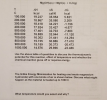 Mg(OH)2(s) = MgO(s) + H2O(g) 100.000 200.000 300.000 400.000 500.000 600.000 700.000 800.000 900.000 1000.000 ΔΗ kcal 19.237 18.867 18.418 17.924 17.401 16.859 16.302 15.735 15.159 14.576 AS cal/K 35.954 35.080 34.221 33.427 32.703 32.044 31.441 30.886 30.373 29.896 AG kcal 5.821 2.269 -1.196 -4.577 -7.883 -11.120 -14.294 -17.410 -20.473 -23.486 Use the above table of quantities to discuss the thermodynamic potential for this reaction, effect of temperature and whether the chemical reaction gives off or requires energy. The Gibbs...
give reactants, reagents, and/or products for the following reactions, as appropriate. reactants, reagents, and/or products for...
 give reactants, reagents, and/or products for the following
reactions, as appropriate.
reactants, reagents, and/or products for the following reactions, as appropriate SOCI dom OH 1) NaBH, (excess) SOCIE OCH 2) H,O* OH, H2O (excess) 1. CH3CH2MgBr (excess) 2. H30 NaBH4 (excess) Br 1) Mg, ether 2) H30*
give reactants, reagents, and/or products for the following
reactions, as appropriate.
reactants, reagents, and/or products for the following reactions, as appropriate SOCI dom OH 1) NaBH, (excess) SOCIE OCH 2) H,O* OH, H2O (excess) 1. CH3CH2MgBr (excess) 2. H30 NaBH4 (excess) Br 1) Mg, ether 2) H30*
1. The initial concentrations of reactants and products for this reaction are given below. N2(g) +...
1. The initial concentrations of reactants and products for this reaction are given below. N2(g) + O2(g) ⇄ 2NO(g) Calculate Q for this reaction. Answer this to one decimal place (e.g. 10.2) The initial concentration of N2 is 1.0 M The initial concentration of O2 is 1.0 M The initial concentration of NO is 2.5 M 2. The reaction below is not at equilibria and Q = 1.7. The equilibrium constant is K = 0.230. 2SO3(g) ⇌ 2SO2(g) + O2(g)...
A. Select the correct reaction when H2PO4- (a Bronsted-Lowry acid) reacts with water. 1. H2PO4- + OH- ⇄ H2O + HPO42-...
A. Select the correct reaction when H2PO4- (a Bronsted-Lowry acid) reacts with water. 1. H2PO4- + OH- ⇄ H2O + HPO42- 2. H2PO4- + H2O ⇄ H3O+ + HPO42- 3. H2PO4- + H2O ⇄ OH- + PO43- 4. H2PO4- + H2O ⇄ O2- + H4PO4+ B. Given the following reaction at equilibrium CaO(s) + CO2(g) ⇌ CaCO3(s) select all of the answers that apply. 1. To restore equilibrium, the reaction shifts to the right (products) side when the total pressure of the system is increased. 2. To restore equilibrium, the reaction shifts to the left (reactants) side when the total pressure...
In a polar aprotic solvent, which nucleophile will be more reactive? H2O or OH- I know...
In a polar aprotic solvent, which nucleophile will be more reactive? H2O or OH- I know that in a protic solvent its OH- but is it the opposite from polar aprotic?
2. A) Which way will the equilibrium of a reaction shift (towards reactants or products) if...
 2. A) Which way will the equilibrium of a reaction shift (towards reactants or products) if one of the products formed is a gas? Which way will the equilibrium of a reaction shift (towards reactants or products) if one of the reactants formed is a solid? B) Using what you just described above, examine the following reactions and apply Le Chatelier's principle. Which way will the equilibrium shift? (Towards reactants or products) Circle the dominate side of the reaction. Explain...
Input Data Reactant Mass (9) .5000 1.00 Mg Volume (mL) 100.0 100.0 AT (C") 19.7 Mgo...
 Input Data Reactant Mass (9) .5000 1.00 Mg Volume (mL) 100.0 100.0 AT (C") 19.7 Mgo 9.0 Calculated Enthalpies of Reaction Mg(s) + 2 HCl(aq) --> MgCl2(aq) + H2(g) AH = -95.76 kcal/mol MgO(s) + 2 HCl(aq) --> MgCl2(aq) + H2O(1) AH = -36.27 kcal/mol Problem: Solve for the following enthalpy changes 1) When 6.73 g NaOH(s) is reacted with 200.0 mL of HCl(aq), the temperature increases 20.10 Celsius degrees NaOH(s) + H"(aq) --> Na"(aq) H2O(0) AH = ? 2)...
 E 21 (1 Point) Which of the following represent the reaction between MgO and H2O? a) 2MgO + H20 → 2MgOH + 12 02 b) MgO + H2O + Mg(OH)2 MgO + H2O → Mg + H2O2 d) MgO + H2O → MgH2 + O2 А Св
 Practice #2 - Limiting Reactants in Moles 1. What is the greatest amount of magnesium oxide in moles that can be made with 6.3 mol Mg and 6.9 mol O,? Which reactant is limiting? How many moles of the excess reactant will be left after the reaction? 2 Mg+ 0, à 2 MgO
 Predict whether each of the following reactions contains mostly
reactants or products AT EQUILIBRIUM
the formulas are :
CO3^2- (aq) + H2O (l) <---> HCO3^-)aq) + OH^- (aq)
NH4^+(aq) + OH^- <-->NH3 (aq) +H2O(l)
H2S (aq) + F^-(aq)+HS^-(aq)
please do not break apart the formulas and tell me what is the
product and reactant like the previous person did. I want to know
which formula is which at equalibrium as a whole formula
Predict whether each of the following reactions...
Predict whether each of the following reactions contains mostly
reactants or products AT EQUILIBRIUM
the formulas are :
CO3^2- (aq) + H2O (l) <---> HCO3^-)aq) + OH^- (aq)
NH4^+(aq) + OH^- <-->NH3 (aq) +H2O(l)
H2S (aq) + F^-(aq)+HS^-(aq)
please do not break apart the formulas and tell me what is the
product and reactant like the previous person did. I want to know
which formula is which at equalibrium as a whole formula
Predict whether each of the following reactions...
 Mg(OH)2(s) = MgO(s) + H2O(g) 100.000 200.000 300.000 400.000 500.000 600.000 700.000 800.000 900.000 1000.000 ΔΗ kcal 19.237 18.867 18.418 17.924 17.401 16.859 16.302 15.735 15.159 14.576 AS cal/K 35.954 35.080 34.221 33.427 32.703 32.044 31.441 30.886 30.373 29.896 AG kcal 5.821 2.269 -1.196 -4.577 -7.883 -11.120 -14.294 -17.410 -20.473 -23.486 Use the above table of quantities to discuss the thermodynamic potential for this reaction, effect of temperature and whether the chemical reaction gives off or requires energy. The Gibbs...
 give reactants, reagents, and/or products for the following
reactions, as appropriate.
reactants, reagents, and/or products for the following reactions, as appropriate SOCI dom OH 1) NaBH, (excess) SOCIE OCH 2) H,O* OH, H2O (excess) 1. CH3CH2MgBr (excess) 2. H30 NaBH4 (excess) Br 1) Mg, ether 2) H30*
give reactants, reagents, and/or products for the following
reactions, as appropriate.
reactants, reagents, and/or products for the following reactions, as appropriate SOCI dom OH 1) NaBH, (excess) SOCIE OCH 2) H,O* OH, H2O (excess) 1. CH3CH2MgBr (excess) 2. H30 NaBH4 (excess) Br 1) Mg, ether 2) H30*
 2. A) Which way will the equilibrium of a reaction shift (towards reactants or products) if one of the products formed is a gas? Which way will the equilibrium of a reaction shift (towards reactants or products) if one of the reactants formed is a solid? B) Using what you just described above, examine the following reactions and apply Le Chatelier's principle. Which way will the equilibrium shift? (Towards reactants or products) Circle the dominate side of the reaction. Explain...
 Input Data Reactant Mass (9) .5000 1.00 Mg Volume (mL) 100.0 100.0 AT (C") 19.7 Mgo 9.0 Calculated Enthalpies of Reaction Mg(s) + 2 HCl(aq) --> MgCl2(aq) + H2(g) AH = -95.76 kcal/mol MgO(s) + 2 HCl(aq) --> MgCl2(aq) + H2O(1) AH = -36.27 kcal/mol Problem: Solve for the following enthalpy changes 1) When 6.73 g NaOH(s) is reacted with 200.0 mL of HCl(aq), the temperature increases 20.10 Celsius degrees NaOH(s) + H"(aq) --> Na"(aq) H2O(0) AH = ? 2)...
Most questions answered within 3 hours.
-
Where is the error in this code sequence?
String s1 = "Hello";
String s2 = "ello";...
asked 10 months ago -
Financial data for Joel de Paris, Inc., for last year
follow:
Joel de Paris, Inc.
Balance...
asked 10 months ago -
Consider this reaction:
Al2(SO4)3 (aq)+ BaCl3
(aq) Al2Cl6 (aq)- +
3BaSO4(s) . What is the...
asked 10 months ago -
Suppose that Savneet is considering increasing her
recent random sample from 20 car rentals to 40...
asked 10 months ago -
Trucks arrive at an unloading terminal at an average rate of 120
per hour.
Trucks arrive...
asked 10 months ago -
Why are methanol and ethanol completely soluble in water while
octanol is not very little soluble....
asked 10 months ago -
A facilities manager at a university reads in a research report
that the mean amount of...
asked 10 months ago -
When the CuSO4 is rehydrated by adding water to the anhydrous
compound, is this an endothermic...
asked 10 months ago -
A ray of sunlight is passing from diamond into crown glass; the
angle of incidence is...
asked 10 months ago -
A block of mass 0.249 kg is placed on top of a light, vertical
spring of...
asked 10 months ago -
how do the kidneys compensate in the presences of acidosis
a) trigger hyperventilate
b) reserve acid...
asked 10 months ago -
Question 501 pts
The rental rate of capital to the firm increases. Which of the
following...
asked 10 months ago