Which of the following statements is true: (A) Using a positively charged rod, it is possible...
Which of the following statements is true: (A) Using a positively charged rod, it is possible to charge an electroscope in a lab either positively or negatively. (B) Both conductors and insulators may hold a net charge.
A and B
A only
B only
Homework Answers
Both statements are correct.
Yes, the conductors and insulator can hold a net charge. In the case of a conductor, the charge resides on the surface while in the case of insulators charge can reside anywhere. All in all, both can hold a net charge.
Have any doubts ask in the comment section below.
Add Answer to:
Which of the following statements is true: (A) Using a
positively charged rod, it is possible...
3 charge diagram questions: 1. A positively charged rod is rubbed against an electroscope 2. A positively charged rod i...
 3 charge diagram questions:
1. A positively charged rod is rubbed against an
electroscope
2. A positively charged rod is brought closed to an
electroscope
3. A negatively charge ruler is brought near an electroscope
Charge Diagrams 1. Suppose that a positively charged rod is rubbed against the electroscope shown at right and transfers electroscope. The rod is then moved far away from the electroscope. Draw the position of the needle. Draw a charge diagram for the electroscope. Charging Plate...
3 charge diagram questions:
1. A positively charged rod is rubbed against an
electroscope
2. A positively charged rod is brought closed to an
electroscope
3. A negatively charge ruler is brought near an electroscope
Charge Diagrams 1. Suppose that a positively charged rod is rubbed against the electroscope shown at right and transfers electroscope. The rod is then moved far away from the electroscope. Draw the position of the needle. Draw a charge diagram for the electroscope. Charging Plate...
A negatively charged rubber rod is brought near the knob of a positively charged electroscope. The...
A negatively charged rubber rod is brought near the knob of a positively charged electroscope. The result is that: A. electroscope leaves will move farther apart B. the rod will lose its charge C. electroscope leaves will tend to collapse D. electroscope will become discharged E. nothing noticeable will happen
study the sequentially numbered four panel sketch above. A positively charged rod is used to induce...
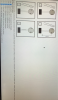 study the sequentially numbered four panel sketch above. A positively charged rod is used to induce a charge on a conductive sphere on an insulated stand. Classity each statements belo s either True or False. Faise The sphere in picure 4 is positively charged False Side B in picture 1 is negatively charged True Side B in picture 2 is essentially neutral. True Side A in picture 3 is negatively charged Faise In picture 2, electrons are moving on to...
You touch a metal sphere which is positively charged. Which of the following is a correct...
You touch a metal sphere which is positively charged. Which of the following is a correct description of what happens next? (Select all options that you think are correct) 1. As opposite charges attract and your body is a reasonably good conductor, some negative charge (if mobile) from your body is attracted to the metal and reduces the net positive charge on the metal. In the process you acquire positive charge. 2. As like charges repel and your body is...
Problem Select the answer which corresponds to the statements below A positively charged glass rod repels...
 Problem Select the answer which corresponds to the statements below A positively charged glass rod repels an object suspended by a non-conducting thread. The charge on the object is Two neutral metal spheres #1 and #2, are mounted on insulating supports ey are connected by a me. A postres charged glass ro is brought near spheres emre connecting the spheres s r more、ndt echa ge d is then taken away. Now the charge on sphere #2 is A positively charged...
I just need a quick answer check with explanation 4) A positively charged object is brought...
 I just need a quick answer check with explanation
4) A positively charged object is brought near, but not touching, an electroscope as shown below. What is the net charge of the electroscope while the tube is held near? A) Positive D) Either positive or negative B) Negative C) Zero E) Either positive or zero
I just need a quick answer check with explanation
4) A positively charged object is brought near, but not touching, an electroscope as shown below. What is the net charge of the electroscope while the tube is held near? A) Positive D) Either positive or negative B) Negative C) Zero E) Either positive or zero
1) A negatively charged Teflon (plastic) rod is held near two initially neutral aluminum pie plat...
 1) A negatively charged Teflon (plastic) rod is held near two initially neutral aluminum pie plates that are touching as shown at right. The plates are held using insulating cups. The Teflon rod never touched the pie plates, and no sparks have jumped. Negatively charged Teflon rod a. Is the magnitude of the net charge of the small pie plate greater than, less than, or equal to the magnitude of the net charge of the large pie plate? If the...
Why is A correct? A rod-shaped positively-charged insulator is brought near a conducting sphere, and the...
 Why is A correct?
A rod-shaped positively-charged insulator is brought near a conducting sphere, and the sphere is momentarily grounded as shown in Diagram I. The conducting sphere is then placed near a nonconducting plane as shown in Diagram II. Which of the following statements is true for Diagram II? a. The conductor has a negative charge and is attracted to the nonconducting plane. b. The conductor has a negative charge and is not attracted to the nonconducting plane. c....
Why is A correct?
A rod-shaped positively-charged insulator is brought near a conducting sphere, and the sphere is momentarily grounded as shown in Diagram I. The conducting sphere is then placed near a nonconducting plane as shown in Diagram II. Which of the following statements is true for Diagram II? a. The conductor has a negative charge and is attracted to the nonconducting plane. b. The conductor has a negative charge and is not attracted to the nonconducting plane. c....
Problem 4 Select the answer which corresponds to the statements below neutral A positively charged ball...
 Problem 4 Select the answer which corresponds to the statements below neutral A positively charged ball is brought close to a neutral isolated conductor. The conductor is then grounded, while the ball is kept close. If the ball is first taker away and then the ground connection is removed, the conductor has a positive A positively charged glass rod repels an object suspended by a non-conducting thread. The charge on the object is cannot tell A positive point charge is...
Q13. (10) (a) Determine the charge on the rod that is brought close to an electroscope...
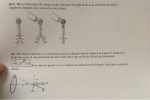 Q13. (10) (a) Determine the charge on the rod that is brought close to an electroscope that is negatively charged. Give reason for your choice. (b) The electric field due to a uniformly positively charged ring of radius a at a point P distance x from the center of ring and along the axis of the ring is given by the following expression. te (Show that for points x sa it reduces to expression for Electric field due to a...
 3 charge diagram questions:
1. A positively charged rod is rubbed against an
electroscope
2. A positively charged rod is brought closed to an
electroscope
3. A negatively charge ruler is brought near an electroscope
Charge Diagrams 1. Suppose that a positively charged rod is rubbed against the electroscope shown at right and transfers electroscope. The rod is then moved far away from the electroscope. Draw the position of the needle. Draw a charge diagram for the electroscope. Charging Plate...
3 charge diagram questions:
1. A positively charged rod is rubbed against an
electroscope
2. A positively charged rod is brought closed to an
electroscope
3. A negatively charge ruler is brought near an electroscope
Charge Diagrams 1. Suppose that a positively charged rod is rubbed against the electroscope shown at right and transfers electroscope. The rod is then moved far away from the electroscope. Draw the position of the needle. Draw a charge diagram for the electroscope. Charging Plate...
 study the sequentially numbered four panel sketch above. A positively charged rod is used to induce a charge on a conductive sphere on an insulated stand. Classity each statements belo s either True or False. Faise The sphere in picure 4 is positively charged False Side B in picture 1 is negatively charged True Side B in picture 2 is essentially neutral. True Side A in picture 3 is negatively charged Faise In picture 2, electrons are moving on to...
 Problem Select the answer which corresponds to the statements below A positively charged glass rod repels an object suspended by a non-conducting thread. The charge on the object is Two neutral metal spheres #1 and #2, are mounted on insulating supports ey are connected by a me. A postres charged glass ro is brought near spheres emre connecting the spheres s r more、ndt echa ge d is then taken away. Now the charge on sphere #2 is A positively charged...
 I just need a quick answer check with explanation
4) A positively charged object is brought near, but not touching, an electroscope as shown below. What is the net charge of the electroscope while the tube is held near? A) Positive D) Either positive or negative B) Negative C) Zero E) Either positive or zero
I just need a quick answer check with explanation
4) A positively charged object is brought near, but not touching, an electroscope as shown below. What is the net charge of the electroscope while the tube is held near? A) Positive D) Either positive or negative B) Negative C) Zero E) Either positive or zero
 1) A negatively charged Teflon (plastic) rod is held near two initially neutral aluminum pie plates that are touching as shown at right. The plates are held using insulating cups. The Teflon rod never touched the pie plates, and no sparks have jumped. Negatively charged Teflon rod a. Is the magnitude of the net charge of the small pie plate greater than, less than, or equal to the magnitude of the net charge of the large pie plate? If the...
 Why is A correct?
A rod-shaped positively-charged insulator is brought near a conducting sphere, and the sphere is momentarily grounded as shown in Diagram I. The conducting sphere is then placed near a nonconducting plane as shown in Diagram II. Which of the following statements is true for Diagram II? a. The conductor has a negative charge and is attracted to the nonconducting plane. b. The conductor has a negative charge and is not attracted to the nonconducting plane. c....
Why is A correct?
A rod-shaped positively-charged insulator is brought near a conducting sphere, and the sphere is momentarily grounded as shown in Diagram I. The conducting sphere is then placed near a nonconducting plane as shown in Diagram II. Which of the following statements is true for Diagram II? a. The conductor has a negative charge and is attracted to the nonconducting plane. b. The conductor has a negative charge and is not attracted to the nonconducting plane. c....
 Problem 4 Select the answer which corresponds to the statements below neutral A positively charged ball is brought close to a neutral isolated conductor. The conductor is then grounded, while the ball is kept close. If the ball is first taker away and then the ground connection is removed, the conductor has a positive A positively charged glass rod repels an object suspended by a non-conducting thread. The charge on the object is cannot tell A positive point charge is...
 Q13. (10) (a) Determine the charge on the rod that is brought close to an electroscope that is negatively charged. Give reason for your choice. (b) The electric field due to a uniformly positively charged ring of radius a at a point P distance x from the center of ring and along the axis of the ring is given by the following expression. te (Show that for points x sa it reduces to expression for Electric field due to a...
Most questions answered within 3 hours.
-
Where is the error in this code sequence?
String s1 = "Hello";
String s2 = "ello";...
asked 10 months ago -
Financial data for Joel de Paris, Inc., for last year
follow:
Joel de Paris, Inc.
Balance...
asked 10 months ago -
Consider this reaction:
Al2(SO4)3 (aq)+ BaCl3
(aq) Al2Cl6 (aq)- +
3BaSO4(s) . What is the...
asked 10 months ago -
Suppose that Savneet is considering increasing her
recent random sample from 20 car rentals to 40...
asked 10 months ago -
Trucks arrive at an unloading terminal at an average rate of 120
per hour.
Trucks arrive...
asked 10 months ago -
Why are methanol and ethanol completely soluble in water while
octanol is not very little soluble....
asked 10 months ago -
A facilities manager at a university reads in a research report
that the mean amount of...
asked 10 months ago -
When the CuSO4 is rehydrated by adding water to the anhydrous
compound, is this an endothermic...
asked 10 months ago -
A ray of sunlight is passing from diamond into crown glass; the
angle of incidence is...
asked 10 months ago -
A block of mass 0.249 kg is placed on top of a light, vertical
spring of...
asked 10 months ago -
how do the kidneys compensate in the presences of acidosis
a) trigger hyperventilate
b) reserve acid...
asked 10 months ago -
Question 501 pts
The rental rate of capital to the firm increases. Which of the
following...
asked 10 months ago